Conventional shock absorbers
AED 525–1,680Two shocks on one axleEstimate assumes
Two standard replacement shocks and routine fitting.
Additional work
Mounts, springs, alignment, and other worn components are quoted separately.
MECHANICS IN AL QUOZ
Car bouncing after bumps, leaking at a shock, or feeling unsettled? Mechanics in Al Quoz, Dubai checks the suspension and fits the correct front or rear dampers to restore control where worn shocks are the cause.
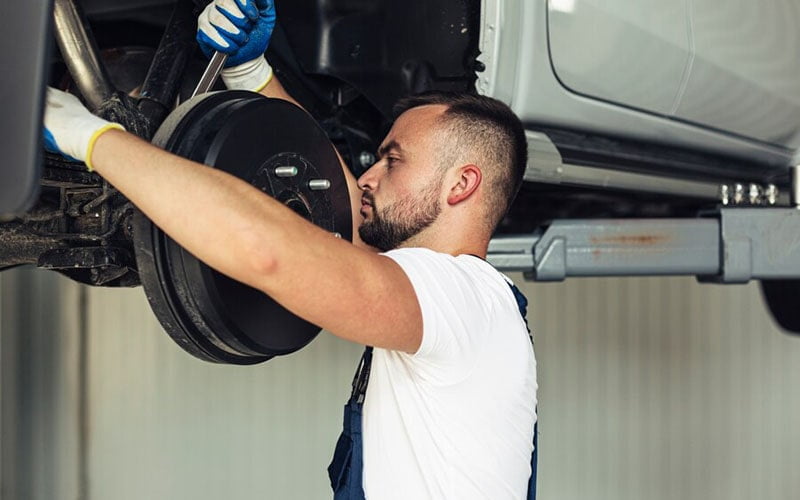
COMPARE THE FITTED SYSTEM
Compare the cost for a pair on one axle. Separate shocks, conventional struts, and electronically controlled suspension need different parts and work.
Estimate assumes
Two standard replacement shocks and routine fitting.
Additional work
Mounts, springs, alignment, and other worn components are quoted separately.
Estimate assumes
Two conventional replacement struts and routine fitting on suitable models.
Confirm the contents
This is not a universal price for complete loaded assemblies. Confirm whether springs, top mounts, and bearings are reused or supplied separately.
Price depends on
The fitted system, affected component, part specification, and required electronic setup.
Check the cause first
Air leaks, sensors, and control faults may need different work from a damper replacement.
VAT and your final quote. Both AED ranges include a 5% VAT allowance and are Dubai market budgeting estimates, not fixed Mechanics prices. They do not cover adaptive or air suspension. Send the model, year, and VIN for a written quote showing the axle, quantity, part brand, labor, VAT, and any additional work. Pickup availability and charges are confirmed separately.
THE RESULT YOU NEED
Correctly specified replacement dampers can restore control lost through damper wear. The inspection should connect the proposed work to the problem you actually feel.
If weak damping causes repeated bouncing or floating, suitable new shocks should control that movement more effectively. The aim is a controlled ride, not simply the softest possible suspension. Tire specification, spring condition, and the vehicle's original setup still influence comfort.
Worn dampers can contribute to excessive dive, squat, or sway as the vehicle changes speed or direction. Replacement addresses damping wear. It does not replace brake repairs, correct tire defects, or guarantee a particular stopping distance.
A damaged damper or its mounting can make noise, but a loose link, worn bushing, or bearing needs its own repair. Ask which finding explains your clunk so the expected result is clear before parts are ordered.
Existing tire wear does not disappear when shocks are replaced, and a sagging spring is a different fault. If the car also pulls, vibrates at a certain speed, or sits unevenly, those concerns should be recorded and assessed alongside the damping complaint.
CHECK THE CAUSE
Shocks control spring movement. Tires, springs, joints, and mounts can produce similar symptoms, so the inspection should establish what is worn before parts are ordered.
| What you notice | What needs checking | Your next step |
|---|---|---|
| Repeated bouncing or floating | Weak damping, tire condition, mounts, and other suspension wear. A dry shock can still be worn. | Arrange a suspension inspection promptly. If control feels unsafe, stop safely and arrange recovery. |
| Oil on the shock body | A light film near the seal can be normal seepage. Widespread wetness or dripping fluid needs closer assessment. | Have the source and damping checked before ordering parts. A photograph alone cannot establish failure. |
| Clunking over bumps | Strut mounts, bearings, links, bushings, and the damper attachments can produce similar noises. | Describe when the noise occurs. A separate joint or mount fault needs its own repair. |
| Uneven tire wear or pulling | Tire pressures and condition, steering wear, alignment, and suspension movement. | Arrange an inspection. Alignment or balancing alone will not repair a failed damper. |
| A low corner or tire rubbing | A broken spring, air-system fault, damaged mount, or other suspension damage. | Do not keep driving with rubbing, a detached part, or unstable handling. Discuss suitable recovery. |
For the difference between a light oil film and a significant leak, see Monroe's shock leakage guidance.
A detached component, severe loss of control, or a tire rubbing the body calls for recovery rather than continuing to drive. Call to discuss the symptoms and transport options.
For several suspension concerns at once, see our suspension repair service.
Describe when the problem happens, whether it began after an impact, and any recent tire or suspension work. Mention towing, regular heavy loads, or modifications so the assessment reflects how the car is used.
When safe, a road assessment helps reproduce the complaint. A lift inspection checks dampers, mounting points, springs, joints, and tire wear. A simple bounce check or a photograph alone cannot establish the complete repair.
For adaptive suspension, a warning or fault code is a starting point. Wiring, connectors, sensors, and the relevant circuit may need testing before a damper is condemned. Agree on any additional diagnostic work first.
Ask which findings require repair now and which can be monitored. The recommendation should identify the affected component rather than group every concern under a suspension replacement.
For the technical basis of a complete assessment, see Monroe's shock and strut inspection guidance. The repair recommendation still depends on the vehicle and actual findings.
REPAIR OR REPLACE
The inspection should identify which component has failed and whether one axle or both need work.
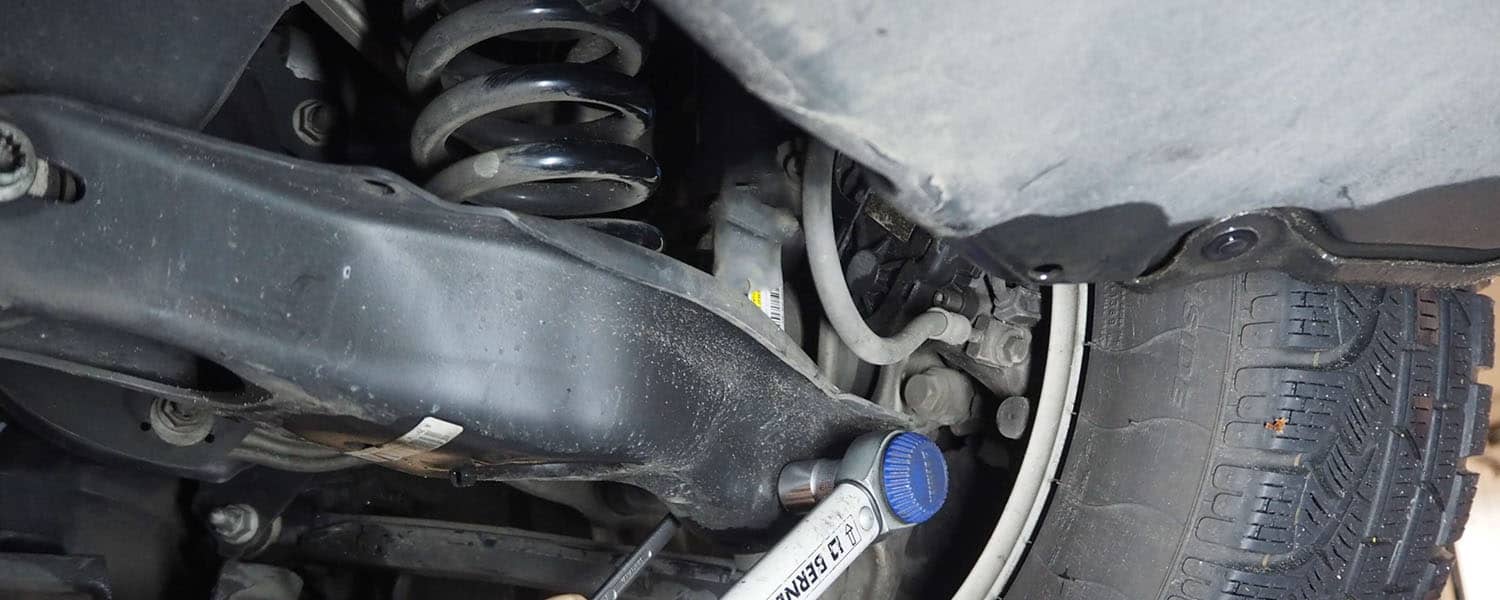
A failed conventional sealed shock normally needs replacement. Routine seal patching or refilling is not a reliable repair. The inspection should distinguish significant leakage, physical damage, and poor damping from a light surface film that does not by itself establish failure.
Mounts, bearings, and springs are separate parts. If a mount or bearing is the confirmed cause, the quote should explain whether damper replacement is also justified. Where several worn parts share access, compare the complete job and the parts that can safely be reused.
For normal wear, compare a matched left and right pair on the affected axle. Both units should suit the same application and intended ride specification. If one nearly new unit was damaged, provide its invoice and part details so the appropriate replacement decision can be made.
A worn front pair does not automatically mean all four are due. Assess rear damping separately. Front work may involve steering-related strut components, while rear access and spring arrangements vary by model. Ask for separate front and rear quantities so the reason for each part is clear.
Only a damper designed to be serviced should be considered for rebuilding. The manufacturer's procedure and parts availability determine suitability.
UNDERSTAND YOUR QUOTE
The words shock absorber and strut are often used for the same complaint, but the supplied parts can be very different. Confirm the fitted system before comparing totals.
Front and rear layouts vary by vehicle. Do not assume that every front unit is a strut or every rear unit is a separate shock. Provide the model and year to begin, with the VIN or suspension code when needed to confirm the part.
FROM CHECK TO HANDOVER
Confirm the fault, agree the parts, then check the fitted suspension. Each stage has a clear purpose.
Identify the fitted system and affected axle. Check mounts, springs, boots, and bump stops for related wear.
Confirm the part specification, quantity, labor, and any extras before approving the work.
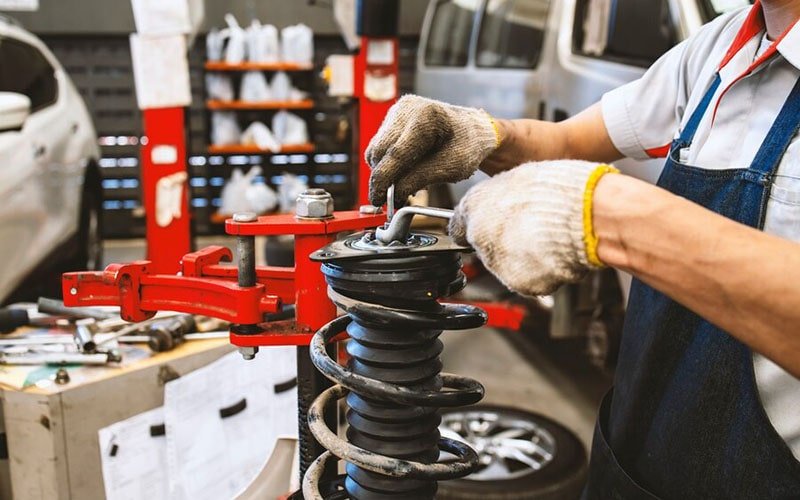
Use the vehicle's fitting procedure, tightening requirements, and suitable spring-handling equipment where needed. Compressed springs store substantial force, so strut dismantling needs the correct equipment and training.
Check fitment, clearance, and noise. A safe road test and any required electronic setup complete the agreed work.
FINISH THE REPLACEMENT
Replacing the component is one stage. The final checks should establish that the fitted suspension moves correctly and that any geometry or electronic requirements have been addressed.
Strut replacement commonly calls for a wheel alignment check because the strut is part of the suspension structure. Replacing a separate shock may leave the geometry undisturbed. The vehicle procedure and the work performed determine the requirement.
Ask whether the quote covers measurement only or includes adjustment, and request the results when alignment is carried out. If a worn joint or damaged component prevents a correct setting, that finding needs an explanation and a separate repair decision.
Completion checks can include secure attachments, correct spring and mount seating, clearance, and any required setup for electronic dampers. A safe road assessment should revisit the original concern and check for new noise or unexpected behavior.
Wheel balancing addresses wheel and tire imbalance. It is different from setting alignment angles, and neither procedure repairs a failed damper. Describe a speed-related vibration separately so it is investigated rather than assumed to be fixed by new shocks.
Agree on the final checks in advance. The planning prices above do not include alignment or every electronic procedure. Our wheel alignment service explains that separate work.
PLAN YOUR VISIT
Workshop fitting time and parts lead time are different. A useful booking estimate covers both, plus the checks needed before your car is ready.
Confirm the diagnosis, affected axle, exact part, and availability. Adaptive units, unusual suspension options, and modified vehicles can need additional identification or ordering time.
Access to upper mounts, strut assembly work, seized fasteners, or damaged hardware can change the labor involved. Ask how extra findings will be explained and approved before the job expands.
Allow for the agreed alignment check, required electronic setup, and final assessment. Confirm the collection window after the workshop has checked parts and access, rather than relying on a universal hourly promise.
BEFORE YOU LEAVE
Keep the replacement details with your service record so future checks start with the right information.
Record the axle, quantity, part brand, mileage, and warranty terms. Ask for the alignment result if geometry was checked or adjusted.
Confirm whether the bouncing, clunk, or warning was resolved and whether any separate suspension work is still recommended.
Contact the workshop if pulling, fresh knocking, a warning, or a leak appears after the work. Stop safely if the car becomes unstable.
Keep suspension inspection within the vehicle's maintenance schedule and arrange a check after a significant impact or a new change in handling. Record replacement mileage, maintain the specified tire pressures, and stay within the vehicle's load limits. Do not wait for a fixed kilometer target when the car develops a clear symptom, or assume that quiet, dry shocks cannot be worn.
Note whether the problem occurs on small bumps, speed bumps, braking, or steering. Record the affected side and any warning message. Photos taken from a safe standing position may show a low corner or visible leak. You do not need to crawl beneath the car or reproduce an unstable maneuver to explain the complaint.
Strut dismantling can involve a highly loaded spring, and access beneath a vehicle requires suitable lifting and support. Do not loosen suspension fasteners or attempt to compress a spring as a diagnostic check. The useful owner task is documenting the symptom and arranging inspection.
MECHANICS IN AL QUOZ
Mechanics provides suspension work, mechanical repairs, electrical repairs, and computer diagnostics in Dubai. That combination matters when a ride problem involves both a physical component and an electronic warning.
Ask the technician to identify the affected axle and explain the finding. A useful explanation distinguishes the failed damper, associated wear, and any work that can be considered separately.
The written quotation should name the parts and included work. Confirm how additional findings will be approved, what coverage applies, and whether your old parts can be shown at handover when practical.
Visit the workshop in Al Quoz, Dubai, or discuss Dubai pickup. Confirm the appointment, access details, vehicle condition, and any collection charge. A car with unstable handling or a detached suspension part needs suitable recovery.
PARTS THAT FIT YOUR CAR
The VIN, axle, suspension code, and fitted equipment matter more than a generic front or rear label.
Ask for the vehicle manufacturer's part number and availability. A genuine part can be useful where maintaining the original electronic or ride specification is the priority.
Compare the named manufacturer, exact application, and written warranty terms. A supplier making original equipment does not mean every product it sells is the identical original part.
Tell us about adjustable suspension, air suspension, or a suspension warning. A conventional shock is not a direct substitute for an electronically controlled unit.
Disclose lowering springs, lift kits, towing use, or other changes. Damper length, travel, and compatibility need checking before a part is recommended.
Discuss whether the goal is restoring the original ride or assessing a modification. Sport, comfort, and electronically adjustable specifications are not interchangeable labels. Compare the correct application and paired fitment, not a universal promise of a softer ride.
BEFORE YOU BOOK
Clear answers about timing, quantities, and the work your car may need.
The planning budget is AED 525–1,680 for two conventional shocks with routine fitting on one axle. Two conventional struts are estimated at AED 840–2,520. Both include the stated 5% VAT allowance. These are market estimates. Alignment, related worn parts, and adaptive or air suspension require separate pricing.
There is no single mileage that suits every vehicle. Follow the manufacturer’s inspection schedule and have new bouncing, leakage, or instability checked. Condition, use, and the fitted suspension determine whether replacement is needed.
Both provide damping, but a strut is also a structural part of the suspension. A complete strut assembly may contain a spring and mount, while a bare replacement strut may not. The quote should state exactly what is included.
For normal wear, a matched pair on the same axle is the usual recommendation. Replacing all four is a separate decision based on both axles. An unusual failure on a recently replaced system needs individual assessment.
Timing depends on access, seized fasteners, the parts required, and any alignment or electronic setup. Ask for a confirmed workshop time after inspection and a parts availability check. Same-day completion is not assumed.
Only noises caused by the replaced components should improve. Worn mounts, links, bushings, or steering parts may need separate work. The inspection is intended to identify those causes before replacement.
No. The market estimates above cover the stated parts and routine fitting. Ask whether the vehicle procedure requires an alignment check and whether adjustment is a separate line on your quote.
No. An initial inspection can identify visible wear and help decide the next step. Electronic suspension testing, dismantling, and investigation of an intermittent fault may require additional work. Agree on the checks and any diagnostic charge before it begins.
A conventional shock controls movement rather than supporting the vehicle weight. A low corner calls for checks of the spring, ride height, load, or air system as applicable. Replacing a shock alone is not a confirmed cure for sagging.
A failed sealed road-car damper normally needs replacement. Rebuilding applies only to units designed for servicing, following the maker's procedure. Confirm the actual unit before comparing a repair with a replacement.
Request the applicable parts and workmanship terms before approval. Confirm the covered components, time or mileage limit, exclusions, and how to report a concern. Ask whether a related mount, spring, or customer-supplied part has separate terms. Keep the invoice and written coverage with the vehicle service record.
Send the make, model, year, and whether the problem is at the front or rear. A VIN helps confirm the exact part. Mention adaptive or air suspension, warning lights, modifications, and the symptoms. Photos of a leak can help, but they do not replace inspection.
MECHANICS IN AL QUOZ
Tell us what the car is doing. We can arrange an initial inspection and explain the recommended parts before you approve the work.
Have the model, year, and symptoms ready. Mention whether the problem is at the front or rear.
Send your VIN and any useful photos on WhatsApp. Pickup availability and charges are confirmed when booking.