Mon to Sat, 9:00 AM to 7:00 PM Car repair, service and body shop in Al Quoz, Dubai +971 50 608 7150
Mechanics · Al Quoz, Dubai

Car Brake Pad Replacement in Dubai

Squealing brakes, a pad warning or wear found during service? Mechanics measures the pads and discs, checks the cause of uneven wear and quotes the work needed. Replace the right axle with pads matched to your car.

Standard pads fitted AED 265–850 per axle

Market-informed planning range including 5% VAT. Covers pads for both wheels on one axle and routine fitting. Discs, sensors and additional repairs are separate.

Free initial inspectionWritten quote before repairPickup available across Dubai
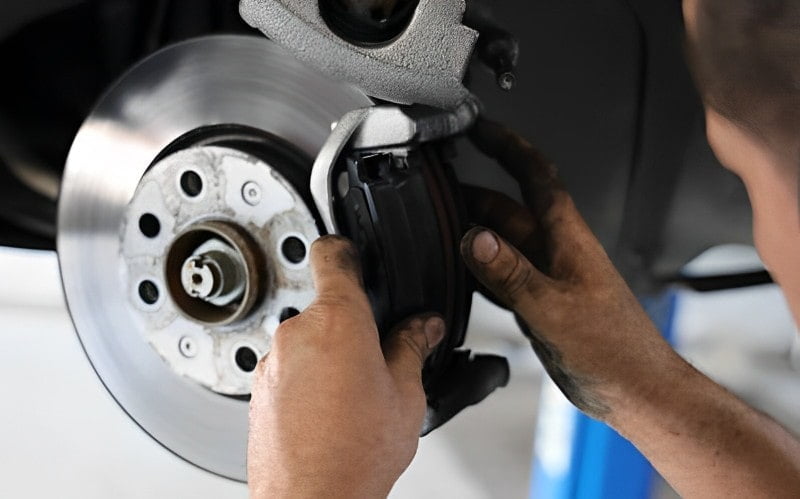
Technician working on a brake caliper beside the exposed disc
Pad replacement starts with the condition of the pads, discs and caliper.
Price both wheels on the axle

Brake pad replacement prices explained

One axle means both front wheels or both rear wheels. Compare the selected parts and the complete fitted job, rather than a price for one loose pad.

Pads and routine fittingAED 265–850

Per axle including 5% VAT

A compatible standard pad set for both wheels on one axle with routine installation. Suitable when the discs and calipers can remain in service.

Replacement wear sensors, new discs, seized components and additional repairs are outside this range.

Conventional discs and padsAED 840–2,100

Per axle including 5% VAT

A pair of conventional steel brake discs, matching pads and routine fitting on the same axle when assessment shows the discs need replacement.

Specialist performance and carbon ceramic systems need a separate vehicle-specific quote.

Your written quote identifies the exact work

These planning estimates match our brake repair guide and are not a fixed Mechanics tariff. The quote states the axle, pad manufacturer and part number, fitting, sensors, any additional work and VAT. Front and rear prices can differ even on the same car.

Free initial brake inspection

We explain the findings before repair. Further investigation of a hydraulic, ABS or intermittent fault is agreed separately. A pad change does not automatically include a brake-fluid change or caliper repair.

Get the right axle priced

Send the make, model, year and any warning message. Mention whether a recent inspection recommended front pads, rear pads or discs as well.

Choose from the actual condition

Pads only or pads and discs

New discs are not automatically required at every pad change. The decision comes from measurements, surface condition and the brake manufacturer’s limits.

Pads only

Keep serviceable discs

A pad set can be fitted when the existing discs remain suitable and the calipers work correctly. The pad contact surfaces, fitting hardware and wear sensors still need assessment.

Pads and discs

Replace a worn or damaged disc

Discs at or below the specified minimum, cracked or damaged beyond permitted limits require replacement. Both discs on the axle are considered together, with matching pads.

Additional repair

Correct the reason for uneven wear

A sticking caliper, damaged guide or hydraulic problem can wear new pads prematurely. Our brake repair service covers those wider faults and ABS diagnosis.

Skimming has strict limits

Disc machining is considered only if the manufacturer permits it and the finished disc remains within specification. A disc below its minimum thickness cannot be made serviceable by skimming. Carbon ceramic systems need their own assessment.

Understand the inspection

See what was measured and why it matters

Pad wear can differ between the inner and outer pad or between wheels. Looking through one wheel at one pad does not establish the condition of the whole axle.

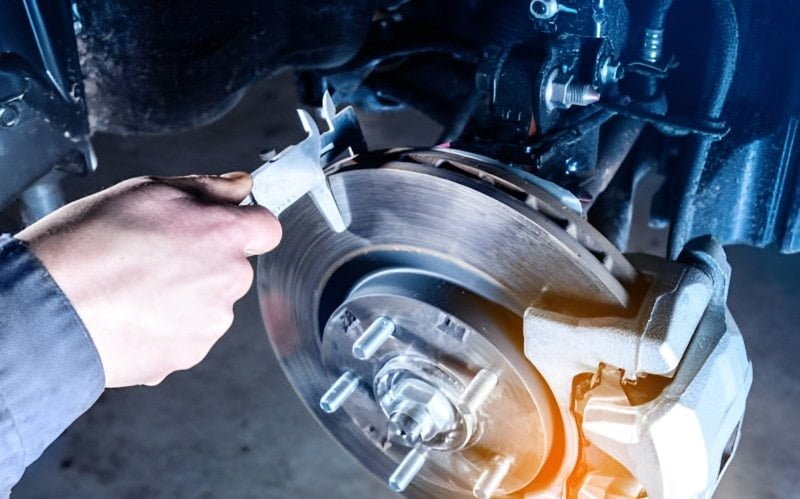
Brake disc being checked with a measuring tool
Disc measurements must be compared with the correct specification for that brake assembly.
01

Remaining friction material

The backing plate is not included in the usable lining measurement. Thickness is considered alongside the pad manufacturer’s limit, any wear indicator, contamination and uneven wear.

02

Disc thickness and condition

Measure against the correct minimum and check the friction surface. If braking vibrates, thickness variation, runout and the hub may also need investigation. A visible lip alone does not decide the repair.

03

The reason one pad is thinner

Uneven wear can point to restricted movement or another fault. Ask for the finding and the corrective work, not just a new pad set over the same problem.

A thickness reading is not a countdown

There is no universal number of safe kilometers left at a given thickness. Traffic, loads, pad material and the vehicle’s brake system change the wear rate. Use the measured condition and manufacturer guidance to plan replacement.

Choose the safe next step

Noise and pedal changes need different checks

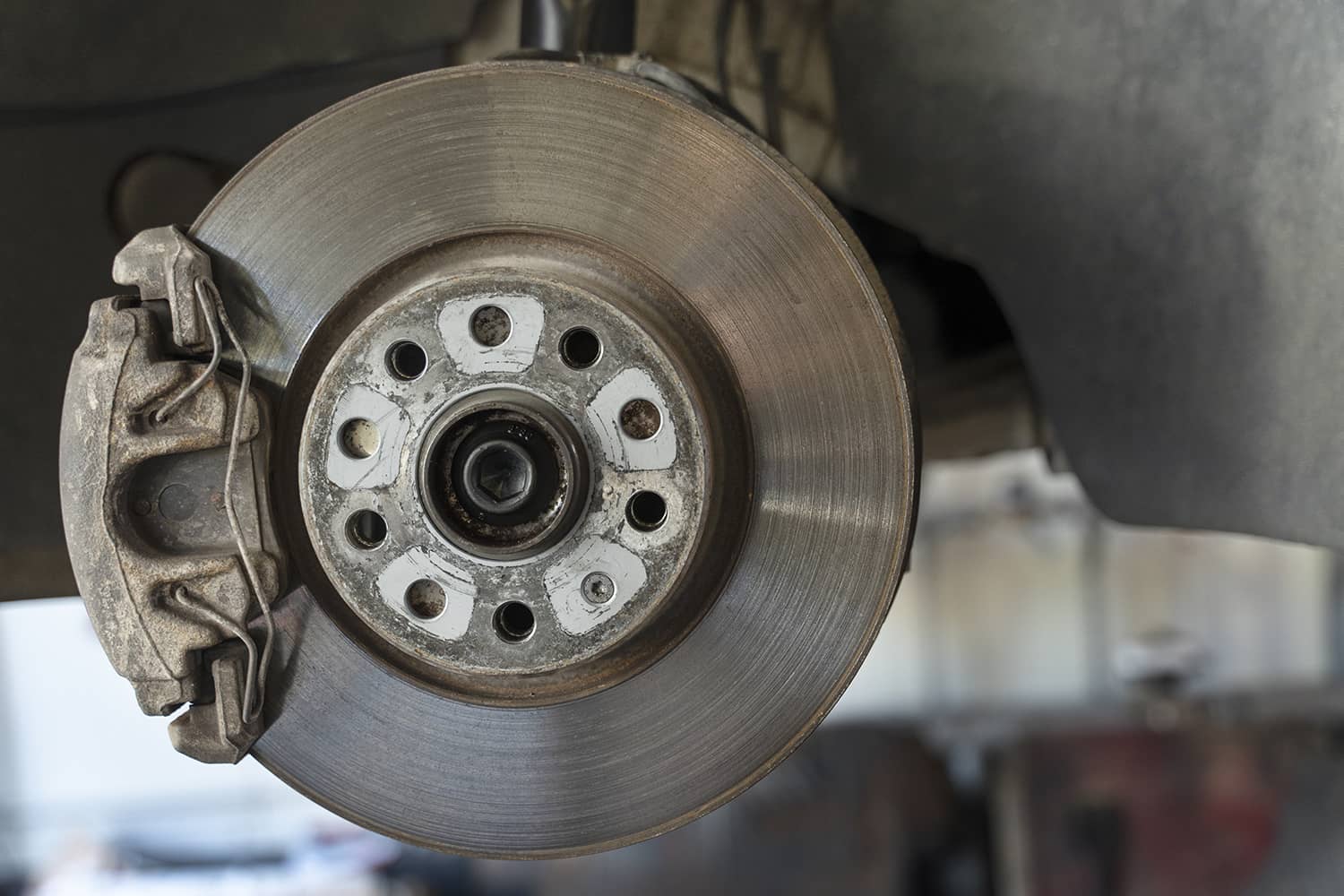
Brake disc and caliper with the wheel removed
The disc, caliper and pad condition are assessed together when braking changes.

A warning symbol is not always a pad-wear warning. Read the exact message and follow the vehicle handbook. Do not top up fluid simply to hide an unexplained low-level warning.

01

Grinding or reduced braking

Stop in a safe place and arrange assessment or recovery. Grinding can mean severe wear or another mechanical problem. Continuing can damage the discs, and braking performance may be affected.

02

Soft or sinking pedal

Treat a new change in pedal response, a fluid leak or compromised braking as a reason not to drive. Pads alone may not resolve the problem. Call for help and suitable recovery.

03

Persistent squealing or a pad message

Arrange a prompt inspection. Wear indicators are one possible cause, but noise can also involve fitting hardware, contamination or the disc surface. Sound alone does not confirm which parts need replacing.

04

Pulling, heat or vibration

A pull, unusually hot wheel or strong burning smell can indicate a dragging brake. Steering shake or pedal pulsation needs assessment of the discs and related components. Stop if braking feels unsafe.

More than fitting a new pad

What the pad change should include

StageWork to confirmWhy it matters
Inspect and agreeIdentify the brake package, affected axle, pad and disc condition, and required parts.You can see why the work is recommended and approve the fitted total.
Fit across the axleReplace the pads at both wheels on the selected axle using the correct parts and fitting instructions.The left and right brakes need matching friction components.
Check movement and hardwareAssess pistons, guides, boots, shims, clips and sensors. Replace required hardware.Restricted movement or incorrect fittings can cause drag, uneven wear and noise.
Use the correct rear-brake procedureApply the vehicle-specific electronic parking-brake service procedure where needed.Rear pads cannot be treated as an identical job on every car.
Verify before handoverCheck pedal response, fluid level, leaks, wheel installation and applicable warnings, then perform appropriate functional checks.A reset warning or a newly fitted pad alone is not proof of a completed repair.

The work follows the vehicle and brake-part instructions. Brembo’s fitting guidance reinforces replacing pads across the axle and completing the operating checks. Lubricants belong only on specified contact areas, never on friction surfaces.

First drive and follow-up

Follow the right bedding instructions

New pads and discs need the manufacturer’s running-in procedure. It varies with the selected combination, so there is no single speed-and-stop routine suitable for every car.

Before collection

Ask what was fitted, which checks were completed and whether further running-in is required. A routine workshop road test does not mean every pad compound is fully bedded in.

Keep the invoice, axle details and part numbers. Confirm the written parts and labor warranty and any normal-wear exclusions.

After collection

Follow the supplied instructions and leave appropriate braking distance. Safety takes priority if an emergency stop is needed. Do not deliberately perform aggressive bedding stops on public roads without the correct procedure and safe conditions.

Report grinding, pulling, reduced braking, a soft pedal, excessive heat or a warning that returns. Do not dismiss these as normal bedding.

Plan the visit around the complete job

A straightforward pad replacement on one axle can often take around an hour once the correct parts are ready. Disc work, seized fittings, electronic parking-brake procedures and additional diagnosis can extend the visit. Ask for availability and collection timing when the quote is agreed.

Match the brake package

Choose pads for the car and the way it is used

Pad shape alone is not enough. The model year, engine, axle, caliper and factory brake option can change the correct part number.

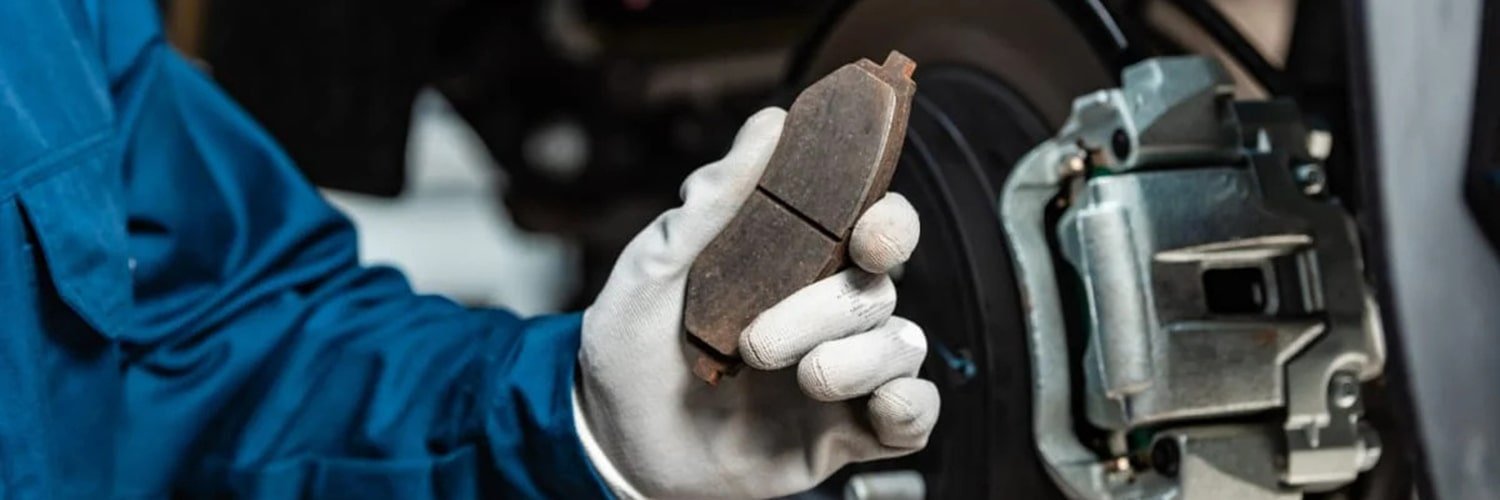
Gloved technician holding a brake pad beside the caliper
Pad shape, friction material and hardware must suit the fitted braking system.
  • Confirm the pad manufacturer and application-specific part number.
  • Identify genuine, OEM-supplier or aftermarket parts accurately.
  • Include the required wear sensors and hardware in the quote.
  • Mention towing, heavy loads, track use or brake modifications.

Everyday road use

Choose a suitable road compound for the actual brake system. A ceramic, low-metallic or semi-metallic label by itself does not establish the best braking behavior for your car.

Noise and wheel dust

Some compatible ceramic compounds can reduce visible dust and noise. Ask about the specific product instead of assuming every ceramic pad is quieter or lasts longer than every alternative.

Performance brakes

Large or carbon ceramic discs need matching pads for that system. Ordinary ceramic road pads are not the same as pads specified for carbon ceramic discs.

Hybrid and electric cars

Regenerative braking may reduce friction-brake use, but discs and calipers still need condition checks. Low mileage or thick pads do not rule out corrosion or a sticking component.

Does your car use rear pads or brake shoes?

Some vehicles use brake shoes inside rear drums instead of disc-brake pads. These are different parts and require different checks. The pad-and-disc prices on this page do not automatically cover shoes, drums, wheel cylinders or associated repairs. Send the vehicle details so Mechanics can identify the brake system and quote the correct work.

Before your visit

Brake pad replacement questions

Clear answers about the work, cost and next step for your car.

How much does brake pad replacement cost in Dubai?

The standard planning range is AED 265–850 per axle including pads, routine fitting and 5% VAT. It covers both wheels on one axle. New discs, wear sensors, specialist brake systems or additional faults change the quote.

Do I need front and rear pads at the same time?

Not automatically. Replace the complete pad set on the affected axle. Front and rear condition is assessed separately. The number of individual pads can vary with the caliper design, so ask for an axle-based quote.

At what thickness should brake pads be replaced?

Follow the vehicle or pad manufacturer’s wear limit and assess all pads on the axle. A wear warning, uneven wear, contamination or damage may also require work. A generic gauge cannot certify that your brakes are safe or predict how long they will last.

Can new pads be fitted to my existing discs?

Yes, when the discs remain suitable within the manufacturer’s limits and the rest of the system is serviceable. Discs at or below minimum thickness or with unacceptable damage need replacement. Any permitted machining must leave them within specification.

Is a brake warning fixed by replacing the pads?

Only when pad wear is the confirmed cause and the required sensor or reset procedure is completed. Brake, ABS, parking-brake and fluid-level messages can mean different faults. Share the exact warning rather than ordering pads from the symbol alone.

Is brake fluid replacement included?

Not automatically. A pad change includes checking the relevant fluid condition and level as appropriate, but fluid replacement or bleeding is a separate job when required. The manufacturer’s specification, service interval and diagnostic findings guide it.

Do new pads stop all brake noise?

No. Noise may also involve the disc surface, fitting hardware, contamination or another component. Correct diagnosis, suitable parts and installation reduce the chance of repeat work, but no universal noise-free guarantee applies.

Can I book pickup instead of driving to Al Quoz?

Pickup is available across Dubai. Call with your location, vehicle and brake concern to confirm suitable arrangements and any charge. If braking is compromised, arrange recovery instead of driving the car to the workshop.

Can I supply my own brake pads?

Ask before buying or arranging fitting. The part number must match the actual axle, caliper and brake option, and the supplied parts need to be suitable for installation. Confirm acceptance, fitting charges, any missing sensors or hardware, and responsibility for the parts and labor warranty in writing.
Mechanics · Al Quoz

Get the correct pads and a clear fitted quote

Start with the car and the concern. We’ll explain the inspection findings, confirm whether it needs pads or additional work and quote before you approve the repair.

+971 50 608 7150
Free initial inspection. Additional diagnosis is agreed separately.

Send these details

  • Make, model, year and front or rear axle if known.
  • The exact warning, noise or inspection recommendation.
  • Any brake upgrade or recent pad and disc work.
  • Your location and whether the car can be moved safely.

Parts availability, workshop timing and any pickup charge are confirmed when arranging the visit.

Call WhatsApp quote
Scroll to Top