In this guide
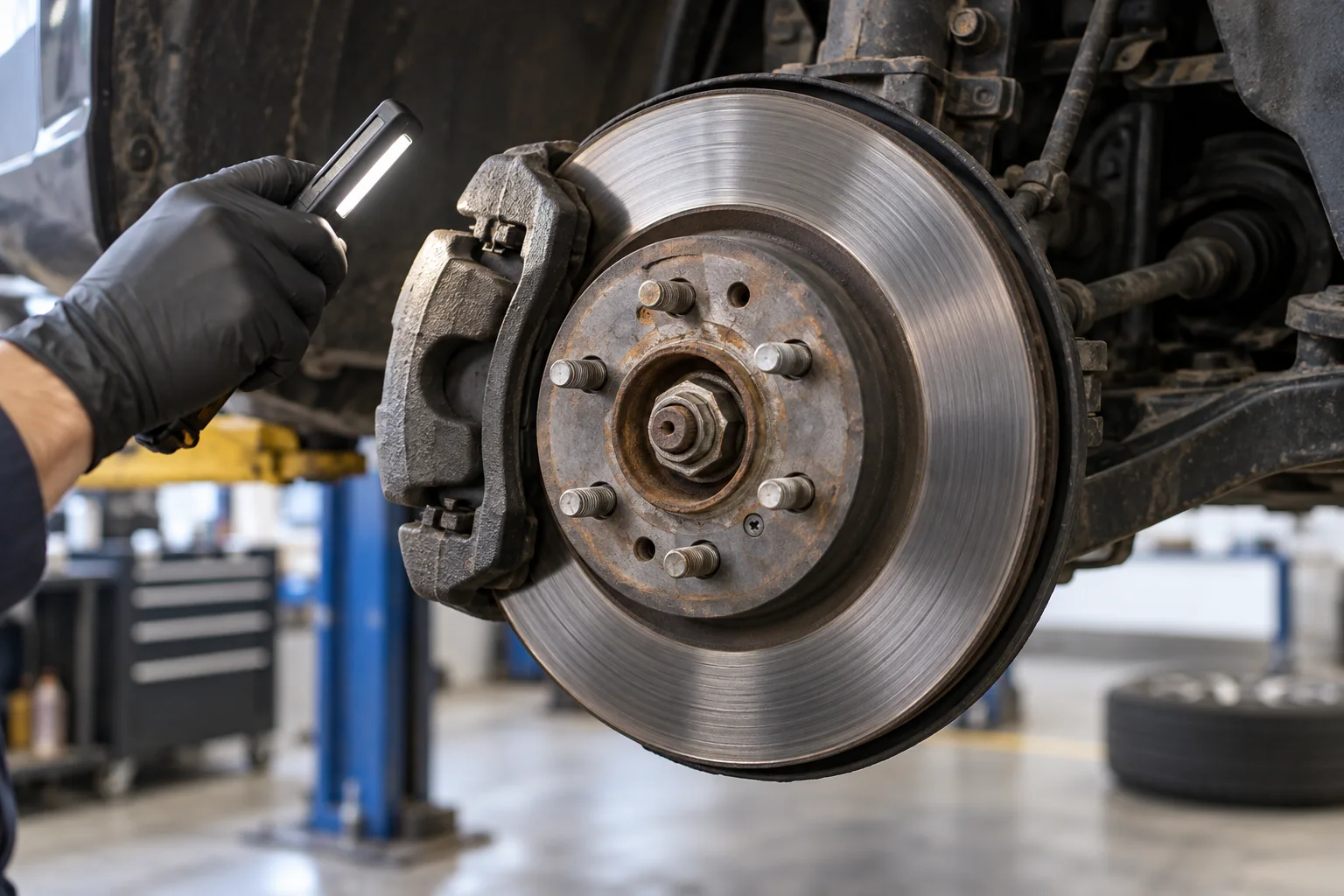
A persistent grinding noise when braking can mean a worn pad is rubbing its metal backing against a brake disc. Trapped debris, a rubbing shield or a sticking caliper can also cause scraping. Sound alone cannot identify the fault. If the grinding continues, stop somewhere safe and arrange an inspection before driving again.
The important distinction is between a brief surface scrape and an ongoing metallic grind. A normal-feeling pedal does not establish that the pads and discs are safe. This guide explains what changes the next step, what a workshop should check and when replacing parts is justified.
When should you stop driving?
Persistent metal-to-metal grinding needs prompt attention. If you are already moving, slow smoothly, leave room around the car and reach a safe stopping place. Do not make extra journeys to see whether the noise gets worse.
Arrange recovery rather than driving to the workshop if grinding is ongoing, braking feels weaker, the pedal becomes soft or sinks, the car pulls strongly under braking, or there is smoke, a burning smell or a red brake warning. Follow any stop instruction displayed by the vehicle.
A warning light is not a prerequisite for worn brakes — not every pad has an electronic wear sensor. Conversely, a warning message can concern fluid, the parking brake or another fault. Tell the workshop the exact message instead of assuming it confirms pad wear.
Do not touch a suspect hot wheel or disc, pour water over it, or spray lubricant into the brakes. There is no reliable “safe distance” to drive with grinding brakes. Call from a safe location and discuss inspection and transport arrangements.
What does the noise pattern tell you?
The timing helps direct an inspection, but it does not confirm a diagnosis. Describe what you noticed during normal driving. There is no need to reproduce the sound with hard braking or a separate test drive.
| What you noticed | Possible explanation | Useful next step |
|---|---|---|
| Heavy metallic grinding as the pedal is pressed | Very worn pads or damaged disc surfaces | Stop safely. Arrange inspection and discuss recovery. |
| A light scrape after parking in damp conditions or washing | A temporary surface film on a steel disc | It should be brief. Persistent noise, changed braking or uncertainty needs inspection. |
| Scraping while rolling, including with the pedal released | A rubbing shield, trapped debris, dragging brake or another rotating component | Have the wheel and brake assembly checked. Do not assume new pads will fix it. |
| Noise beginning immediately after brake or wheel work | Fitment, hardware or clearance needs checking | Contact the workshop that did the work before further travel. |
Ford distinguishes occasional brake noise from continuous grinding, which can indicate worn lining and requires a check. That distinction is useful, but a sound recording cannot establish remaining pad thickness or disc condition.
What can cause grinding when braking?
Worn pads contacting the disc
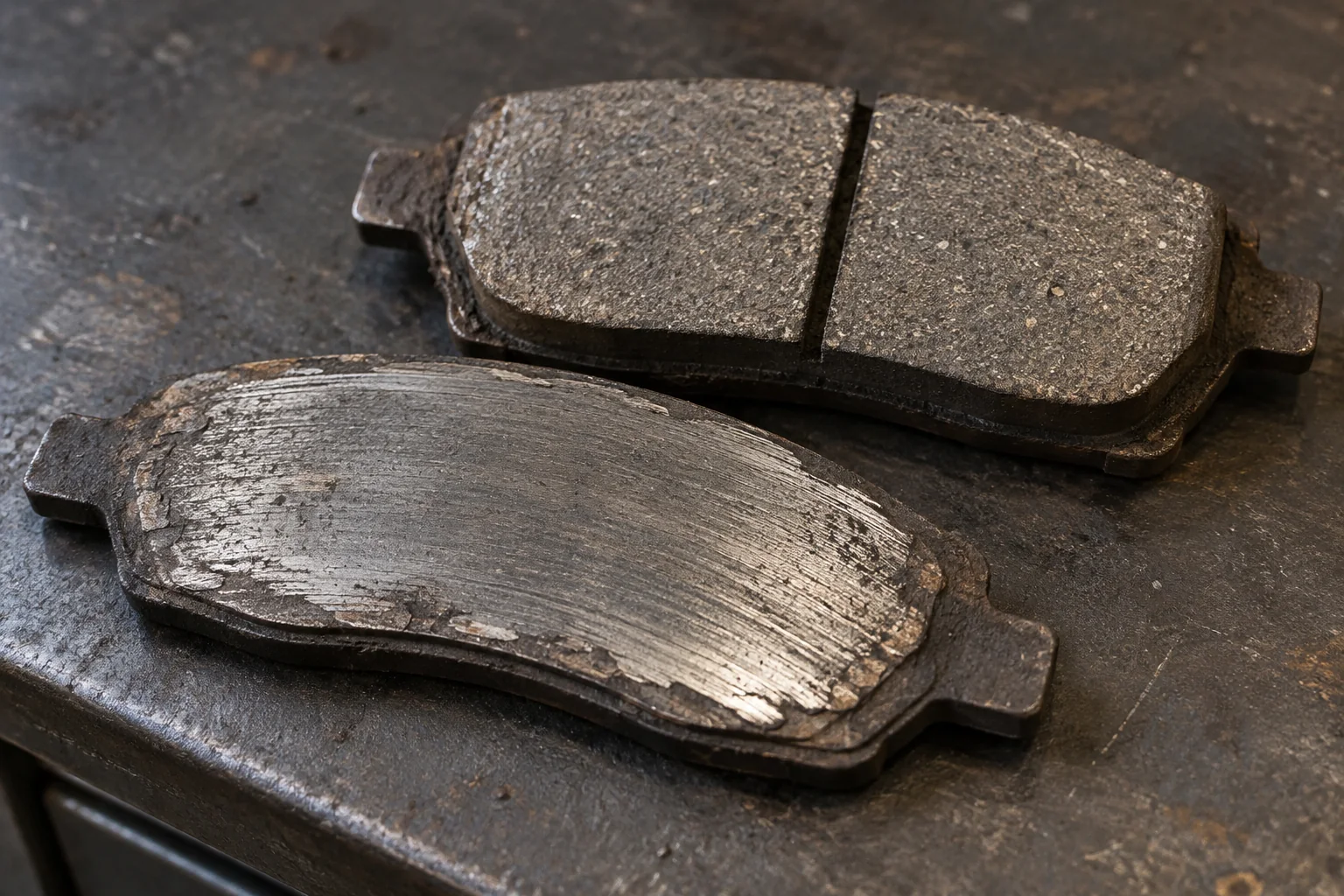
Brake pads have friction material attached to a backing plate. If that material wears away, the backing can contact and score the disc. This can reduce braking performance. It is more serious than an occasional squeal.
One visible outer pad can look acceptable while an inner pad is much thinner. Ask for the condition of both pads at each wheel, rather than relying on a photograph taken through the alloy wheel.
A dragging caliper or uneven pad wear
A caliper presses the pads against the disc. If its sliding mechanism or piston does not move correctly, a pad may remain in contact and wear unevenly. Replacing the worn pad without addressing the restriction can leave the cause unresolved.
HELLA’s guide to floating-caliper slide pins explains why their condition and correct servicing matter. The workshop also needs to distinguish a mechanical restriction from a hydraulic fault before choosing the repair.
Debris, a shield or fitting hardware
A small object trapped near the disc or a backing shield rubbing against it can produce a scrape. Incorrectly positioned clips or other hardware can also create contact. These faults may need removal or adjustment rather than replacement of otherwise serviceable discs and pads.
Leave that distinction to an inspection. Reaching behind a wheel, bending a shield blindly or applying grease to silence a noise can cause injury or contaminate the braking surfaces.
Rear drums and parking-brake shoes
Some vehicles use rear drum brakes or separate shoes for the parking brake. The inspection needs to identify that arrangement rather than assume every scraping sound comes from disc pads. Worn shoe linings, damaged springs, a seized cylinder or a parking brake that does not release properly need their own checks. HELLA’s drum-brake maintenance guide identifies these components and faults. Replacing disc pads alone will not address a separate shoe or drum problem.
A damaged disc or a fault after recent work
Disc damage, severe wear and fitment problems can create noise. Ferodo’s disc troubleshooting reference links metal-backing contact to grooving and grinding, and shows why the caliper and installation also need attention.
Tell the technician if the sound started after pads, discs, tyres or a wheel were replaced. Give the invoice and mileage since that work. Do not dismiss heavy grinding as normal bedding-in, and do not authorise another pad set solely because it is the easiest part to replace.
What should the brake inspection establish?
A useful inspection identifies the source of contact and records whether the affected parts remain within the vehicle’s limits. Mechanics’ brake repair service covers the wider assessment when the fault involves more than pad wear.
- Check the complete axle. Inspect inner and outer pads, both disc faces, calipers, hardware and shields. An outer pad alone is an incomplete view.
- Measure the discs. Compare measurements with the applicable manufacturer limit. A visible lip or a finger run over the surface cannot establish usable thickness.
- Find the cause of uneven wear. Check movement and condition of the relevant caliper components. Investigate hydraulic restriction where findings justify it.
- Investigate associated symptoms. Judder may require disc thickness-variation, runout and hub checks. Pedal changes, leaks or warning messages require their own diagnosis.
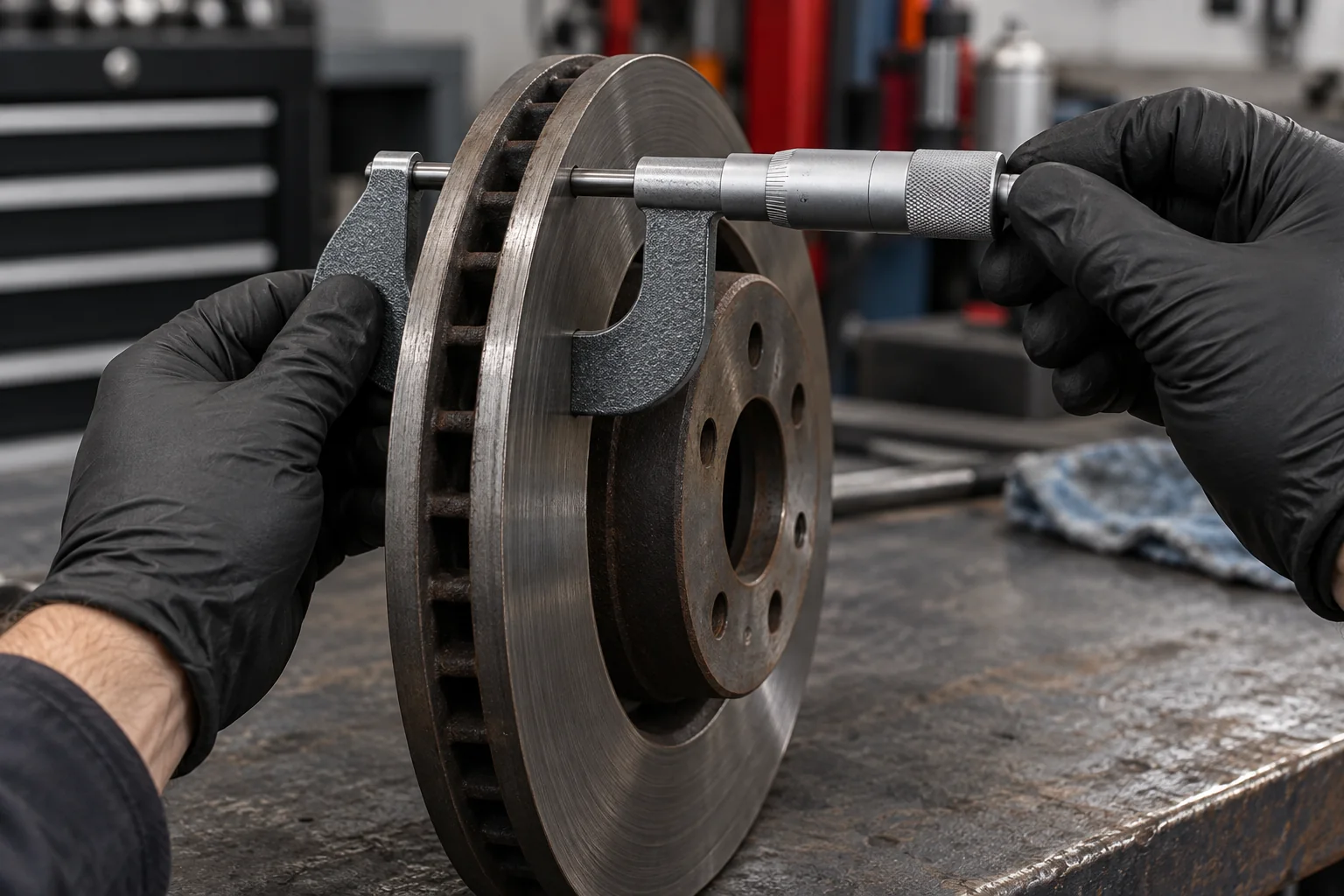
Brembo explains the disc’s MIN TH marking and the need to measure at several positions. There is no single minimum thickness that applies to every car. Machining is only an option where the vehicle and disc manufacturer permit it and all relevant limits can still be met. It is not the default answer to grinding.
Before approving work, ask to see the damaged contact area, pad measurements and disc findings. The quote should identify the axle, selected parts, any additional fault and what will be checked after assembly. Photos support the explanation. Measurements support the replacement decision.
Which repairs might be needed?
Brake pad replacement may be sufficient when the discs are serviceable, the correct pads are fitted and the calipers operate properly. Pads are replaced as a set across the affected axle. A grinding noise does not automatically mean all four wheels need new brakes.
Discs damaged beyond permitted limits need replacement, with the corresponding axle pair and pad requirements followed. A shield-contact or debris problem may instead need a smaller correction, provided the friction components have not been damaged.
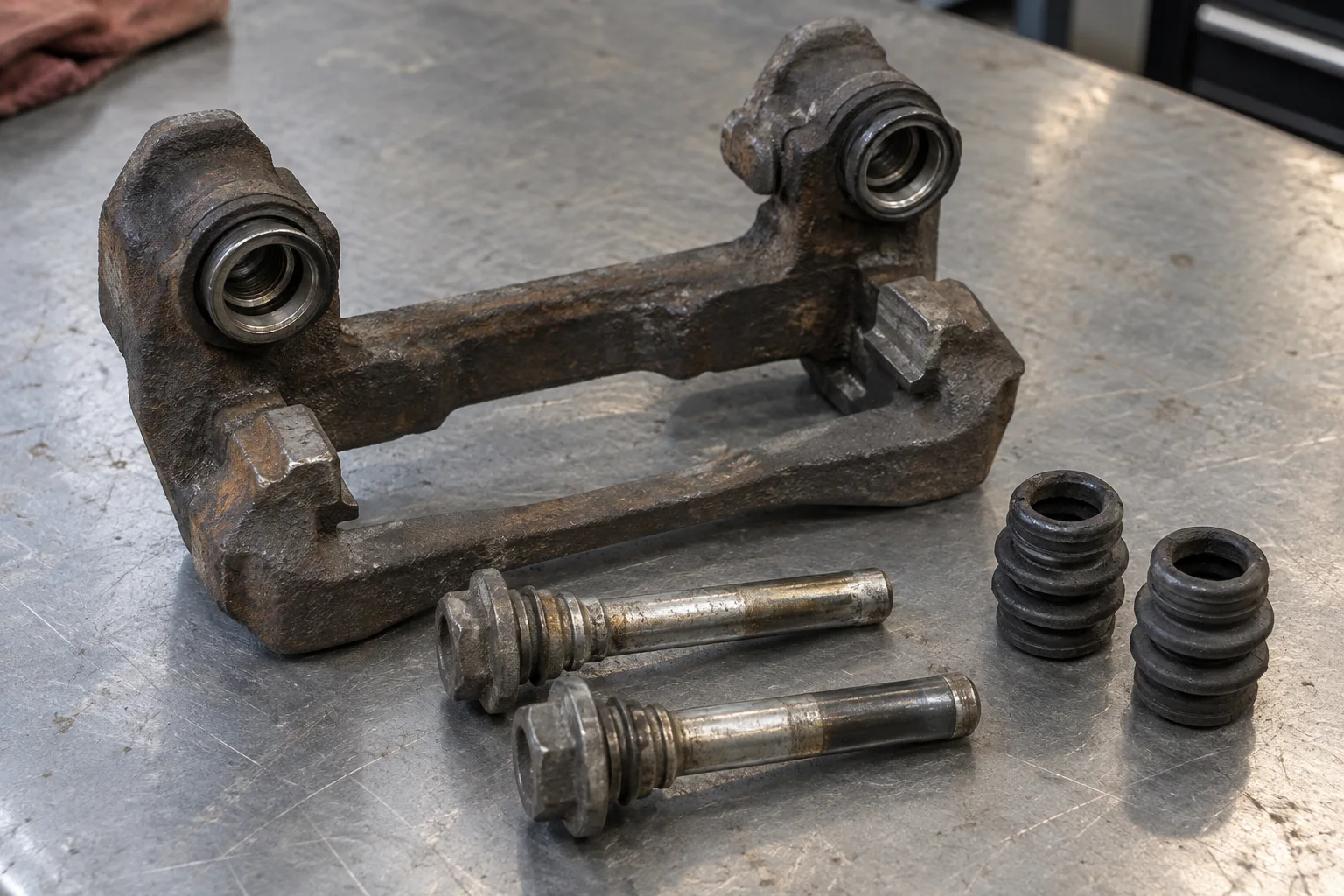
A caliper fault may require appropriate servicing or replacement, depending on the component and damage. Brake-fluid replacement is a separate decision based on the vehicle’s maintenance requirements or necessary hydraulic work. It is not an automatic cure for friction grinding.
After the work, the technician should confirm correct operation and carry out the required safety checks. Follow the specific pad and vehicle bedding instructions supplied with the repair. If grinding remains or braking feels abnormal, contact the workshop rather than trying harder braking to “bed it out”.
What could the work cost in Dubai?
Use these planning ranges for conventional brakes, consistent with Mechanics’ current brake-service pages. They are estimates, not a fixed tariff or a diagnosis of your car.
| Work | Planning range, including 5% VAT | Scope and exclusions |
|---|---|---|
| Standard pads fitted | AED 265–850 per axle | Pads at both wheels on one axle and routine fitting. Discs, sensors and additional faults are separate. |
| Conventional steel discs and pads | AED 840–2,100 per axle | A pair of steel discs, matching pads and routine fitting. Specialist performance and carbon-ceramic systems are excluded. |
| Caliper, hydraulic or other fault | Quote after diagnosis | The failed component, permitted repair and additional investigation determine the price. |
The initial brake inspection is free. Any further diagnostic charge should be agreed separately. Ask for an itemised quote covering parts, labour, wear sensors, additional work and VAT. Front and rear prices can differ on the same car. Confirm the written warranty and its exclusions for the quoted work. There is no universal warranty period for every brake component.
How long could the work take?
Straightforward pad or disc work may be completed within one working day when the correct parts are available, consistent with the brake-service guidance. Seized components, hydraulic faults, extra diagnosis or parts ordered for the vehicle can extend the stay. Ask Mechanics to confirm the inspection slot, parts availability and expected collection time before booking. A same-day allowance is not a promise for every grinding-noise repair.
Other questions about brake grinding
Why does it grind when reversing but not going forward?
Changing direction changes how components load against their supports. Hardware, clearances or surface contact may be involved, but the direction alone does not prove the cause. Report whether the pedal was applied and whether the sound began after recent work. Persistent metallic grinding still needs inspection.
Can new pads grind against old discs?
New pads can be fitted to serviceable discs when permitted. Old discs are not automatically unsuitable, but existing damage, incorrect fitment or another fault can cause noise. Heavy grinding after replacement needs checking. It should not simply be accepted as bedding-in.
Can an electric car have rusty or noisy brakes?
Yes. Regenerative braking does not remove the need to inspect the friction brakes. The Tesla Model 3 manual discusses disc corrosion despite regenerative braking. Follow the maintenance instructions for the exact vehicle. Persistent grinding should be checked before attempting a cleaning or burnishing procedure.
Can I send a recording for diagnosis?
A recording can help describe a sound already noticed, but it cannot show inner-pad wear, disc thickness or a hydraulic fault. Do not record while driving or make another journey to capture it. Send existing recordings with the vehicle details and any warning message.
Describe the grinding before you travel
Contact Mechanics in Al Quoz, Dubai with the make, model, year and when the noise happens. Mention pedal changes, warning messages and recent brake work. Call before travelling if the grinding is ongoing so inspection and recovery arrangements can be discussed.