In this guide
A musty car AC smell often comes from moisture and contamination around the evaporator, cabin filter or drainage system. Car AC smell removal starts with finding the source — a filter change, clearing a drainage fault, suitable evaporator treatment or drying a wet interior may be appropriate. A gas refill or perfume does not solve all of these problems. Burning, fuel, exhaust or sweet chemical smells need a different assessment.
When a smell needs prompt attention
Stop safely for smoke, a strong burning or fuel smell, or exhaust fumes inside the car. Switch the vehicle off when safely parked, get occupants away from the affected cabin, and arrange assistance. Do not keep running the fan to investigate smoke or drive with exhaust fumes entering the cabin.
A sweet smell with coolant loss, misting glass, a wet footwell or an overheating warning needs prompt inspection. Do not open a hot coolant reservoir. A mild musty smell without those warning signs is usually a workshop booking issue rather than a reason to replace the whole AC system immediately.
Ford’s exhaust-fume safety guidance specifically warns against driving when exhaust fumes are smelled inside the vehicle. Switching to recirculation is not a repair for an exhaust leak.
For a persistent smell, use car AC repair at Mechanics to arrange the appropriate checks. Describe the timing, airflow and any damp carpet so the inspection starts with the right symptoms.
What the smell and timing can tell you
Use the description to guide an inspection, not to diagnose a failed part. Several sources can produce similar smells, and air from elsewhere in the car can emerge through the vents.
Scroll the comparison sideways on smaller screens.
| What you notice | What to investigate | Useful next step |
|---|---|---|
| Musty or damp at startup | Moisture around the evaporator, a damp filter or retained cabin odours. | Record how long it lasts and whether the interior also smells with the fan off. |
| Sour or vinegar-like | Damp contamination, retained smells or a non-AC source such as a spill. | Check the filter area, drainage and cabin condition. The smell alone cannot identify an organism. |
| Rotten or decomposing | Leaves, organic debris or another hidden source near an intake or inside the cabin. | Locate and remove the source before applying deodoriser. |
| Sweet or chemical | Coolant/heater-system leakage, spilled products or other chemical contamination. | Mention coolant loss, wet carpet and window misting. Do not identify a refrigerant leak by smell. |
| Burning, fuel or exhaust | An electrical, mechanical, fuel or exhaust problem that may be outside the HVAC system. | Stop safely for strong or persistent fumes, smoke or burning and arrange assessment. |
Engine coolant and AC refrigerant are different fluids in separate circuits. In a conventional combustion-engine car, the heater core uses engine coolant. The evaporator uses refrigerant. A sweet smell does not prove that the AC needs recharging.
Why the smell is strongest when you first switch on
The evaporator is the cold heat exchanger inside the heating, ventilation and air-conditioning housing, usually behind the dashboard. Moisture from the air condenses on its surface during cooling. That water should leave through the condensate drain, but the surface can remain damp after a journey.
Dust, pollen and other material can collect around the filter, intake and evaporator. Moisture and retained contamination can contribute to odour when airflow starts again. A brief startup smell does not, by itself, establish extensive mould growth or a refrigerant leak.
Smells from food, pets, smoke, fragrance and damp carpets can also be retained by the ventilation system. Toyota’s HVAC odour bulletin for specified Scion models describes both internal and external odour sources accumulating in the system. Its treatment and maintenance instructions apply to those vehicles, not every car in Dubai.
Humidity changes how much condensation forms. Dust exposure changes what collects at the intake and filter. These are useful UAE considerations, but there is no single cleaning interval or filter mileage that suits every vehicle.
What you can check before booking
- Describe the timing. Is it present before starting, only with the fan, during cooling, after rain or after the car has stood overnight? Note any weak airflow or loss of cooling.
- Check the cabin for dampness. Lift removable mats and look for wet carpet, spills or damp items. Do not assume a wet passenger footwell must be AC drainage. Rainwater entry and heater-system leaks also need consideration.
- Look at accessible intake areas. Remove loose leaves from an accessible windscreen-cowl area without removing covers or pushing debris down into the intake.
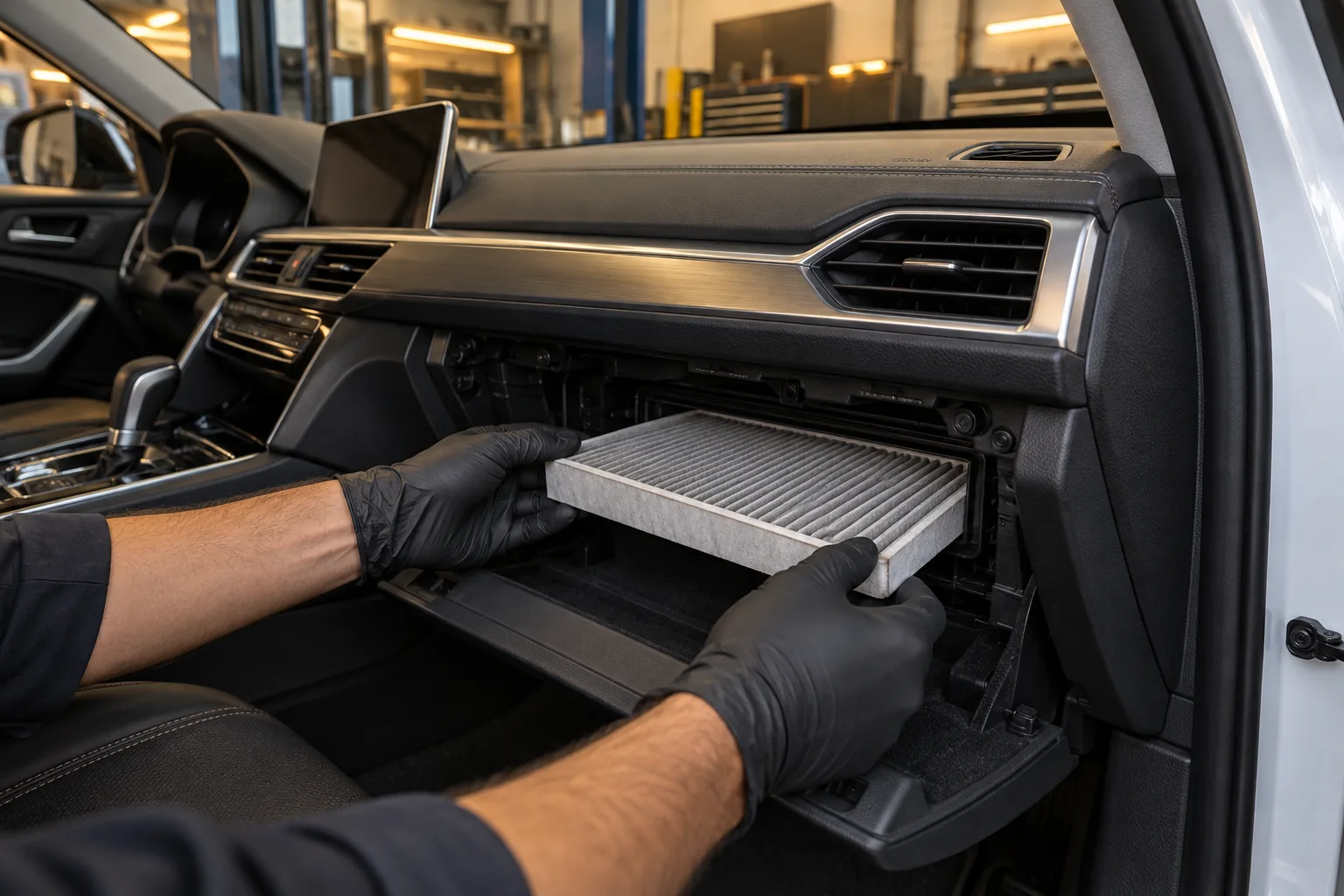
- Check the service record. Find when the cabin filter was last changed and which type was fitted. Inspect or replace it yourself only where the owner’s instructions provide straightforward access.
Do not spray household disinfectant into vents, drill an access hole, force wire up a drain or use unrestricted compressed air. The correct access point and cleaning method depend on the vehicle. Electrical equipment, fragile fins and the HVAC casing can be damaged by an unsuitable approach.
Fix the source rather than covering the smell
Check the cabin filter and its housing
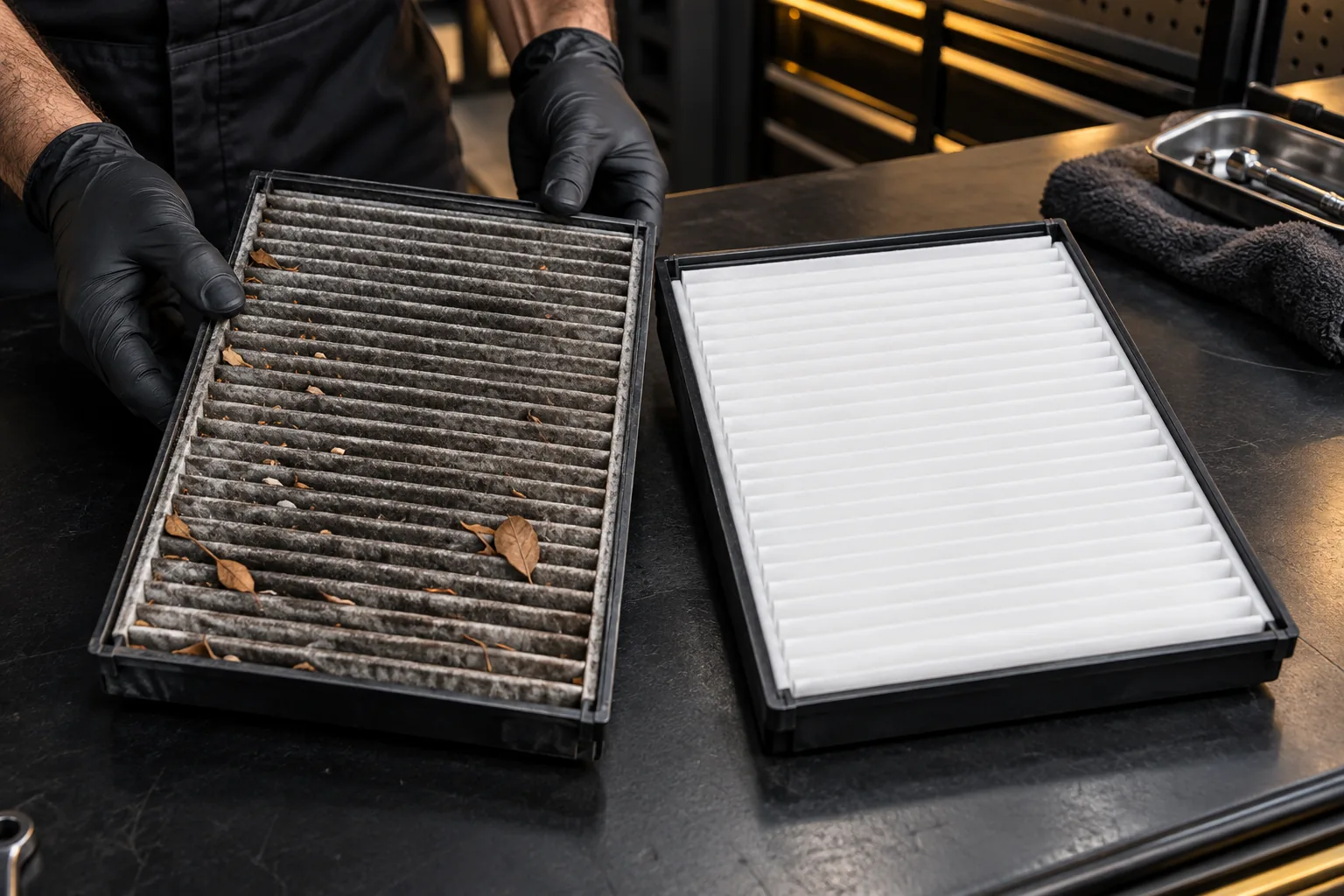
A loaded, damp or contaminated cabin filter can contribute to smell and restricted airflow. Inspection should include debris in the housing, the cover seal and correct installation. Some cars have more than one element or a filter in a less accessible location.
A compatible activated-carbon filter can reduce some odours entering with the air. MANN-FILTER’s cabin-filter overview explains the different filter options. The engine air filter serves the engine intake. It is not a substitute for the passenger-compartment filter. Changing both automatically is not an odour diagnosis.
Use the correct element and airflow orientation. Follow the vehicle’s maintenance guidance and adjust inspection to actual dust exposure and condition. A universal “replace every 8,000–10,000 km” rule should not override the instructions for your car.
Assess the evaporator before deciding on cleaning or replacement
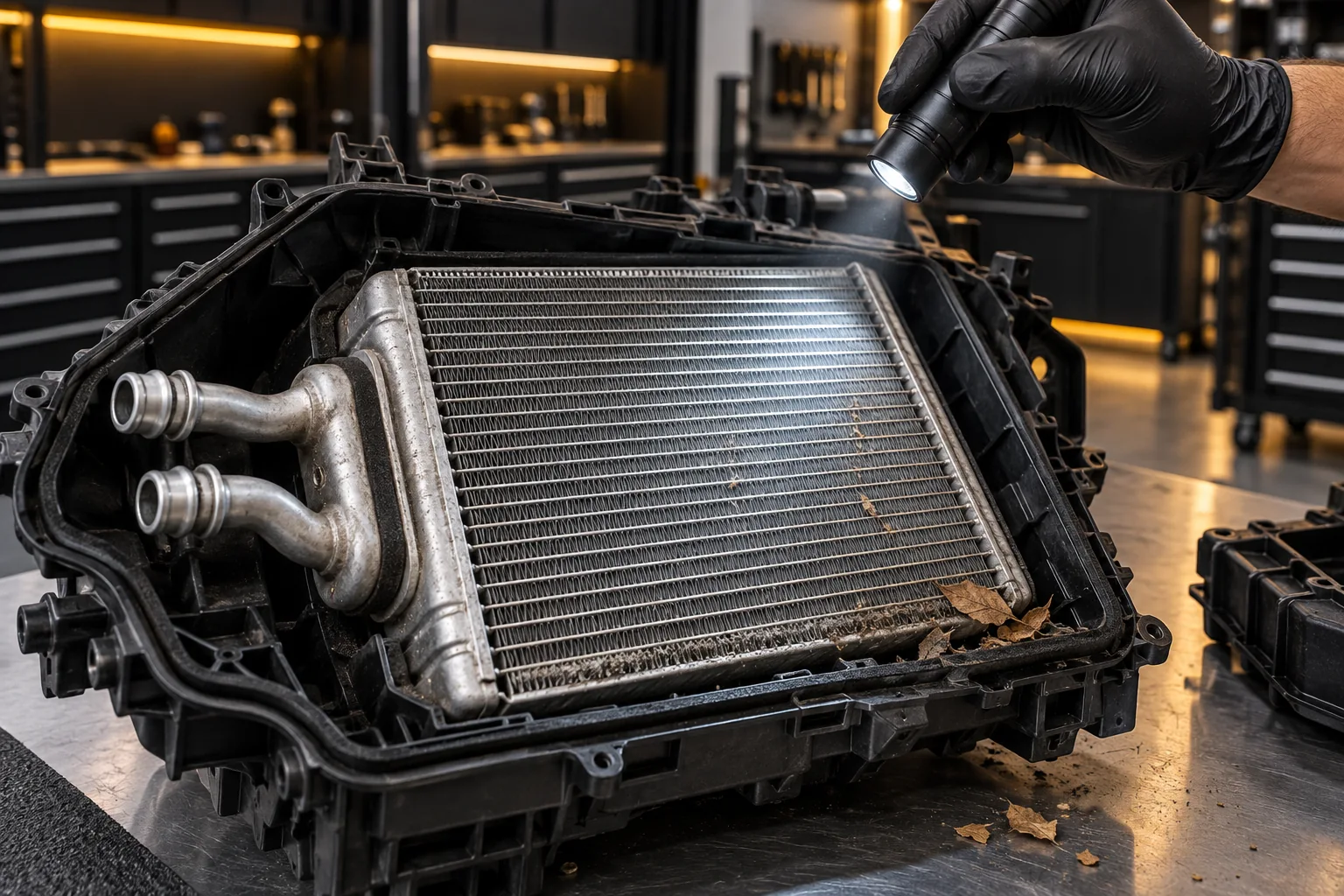
When the odour points to the evaporator area, the inspection should consider contamination, drainage and other moisture sources before treatment. Cleaning products have specific application, contact-time, ventilation and re-entry requirements. A pleasant smell from the vents does not confirm that the source has been reached.
Some vehicles permit treatment through a defined service route. Others need additional access. There is no universal instruction to spray cleaner under the dashboard, run the blower at maximum, or fill the vents with foam. The current vehicle repair procedure and compatible product instructions take priority.
Audi’s published odour bulletin, for example, calls for checking drain flow, cabin water entry, plenum drains and filter condition before its specified treatment. It illustrates why cleaning should follow assessment rather than replace it.
Smell alone is not a reason to replace the evaporator. Replacement needs a finding such as a confirmed leak or damage that makes the proposed repair appropriate. If that is the outcome, see the AC evaporator repair and replacement page for the component job and ask for a vehicle-specific scope.
Confirm where the water is going
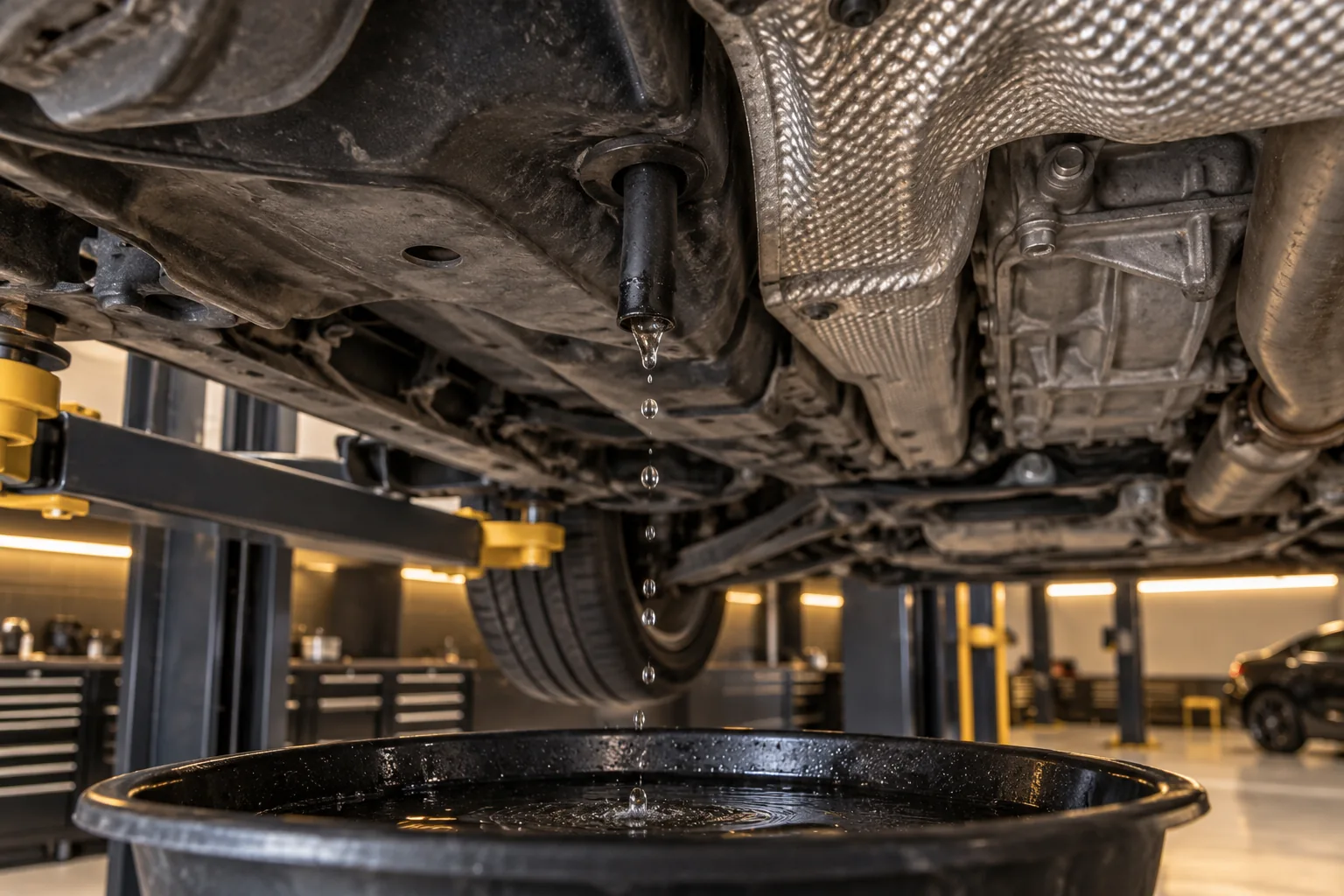
Clear water beneath a car after AC use can be normal condensation. A wet interior, sloshing or persistent damp smell deserves a drainage and water-entry check. The location of the drain outlet varies, so a dry patch of ground under the passenger side does not prove a blockage.
Humidity, operating time and vehicle design affect visible dripping. A workshop should identify the correct outlet and inspect it using the vehicle procedure, then confirm drainage after the work. Drying carpet and underlay may be necessary if water has already entered the cabin.
Remove spills, debris and water-entry sources
If the car smells before the fan runs, inspect beyond the AC. Damp underlay, luggage, a spill, an intake full of leaves or an inaccessible organic source may need targeted attention. Cleaning the visible top of a mat cannot dry wet padding underneath it.
Stop continuing water entry before drying the affected carpet and underlay. Keep photographs and tell the workshop whether the smell follows rain, washing or a recent interior clean.
What affects car AC smell-removal cost?
A simple filter job and a dashboard-access repair have very different costs. The current car AC repair service gives an indicative AED 105–315 cabin-filter replacement budget per vehicle, including a 5% VAT allowance, for one suitable filter and routine fitting. It is a planning estimate, not a fixed Mechanics offer. Multiple filters, specialist elements and restricted access can change the total.
For straightforward evaporator and vent disinfection through an approved, accessible service route, use from about AED 160 including VAT as an initial labour budget. This is a rounded planning starting point, not a Mechanics price or a ceiling. It excludes treatment materials where charged separately, a replacement filter, dismantling, fault diagnosis, leak repairs and interior drying unless expressly included.
Drain work, a wet interior or dashboard access needs a separate quote for the car and findings. A cleaning price should name the areas actually reached and the method being used.
Allow time for diagnosis and drying
A straightforward treatment may take around 45–60 minutes once the source, access and method are agreed. Inspection, product contact time, ventilation and any filter work can extend the visit. Wet underlay, water-entry repairs or dashboard removal can need substantially longer. Ask Mechanics for the expected collection time and re-entry instructions before leaving the car.
- Inspection and access
- Which checks are included, what needs extra diagnosis and whether trim or other parts must be removed.
- Cleaning and replacement
- The source being treated, the chosen method, filter specification and any component replacement supported by findings.
- Collection and aftercare
- Required ventilation, drying, re-entry guidance and the expected stay for the agreed work.
- Price and warranty
- The VAT-inclusive total, exclusions, any offered written cover and what happens if the same smell returns.
There is no universal warranty period or permanent odour-removal promise for every cause. A return of the smell should lead to reassessment of the original condition and any continuing source.
Will an AC gas refill remove the smell?
A refill corrects refrigerant charge. It does not remove a damp filter, clear a blocked condensate drain or dry wet carpet. If cooling is also weak, refrigerant performance may need separate testing. Tell the technician about both symptoms rather than booking a refill as a deodorising treatment.
Refrigerant leaks require the appropriate leak investigation and repair. Do not open service valves, use smell to locate a leak or add a universal gas can. Hybrid and electric cars can have additional thermal-management requirements.
What to check after the work
Ask what source was found, which areas were reached and whether any moisture or leak still needs attention. Confirm that the filter housing and removed trim have been refitted, that airflow and cooling remain satisfactory, and that any drainage fault was rechecked.
An odour can be intermittent. Compare the next startup after parking under similar conditions rather than judging only by a fresh treatment fragrance. Follow the product’s ventilation and re-entry instructions, and report a returning smell with its timing and any wet-carpet or cooling symptoms.
Reduce the chance of the smell returning
- Keep the interior dry. Remove wet towels and spills, and investigate recurring damp carpet.
- Inspect filters for actual conditions. Use the correct maintenance schedule and inspect sooner when exposure or contamination justifies it.
- Keep accessible intake areas clear. Remove loose leaves without disturbing covers, seals or drainage components.
- Follow the vehicle’s climate-control guidance. Where the manufacturer recommends a drying or fresh-air routine, use that advice. A brief fan-only period is not a guarantee of a dry evaporator.
- Keep records of repeat odour. Note whether it returns at startup, after rain or only in one ventilation mode, and whether a previous treatment changed it.
Some vehicles have a factory after-run drying function. Its availability and operation are model-specific. Do not add controls or wiring based on a generic online tip. Recirculation is useful in appropriate conditions, including dusty traffic, but it cannot repair contamination or water entry.
Ozone is not a routine DIY substitute for cleaning — it is a respiratory irritant, and an occupied cabin should not be exposed to ozone generation. The US EPA’s guidance on ozone air cleaners explains its health risks and limits. Any proposed treatment needs a compatible method and clear ventilation and re-entry instructions.
Questions about persistent AC smells
Why does it still smell after a new cabin filter?
The filter may have been only one source. Check whether the evaporator, intake, drainage or damp interior still needs attention. Also confirm that the replacement fits correctly and that its housing was inspected.
Does a musty smell prove there is dangerous mould?
No. Smell alone cannot identify the organism, extent or cause. Persistent moisture should be investigated. If the air makes an occupant unwell, stop exposure and seek appropriate medical advice rather than relying on a deodoriser.
Can cleaning be done without removing the dashboard?
Sometimes, depending on the vehicle, approved access and treatment. Ask what can actually be reached. Dashboard removal should follow a justified access or repair need, not be assumed for every smell.
Why is the smell different on fresh air and recirculation?
The settings change the air source. A difference can help the technician investigate outside intake contamination, retained cabin smells or the HVAC path. It does not identify one failed part on its own.
Does a cold AC mean everything is working properly?
No. The refrigerant circuit can cool while the filter, drainage or cabin has an odour problem. Cooling performance and the smell need separate checks, then verification of the agreed work.
Arrange an AC smell check
Send your car’s make, model and year, describe the smell, and mention wet carpet, weak cooling or any warning light. Mechanics in Al Quoz can discuss the appropriate inspection and confirm the work and charges before booking.
Technical references
Manufacturer bulletins linked here describe the vehicles and procedures in their own scope. Current vehicle repair information takes priority. Sources reviewed on 16 October 2026.