In this guide
Rapid AC compressor cycling can result from an incorrect refrigerant charge, poor condenser airflow, a pressure or temperature signal problem, or a fault in its drive or controls. Some cycling is normal on clutch-equipped systems. A repeated change accompanied by weak cooling, unusual noise or a new loss of comfort needs diagnosis rather than an automatic gas refill or compressor replacement.
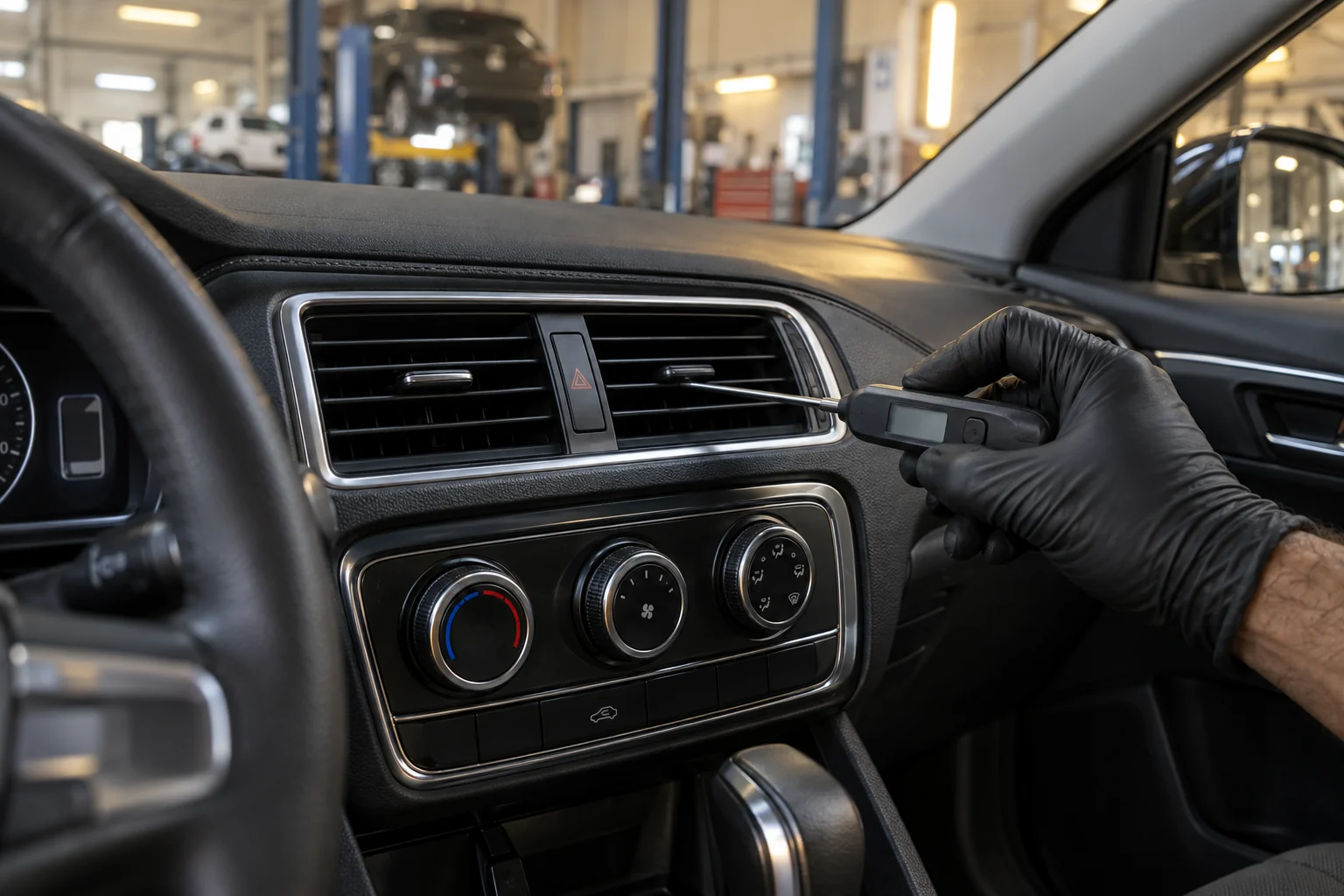
Start with what happens at the vents. Does the air turn warm while the blower keeps running, or does the airflow itself fade? Does it happen only in traffic, after the car warms up or straight after an AC service? These differences help identify the next test.
When is AC compressor cycling normal?
Repeated, unexpectedly brief clutch on and off periods are often called car AC short cycling. There is no universal number of seconds or minutes that defines normal operation for every car. Compressor design, outside temperature, humidity, engine speed, blower setting and cooling demand all affect operation. Applying a home AC cycle-time rule to a vehicle can lead to the wrong diagnosis.
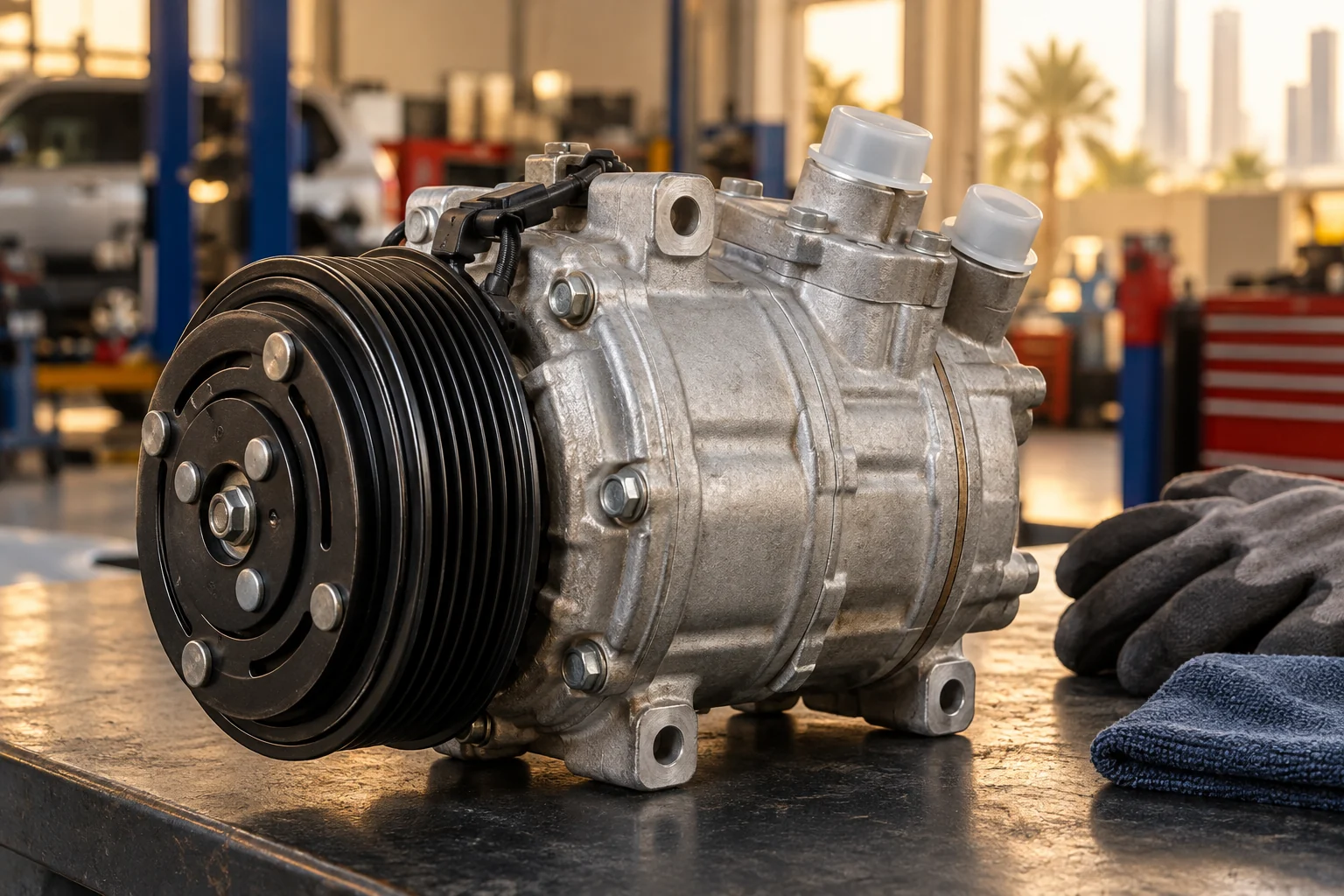
A compressor with a clutch
On a conventional clutch-equipped system, the belt can keep turning the outer pulley while the clutch connects or disconnects the compressor drive. Switching may be part of normal temperature or pressure control. A click alone does not establish a failure.
A variable or electric compressor
A variable-displacement compressor can adjust its pumping output, and some versions have no cycling clutch. An electric compressor has its own motor. Neither should be judged by watching for the same clutch pattern as an older belt-driven system.
Brief AC interruptions can also be commanded by vehicle control strategies. Ask whether the observed behaviour is expected for the exact model. If cooling stays comfortable and the pattern has not changed, monitoring may be enough. Persistent warm pulses or repeated disengagement under steady conditions deserve a check.
Can you keep driving when the AC keeps cutting out?
A cooling complaint without other symptoms usually calls for an appointment rather than an assumption that the car is about to fail. Switch the AC off if engaging it produces severe noise or a burning smell. Do not keep switching it on to test whether the noise returns.
Stop safely for warnings beyond cabin cooling
Smoke, a damaged or distressed belt, an engine temperature warning or an electrical warning with worsening symptoms needs prompt attention. Stop safely, follow the handbook and discuss recovery if continued driving may cause damage. Turning the AC off does not make a seized pulley or engine cooling fault safe.
Plan around the heat too. If the cabin cannot stay comfortable, arrange alternative transport, especially for children or vulnerable passengers. Never leave anyone waiting in a hot parked car. Do not investigate moving belts or fans with the vehicle running. Electric fans may start unexpectedly.
Common causes of rapid AC compressor cycling
Low refrigerant or an incorrect charge
A loss of refrigerant can cause pressure conditions that limit or interrupt compressor operation. A leak, incorrect previous filling or another circuit problem needs investigation. The timing of the clicks cannot tell you how much refrigerant remains.
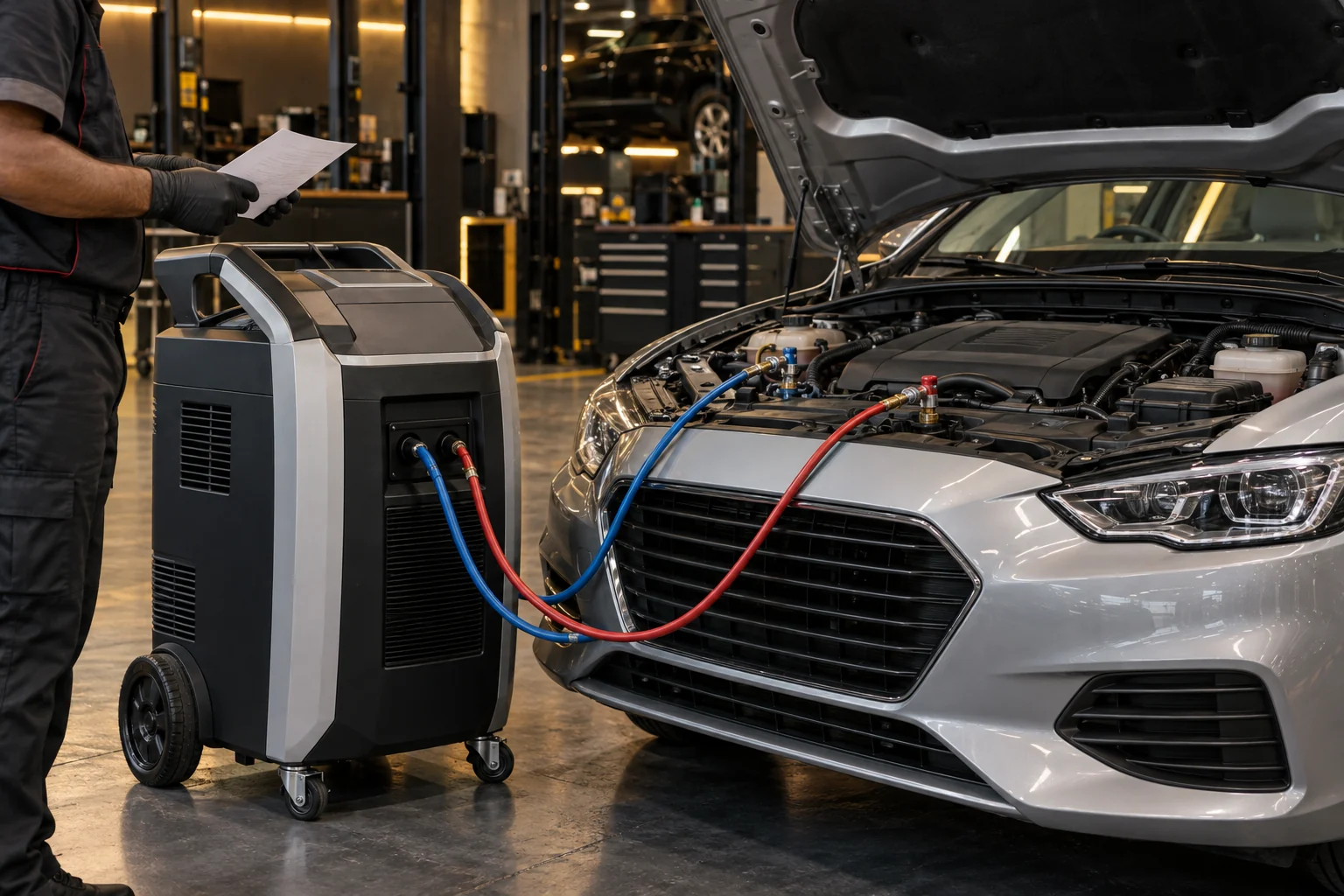
Adding gas without establishing the existing charge can overfill the system. A recent recharge is useful history, not proof that the charge is correct. The workshop should identify the specified refrigerant and charge weight, then agree the appropriate recovery, leak investigation and charging work. A seal or accessible connection repair may solve the underlying loss without replacing the compressor.
Insufficient airflow through the condenser
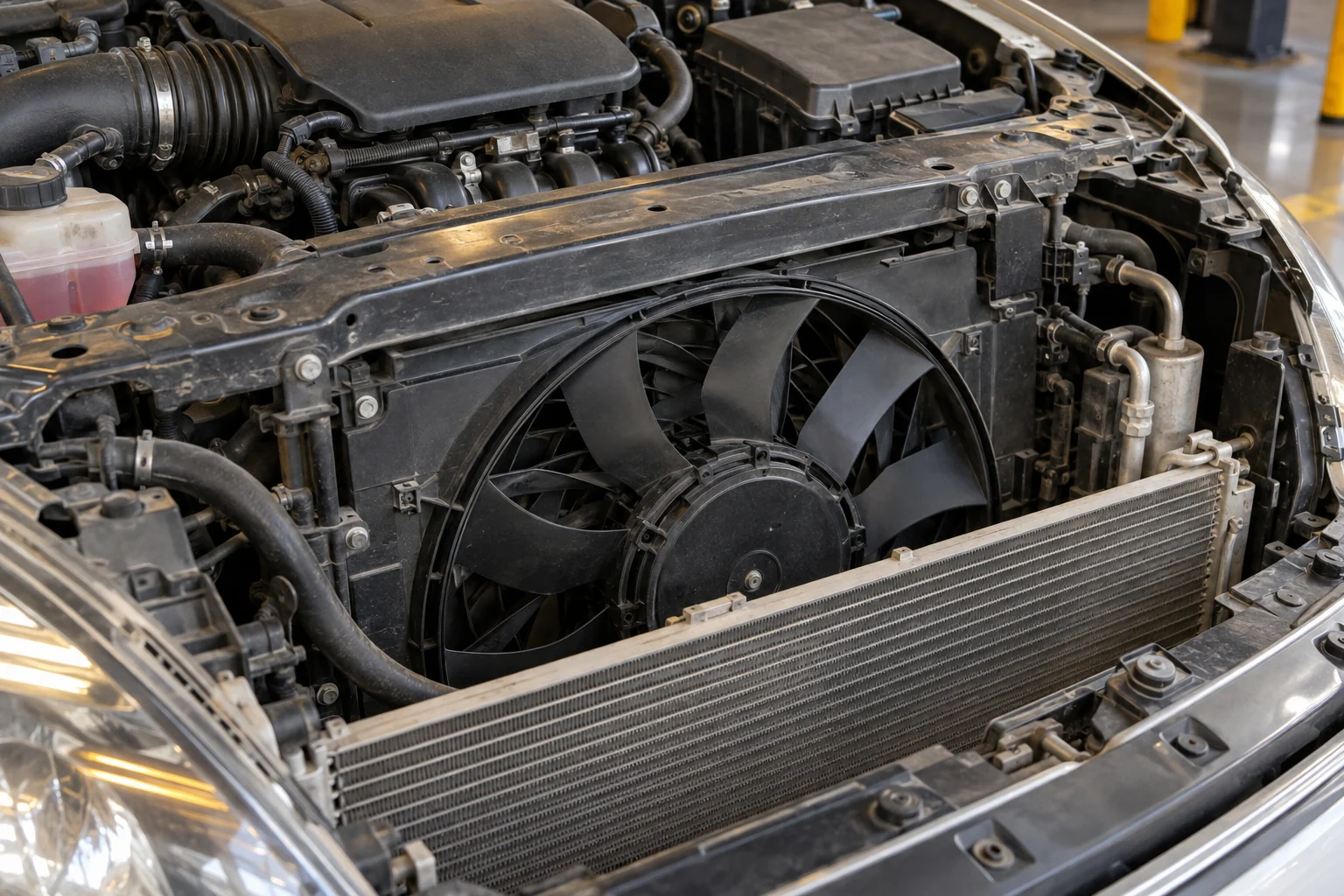
The condenser releases heat outside the cabin. A fan fault, obstructed fins or an airflow problem can impair that heat rejection and produce an abnormal pressure condition. This is particularly relevant when cooling deteriorates at idle but improves once the car is moving.
Dubai heat and slow traffic increase the importance of effective heat rejection. Dust can obstruct the heat exchanger, but dirty-looking fins do not prove the cause. Fan commands, actual fan operation and pressure behaviour need to be checked together. A fan circuit repair may be the appropriate job rather than a new compressor.
A pressure sensor, temperature sensor or wiring problem
Pressure and temperature information helps the vehicle decide how the AC should operate. An implausible signal, poor connection or wiring fault can interfere with that decision. However, a protective shutdown can also be a correct response to a real pressure problem.
A sensor-related code does not automatically prove that the sensor itself needs replacing. Its supply, wiring and reported values need assessment. Replacing a pressure sensor while leaving an overcharge or fan fault unresolved can leave the original complaint unchanged.
A clutch or electrical supply fault
On clutch-equipped cars, the clutch coil, specified air gap, relay where fitted, connections and electrical supply may need testing. A temperature-dependent electrical fault can explain why operation changes after the engine bay gets hot. Belt, tensioner or pulley problems can also create noise or poor drive.
The important distinction is whether the controller asked the compressor to stop or whether the drive failed to follow an on command. Those findings lead to different repairs. A relay click, engine-speed change or cooling-fan sound is not enough to identify which component is switching.
Evaporator icing or restricted cabin airflow
The evaporator is the cooling coil inside the cabin air unit. If airflow starts strong and then weakens while the blower still sounds busy, icing is one possibility. A restricted filter, blower issue or temperature-control problem may need assessment. Weak airflow by itself does not prove that the compressor is short cycling.
Keep the distinction between the two air paths clear. The cabin filter affects air entering the passenger compartment. The condenser and its fans manage heat outside it. Changing the cabin filter will not repair a failed condenser fan or correct excess refrigerant.
A restriction, control-valve fault or internal compressor problem
A refrigerant-flow restriction or a compressor output-control fault can also upset cooling. Internal damage is possible, but frequent switching alone does not establish it. Diagnosis should distinguish the command, drive and pumping response before a major part is condemned.
If internal damage has contaminated the circuit, the estimate may need additional components and appropriate cleaning. Not every component is suitable for flushing. Installing a compressor without addressing the original cause or contamination can leave the replacement at risk.
What you can check safely before booking
Record the symptom from inside the car with normal controls. Keep settings consistent while noting what changes. You do not need to open refrigerant connections, remove relays or put a phone near a running belt to provide useful information.
Swipe the table to compare all columns. Keyboard users can focus the table and use the arrow keys.
| What you notice | What to tell the workshop |
|---|---|
| Cold while moving, warm in traffic | Whether the blower stays strong and whether engine temperature remains normal |
| Strong airflow gradually fades | How long it takes and whether normal airflow returns after the AC has been off |
| Warm and cold pulses with steady airflow | The approximate pattern, climate settings and whether it occurs at idle as well as on the road |
| The fault began after service | The invoice, refrigerant work, parts replaced and any improvement before the symptom returned |
Check that the AC is selected, the temperature setting requests cooling and both zones are set alike where applicable. Note fresh-air or recirculation mode and fan speed. Automatic modes can change airflow normally. A simple settings correction may explain a complaint without any repair.
Do not bypass a pressure switch, bridge a relay or add refrigerant from a DIY can to stop the cycling. Pressure protection may be doing its job. Do not disconnect hybrid or EV compressor wiring. Refrigerant work and high-voltage systems require the correct equipment and procedures.
What a useful workshop diagnosis should establish
The technician should first reproduce the complaint under relevant conditions and identify the fitted AC system. A brief check on a cool engine may miss a fault that appears only after a hot drive. Ask what the initial inspection covers and which additional tests require approval.
The workshop should also check relevant manufacturer service bulletins before recommending parts. A model-specific procedure may change the test sequence or identify a known control issue.
- Operating conditions should include ambient conditions, climate settings, vent temperature and whether airflow changes.
- Control information can include available HVAC fault codes, compressor requests, pressure and temperature data. Scan coverage varies by vehicle.
- Physical and electrical checks should address fans, heat exchanger condition, relevant power supplies, connections and drive components.
- Refrigerant assessment should use the correct refrigerant, charge specification and applicable test procedure. Both sides of the circuit may need assessment during the symptom.
A single static pressure reading does not establish the correct refrigerant mass. Nor is one internet pressure range valid for every refrigerant, temperature and system design. Ask what the readings mean under the recorded test conditions and what evidence supports the proposed repair.
What might the repair cost in Dubai?
There is no single price for fixing rapid cycling because it is a symptom. Mechanics’ AC service page lists the following planning budgets per vehicle, including a 5% VAT allowance. They are estimates rather than fixed offers, and the rows describe separate work.
Swipe the table to compare all columns. Keyboard users can focus the table and use the arrow keys.
| Work | Planning budget | Scope to compare |
|---|---|---|
| R134a recharge | AED 160–420 | Routine recovery, evacuation, specified charge and cooling check. Leak repairs and parts are extra. |
| R1234yf recharge | AED 370–740 | Routine recharge work with the specified refrigerant. Unusual systems or larger quantities need a separate estimate. |
| Conventional compressor replacement | AED 1,260–4,725 | Compressor and routine fitting. Confirm recharge, oil balancing, supporting parts and contamination treatment separately. |
Dedicated diagnosis, fan or wiring repairs, pressure sensors and electric compressors need a vehicle-specific quote. The car AC repair service in Al Quoz explains the available work and its exclusions. Confirm the complete payable total, diagnostic charge, part specification and applicable warranty terms before approval.
Do not choose the most expensive row simply because the compressor keeps switching. A confirmed connection, fan or serviceable clutch fault may allow a smaller repair. Conversely, fitting a cheap compressor alone may be incomplete if the circuit is contaminated.
How to confirm the repair has worked
Ask for a repeat check under the conditions that originally caused the complaint. Cooling should remain appropriate, fan operation and relevant pressures should be satisfactory, and the explanation should identify any normal switching that remains. Success does not mean every compressor must run continuously.
Keep the findings and invoice, including refrigerant work and parts fitted. If the symptom returns, record when and how it happens rather than repeatedly topping up or clearing codes. Follow the vehicle’s filter and maintenance guidance. There is no universal need to recharge every few months or recalibrate AC sensors annually.
Questions about a compressor that keeps switching
Why does it cycle quickly when the cabin is already cold?
Lower cooling demand can change normal control behaviour on some systems. If comfort is maintained and nothing else has changed, that may be expected. There is no universal cycle interval. Persistent warm pulses or a new noise still needs investigation.
Will turning the AC off and on reset the problem?
A temporary improvement does not confirm a repair. It can change the conditions or allow a temperature-related fault to disappear briefly. Tell the workshop what changed rather than repeatedly restarting an AC that makes severe noise.
Is water dripping under the car a refrigerant leak?
Clear water after AC use is commonly condensate leaving the evaporator drain. It does not establish a refrigerant leak. Oily residue, unusual fluid, wet cabin carpet or continuing cooling loss needs the appropriate inspection.
Can an electric car have the same symptom?
Cooling can vary on an EV, but its compressor and thermal-management controls differ from a conventional clutch system. Send the exact model and any warnings before booking. A cabin cooling complaint should not be used to diagnose high-voltage equipment by sight or sound.
Describe the pattern before choosing a repair
Tell Mechanics your model, year, whether airflow stays strong and when the air turns warm. The Al Quoz team can confirm the initial check, charge and appointment. Mention severe noise, belt symptoms or temperature warnings before travelling.
Technical references
DENSO’s AC troubleshooting guidance explains diagnosis and confirmation under relevant conditions. HELLA’s automotive AC guide covers circuit checks and pressure interpretation. Nissens’ pressure-sensor guidance distinguishes control faults from actual pressure conditions. Sanden’s compressor guide shows the different compressor designs. The procedure and specifications for the exact vehicle govern testing and repair.