In this guide
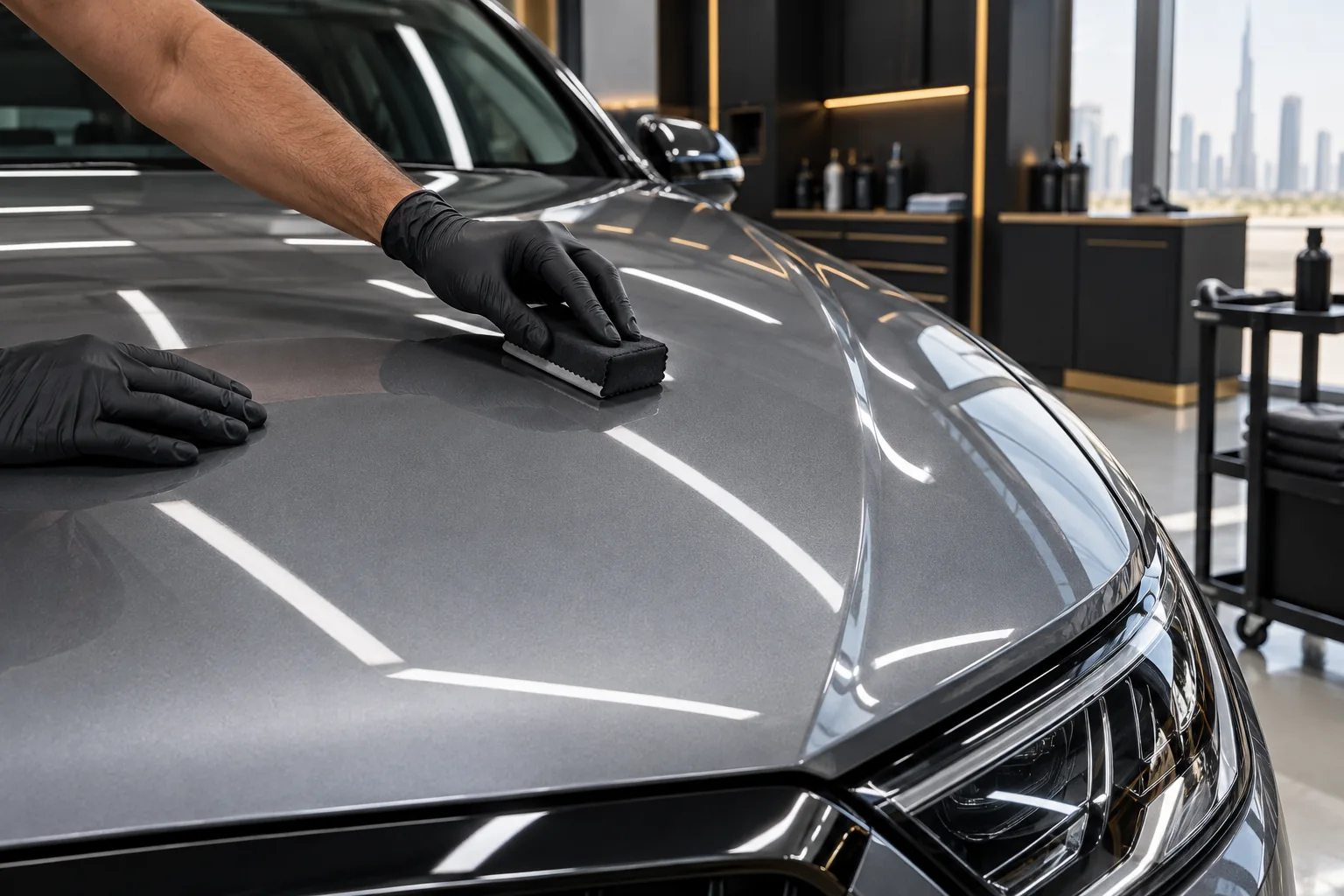
A suitable, properly cured ceramic coating can help protect and maintain paint through hot UAE summers. It adds a surface treatment that can improve gloss, water behaviour and resistance to contamination. It does not keep the paint or cabin cool, make a car scratch-proof, or guarantee that sunlight and dirt cannot damage the finish. Choose the product, preparation and aftercare for the car rather than buying on a headline heat rating.
Heat resistance is only part of the question
When someone asks whether a coating works at 50°C, separate three things — the outdoor air, the temperature of the painted panel, and the conditions allowed while applying the product. An air-temperature reading is not a measurement of the bonnet. A cured coating’s performance is also different from the conditions needed for the liquid to spread, level and bond correctly.
Do not treat a claim such as “600°C resistant” as proof that the whole painted body can tolerate that temperature, or that a car will stay cool in the sun. The paint underneath still has its own limits. Ask for the exact coating’s technical instructions and a clear explanation of what a quoted temperature test actually demonstrates.
For example, Gtechniq’s Crystal Serum Light instructions specify application at 5–25°C, away from direct sunlight, followed by 12 hours indoors. Those are application instructions for that product, not a temperature limit shared by every cured coating.
What protection can you reasonably expect?
Gloss and easier routine cleaning
A coating changes the outer surface rather than repairing the paint below it. The finish may release contamination more easily during a suitable wash. Dust will still land on the car, and a coating does not make dry wiping safe.
Product-specific chemical and UV resistance
Look for the named product’s claims and conditions. Resistance means more opportunity to remove contamination appropriately, not permission to leave bird droppings, sap or insects on a hot panel. Shade and prompt cleaning remain useful.
Limits around scratches and existing damage
Coating does not fill stone chips, rebuild peeling clear coat or remove deep scratches. Wash marks can still occur. A hardness label does not promise immunity to abrasion, keys or road debris.
Water beads can still leave mineral spots
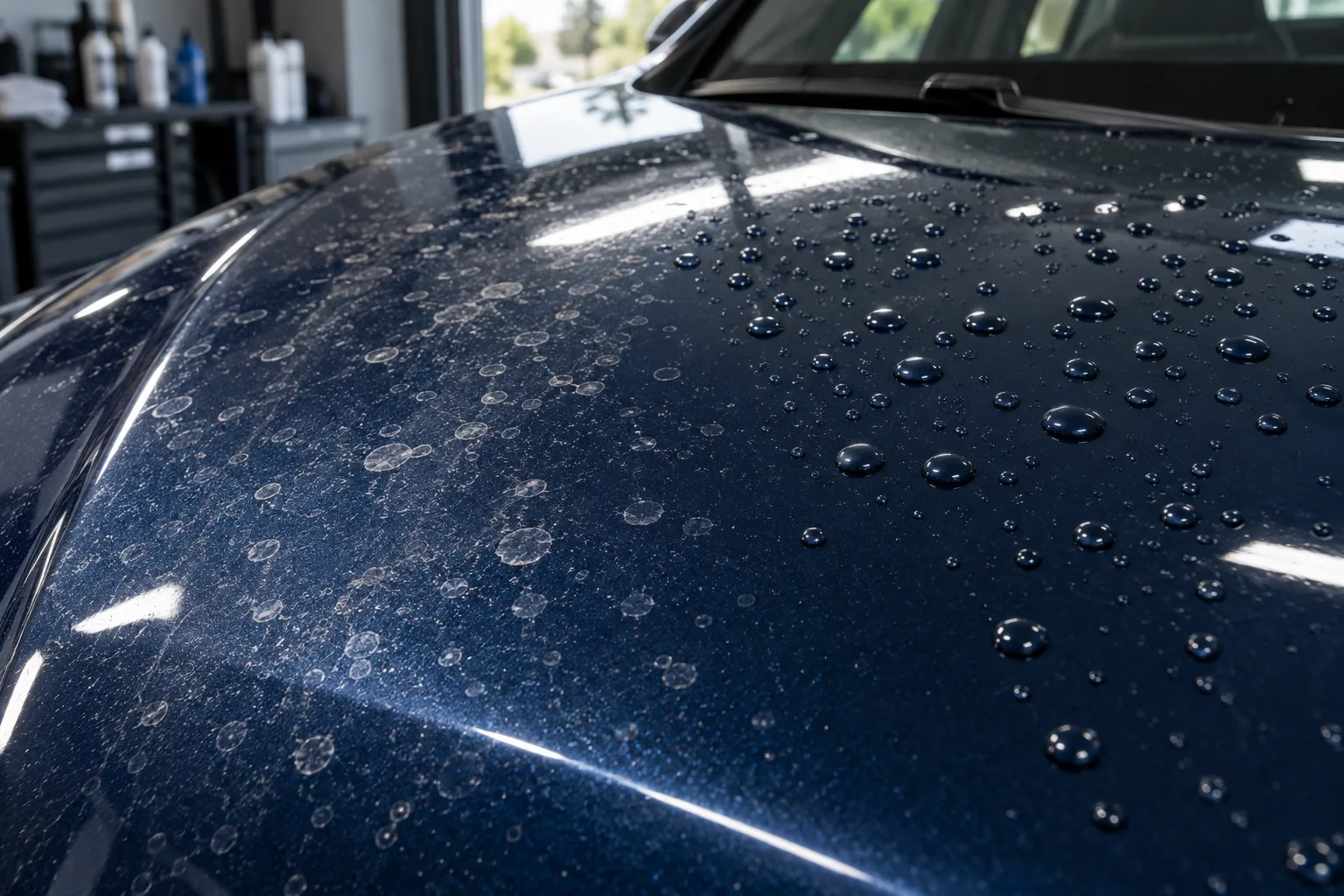
Hydrophobic means the surface resists wetting. It does not remove dissolved minerals from wash water or sprinkler spray. When droplets evaporate, deposits can remain. Rings on the finish may be surface contamination, while persistent marks can involve etching that needs a different response.
Move to shade, let the panel cool and begin with an appropriate wash. If marks remain, ask about a cleaner compatible with the coating and finish. Avoid experimenting with strong acids, household abrasives or aggressive polishing. Polishing can remove or alter a coating and may need to be followed by a planned reapplication.
Gtechniq’s water-spot treatment guidance also cautions against use on hot panels or in direct sun. A dedicated product still needs the correct method.
Choose coating, wax or PPF for the job
If the priority is easier cleaning and maintaining a prepared finish, compare coatings. If the priority is physical protection for a bonnet or bumper exposed to road debris, compare paint protection film. Neither choice makes the car maintenance-free.
Compare the options below. Scroll the table sideways on smaller screens to read every column.
| Choice | Main reason to choose it | What to keep in mind |
|---|---|---|
| Wax or sealant | A simpler surface-protection and appearance option. | Renewal depends on the actual product, washing and use. It is not an impact barrier. |
| Ceramic coating | A cured treatment for gloss, water behaviour and easier cleaning. | Preparation and curing matter. It does not stop stone chips or eliminate water spots. |
| Paint protection film | A physical film covering selected painted panels. | Confirm the film, panel coverage, edges and product terms. Damaged sections may need replacement. |
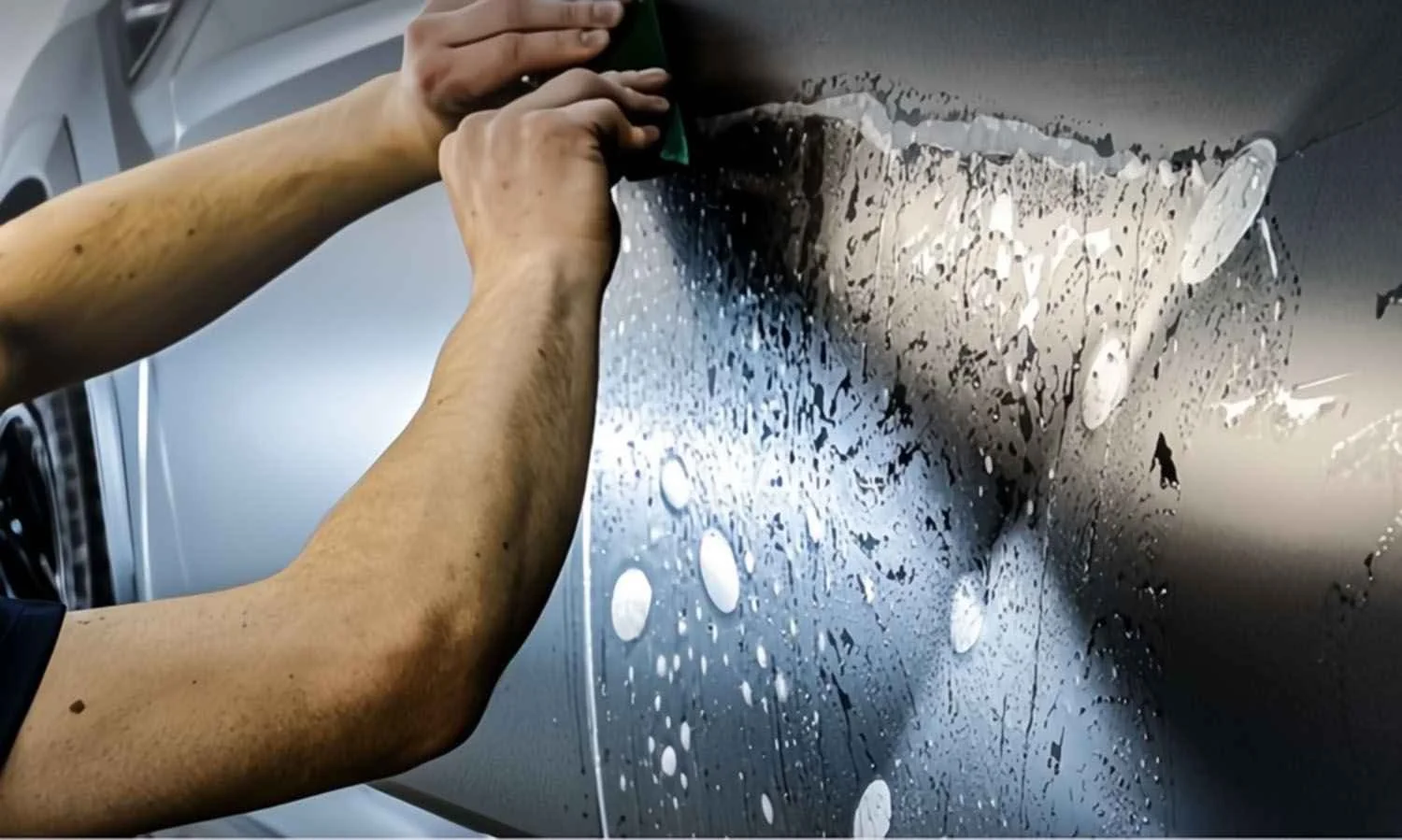
Use the paint protection film service page to compare panel coverage. A coating over film needs to be compatible with that exact film and its care terms. Do not assume a normal paint coating is approved for every PPF, matte finish or wrap.
Preparation and curing determine the result
A new car still needs inspection. Transport contamination, previous polishing or delivery preparation can affect the surface. An older car may need correction, but coating is not a reason to remove more clear coat than necessary. Repainted panels need the paint supplier’s curing advice before another treatment is applied.
Inspect and agree the finish
Identify repainting, existing film, chips and scratches. Agree which defects can reasonably be improved and which will remain.
Clean and prepare the surface
Wash, decontaminate and carry out only the agreed correction. Use preparation products suitable for the selected coating and paint.
Apply under the product’s conditions
Temperature, dust control, humidity, working area and residue removal affect application. Hot afternoon sun is not a shortcut to correct curing.
Allow the right cure and handover
Get written instructions for collection, first water exposure, first wash and maintenance. Initial drying, safe collection and full cure are not interchangeable milestones.
The GYEON Q² Mohs EVO guidance, for instance, calls for a cool, dust-free surface and protection from direct sun and water for the first 12 hours. Follow the instructions supplied with the product actually fitted rather than borrowing another brand’s schedule.
Warranty years are not the same as service life
A durability claim describes expected performance under stated conditions. A warranty is a written agreement covering particular problems and remedies. Neither means that every scratch, stain or wash mark will be fixed without charge.
A real five-year example
Gtechniq publishes a five-year Crystal Serum Light guarantee. Its terms include accredited application, registration within 30 days and annual inspection requirements, with exclusions including stone chips and wash-related scratching. The referenced document concerns eligible original gloss-painted bodywork and excludes commercial use.
Read the manufacturer’s exact guarantee terms. This example is not a Mechanics warranty or a claim that Mechanics is an accredited installer. UAE eligibility, the offered product and the person responsible for a claim must be confirmed before purchase.
For comparison, GYEON describes Mohs EVO durability as up to 36 months or 40,000 km for one layer, and 48 months or 50,000 km for two layers. That product-performance statement should not be relabelled as a three- or four-year workmanship guarantee.
Ask whether inspection visits, maintenance treatments or top-ups cost extra, what records you must keep, and what happens after a panel is repainted. Keep the invoice, product name, treated-panel list and warranty registration together.
What should a ceramic-coating quote include?
Request an itemised quote for your vehicle and the treatment being offered. A bottle price, a quick spray treatment and a prepared whole-car coating are different purchases. Ask Mechanics to confirm coating availability, the product and the installed total before arranging a visit.
- Preparation
- Wash, decontamination and any agreed polishing stages. Chip repair, old-coating removal and repainting should be separate if needed.
- Treated surfaces
- List painted panels. Glass, wheels, trim, interior surfaces and existing PPF need their own suitability and inclusion checks.
- Product and application
- Record the exact coating and specified application. More layers do not by themselves prove a better result.
- Total and future costs
- Confirm VAT, curing or storage arrangements, collection time and any chargeable inspections, maintenance or top-ups.
For cleaning and paint preparation, see car detailing at Mechanics. A combined detail should not be assumed to include a ceramic coating, and a coating quote should state exactly which preparation it includes.
Look after the finish through a UAE summer
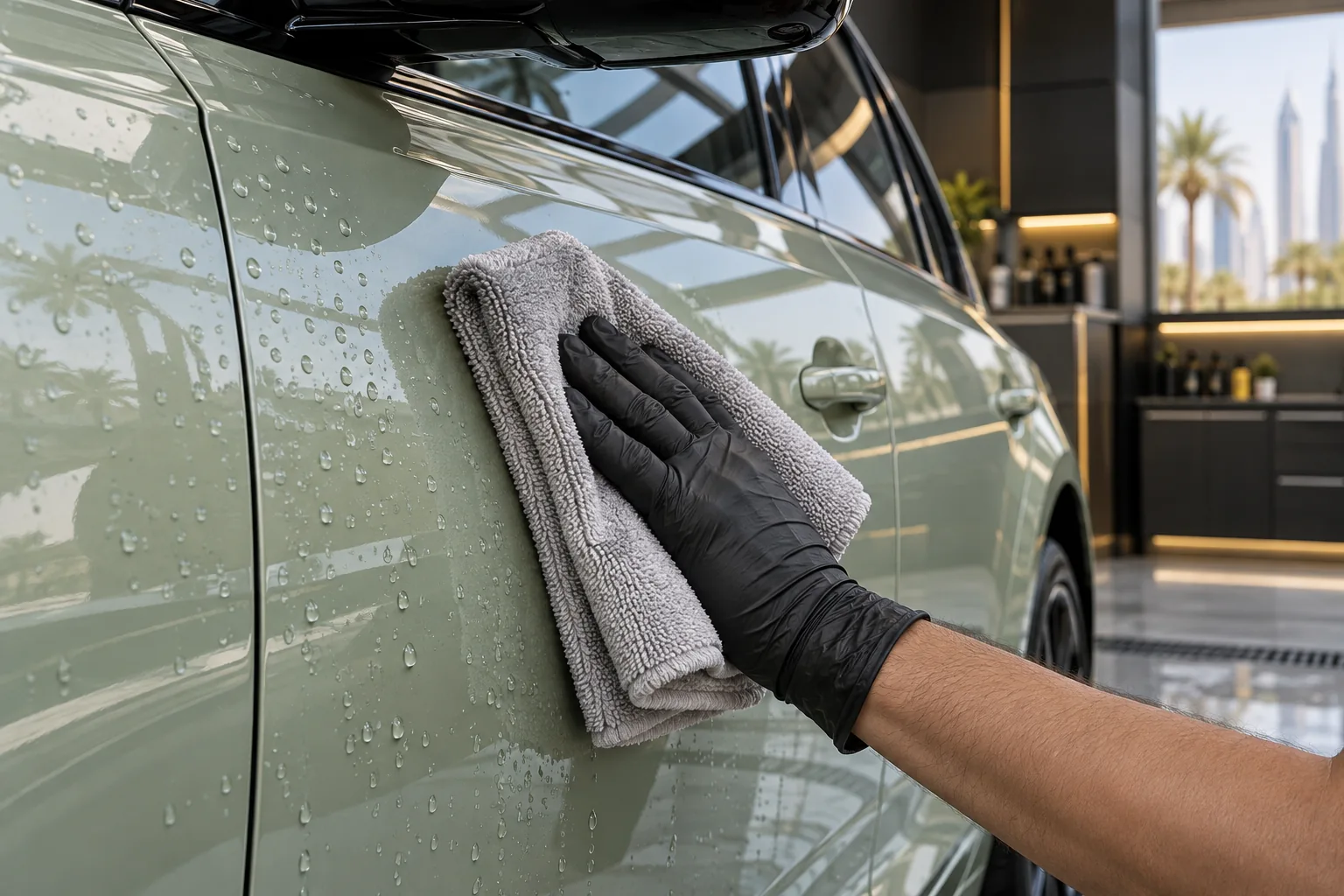
- Let the panel cool. Wash in shade when possible. Work in manageable areas so shampoo and rinse water do not dry before you can remove them.
- Remove grit before contact. Do not brush away a dust storm with a dry cloth. Rinse and use a coating-compatible wash method, clean mitts and clean drying towels.
- Respond to contamination. Soften and remove bird droppings or insects gently rather than scraping. Keep the cleaner suitable for the coating, glass, trim and film nearby.
- Keep maintenance specific. Use boosters only when appropriate to the coating. A topper can change water behaviour without proving that an underlying coating has been restored.
- Inspect before recoating. Reduced beading can reflect contamination or a worn top layer. Arrange a suitable clean and assessment before assuming that the entire coating has failed.
There is no universal wash interval that suits every car. Outdoor parking, dusty journeys and contamination change the need. Follow the written aftercare and inspection schedule. Covered parking remains useful even when the car has been treated.
Questions before choosing a coating
Will ceramic coating make the cabin cooler?
A paint coating is not a cabin-cooling treatment. Do not buy it on a promise that the car will stay cool when parked. Cabin heat management is a separate issue.
Does a 9H label mean scratch-proof paint?
No. It is not a promise that washing, grit or an impact cannot mark the finish. Ask which test supports a hardness claim and what it means for the actual product and surface.
Can coating go over matte paint, a wrap or PPF?
Only use a product approved for that finish and check its appearance and care requirements. Polishing a matte finish can change it, so normal gloss-paint correction should not be assumed.
Should water spots be polished out immediately?
Start with a suitable wash and assessment on a cool surface. Mineral deposits and etched paint are different problems. Unnecessary polishing can remove coating or clear coat.
Can I collect and wash the car on the same day?
Collection and washing are separate permissions. Confirm both against the selected product’s curing instructions and the conditions during application. Get the first-wash date in the handover notes.
Discuss the finish you want to protect
Send the make, model, year, paint condition and clear photos. Mention repainting, existing film or coating and whether you want easier cleaning or protection for high-impact panels.
Mechanics in Al Quoz can confirm the suitable work, coating availability, itemised quote and appointment arrangements before you book.
Technical references
The manufacturer product instructions and guarantee linked above were checked on 16 October 2026. They illustrate product-specific requirements. They do not establish Mechanics stock, accreditation or a universal coating warranty.