In this guide
A bad car thermostat can make the engine run too hot or warm up too slowly. A leaking thermostat housing can also cause coolant loss. None of these symptoms proves the thermostat is faulty on its own. Check the temperature pattern, coolant level, sensor readings and circulation before choosing a replacement. If the engine is overheating, stop safely and switch off.
This guide helps you describe the problem and understand the tests behind a repair decision. It is not an instruction to open a hot cooling system or carry out a roadside thermostat test. For parts choices, fitted scope and a written quote in Dubai, use our car thermostat replacement service.
Overheating now? Decide whether to stop first
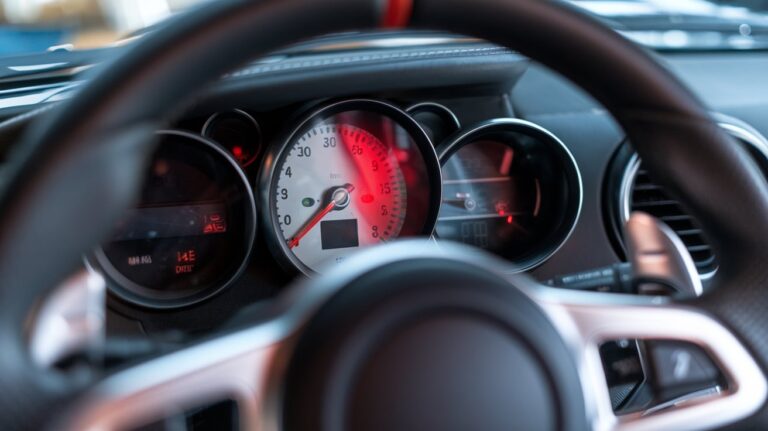
A red temperature warning, gauge in the hot zone, steam or rapid coolant loss calls for a safe stop. Move out of danger, switch off and arrange assistance. Do not keep driving to see whether the temperature falls, and do not repeatedly restart the engine to demonstrate the symptom.
Never remove a coolant reservoir or radiator cap while the system is hot or pressurized. A fixed waiting period cannot establish that it is safe. Follow the vehicle instructions and check the level only when fully cold. Keep hands away from fans and drive belts; a fan may operate unexpectedly.
If the only symptom is slow warm-up, with no overheating or loss of coolant, record it and arrange an assessment. A cooler reading is still worth investigating, but it is a different situation from steam or a rising temperature warning. Describe which problem you actually have when calling the workshop.
Record evidence without recreating the fault
Note the warning wording, journey length, traffic conditions and whether the cabin heater changed. Keep an existing dashboard photo if you took it safely. Do not restart a hot engine, open its cap or touch a hose to make a new video.
What the thermostat controls
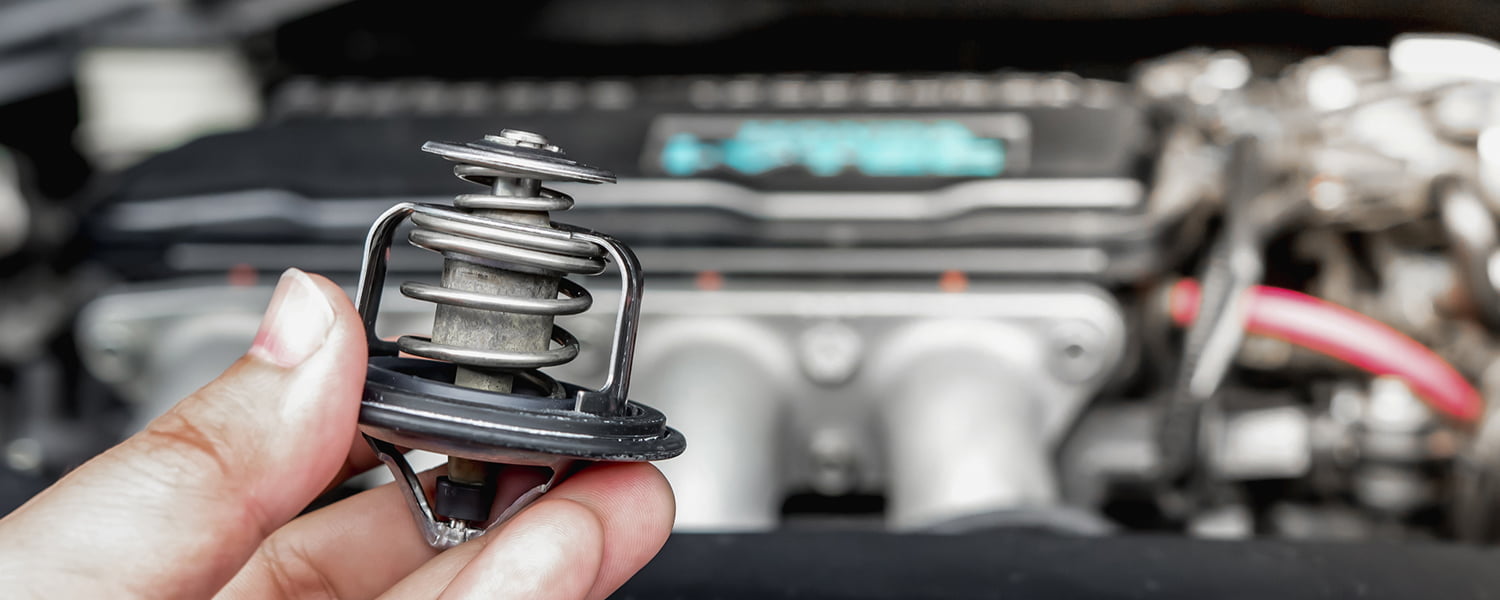
The engine thermostat regulates coolant flow to the radiator as the engine warms up and operating conditions change. It helps the engine reach and maintain its intended temperature. It is separate from the temperature sensor that reports a reading and the pump that circulates coolant.
On a conventional system, coolant can circulate through an engine bypass while radiator flow is restricted during warm-up. The thermostat then opens the radiator path as required. Saying that a closed thermostat stops every drop of coolant moving is an oversimplification. Actual bypass, heater and auxiliary circuits differ by engine.
Some thermostats add an electrically heated element; others sit within a larger thermal-management module. Their response can depend on control commands as well as coolant temperature. That is why a generic opening temperature or a single hose-touch test is not an adequate check for every car.
Symptoms that point toward different checks
Start with the pattern rather than naming the part. The same warning can arise from low coolant, a misleading sensor signal, a flow restriction or poor airflow. This comparison shows the next useful question, not a list of parts to buy.
| What you notice | Possible explanation | Useful next check |
|---|---|---|
| Slow warm-up or temperature falls on the road | Thermostat opening too early or staying open; inaccurate temperature data | Cold-start data and measured warm-up compared with the engine specification |
| Temperature rises after warming up | Restricted thermostat, low coolant, weak circulation or another cooling fault | Safe pressure, temperature-distribution and circulation assessment |
| Hot in slow traffic, improves at road speed | Fan or airflow problem can be involved | Fan request, actual operation, supply and heat-exchanger airflow |
| Coolant residue at the housing | Housing, seal or nearby hose connection leaking | Trace the leak source before deciding which assembly to replace |
| Heater turns cold while temperature rises | Low coolant, trapped air or interrupted circulation | Stop safely; check the system after cooling, not by opening a hot cap |
A thermostat housing leak and a regulating fault are different failures. Replacing a leaking seal may address coolant loss where the design allows it, while a failed regulating element needs the correct thermostat or assembly. A stain on the housing also needs interpretation because fluid can run down from a connection above it.
Does P0128 prove the thermostat has failed?
No. P0128 indicates that coolant temperature is below the expected thermostat regulating condition. It is a useful starting point, not a complete component diagnosis. The workshop needs the stored code, its accompanying operating data and the vehicle-specific test procedure.
A thermostat that stays open is one possible cause. The coolant-temperature sensor, its electrical connections, coolant level and operating conditions also matter. An implausible cold reading may send the investigation toward a sensor or circuit; credible data showing poor warm-up can support a different route.
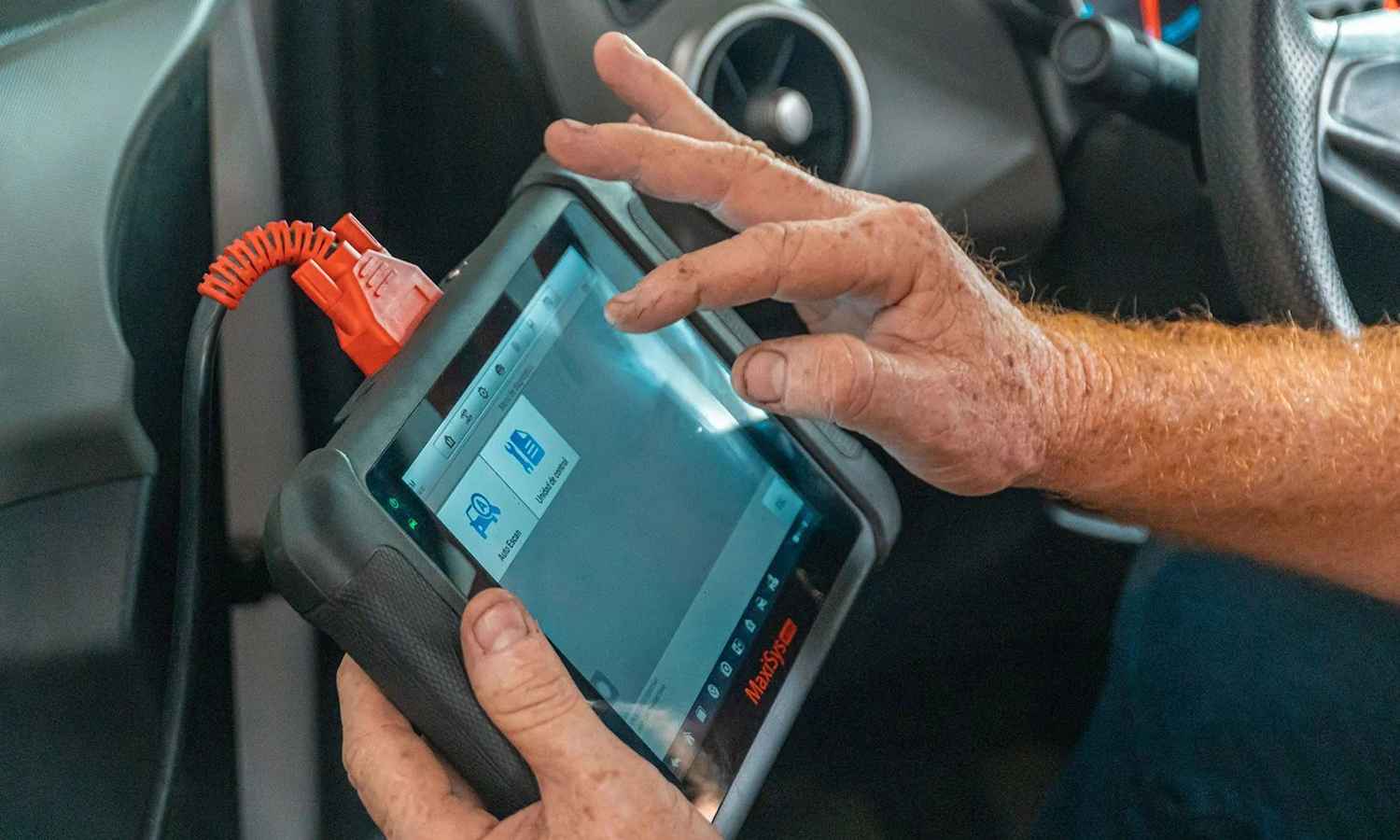
Do not erase the code immediately just to see whether the warning returns. Stored information can help establish when the fault occurred. If it has already been cleared, tell the technician when, why and whether any part or coolant was changed at the same time.
What you can check with the engine fully cold
Useful owner observations are simple and noninvasive. Park safely, follow the handbook and avoid reaching near moving components. A check that requires lifting the car, pressurizing the system or removing a part belongs in an appropriately equipped workshop.
- Level: read the reservoir marks from outside where possible. Record a low level; do not assume every loss is normal evaporation.
- Visible residue: photograph accessible dried coolant or wet areas without crawling beneath an unsupported vehicle.
- Previous work: note recent coolant, pump, radiator, hose or thermostat repairs and any product added.
- Sequence: record whether the warning began at startup, in traffic, under load or after a longer journey.
- Service evidence: bring prior invoices and diagnostic reports rather than relying only on a remembered part name.
Coolant color is not a reliable specification. If topping up is appropriate under the vehicle instructions, use the specified product and record what you added. Repeated top-ups do not repair a leak. Do not add stop-leak products or use thermostat removal as a shortcut around a temperature problem.
What a useful workshop diagnosis establishes
The test plan should answer a defined question at each stage. Ask what has been confirmed, what remains uncertain and whether another test requires extra authorization. You should be able to distinguish an observed leak from a suspected internal flow problem in the explanation you receive.
First: is the reading credible?
The technician compares temperature information with the engine’s condition and checks relevant faults. A sensor or wiring issue can distort the reported temperature, but a real overheating event must not be dismissed as a bad reading without evidence.
Next: where is heat or coolant control failing?
Leak and pressure checks, controlled warm-up, fan operation and temperature distribution help narrow the route. Pump circulation and radiator condition remain relevant if the thermostat does not explain the findings.
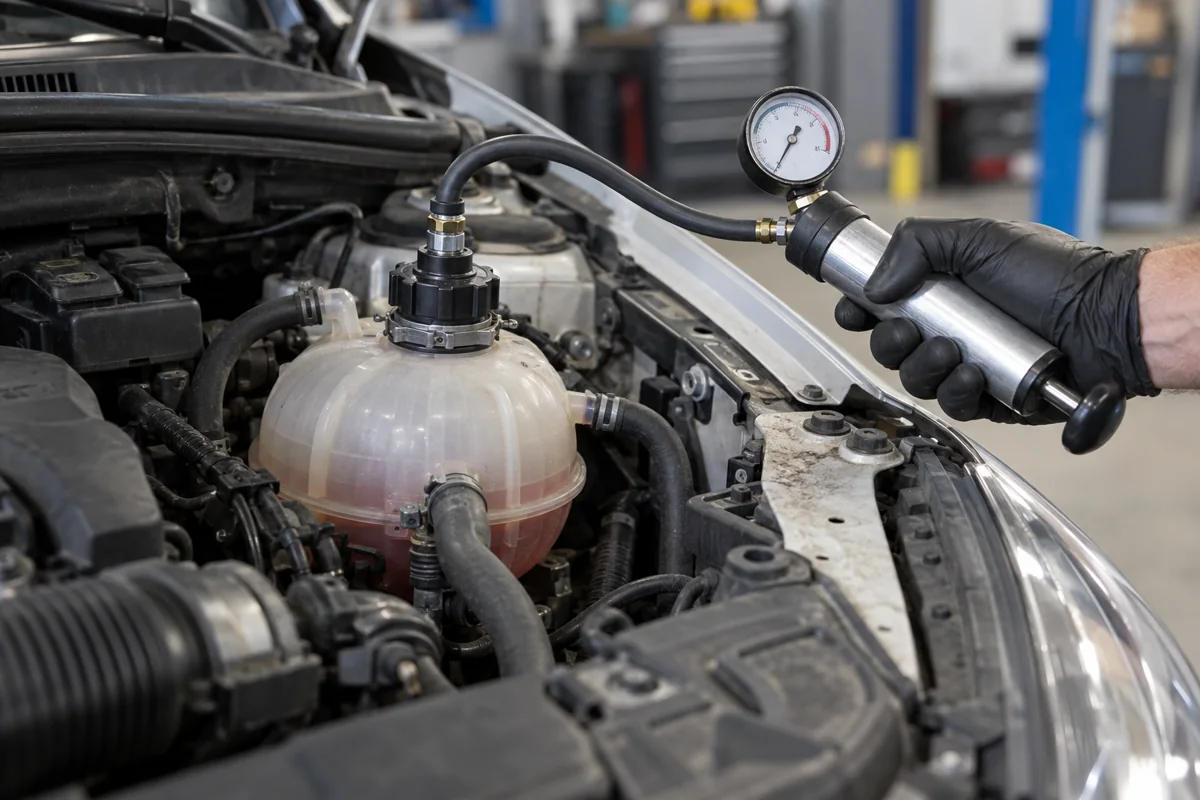
If symptoms started immediately after cooling-system work, the filling procedure and trapped air deserve attention. If the engine overheated severely, checking the thermostat alone may be insufficient. The workshop should explain why any internal-engine test is justified instead of treating overheating as automatic proof of head-gasket damage.
A helpful written result identifies the symptom reproduced, tests completed, failed component or remaining uncertainty, and recommended work. If the fault is intermittent and did not occur during testing, that limitation belongs in the report. Replacing a part without reproducing or explaining the failure is a different level of certainty.
When replacement is the appropriate repair
A confirmed regulating failure normally requires a replacement thermostat or the assembly in which it is supplied. The correct choice depends on the engine, housing condition and parts design. A combined pump-and-thermostat unit is not the same job as an accessible standalone valve.
Ask the quotation to identify the part manufacturer and number, included seals or sensors, access labor, coolant, bleeding and final checks. The term “OEM” by itself does not identify what will arrive. Also ask which parts and labor warranty applies and whether any unrelated leak or damage is excluded.
There is no universal thermostat replacement mileage for every car. Follow any applicable manufacturer requirement and respond to confirmed faults. Replacing it automatically at one arbitrary kilometer figure, after every cooling repair or simply because Dubai is hot can miss the actual problem.
Keep the old diagnosis with the new quote. If one workshop proposes a thermostat and another proposes a pump, ask which test supports each recommendation and whether they are describing a combined assembly. Different part names do not always mean different repair scopes.
The thermostat replacement pricing section explains the commercial scope and a researched Dubai price guide. This article focuses on diagnosis; the fitted cost still needs your engine details and the findings.
What should be checked after the repair?
Opening the cooling circuit allows coolant out and air in. Correct refill and bleeding are therefore part of the repair, not an optional finishing touch. The method depends on the vehicle and may involve vacuum filling or a specified control routine.
After reassembly, the technician should check for leaks and verify the relevant temperature behavior. The handover should explain the fitted part, coolant used, completed checks and any remaining observation or work. Follow the instructions for a subsequent cold-level check if one is requested.
A full coolant flush may be appropriate for incompatible or contaminated fluid or scheduled maintenance. It is different from the drain, refill and bleed needed to replace a thermostat. If a warning returns, report it promptly instead of repeatedly topping up and assuming the new part must be defective.
Keep a short repair record
Save the invoice, diagnosis, part details and coolant specification with the vehicle history. If the symptom returns, record how it differs from the first event and whether the level changed. That makes a follow-up assessment more useful than simply reporting that the car is “still hot.”
Common thermostat questions
Can a thermostat fail without leaking?
Yes. Its regulating element can stick or respond incorrectly without any external coolant leak. Equally, a housing or seal can leak while the thermostat still regulates. The two functions need separate assessment.
Can I remove the thermostat to keep the engine cooler?
No. Removing it changes the designed coolant control and can disrupt warm-up or flow through the intended circuits. It does not repair a pump, fan, radiator, leak or internal-engine problem.
Does the dashboard gauge show the exact coolant temperature?
Not necessarily. Gauge behavior depends on the vehicle, and an apparently normal display is not a substitute for a proper check when coolant is escaping or a warning appears. Live data must also be checked for plausibility.
Why did overheating start after a thermostat replacement?
Possible routes include trapped air, incorrect filling, a leak, an incorrect part or a separate fault that was not resolved. Review the work and test findings before assuming another thermostat is the answer.
Should the water pump be replaced at the same time?
Only when the engine arrangement, pump condition or shared-access economics supports it. Some engines use combined modules. See water pump replacement for that related repair scope.
Technical points were checked against HELLA’s engine-cooling explanation, cooling-system diagnostic checks, coolant-temperature sensor checks and OBD fault-code definitions. Refill considerations follow MAHLE thermostat-fitting guidance (PDF). Always use the repair information and owner instructions for the exact vehicle.