In this guide
A radiator fan that does not work is usually caused by a blown fuse, a failed relay, a worn fan motor, a damaged connector, a faulty fan control module or a wrong signal from the coolant temperature sensor. The engine may run fine on the highway but overheat in traffic. In Dubai heat, stop driving if the gauge climbs and have the fan circuit tested before the engine is damaged.
This guide is written by the Mechanics workshop team in Al Quoz, Dubai. Cooling fan faults are a regular summer job for us, and these are the patterns we see.
Use it to understand what your car is doing. Then let a technician confirm the cause before any part is ordered.
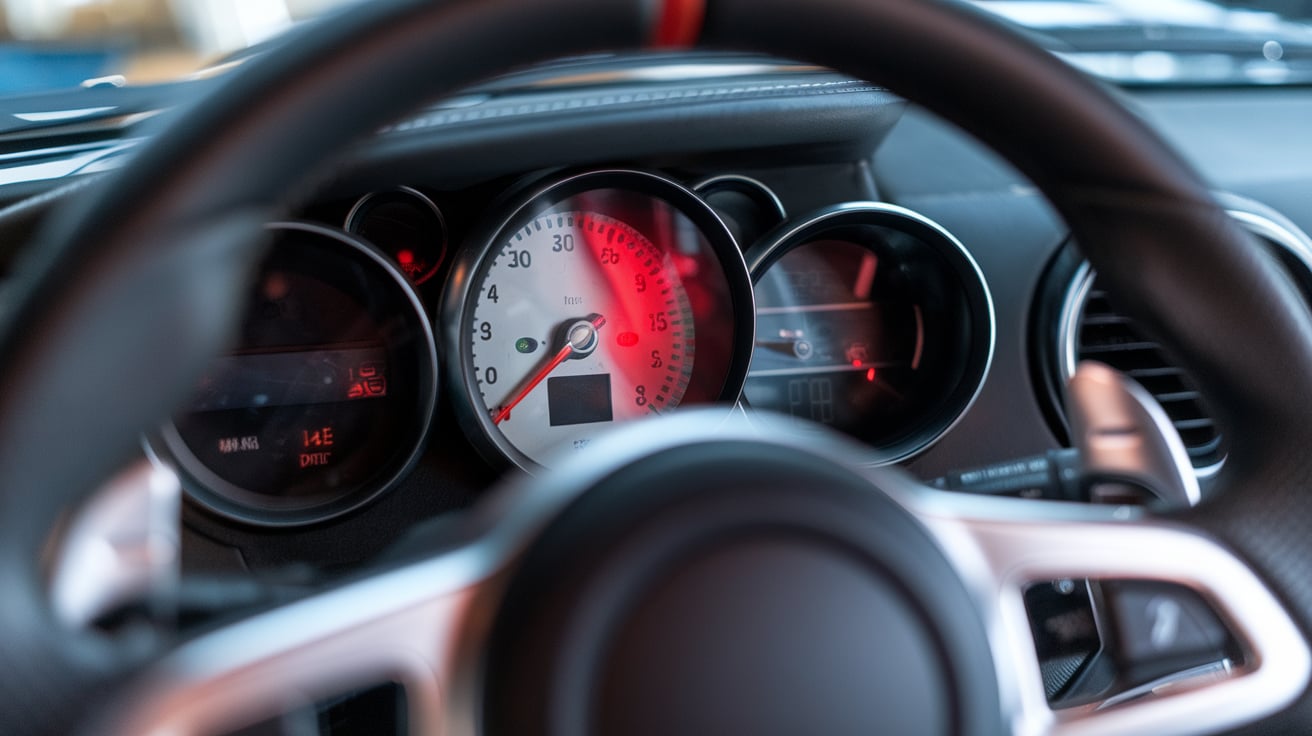
Is it safe to drive with the radiator fan not working?
It depends on the temperature gauge and the traffic. On an open road, moving air may keep the engine cool for a while, but in slow traffic the heat climbs quickly.
| What you notice | Risk level | What to do |
|---|---|---|
| Gauge rises at idle, drops when moving | Medium | Avoid traffic, drive gently to the workshop |
| Gauge near the top or warning light on | High | Pull over safely and switch off |
| Steam from the bonnet | High | Stop, switch off, stay clear of the bonnet |
| Coolant smell or puddle with high temperature | High | Do not restart, arrange recovery |
| Engine loses power or knocks when hot | Very high | Stop at once and call for help |
Never open the radiator cap or expansion tank cap on a hot engine. The coolant is under pressure and can spray out as boiling liquid and steam. Wait until the engine is fully cold, which can take a long time in Dubai heat.
- Do not keep driving with the gauge in the red to reach home
- Do not pour cold water onto a hot engine or radiator
- Do not put your hands near the fan, it can start on its own even with the engine off
Radiator fan not coming on? Send us the car model and a photo of the temperature gauge, and we will tell you whether it is safe to drive in.
How the radiator cooling fan works
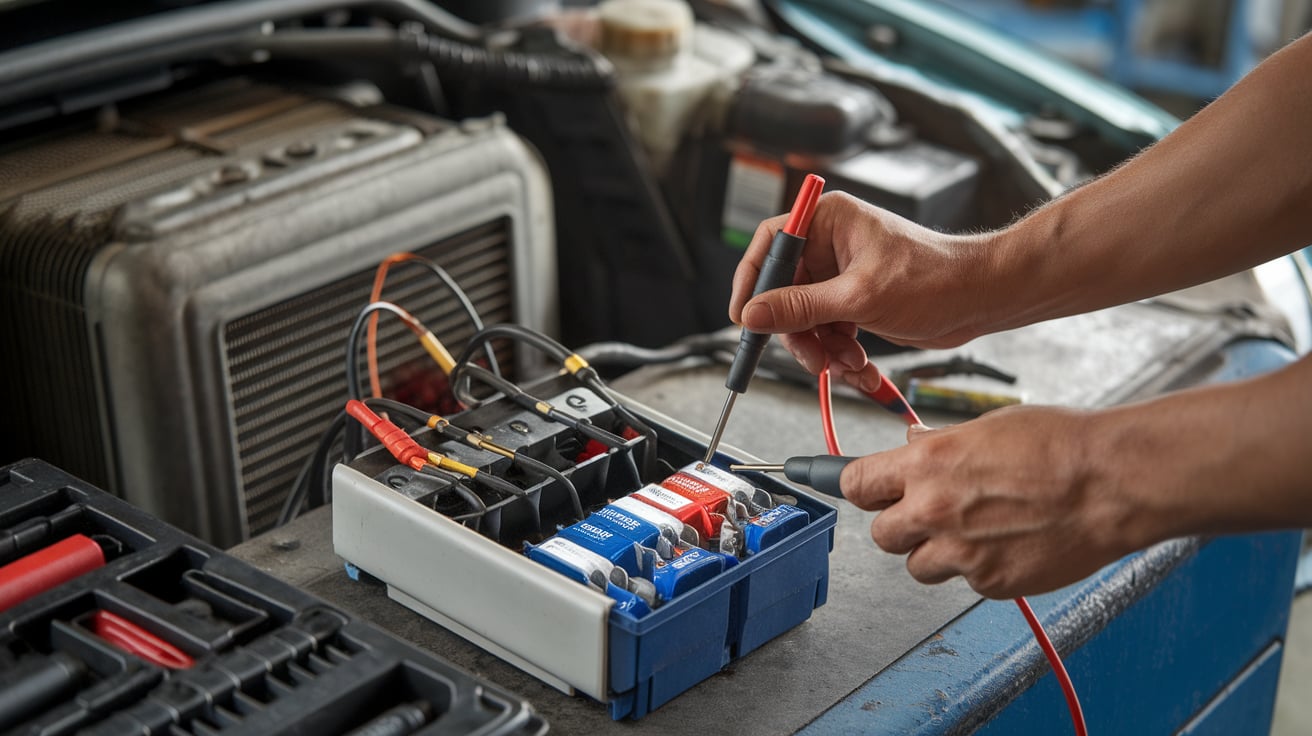
When a car moves fast, air flows through the radiator on its own. When it slows down or idles, the electric fan pulls air through instead.
- The coolant temperature sensor reports engine heat
- The engine computer decides when the fan should run
- A relay or fan control module sends power to the motor
- The fan pulls air through the radiator and the AC condenser
On or off, sometimes two speeds
One or more relays switch the fan. Some cars use a resistor for a low speed.
Variable speed control
A fan control module changes the speed to match the cooling demand.
Fan runs with the AC on
Many cars run the fan whenever the AC is on, to cool the condenser.
Fan runs after switch off
Some cars keep the fan running for a short time after parking. This is normal.
The radiator and the AC condenser sit together at the front of the car. Our guide to car AC parts and how they work explains the condenser side.
Radiator fan not working, symptom to cause table
| What you notice | Possible cause | How we confirm it |
|---|---|---|
| Fan never runs, gauge climbs in traffic | Blown fuse, failed relay, dead motor, broken wiring | Fuse and relay test, voltage at the fan plug |
| Fan runs only with the AC on | Coolant temperature sensor, one relay or one speed circuit failed | Live data of coolant temperature, fan command check |
| Fan runs all the time | Stuck relay, sensor fault, module fault, failsafe mode | Scan for codes, relay and sensor test |
| Fan runs slowly or only one speed works | Worn motor, failed resistor, fan control module fault | Current draw and speed test |
| Fuse blows again after replacing | Seized motor or short circuit in the wiring | Motor current test, wiring inspection |
| Weak AC in traffic, fine when driving | Fan not running, or a blocked condenser | Fan test with AC on, condenser inspection |
Why a radiator fan stops working, causes in detail
1. Blown fuse
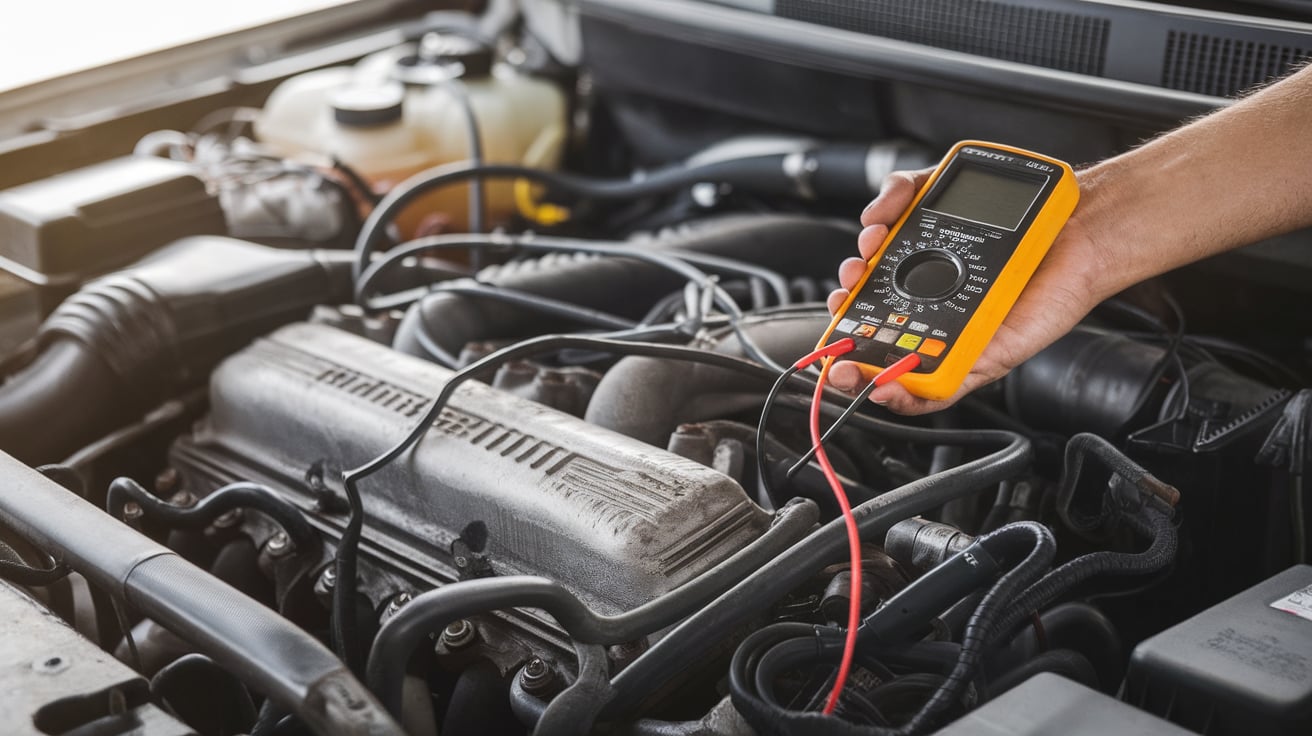
Most cars have a separate high current fuse for the fan. If it blows, the fan has no power at all.
- A fuse that blows once can be a one off overload
- A fuse that blows again points to a seized motor or a short
- Fitting a bigger fuse is never a fix and can melt the wiring
2. Failed fan relay
The relay is the switch that carries the heavy fan current. When the contacts burn or stick, the fan stays off or stays on.
- We test the relay coil and contacts, not just swap it and hope
- Some cars use two or three relays for different fan speeds
3. Worn or seized fan motor
Worn brushes
The motor may work after a tap, then stop again.
Dry bearings
A slow, noisy fan that draws extra current.
Seized motor
No movement at all, and it can blow the fuse.
4. Damaged wiring or connector

The fan plug sits near the hot radiator and gets a lot of current. Over time the terminals can overheat, melt or corrode.
- A browned or melted plug is a common find on older cars
- Corrosion after engine bay washing can stop the fan
5. Coolant temperature sensor fault
The engine computer only runs the fan when it believes the engine is hot. If the sensor reads too low, the fan stays off while the engine overheats.
- We compare the sensor reading with the real engine temperature
- Some cars switch the fan on full as a failsafe when the sensor fails
6. Fan control module or resistor fault
| Part | Typical sign when it fails |
|---|---|
| Fan control module | No fan, fan stuck on full, or a stored fault code |
| Speed resistor | Low speed missing, high speed still works |
7. When the fan works but the engine still overheats
Sometimes the fan is fine and the problem is elsewhere in the cooling system. We check these before blaming the fan.
Low coolant or a leak
Low level gives false readings and hot spots.
Stuck closed
Coolant cannot reach the radiator. See our failing thermostat guide.
Blocked core
Sand and debris outside or scale inside cut the airflow and coolant flow.
Weak circulation
A worn pump or leaking seal moves less coolant.
What you can safely check yourself
These checks need no tools and no lifting. Do them only with the engine off and fully cold, unless the step says otherwise.
- Watch the temperature gauge in traffic and note when it rises
- With the engine warm and the car parked, switch the AC on and listen from outside the car for the fan
- Look at the coolant level in the expansion tank against the marks, engine cold
- Look for fresh coolant spots under the front of the car
- Take a photo of any warning light or message on the dashboard
- Do not open any cooling system cap on a warm or hot engine
- Do not touch the fan or put tools near it, it can start without warning
- Do not bridge relays or wire the fan straight to the battery
- Do not fit a larger fuse than the one specified
How Mechanics diagnoses a radiator fan fault
-
Listen to you
When the gauge rises, whether the AC is weak, and any recent work or warnings.
-
Scan the car
We read fault codes and live coolant temperature. See our computer check service.
-
Command the fan
On many cars the scan tool can switch the fan on to test the circuit.
-
Test the power path
Fuse, relay, module, wiring, ground and the voltage at the fan plug are checked in order.
-
Check the motor
Current draw and speed show whether the motor is healthy, weak or seized.
-
Check the cooling system
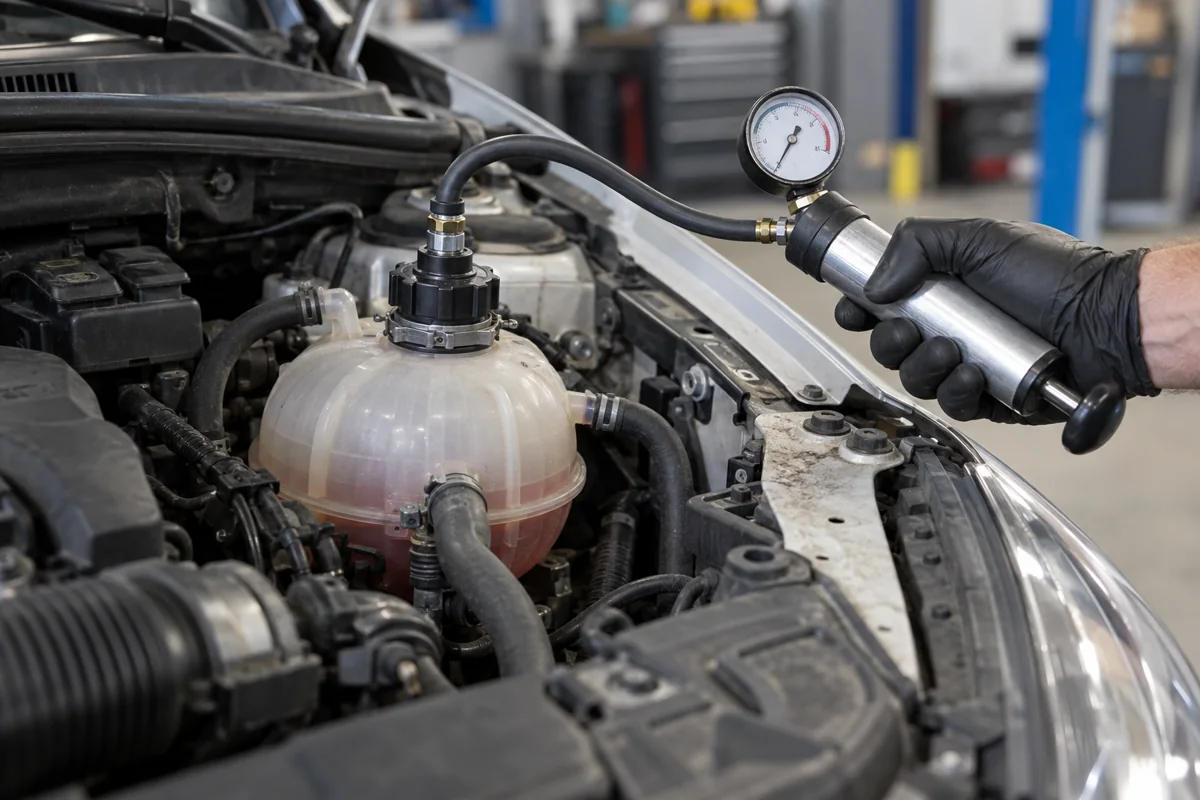
A cold pressure test, coolant condition and thermostat checks rule out other causes.
-
Written quote
You get the findings and the price on WhatsApp before we start.
Common radiator fan repairs and what they fix
| Repair | Fixes | Usually followed by |
|---|---|---|
| Relay replacement | Fan dead or stuck on | Fan command test |
| Connector or wiring repair | Melted plug, corrosion, short circuit | Voltage drop test |
| Fan motor replacement | Seized, slow or noisy motor | Run test at temperature |
| Complete fan and shroud assembly | Integrated motor and module, broken shroud | Run test and scan |
| Fan control module or resistor | Missing speeds, fan stuck on full | Speed test and scan |
| Coolant temperature sensor | Wrong reading, fan not commanded | Live data check |
If the engine has overheated, we also check the radiator, hoses and coolant. Our radiator repair service covers leaks, blockages and replacement.
What affects the cost of a radiator fan repair?
The real fault
A relay is a small job, a full fan assembly is a larger one. Testing comes first.
How the fan is built
On many newer cars the motor, module and shroud come as one unit.
Parts choice
Genuine and OEM equivalent parts differ in price and availability.
Access
Some fans come out from above, others need the front end or bumper removed.
Overheating damage
If the engine boiled, hoses, coolant or the radiator may also need work.
| Related work | Planning price from our service pages |
|---|---|
| Coolant flush and refill | AED 250 to 800 including VAT, see the coolant flush price section |
| Economy or mid range radiator replacement | AED 600 to 1,500 market band, see the radiator repair price section |
| Radiator fan repair | Quoted after testing, as it depends on the fault and the car |
These are planning figures copied from our own service pages, not fixed prices. Your final quote depends on the car and what we find.
How Dubai conditions affect the radiator fan
The fan works harder
High air temperature means the fan runs longer and more often, so motors and relays wear faster.
AC on all day
The condenser adds heat in front of the radiator, so airflow matters even more.
Long idling
Slow traffic means little natural airflow, so the fan does nearly all the work.
Blocked fins
Dust and sand pack the radiator and condenser fins and cut airflow.
How to prevent radiator fan problems
- Ask for a fan and cooling system check before summer
- Keep the coolant at the right level with the correct type
- Have the radiator and condenser fins cleaned when they look packed
- Avoid pressure washing the engine bay and the fan plug
- Watch the gauge in traffic and act early if it moves
Old coolant can also hurt the cooling system. Our guide what a radiator flush is and why it matters explains when fresh coolant is needed.
Why does the radiator fan only work with the AC on?
This is a common question. The AC request can switch the fan on by a different route than the engine temperature request.
| Situation | What it may mean |
|---|---|
| Fan runs with AC, gauge stays normal without AC | Often normal, the engine simply has not reached fan temperature |
| Fan runs with AC, engine overheats with AC off | Temperature sensor, one relay or one speed circuit has failed |
| Fan runs with AC only on high speed | Low speed resistor or module fault |
What to send us
Make, model, year and mileage.
A photo of the temperature gauge and any warning light.
In traffic, on the highway, or with the AC on.
Any coolant top ups, leaks or recent cooling work.
Book a radiator fan check. Send these details on WhatsApp and we will advise whether to drive in or arrange pickup.
Radiator fan questions we get asked
Why is my radiator fan not working?
The most common causes are a blown fuse, a failed relay, a worn motor, a melted connector, a fan control module fault or a coolant temperature sensor that reads too low. A scan and a circuit test show which one it is.
Can I drive with a radiator fan not working?
Only for a short distance on a moving road, while watching the gauge. In traffic the engine can overheat quickly. If the gauge rises or a warning appears, pull over safely and switch off.
How do I know if my radiator fan is working?
With the engine warm and the car parked, switch on the AC and listen from outside the car. On many cars the fan starts within a short time. If you hear nothing and the gauge rises in traffic, have it tested.
Should the radiator fan run all the time?
No. It should switch on and off with temperature and AC demand. A fan that runs nonstop can point to a stuck relay, a sensor fault or a module in failsafe mode.
Why does my fan only work with the AC on?
The AC request can switch the fan by a separate route. If the engine also overheats with the AC off, the temperature sensor, one relay or one speed circuit may have failed.
Can a bad radiator fan make my AC weak?
Yes. The fan also cools the AC condenser. Without it, the AC often blows warm in traffic and gets colder again when the car moves.
Can a blown fuse stop the radiator fan?
Yes. A fuse that blows once may be a one off. A fuse that blows again usually means a seized motor or a short in the wiring, which must be found.
Is it safe to open the radiator cap to check the coolant?
Only when the engine is fully cold. On a hot engine the system is under pressure and boiling coolant can spray out. Check the level on the expansion tank marks instead.
What damage can overheating cause?
Overheating can damage hoses, the radiator, the head gasket and the engine itself. The longer it runs hot, the bigger the risk. That is why stopping early matters.
Do I need to replace the whole fan assembly?
Not always. On some cars the motor or relay can be replaced alone. On many newer cars the motor and module are built into the shroud and come as one unit.
Does Dubai heat make radiator fans fail sooner?
Heat, long idling and constant AC use make the fan run more, which wears motors and relays faster. Sand on the fins also cuts airflow. A check before summer catches it early.
How do I book a radiator fan check at Mechanics?
Send your car details and a photo of the gauge on WhatsApp, or call us. Our workshop is in Al Quoz, Dubai, and you get a written quote before any work starts.