Mon to Sat, 9:00 AM to 7:00 PM Car repair, service and body shop in Al Quoz, Dubai +971 50 608 7150
Mechanics · Al Quoz, Dubai

Differential Repair in Dubai

Whining under acceleration, a leaking axle housing or binding in turns? Mechanics in Al Quoz, Dubai checks the source before recommending a front or rear differential repair, rebuild or matching replacement.

Differential replacement guide AED 1,500–4,000

Vehicle-dependent estimate, not a ceiling. Confirm the parts, fitting and final total.

Free initial inspectionDiagnosis before parts approvalWritten repair quote
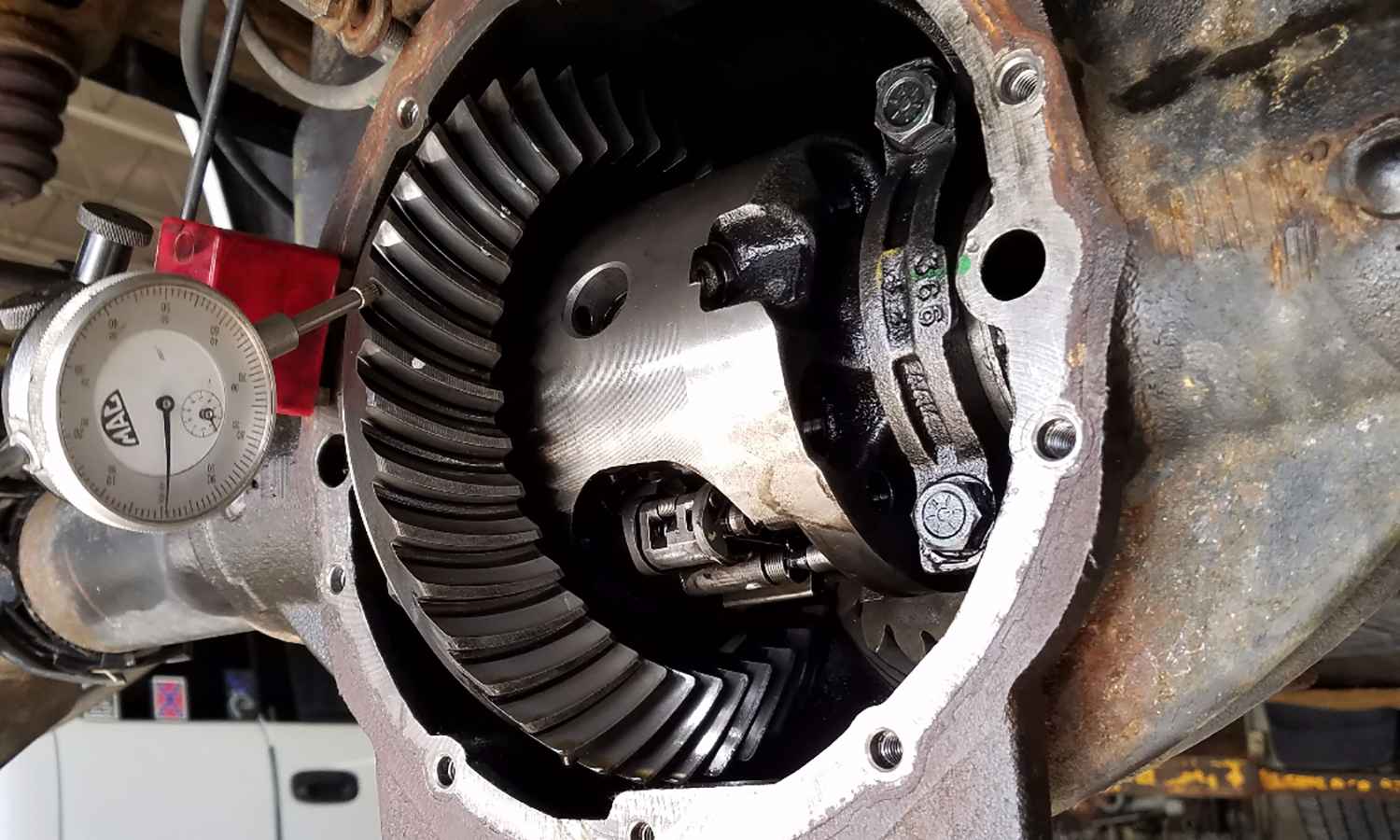
Open differential ring gear with a dial indicator positioned for measurement
Gear condition and setup measurements help determine the right repair.
Choose after inspection

A leak, worn bearings or a damaged gear set?

Front and rear differentials let driven wheels rotate at different speeds when turning. Noise or leakage can have several causes, so the smallest repair is useful only when it addresses the actual fault.

Targeted repair

Keep a serviceable unit

A confirmed seal, gasket, breather or mounting fault may allow a smaller repair when the internal gears and bearings remain serviceable. An oil change alone cannot repair worn metal.

Confirm: the leak source, oil level, shaft condition and any underlying wear.

Internal rebuild

Renew damaged internal parts

Where the housing is usable and the right parts are available, a rebuild may replace worn bearings, seals, gears or applicable limited-slip components. Setup and testing are part of the decision.

Confirm: itemized parts, measurements, labor and repair warranty.

Complete replacement

Fit a compatible assembly

Extensive damage, an unserviceable housing or poor parts availability can favor replacement. Compare a new, remanufactured or available used unit by condition, compatibility and cover.

Confirm: part code, final-drive ratio, equipment and fitted price.

Budget and approval

Differential repair and replacement costs

A leaking seal, internal rebuild and complete replacement have different costs. The initial inspection helps identify which estimate is relevant.

Published replacement guideAED 1,500–4,000

A starting budget, not a universal fitted price

This is the existing Mechanics replacement estimate. The quote must identify the front or rear unit and quantity. Do not assume the guide covers both axles. It does not define the vehicle, replacement-unit condition or every included item. Specialist, luxury, electronically controlled and heavily damaged units can cost more.

Request a vehicle-specific written total before approving the unit or labor.

01

Seal or external leak repair

Price depends on the seal location, removal access, related wear, oil specification and checks afterward. Ask whether the quote includes the cause of the leak as well as a new seal.

02

Bearing or gear rebuild

The total is established after the required inspection and, where authorized, dismantling. Parts availability, gear-set damage and setup work determine whether rebuilding is economical.

03

Oil service or control fault

Oil type and quantity vary by unit. A limited-slip additive, actuator, sensor or control-module repair is included only when applicable and listed in the quote.

What a complete quote should show

  • Diagnosis and any authorized dismantling charges.
  • Selected parts or replacement unit, with its condition identified.
  • Removal, fitting, oil, seals, setup and relevant testing.
  • Final payable total, expected completion time and written warranty terms.

When the estimate may change

Metal contamination, housing damage, worn shafts or a damaged gear set may become clear only after opening the unit. Ask the workshop to explain additional findings and obtain approval before extra work. A rebuild quote should also be compared with a compatible replacement.

Call with the model, year, drivetrain type and symptoms. Bring a previous diagnosis or quote if you have one.

Symptoms are clues

Locate the noise before replacing the differential

Tell the team when the noise occurs. That can narrow the inspection, but it does not replace checking the vehicle.

What you noticeWhat needs checkingUseful detail to share
Whine on acceleration or overrunGear and bearing condition, oil level and other driveline sources.Road speed, throttle position and whether it changes when lifting off.
Hum that changes with speedDifferential bearings, wheel bearings and tire condition, including uneven tread wear.Whether steering load or road surface changes the sound.
Clunk when taking up driveMountings, joints, shafts and driveline play as well as the differential.Whether it happens selecting a gear, accelerating or changing direction.
Judder or binding in tight turnsLimited-slip operation, tires, relevant fluids and AWD/4WD systems.Driving mode, tire changes and whether the symptom is new.
Oil around the housing or axleActual fluid source, seals, cover, breather and oil level.Leak position, recent service history and how quickly it returns.
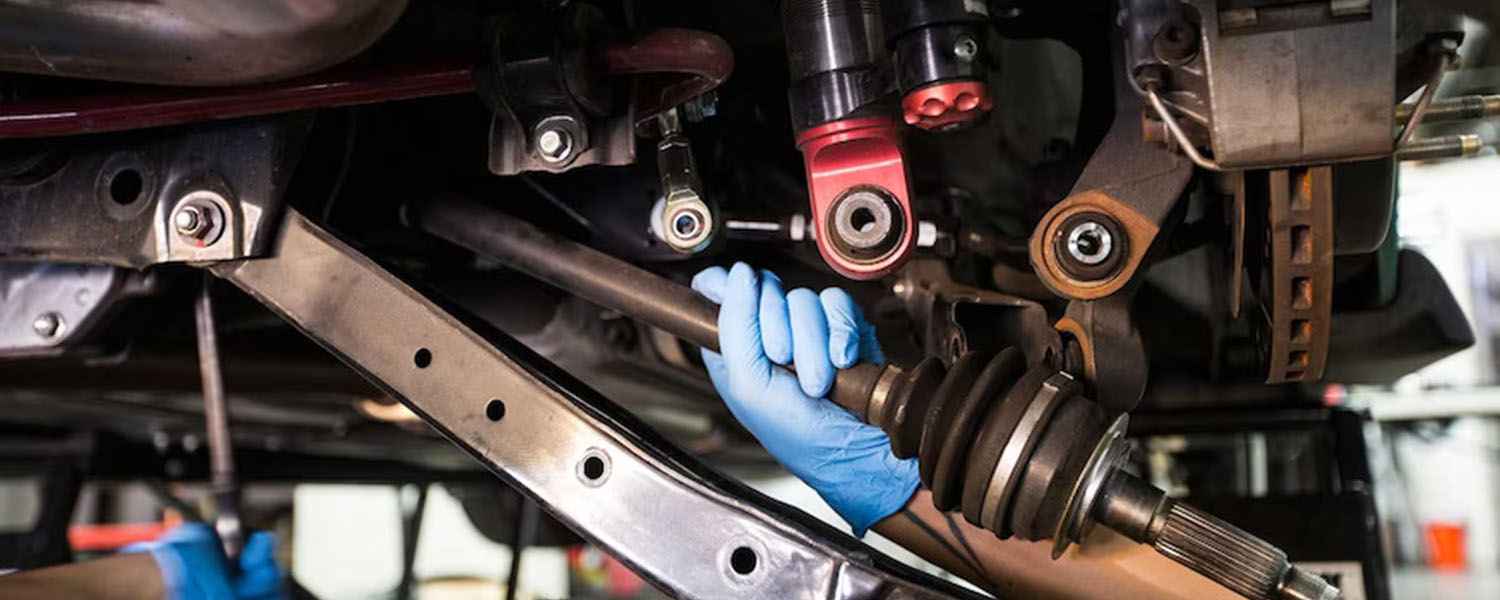
Technician inspecting a CV axle beneath a raised vehicle
Axle joints and related driveline parts can produce symptoms similar to a differential fault.

Describe the symptom, avoid guessing the part

A road test, where safe, is considered alongside checks on the lift. Relevant fault codes can help with controlled differentials or AWD systems, but a scan alone does not prove a mechanical differential fault.

Gear-changing faults may need transmission repair. Problems distributing drive between axles may involve the transfer case. These components should not be treated as interchangeable.

Grinding, heavy leakage or drive loss?

Stop safely and contact the workshop about recovery if there is severe grinding, binding, heavy fluid loss or unreliable drive. Do not continue to test the fault on the road. Towing requirements vary, especially for AWD and 4WD vehicles. Follow the vehicle handbook.

Oil leaks and repeat repairs

Find where the differential is losing oil

Oil on the outside of the housing needs tracing to its source. Fluid can travel across surrounding parts, so the lowest wet point is not enough to identify a failed seal.

01

Pinion or input seal

A leak where the drive enters the differential needs an inspection of the seal area and associated shaft or flange condition. Bearing wear, movement or damage can change the work required. Access and the manufacturer’s setup procedure affect the quote.

02

Axle or output seals

Leaks at the axle or output connections may require removal of nearby driveline parts. The inspection should check the sealing surface and related wear before a replacement seal is selected. A recurring leak needs its cause addressed.

03

Cover joints and breather

The cover, sealing joint, plugs and breather are checked as applicable to the unit. Low oil, unusual debris or accompanying noise can justify further internal inspection instead of a seal-only repair. Any additional dismantling needs your approval.

After repair, the correct oil level and a leak check matter as much as the replacement seal. Report any returning leak promptly.

Compatibility before ordering

The right differential for your 4×4 or AWD

Front and rear units, final-drive ratios and locking or limited-slip systems vary across UAE-market and imported vehicles. The replacement must match the vehicle specification.

Front or rear
The axle position and drivetrain layout determine access and the assembly required. Some differentials are integrated with a transaxle.
Final-drive ratio
Use the specified ratio and compatible front-to-rear relationship. A physically similar unit may be mechanically unsuitable.
Open, limited-slip or locking
Internal parts, lubricant requirements and operation differ. A locking differential is not automatically a limited-slip unit.
Electronic equipment
Actuators, sensors and controlled couplings can require specific testing or adaptations after repair, where the manufacturer specifies them.

Send the VIN or vehicle details privately to the workshop so the unit can be identified. A badge or model name alone may not distinguish all drivetrain variants.

Illustration showing differential gears and housing
Illustration of a differential assembly. Your vehicle’s design and control equipment may differ.

Mention off-road use, water exposure and tire changes

Sand driving, towing and water crossings are relevant service history. Contamination or overdue maintenance needs investigation, not an assumption that every 4×4 requires the same repair. On AWD vehicles, tire size and wear compatibility should also be checked against manufacturer requirements.

Repair, assembly and final checks

What a differential repair involves

The aim is a correctly matched, properly set up unit with the original cause addressed. Replacing oil or a seal should not conceal an unresolved internal fault.

01

Confirm the fault and agree on access

Check the reported symptom, leaks, fluid condition, mounting points and related driveline components. Explain whether further dismantling is needed and obtain approval for that work.

02

Inspect the internals when required

Assess bearings, gear teeth, wear patterns and the housing. Identify contamination and determine which components can be retained. A damaged gear set may change the repair recommendation.

03

Rebuild or fit the matched unit

Where applicable, set bearing preload, backlash and gear contact pattern to the specific axle requirements. Preload controls bearing loading, backlash is the clearance between meshing gear teeth, and the contact pattern shows where the teeth meet. Replace required seals and associated service parts. There is no universal adjustment figure for all vehicles.

04

Fill, check and test

Use the specified lubricant and any manufacturer-required additive. Check for leaks and relevant electronic faults, then verify operation with an appropriate test. Confirm any running-in or follow-up instructions for the work performed.

Agree on the repair record

Ask the written job record to identify the diagnosed fault, the parts replaced and any remaining recommendations. Keep the oil specification and any running-in or follow-up instructions with the invoice so future servicing can refer to the work actually completed.

Plan for inspection and parts lead time

An accessible external repair may need less workshop time than removing and rebuilding a unit. Gear setup, parts ordering and testing can extend the visit. The completion estimate should follow diagnosis and parts confirmation, with updates if hidden damage changes the job.

Aftercare and service history

Oil service that matches the unit

The service interval, oil specification and quantity must match the differential fitted to your vehicle.

There is no single oil interval or universal lubricant for every differential.

01 · When to service

Follow the vehicle schedule

Use the manufacturer’s interval for the installed unit, including any severe-use guidance for towing, off-road driving or other demanding conditions.

02 · Which oil to use

Check the full specification

Viscosity alone is not enough. The required lubricant performance specification must also match the differential.

03 · Front and rear

Confirm each unit separately

Front and rear differentials may have different oil specifications or capacities. Do not assume one oil or quantity suits both.

04 · Limited-slip units

Verify additive requirements

Some units require a specific friction modifier and others do not. Follow the manufacturer’s requirements instead of adding a universal treatment.

After the service

Keep a clear service record

Keep the invoice showing the oil used and the work completed. Report a returning leak, new noise or change in how the car drives so it can be checked against the repair record.

Parts and replacement choices

Compare the unit you are buying

The words rebuilt, remanufactured and used do not describe the same work. Compare the identified assembly, what has been renewed, the installed total and the written cover before choosing.

OptionWhat to establishWhat can change the decision
Rebuild your unitKeep a serviceable housing and renew the identified worn parts. The quote should list the bearings, seals, gears or applicable clutch components being replaced.Hidden damage and parts availability can affect cost and completion time.
New assemblyIdentify the supplier, part number and supplied components. Confirm any separately required seals, oil, fittings or electronic equipment.Compatibility, delivery time and the fitted price need confirmation.
Remanufactured assemblyAsk who remanufactured it, what was renewed and tested, and whether the old unit must be returned.An exchange deposit or return condition can affect the final payable amount.
Used assemblyCheck the part identification, available condition information, inspection and written warranty. Used does not mean rebuilt.History may be incomplete. Clarify the handling of a faulty supplied unit and repeat fitting costs.

Match the assembly before ordering

Confirm the axle position, final-drive ratio, mounting and shaft connections, and any locking or electronic equipment. A replacement should preserve the vehicle’s specified drivetrain relationship. A change of ratio or differential type is a separate modification decision, not a substitute for diagnosing the original fault.

Ask for photos of the identified damage and the part details with the quote where available. That makes a repair and replacement comparison easier to understand.

Before your visit

Differential repair questions

Repair choices, realistic timing and what to confirm before work begins.

Can a differential be repaired instead of replaced?

Yes, when the fault is repairable and the housing and remaining components are serviceable. A seal repair, bearing replacement or full rebuild may be appropriate in different cases. Extensive damage or poor parts availability can make replacement the better option. Compare the itemized repair and replacement proposals.

How much does differential replacement cost in Dubai?

The existing Mechanics guide is AED 1,500–4,000, but it is not a universal fitted offer or a price ceiling. Vehicle specification, replacement condition and included work change the total. Ask for parts, labor, oil, seals, testing and the final total to be identified in the written quote.

Can I drive with a whining differential?

The sound alone cannot establish how serious the fault is. Arrange an inspection promptly and avoid a long trip before the cause is known. Severe grinding, binding, heavy leakage or loss of drive calls for stopping safely and arranging suitable recovery.

Will a differential oil change stop the noise?

Only if the issue can be resolved by correcting a lubricant-related problem and there is no damage requiring repair. Oil will not restore worn bearings or damaged gear teeth. The source of the noise, oil level and condition should be checked first.

Is the differential the same as the transfer case?

They have different jobs. An axle differential permits speed differences between driven wheels. A transfer case distributes drive between axles on applicable vehicles. Some AWD systems also have a center differential or controlled coupling, so identify the actual layout before choosing the repair.

Do both differentials need replacing on a 4×4?

Not automatically. Each unit is assessed, but any replacement must preserve the specified drivetrain compatibility, including the applicable front-to-rear ratio relationship. A fault in one unit is not enough reason to replace another without evidence.

What warranty comes with a rebuild or replacement?

Ask for the terms for the exact repair and selected parts before approval. Check the time or mileage limit, covered components and labor, exclusions, maintenance conditions and reporting process. Used, remanufactured and new assemblies can have different cover.

What should I send before booking an inspection?

Send the make, model, year, drivetrain type and a description of when the noise or leak occurs. Add recent tire, oil, axle or transmission work and any off-road or water exposure. A recording made safely by a passenger may help describe the sound, but it cannot confirm the faulty part.

Does a differential rebuild include every internal part?

Not necessarily. A rebuild replaces the parts identified in the agreed work, while serviceable components may be retained. Ask for an itemized parts list and the findings that justify it. A bearing-only repair is different from replacing a damaged gear set or the complete assembly.

How long will a differential repair take?

The workshop can estimate completion after confirming the fault, access and parts availability. An external leak repair differs from a unit that must be removed, dismantled and set up. Ask when the vehicle is needed, whether an ordered unit is confirmed, and when testing can be completed.

Does an AWD warning mean I need a new differential?

No. A warning can require checks of the relevant control system, sensors, actuators, wiring and mechanical components. The fault codes, vehicle symptoms and test results need to agree before replacement is recommended. A warning message alone does not identify a complete differential as faulty.
Talk to the workshop

Get the differential fault checked

Describe the noise or leak and whether the vehicle can move safely. Mechanics in Al Quoz, Dubai will explain the assessment and quote the recommended work. Confirm the inspection time and recovery arrangements if the vehicle should not be driven.

  1. Share the model, year and whether it is 2WD, AWD or 4WD.
  2. Explain speed, throttle, turning behavior, leaks and recent work.
  3. Compare the recommended repair, parts choice and written total.
Call WhatsApp quote
Scroll to Top