Out or flickering
Check the light source, connector and power supply. A confirmed replaceable-bulb fault may need car bulb replacement.
One light out, a cloudy lens or an adaptive-light warning? Mechanics checks the fault before recommending bulb replacement, restoration, electrical repair or a complete headlamp.
Dubai market examples start at AED 100 to 150 for a halogen bulb replacement. Confirm the fitted total for your car.
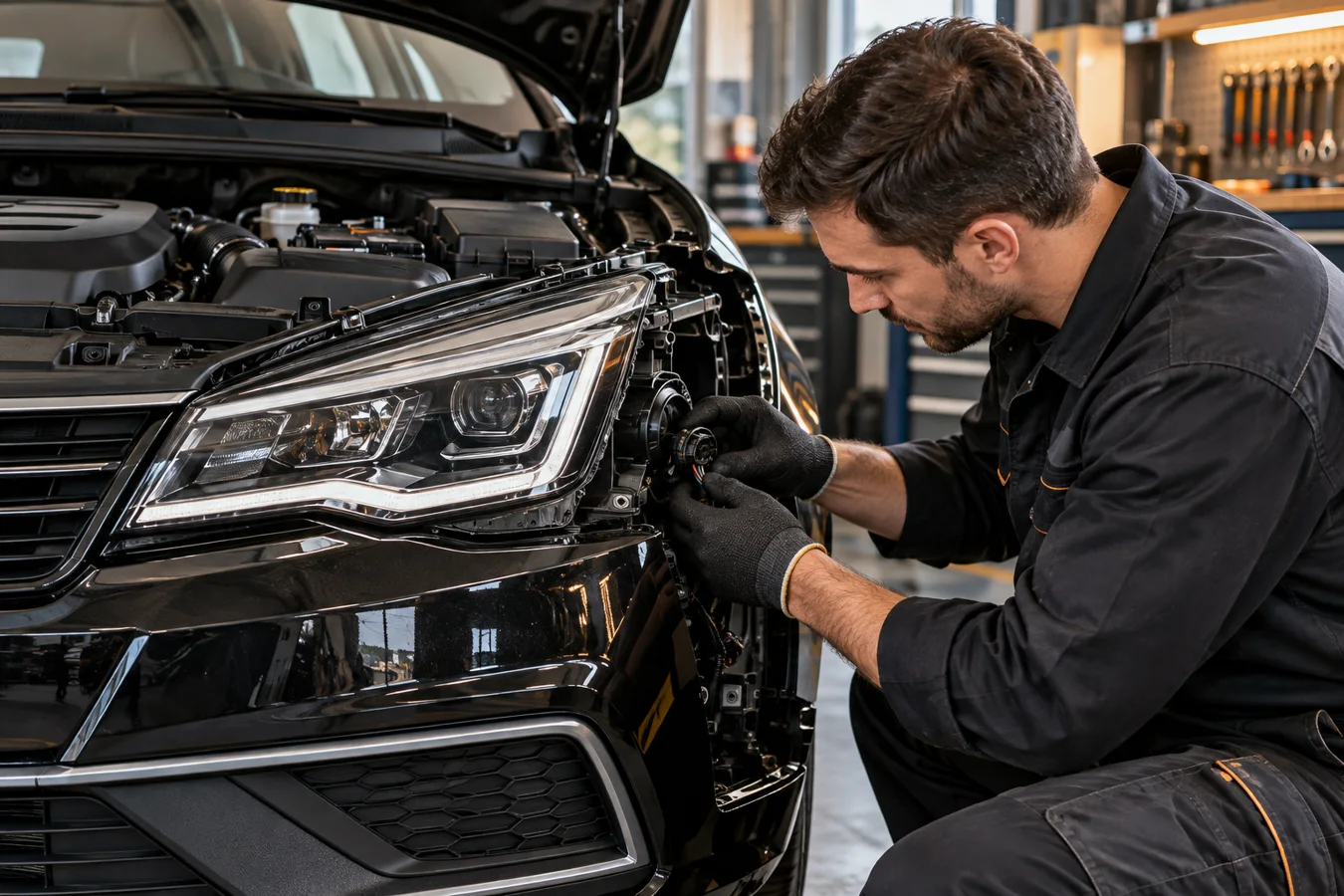
A bulb, a lens treatment and a complete adaptive lamp are very different purchases. These published Dubai market ranges help you compare the type of work. They are not fixed Mechanics prices.
On small screens, scroll the table to see the scope and tax column.
| Work advertised | Market example in AED | Quantity and fitting | VAT basis |
|---|---|---|---|
| Halogen bulb replacement | 100 to 150 | Confirm whether this covers one bulb or a pair, the bulb specification and access labour. | Not stated by the source |
| HID or replaceable LED bulb | 250 to 600 | Bulb replacement example. Not a price for every integrated LED headlamp or control module. | Not stated by the source |
| Lens polishing and restoration | 150 to 300 | Confirm one lens or both, preparation and finishing protection. Internal damage is separate. | Not stated by the source |
| Complete headlight unit | 900 to 3,000 or more | Confirm side, assembly condition, included modules, removal, fitting, coding and aiming. | Not stated by the source |
The comparison source is Meta Mechanics’ published sample repair costs, checked on 13 October 2026. It does not establish a tax-inclusive total or every package inclusion. These figures are not guaranteed offers from Mechanics.
Compare the complete repair, including parts, access, testing and VAT.
An initial inspection is available. Confirm charges for deeper testing or dismantling before authorising work.
A failed light does not always need a complete headlamp.
Check the light source, connector and power supply. A confirmed replaceable-bulb fault may need car bulb replacement.
External oxidation may suit restoration. Internal haze, deep cracks or reflector damage need a different repair.
Persistent droplets or pooled water need the seals, vents and housing checked. Find the entry point before drying.
Check mounting, levelling, controls and the vehicle-specific setup. A bulb change alone may not solve it.
Avoid driving in darkness with inadequate lighting. Report smoke, burning smells, exposed wiring or repeated fuse failure promptly.
An intact plastic lens with external oxidation may suit preparation and polishing. Internal damage needs separate assessment.
Identify cracks, peeling coatings, internal contamination and previous sanding. Agree which marks may remain.
Specify one lamp or both, surface preparation, polishing and the final protective finish.
Confirm curing, washing and product restrictions. Durability depends on the lens and treatment.
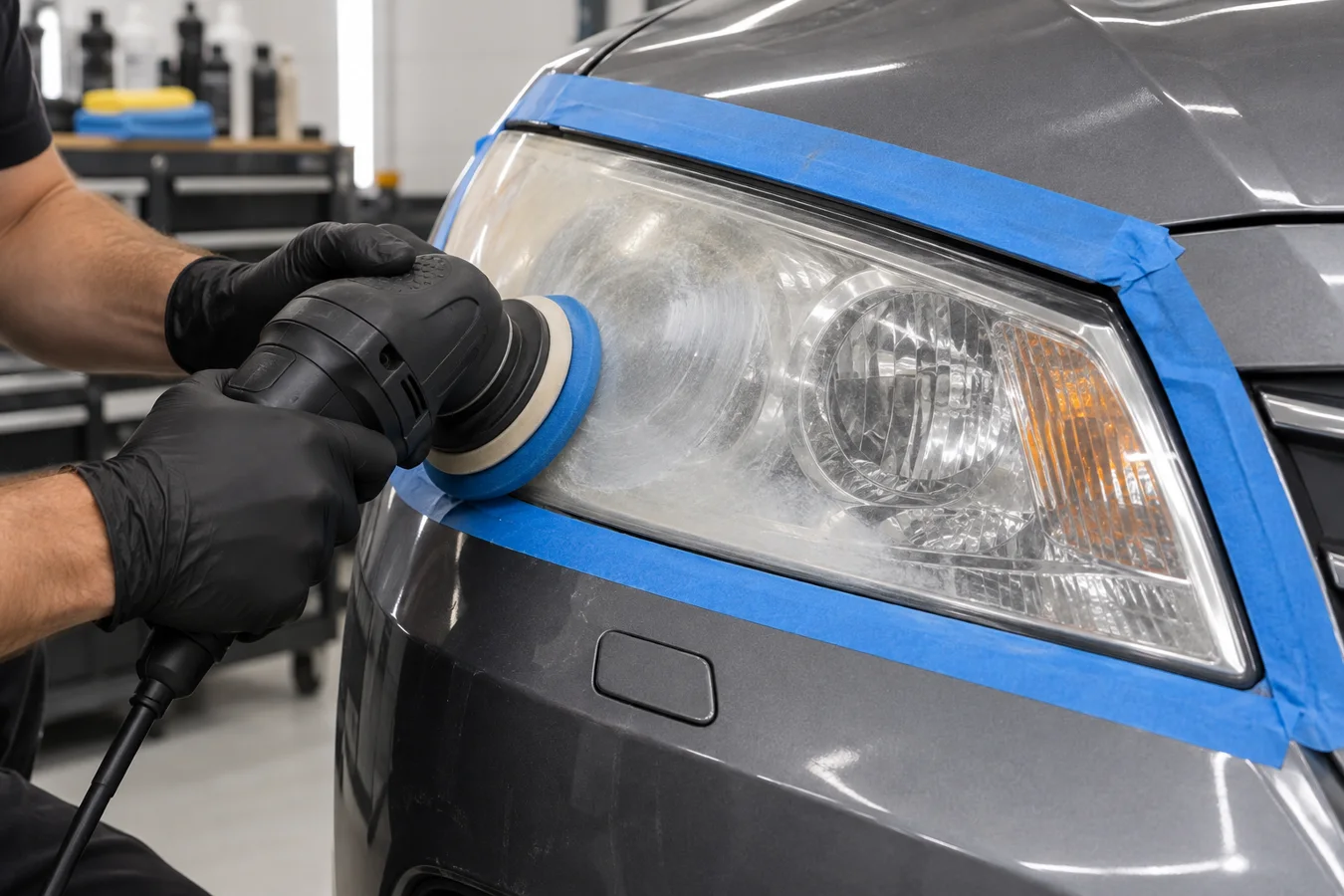
Polishing cannot repair a cracked housing, failed electronics, damaged reflectors or broken mounts. Returning haze or moisture needs reassessment.
The same model can have different headlight equipment by trim and year. Mechanics can assess the fitted system before a replacement is ordered. Tell us whether dipped beam, high beam, DRL or an adaptive function is affected.
| System fitted | Components to distinguish | What changes the repair |
|---|---|---|
| Halogen | Replaceable bulb, holder, wiring and reflector or projector. | Correct bulb type and rating, holder condition and access. A damaged connector should be addressed rather than fitting another bulb into it. |
| HID, xenon or bi-xenon | Gas-discharge light source, ballast and ignition components. Bi-xenon designs can use a shutter for high and low beam. | A starting or flickering fault is not proof that the bulb alone has failed. If one beam mode works, the switching mechanism may need checking. High-voltage components require professional handling. |
| LED or bi-LED | LED light source, driver/control unit, optical components and the fitted cooling arrangement. | Some parts are serviceable and others are integrated. A failed high-beam function can involve a shutter on some designs. Confirm the available repair parts for that lamp. |
| Adaptive, Matrix LED or laser-assisted | Lighting electronics, controlled beam functions and vehicle inputs. Equipment differs between models. | Identify the failed function, supported component repair and setup procedure. A matrix or laser label does not establish universal repairability or a fixed price. |
Lamp designs vary. These are repair distinctions, not a promise that every internal component can be repaired on every vehicle.
The front cover is often called headlight glass, but many modern lamps use a polycarbonate lens. Surface restoration, a replacement cover and a complete lamp are different jobs. Material and construction must be checked before choosing a treatment.
Tell us whether the lamp or bumper has already been removed. Confirm any required mounting repair, assembly replacement and beam check on the quotation. Access work, damaged brackets and additional parts should be identified separately so a small visible crack does not become an unexplained fitted bill.
Halogen, xenon and LED systems use different parts. Some LED lamps have integrated light sources; a universal bulb is not a solution for every fault.
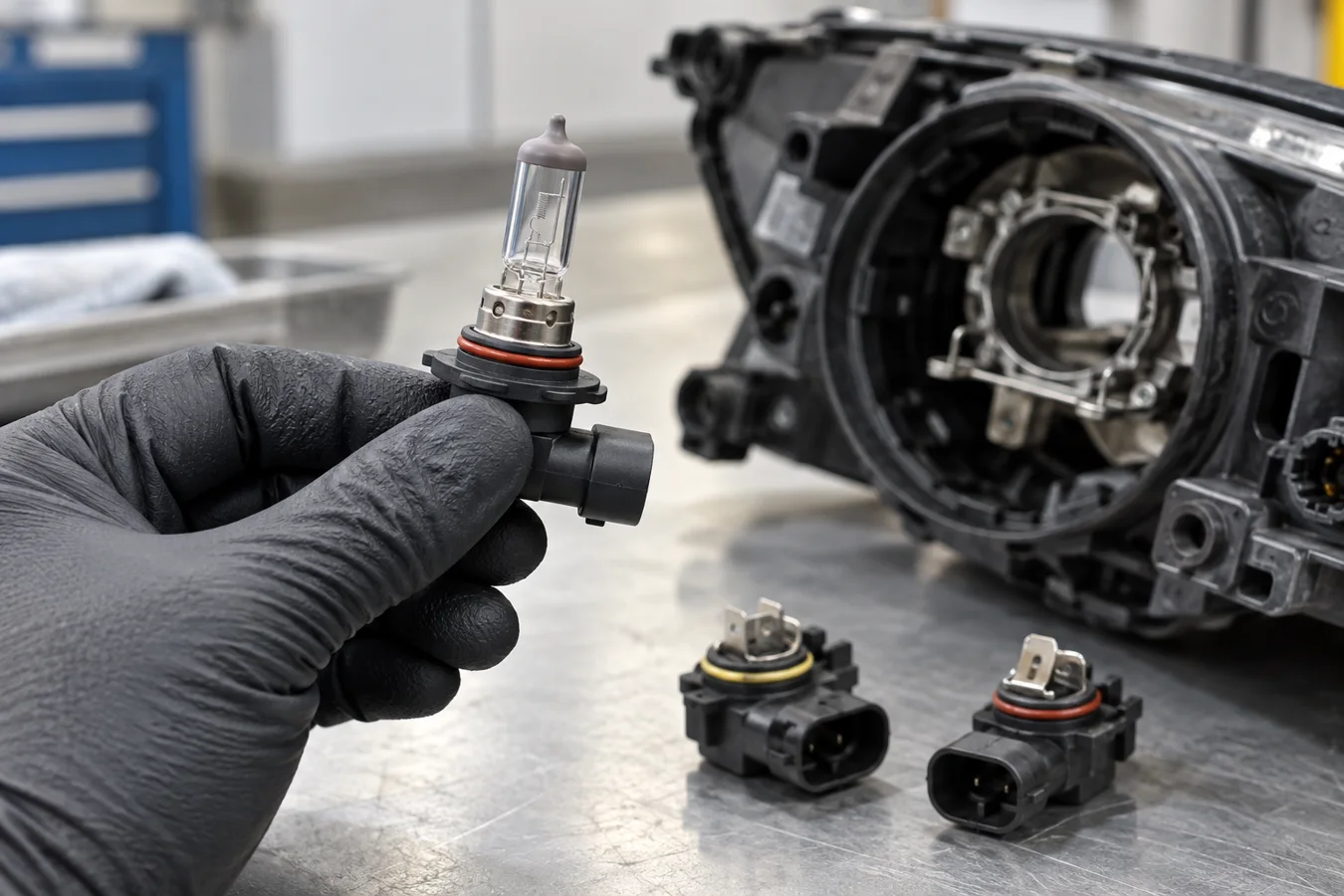
Similar shape does not guarantee compatibility. See Audi headlight repair for that application.
Confirm the vehicle-maker reference and whether modules, fitting and setup are included.
Compare the specified functions, fit, complete installed price and written coverage.
Check mounts, moisture history, lens condition, included modules and programming needs.
A lamp can still illuminate while an adaptive function has stopped working. Describe the warning and the change you notice, rather than assuming the complete headlamp has failed.
Automatic levelling systems can depend on vehicle-height sensors, their links, wiring, actuators and control units. Damage or an incorrect basic setting can affect beam position. Cornering functions may use other vehicle inputs. The exact fault needs to be identified before replacing a lamp.
Mention recent suspension work, a change in ride height, a removed headlamp or an impact. This history helps distinguish a physical mounting problem from a sensor, setup or electrical fault.
On advanced systems, the lamp and vehicle electronics work together. A warning may involve lamp electronics, communication or another relevant system. Some designs also use cooling fans. Diagnosis and the manufacturer’s repair instructions determine what can be replaced separately.
Share the exact warning, the affected side and whether the main light, individual segments or automatic high beam have stopped working. Keep any useful photo or video of an intermittent fault.
Ask whether the proposed job needs lamp coding, a basic setting, optical adjustment or a separate sensor calibration. These are different operations. Camera or ADAS calibration should be quoted when the specific repair requires it, rather than added automatically to every headlight change.
Replacing the same bulb or fuse repeatedly can leave the original fault unresolved. Explain when the problem occurs and what has already been changed.
A diagnostic message helps locate the affected function, but the relevant supply, earth, connectors and component operation still need assessment. Check the affected side against the other lamp where appropriate. Previous splices, accessory wiring and impact repairs are useful information for the technician.
Record which function fails and whether it affects one side or both. The assessment may include the relevant fuse, power supply, earth connection and voltage drop under load. Switching circuits and any fitted relay are considered using the vehicle’s wiring information.
Tell us if the light fails only when warm, after rain or washing, or when another electrical load switches on. Photographs or a short video can preserve an intermittent symptom that is absent during the appointment.
Ventilated lamps can show temporary condensation. Persistent droplets, pooled water or corrosion call for checking covers, seals, vents and connections. A damaged housing may need replacement. Avoid improvised drilling, blocked vents or a cosmetic sealant treatment that makes future servicing difficult.
Describe whether one or both lamps are affected and whether the moisture clears. Photos taken before the unit dries help the assessment. Any moisture-related damage to a driver or connector should be included in the repair decision.
A blown fuse or a stored fault code is a finding, not a complete diagnosis. The cause still needs checking. On electronic lamps, actuator tests and communication checks may be appropriate. Do not fit a higher-rated fuse or bypass a protective circuit to keep a faulty light working.
Tell us the function and affected side so the correct circuit can be assessed.
A DRL strip may have its own driver or an integrated component. Mention whether the main headlight still works.
Identify the rear position, brake, reverse or indicator function. One housing can contain separate circuits.
Check the bulb, housing, switch, connector or wiring for the affected function.
Confirm optical, electrical and regulatory suitability before ordering. Physical fit or extra brightness alone does not establish compatibility.
Brighter is not always better. A headlight only works well when the light source matches the lamp it sits in, so we check the lamp design before recommending any upgrade.
| Option | Best suited to | What to check first |
|---|---|---|
| Better halogen bulbs | Halogen lamps that look dim | Correct bulb type, lens condition and aim. |
| LED bulb conversion | Lamps designed or approved for LED use | Beam pattern, glare for other drivers, cooling space and warning messages. |
| HID or xenon conversion | Projector lamps built for xenon | Ballast fit, wiring, self levelling and washer needs. |
| Complete LED or matrix headlamp | Owners wanting a factory style upgrade | Exact part number, coding, adaptive functions and cost. |
| Fog and auxiliary lights | Better low level light in dust or rain | Switching, wiring protection and correct aim. |
An LED or HID bulb in a lamp made for halogen can scatter light and dazzle oncoming drivers. We test the cut off line on the wall before handing the car back.
Many cars watch the bulb circuit. A poor conversion can trigger bulb warnings or flicker, which a correct driver or coding avoids.
Rear lights and indicators need the right brightness and timing. See our tail light replacement page for rear lamp work.
Agree the work, fitted cost and required setup before the repair begins.
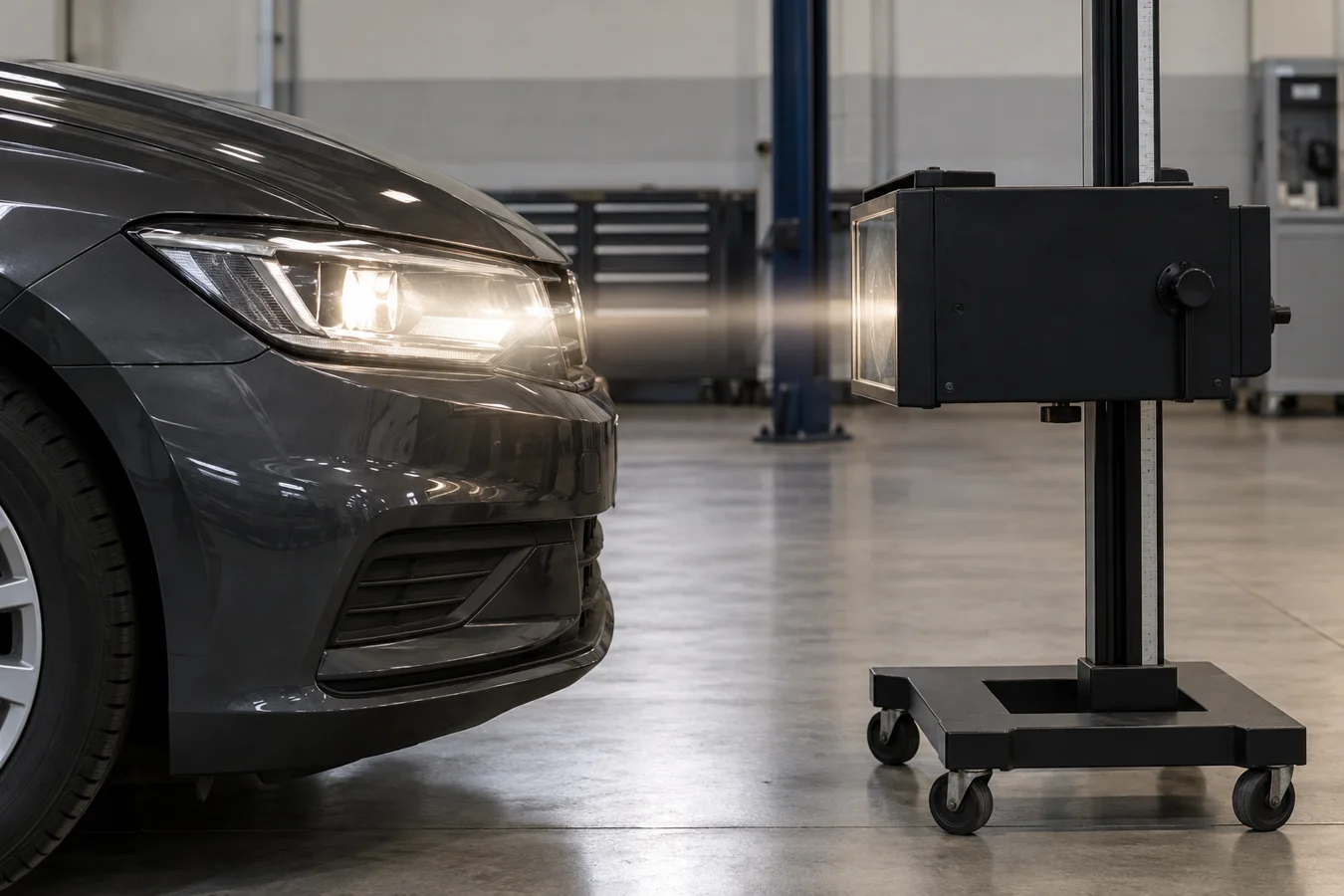
Confirm the affected function, parts, fitting, VAT-inclusive total and expected time. Additional findings need a separate agreement.
Follow the vehicle procedure. Coding, initialisation, optical adjustment and calibration depend on the fitted system.
Check the repaired light, relevant beam or levelling functions, mounting and warnings. Confirm aftercare and written coverage.
If an intermittent fault could not be reproduced, agree what to record if it returns. A cleared warning alone does not prove the cause is resolved.
A photograph and the model year help us distinguish a bulb, lens or electrical fault. A precise quote follows the vehicle and repair requirements.
Published Dubai market examples advertise halogen bulb replacement at AED 100 to 150, HID or replaceable LED bulbs at AED 250 to 600, lens restoration at AED 150 to 300 and complete units at AED 900 to 3,000 or more. These are comparison figures, not Mechanics tariffs. The source does not confirm VAT, per-lamp quantities or every fitting inclusion. Request an itemised total for your exact car.
Sometimes. A compatible replaceable bulb, damaged connector, external driver or repairable surface haze may allow a smaller repair. Internal damage, broken mounting points, a cracked sealed housing or a non-serviceable integrated light source may require an assembly. The inspection determines which option is suitable.
External oxidation can often be improved by suitable surface restoration. Internal haze, deep cracks, damaged reflectors and electrical failures are different problems. Ask which finishing protection is included and what limitations apply to the condition of your lens.
A light film that clears can be normal in a ventilated lamp. Persistent droplets, pooled water or corrosion need assessment of the seals, rear covers, vents, housing and connections. Drying the lamp alone does not resolve an ongoing entry point.
The bulb may be incompatible, the holder damaged, the connection poor or moisture present. The circuit and supply also need checking. Record which side fails and how soon after replacement, so the diagnosis can address the cause instead of repeating the same bulb change.
Some replacement lamps or control units require model-specific coding, initialisation or adjustment. Others do not. Confirm the vehicle specification, supplied modules and manufacturer procedure before ordering. Coding, beam adjustment and any separate calibration should be identified on the quote.
Replacing a pair can help match colour and output when the other bulb is similarly aged. It is not automatically necessary to replace two complete assemblies because one side failed. Inspect both sides and compare the cost and condition before choosing.
A straightforward accessible bulb replacement is a shorter job than removing a bumper, tracing a circuit or sourcing an adaptive lamp. Confirm the appointment, parts availability, workshop time and collection estimate after the vehicle and fault are assessed. Pickup time is separate.
No. A bulb that physically fits is not necessarily compatible with the reflector, beam pattern, electronics or applicable lighting requirements. Repairing the approved original configuration is usually the first option to assess. Discuss any proposed change before ordering parts.
Coverage depends on the selected part and the agreed work. Ask for the supplier or workshop coverage, duration, exclusions and claim process in writing. No universal duration applies to every bulb, restored lens, used assembly or electrical repair.
The functions may use separate bulbs or share an optical module, depending on the lamp. The affected light source, supply, switching mechanism and controls need checking. A working high beam does not rule out a lamp or circuit fault.
Sometimes, when a compatible cover and suitable repair method are available. The housing, mounting, optics and electronics must also be sound. Confirm resealing, testing and coverage before choosing a cover replacement instead of an assembly.
No. The relevant system can include height sensors, links, wiring, actuators and control units. Recent suspension or lamp work can also make the setup important. Diagnosis should identify the affected part and any required basic setting.
No. Lamp coding, a basic setting, beam adjustment and camera calibration are different operations. Follow the requirements for the exact vehicle and repair. Any separate calibration should be explained and identified on the quote.
Send your car details, the affected side and a clear photo. Mention any warning, impact, moisture or recent bulb replacement. Ask about the inspection, fitted quote and available appointment. Pickup arrangements and any transport charge are confirmed separately.
Illustrative images on this page are AI generated and do not show verified Mechanics employees, premises or customer jobs.