Call to confirm opening hours Car repair, service and body shop in Al Quoz, Dubai +971 50 608 7150
Wheel and tyre checks in Al Quoz

Wheel Alignment & Balancing in Dubai

Uneven tyre wear, an off-centre steering wheel or vibration? Mechanics checks what the symptom needs before proposing alignment, balancing or repairs to the wheel and suspension.

Four-wheel alignment has a published planning budget of AED 157.50–315 per vehicle including VAT. Balancing is priced per wheel. Compare the work below, then ask for a quote matched to your car.

Vehicle-specific settingsWork explained before adjustment
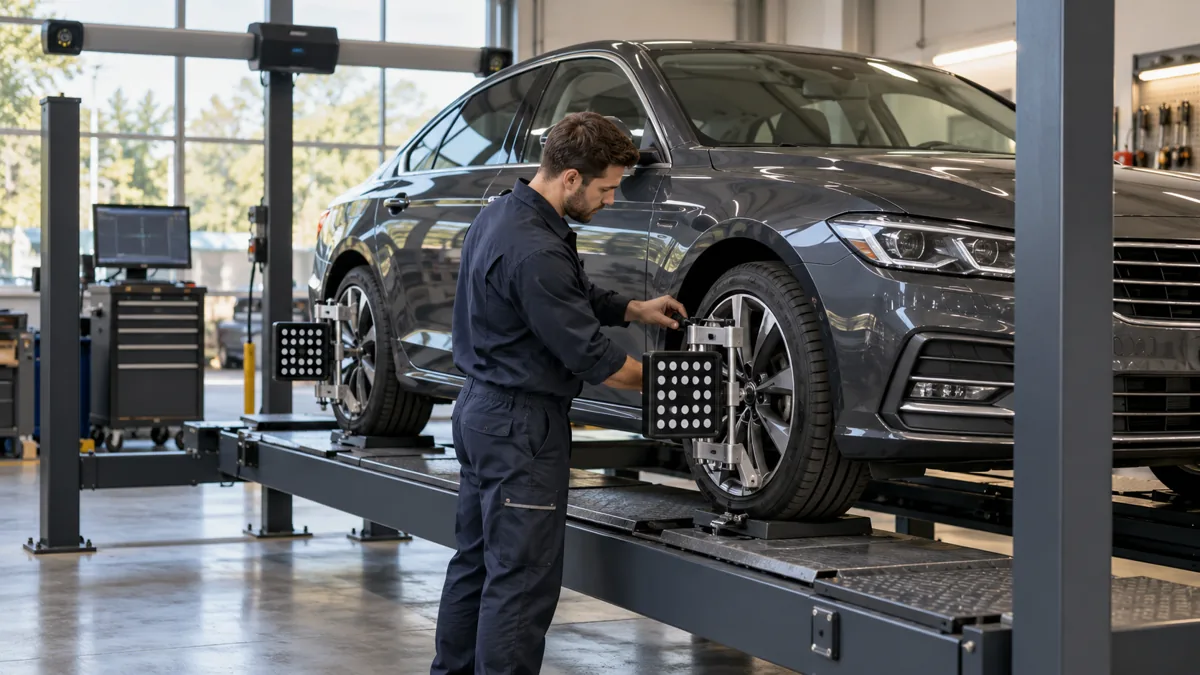
Optical alignment targets mounted on a car on a drive-on rack
Optical targets mounted for alignment measurement.
Compare the same work

Alignment and balancing prices

These published Dubai planning figures help you budget. Mechanics confirms its own vehicle-specific quote. A geometry check, an adjustment and balancing are separate items.

WorkPlanning figure including 5% VATUnit and work to confirm
Alignment measurementPublished starting prices AED 52.50–105Per vehicle. Measuring the angles is different from adjusting them. Confirm the check charge and any credit if you proceed.
Four-wheel alignmentAED 157.50–315Per vehicle. Measurement and suitable factory adjustments. Tyres, damaged parts, seized adjusters and additional calibration are separate.
Wheel balancingFrom AED 31.50Per wheel. Confirm the number of wheels, weights, wheel removal and refitting, and whether any extra vibration diagnosis is needed.
Specialist geometry setupAED 315–630Per vehicle as a planning range. Model-specific setup, adjustable suspension and access can change the work and total.
Two different services

Choose the work your car needs

Geometry and balance affect the car in different ways. The first check should distinguish the symptom rather than sell a combined package by default.

Wheel alignment

Alignment concerns the position and angles of the wheels relative to the vehicle and each other. The readings are compared with the correct specification, then the supported adjustments are made.

  • Useful for investigating an off-centre steering wheel or uneven wear
  • Checks front and rear relationships even where the rear has limited adjustment
  • Does not repair a worn joint, bent part or damaged tyre

Wheel balancing

Balancing concerns the rotating tyre and rim assembly. A machine measures imbalance, and suitable weights are fitted to correct it. The wheel needs to be mounted and centred correctly during the check.

  • Relevant to vibration that appears at particular speeds
  • Required when new tyre assemblies are fitted
  • Does not straighten a bent rim or correct suspension geometry
Describe what happens

The symptom guides the first checks

Tell us when the change began, whether it follows an impact or recent work, and whether it happens continuously or at a particular speed.

Pulling or an off-centre wheel

Geometry is worth checking, but tyre pressures, tyre condition and other faults can also affect straight-line behaviour. A pull is not a confirmed alignment diagnosis. Explain whether it changes under braking or began after tyres were fitted.

Uneven tread wear

Show the worn edge and the opposite tyre. Existing wear cannot be reversed by an adjustment. If a tyre is damaged or no longer serviceable, discuss tyre replacement as well as the cause of the wear.

Vibration or a recent impact

Balance, tyre condition and wheel runout may need checking. A kerb or pothole strike can affect more than one component. If a rim is damaged, rim repair is a separate decision from adding balance weights.

Severe vibration, visible tyre damage or impaired steering needs prompt assessment. Do not treat an alignment appointment as confirmation that the car is safe to drive.

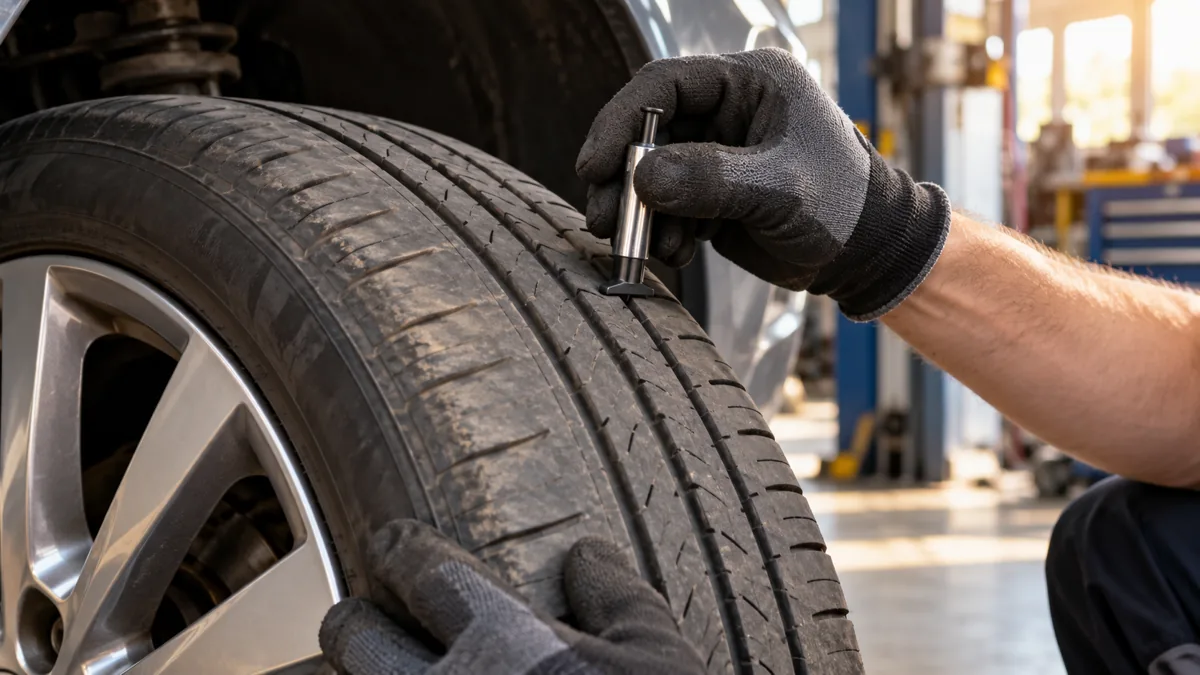
Tread depth being checked on a stationary car tyre
Checking tread depth and tyre wear.
Measurement and evidence

What the equipment tells you

Ask for the initial and final readings, the selected vehicle specification and an explanation of anything that could not be corrected.

Alignment rig and wheel targets

An aligner uses wheel sensors or optical targets to measure geometry. Camera-based systems can calculate the positions of fitted targets. The correct vehicle selection, wheel mounting, pressures, ride height and setup matter as much as the display.

Toe describes the direction the wheels point relative to each other. Camber describes their inward or outward tilt viewed from the front. Caster describes the steering-axis tilt viewed from the side. The vehicle design determines which values can be adjusted.

Balancing machine

A balancer measures imbalance in the tyre and rim assembly. Appropriate centring and weight placement are important. Road-force measurement is an additional diagnostic capability and should not be assumed to be part of every balancing service.

Ask for the machine make and model, wheel-size coverage and any special procedure when booking. For a modified setup or a persistent vibration, confirm the additional measurement capability needed for your car.

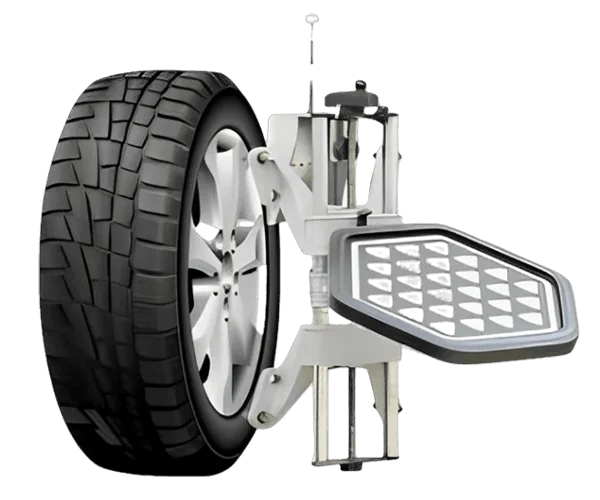
Optical wheel-alignment target and clamp mounted on a wheel
Optical alignment target mounted on a wheel.
Prepare the car correctly

When another repair comes first

Start with a car that can hold the intended settings. These checks decide whether adjustment can proceed or another repair is needed.

Tyres and wheels

Check pressures, tread condition and wheel damage. Worn or damaged tyres need a separate decision before the alignment result can be assessed.

Steering and suspension

Check ride height and relevant play. Loose or damaged parts may need suspension repair before an adjustment can hold.

Available adjustment points

Camber and caster are not adjustable on every model. Ask which readings can be corrected and whether a bent part or changed ride height explains a remaining limit.

Share the model, year and recent work so the quote starts with the right checks.

From arrival to handover

A clear sequence for the work

Agree what is being checked and adjusted, and keep the results with your service records.

01

Check the starting condition

Explain the symptom and recent tyre, steering or suspension work. The initial checks establish whether alignment, balancing or another assessment is the next step.

02

Measure and agree the work

The applicable vehicle settings and initial readings guide the proposal. Confirm the included adjustments, balancing quantity and any separate repairs or calibration.

03

Complete the supported correction

Factory adjustment points are used where available. Wheels requiring balancing are mounted and checked separately. Additional findings need a revised decision.

04

Review the result

Ask for before-and-after readings, remaining limitations and the agreed functional or road checks. Keep the invoice and any relevant reset or calibration record.

Investigating vibration

Balancing and the wheel condition

A weight correction and a damaged tyre or rim are different problems. Describe the speed and driving conditions where vibration appears.

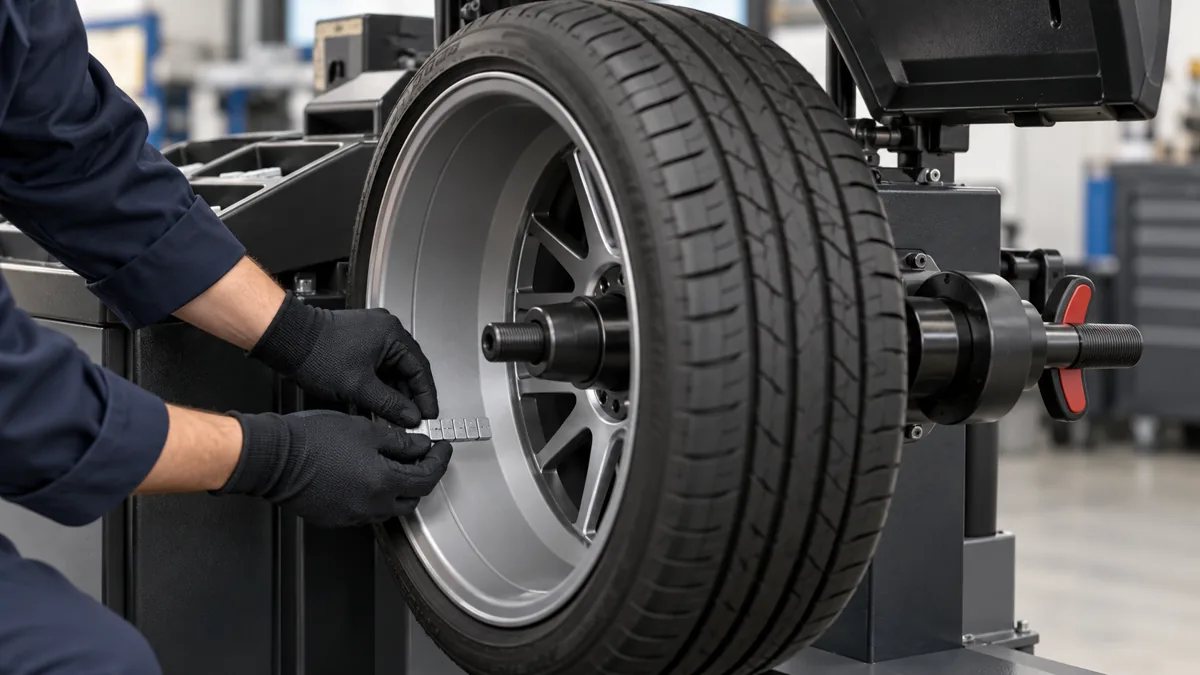
Wheel and tyre assembly mounted on a stationary balancing machine
Stationary wheel setup on a balancing machine.

Balancing starts with a tyre and wheel assembly suitable for testing. Confirm whether the quote covers one wheel or a complete set, removal and refitting, and the required weights. Wheel size, unusual fitment and access can affect the work.

A wheel can be balanced yet still have a tyre or rim condition that affects the ride. If vibration remains, the next step may be a runout check, a more detailed tyre assessment or a supported road-force test where available. Repeating the same balancing operation does not identify every cause.

Explain whether the symptom began after new tyres, a puncture repair or wheel removal. Mention changes in tyre size and any previous attempt to correct the problem. These details help the workshop choose the useful checks.

Allow time for the actual work

Plan your visit and collection

Call with the model, year, wheel size and symptoms. Confirm vehicle coverage, the appointment and the expected collection time before travelling. Mechanics offers car pickup across Dubai and written quotes on WhatsApp. Ask about pickup availability and charges when scheduling.

How long it can take

Published workshop timings commonly allow about 45–60 minutes for a straightforward alignment and about 30–45 minutes for balancing a set. These are planning guides for the work, not a guaranteed door-to-door appointment.

Setup, investigation, seized adjusters, repairs and any required electronic procedures can extend the visit. Ask whether alignment and balancing can be completed together and whether the quoted time includes the initial checks.

What to bring and ask for

Bring recent tyre or suspension invoices and previous alignment readings if available. Tell us about an impact, a changed ride height or warning messages.

Confirm the written total, any recheck conditions and the terms for the actual work. Later impacts, changed settings and unrelated component wear may affect the result. Keep the readings and the invoice for follow-up.

Choose what changed

After tyres or suspension work

Select what happened to your car to see the useful next check. Follow the vehicle-maker procedure and the condition of the car.

Balance the new tyre assemblies

New tyre and wheel assemblies need balancing when fitted. An alignment check can show whether geometry contributed to wear on the removed tyres. Tyre replacement alone does not mean every angle needs adjustment.

Bring or sendThe tyre fitting invoice, wheel size and photos of the previous wear if available.

Confirm the geometry after the work

Steering or suspension work that affects geometry may require alignment. A significant impact or changed handling can also justify a check. Confirm the vehicle procedure and repair any damage that prevents the settings from holding.

Bring or sendThe repair invoice, changed parts, ride-height details and when the impact occurred.

Compare the readings and investigate

Record when the pull, wear or vibration returns. A recheck can distinguish a changed setting from tyre condition, wheel damage or another fault. Previous readings are more useful than repeating the same adjustment without identifying the cause.

Bring or sendThe previous alignment report, invoice and the speed or conditions where the symptom occurs.
Before booking

Wheel alignment questions answered

Answers about the work, prices, equipment and follow-up.

How much does wheel alignment cost in Dubai?

A published four-wheel alignment planning range is AED 157.50–315 per vehicle including 5% VAT. Specialist geometry setup can cost more. Wheel balancing has a published starting example of AED 31.50 per wheel including VAT. These figures are planning guides. Mechanics confirms the required work and its own quote.

Is alignment the same as balancing?

No. Alignment measures and adjusts suspension geometry to the vehicle specification. Balancing addresses uneven mass distribution in a tyre and wheel assembly. A car may need one, both or a different repair after the symptoms are checked.

How long should I allow for the appointment?

A straightforward alignment is commonly quoted at about 45–60 minutes, and balancing a set at about 30–45 minutes. These are planning times for the work rather than guaranteed appointment lengths. Setup, diagnosis, repairs, seized adjusters and any required calibration can extend the visit.

Can every camber and caster reading be adjusted?

No. Factory adjustment points depend on the model and suspension. Some readings are measured but cannot be changed by a normal adjustment. An out-of-range value may call for checking ride height, worn or bent parts, previous repairs or a modified setup.

What alignment equipment is used?

An alignment rig measures wheel geometry against the selected vehicle specification. A wheel balancer measures imbalance in the tyre and rim assembly. Ask for the machine make and model, wheel-size coverage and any specialist procedure for your vehicle when booking. Confirm separately whether road-force measurement is available if your vibration assessment needs it.

Should I check alignment after fitting new tyres?

New tyre and wheel assemblies need balancing when fitted. An alignment check can help establish whether geometry contributed to earlier wear. Adjustment should follow the measurements and the applicable vehicle procedure rather than be added automatically to every tyre change.

Is ADAS calibration included in alignment?

Alignment, a steering-angle sensor reset and driver-assistance calibration are different operations. The manufacturer procedure for the exact model and work determines what is required. Ask for any additional procedure and cost to be identified on the quote.

What if the car still pulls or vibrates afterwards?

Return with the readings and describe when the symptom occurs. Tyre condition, pressures, wheel runout, steering, suspension and other faults may need further checks. Repeating alignment or balancing without identifying the remaining cause may not resolve it.

What warranty applies to the work?

Confirm the written terms for the agreed service, any recheck and any installed parts. Ask about the coverage period, exclusions and return procedure. Later impacts, changed suspension settings and unrelated wear can affect the result. There is no universal warranty duration stated for every job.
Mechanics in Al Quoz

Get the right wheel service quoted

Share the make, model, year, wheel size and the symptom. Mention new tyres, suspension work or an impact so the proposal starts with the right checks.

Call WhatsApp quote
Scroll to Top