Correct a related fault
If output is being affected by damaged wiring, poor grounds or the belt drive, that work is quoted separately. Replacing a healthy alternator would leave the original problem unresolved.
Battery light on, repeated flat battery or charging trouble? Mechanics tests the charging system, identifies the cause and quotes alternator repair or replacement. Get the fault explained before paying for a new unit.
Replacement guide AED 800–2,500
Parts and labor guidance for a conventional alternator. Vehicle specification and access affect the total. Confirm VAT and any additional repairs.
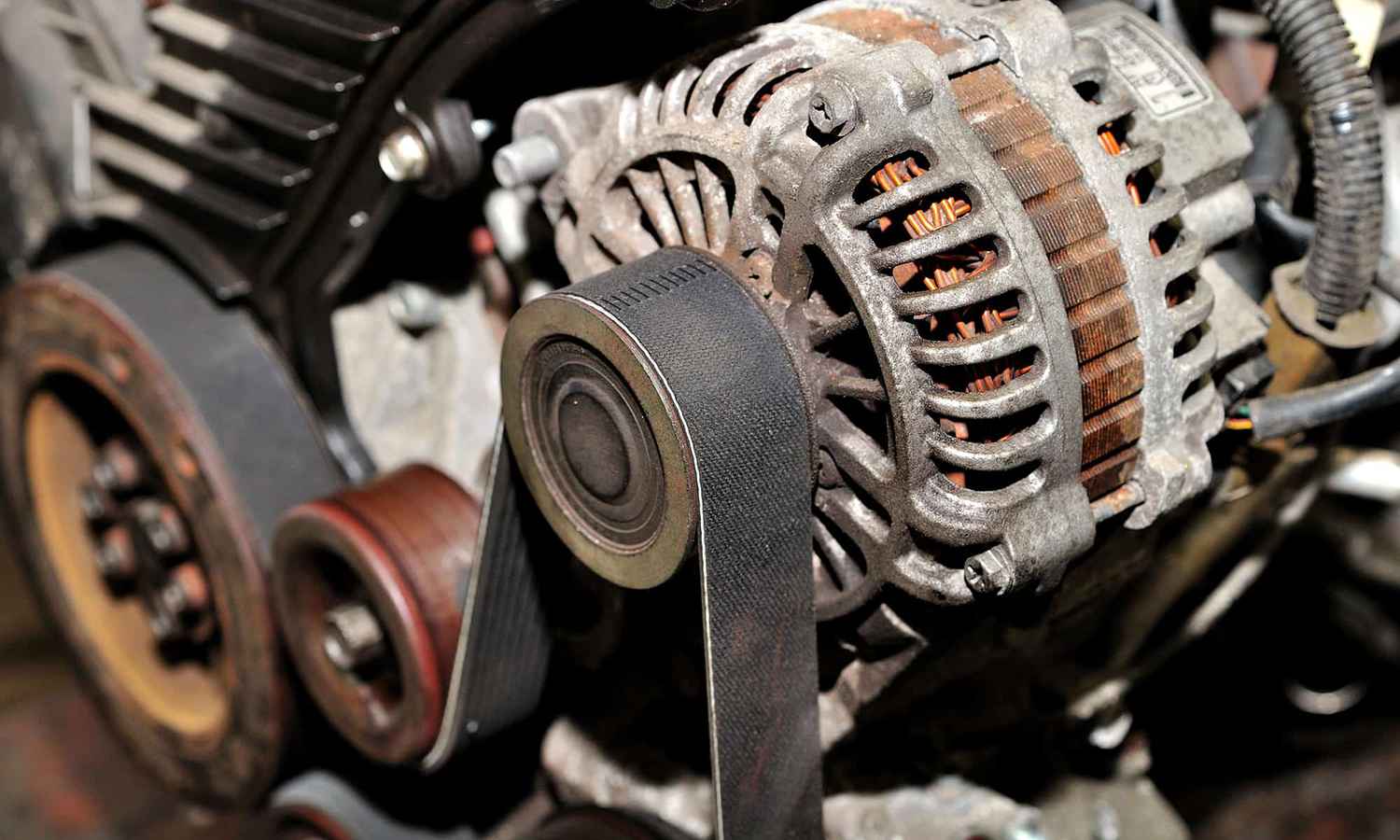
A battery warning is a charging-system warning. It does not identify the alternator as the failed part. Testing helps avoid buying a unit when the problem is a connection, belt or battery.
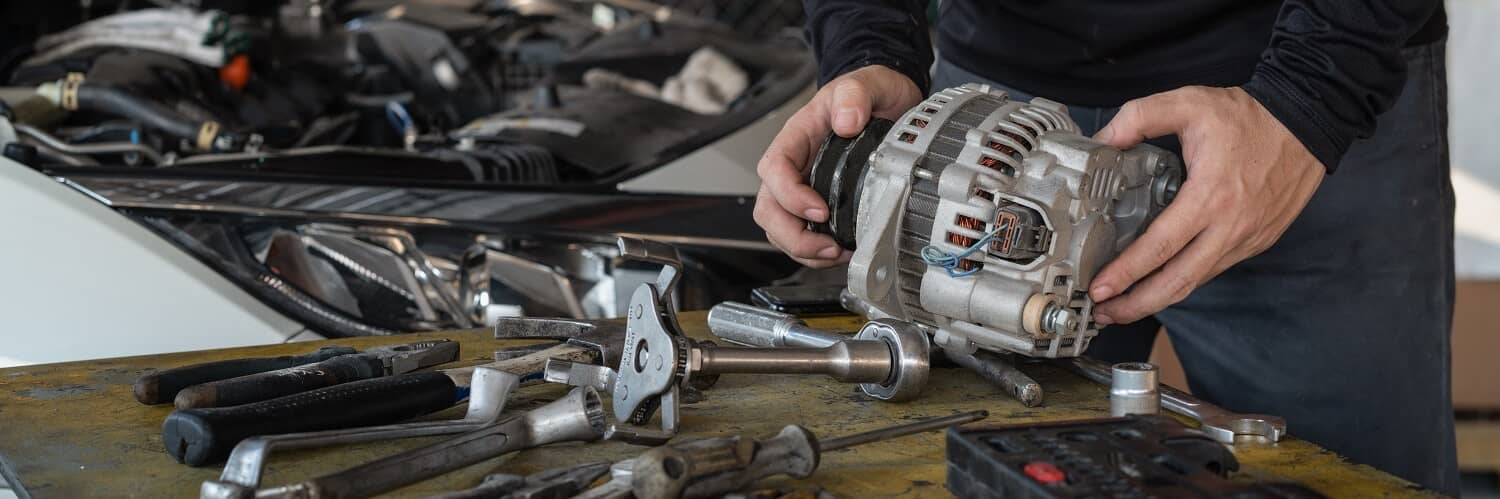
If output is being affected by damaged wiring, poor grounds or the belt drive, that work is quoted separately. Replacing a healthy alternator would leave the original problem unresolved.
A regulator, bearing, brush assembly or pulley may be repairable on a suitable unit when the rest remains serviceable and the correct parts are available. Internal damage and the unit design determine whether a component repair is sensible.
Extensive damage, repeated failure or an unavailable repair part may favor a complete replacement. Compare a compatible new unit with a properly remanufactured option where available, including the warranty and total fitted cost.
The price of a replacement depends on output rating, electronic control, the chosen part and how much must be removed to reach it. A basic replacement estimate does not include every charging-system repair.
Indicative parts and labor range for one alternator.
Specialist, high-output and difficult-access applications can exceed this guide. VAT treatment must be confirmed in your quote.
A small component repair and a full rebuild are different jobs. We first establish whether the unit can be repaired and what testing is needed, then compare its fitted cost with replacement.
Send the model, year, engine and warning message for a vehicle-specific estimate. A photo of the original part label can help when it is safely accessible.
The initial inspection is free. Detailed electrical testing, removal for assessment and bench testing can be chargeable and are agreed before proceeding. Ask about parts availability and the warranty on the exact repair.
A useful diagnosis checks how the battery, alternator, cables and vehicle controls work together. One voltage reading or a successful jump start is not enough to confirm the failed component. For an unconfirmed no-start cause, see our starting-fault diagnosis before deciding which component needs repair.
A discharged battery may need suitable charging and a performance test. Its ability to crank and accept charge matters. If testing confirms a failed battery, our battery replacement service covers the correct technology and fitting requirements.
Cables, grounds, terminals, connectors and fusible links are checked as the symptoms require. A voltage-drop test can reveal resistance that a simple visual inspection misses. A good alternator cannot compensate for a defective connection.
Slipping, misalignment or a worn tensioner can interrupt charging. Noise also needs to be traced because an adjacent pulley can sound like an alternator bearing. Confirm the source before deciding which assembly to replace.
Charging output is assessed against the vehicle procedure and electrical demand. Where indicated, fault codes, live data, control communication and ripple testing help separate an internal fault from a control or supply problem.
A charging fault can produce excessive output as well as too little charge. Sustained overcharging can damage the battery and electrical components. The battery, voltage-sensing connections and regulator need assessment before deciding which part has failed.
A higher reading is not automatically better. Compare it with the vehicle’s charging strategy and the conditions during the test. If the problem returns after a battery or alternator replacement, bring the previous repair details so the cause can be checked before another unit is ordered.
A stored low-voltage code can be a consequence of the fault. Ask which test confirms the repair recommendation. DENSO’s diagnostic guidance also emphasizes checking related circuits before condemning an alternator.
A charging failure can leave the car running only until the battery can no longer support its electrical systems. There is no reliable distance or driving-time allowance.
If the battery light appears with burning smells, smoke, rising engine temperature, severe belt noise or a loss of electrical functions, pull over safely, switch off and arrange recovery. Do not continue a journey to test how far the car will go.
Never disconnect a battery terminal with the engine running as an alternator test. Keep hands and tools away from a moving belt or fan. Call +971 50 608 7150 with the warning and your location to discuss the appropriate next step.

Mention how long the car was parked, recent jump starts and any aftermarket equipment. Discharge while parked can require a separate current-drain investigation. Replacing the alternator without testing may not address it.
Tell us whether it appears after a long drive, at idle or with electrical equipment in use. An intermittent concern may need testing under those conditions and can take longer than a straightforward replacement.
Bring the previous invoice and fitted part details. Repeated failure makes battery condition, connections, belt drive, contamination and part compatibility especially relevant. A second replacement should not be the first assumption.
Many vehicles vary alternator output electronically. A reading that changes with temperature, battery charge or electrical demand can be normal for that system.
The regulator may communicate with the engine or energy-management system. Charging requests, actual output and relevant wiring need to be considered together. A universal charging-voltage cutoff is not a reliable diagnosis for every car.
Correct battery technology also matters. If a battery is replaced during the repair, registration or adaptation follows the vehicle requirement. It is not an automatic alternator-coding fee.
A belt starter-generator, integrated starter-generator or DC-to-DC charging system needs a different assessment from a conventional alternator. Share the exact model, year and warning before comparing prices.
The AED 800–2,500 guide does not price high-voltage components or every 48V assembly. Suitable procedures, parts and technician capability must be confirmed for that vehicle.
Record the complaint, battery condition and charging findings. Explain any further test or removal needed before it is carried out.
State the parts choice, related work, fitted total, VAT and expected availability. Further work requires a revised approval.
Follow the vehicle procedure, address the agreed cause and check the belt drive and connections disturbed during the work.
Recheck charging behavior, battery condition and relevant warnings. Explain any remaining concern and give the invoice and warranty terms.
A straightforward conventional alternator replacement can take roughly two to three hours once the correct part is available. Difficult access, intermittent testing, a component rebuild or ordered parts can extend the visit. Confirm the collection time after assessment.
Confirm the exact application before a unit is ordered. Different engine variants and equipment packages can use alternators that look alike but are not interchangeable.
Keep the quotation and part details. Warranty duration and coverage depend on the supplied unit and agreed work, including any labor terms and exclusions. Do not assume a universal warranty applies to every repair.
Clear answers about the work, cost and next step for your car.
The guide is AED 800–2,500 for a conventional alternator with parts and labor. It is not a fixed price for every car. Confirm VAT, the selected unit, diagnosis, access and any battery, belt or wiring repair in the written quote.
Sometimes. A serviceable unit with an available regulator, bearing or other repair part may be suitable. The internal condition, repair cost and testing determine whether repair or complete replacement is the better option.
No. It can indicate a charging-system fault. The battery, alternator, drive belt, cables and controls need appropriate checks. A battery is replaced when its condition or performance justifies it.
A jump start may get the engine running, but it does not repair a charging fault or prove the battery is healthy. The car may stall or fail to restart. Arrange assessment and recovery when it cannot be driven safely.
Not every conventional alternator does. Some vehicles require a specific setup or diagnostic procedure, and the replacement regulator must be compatible. Ask which manufacturer-required procedure is included, rather than assuming coding is always needed.
Completion depends on the confirmed fault, access and the availability of a suitable unit or repair parts. A simple replacement may fit within one visit, while intermittent diagnosis or a rebuild can take longer. Ask for the expected timing before approving work.
Call with the car details, location and parking access. Pickup is available across Dubai, with suitable recovery arrangements and any charges agreed for an undriveable car. An inquiry does not confirm an immediate arrival.
Yes. A regulation or voltage-sensing fault can cause excessive charging, but the battery and related connections also need checking. The result must be compared with the vehicle specification. Replacing the battery alone does not correct an unresolved charging-system fault.
Tell us what the warning shows and when it happens. We’ll help arrange the inspection and explain the repair options before you approve the work.
+971 50 608 7150
Free initial inspection. Detailed diagnostics and repair work are quoted separately.
Make, model, year and engine
Warning, starting issue or repeated discharge
Recent battery or alternator work