Check power, connections and the start command
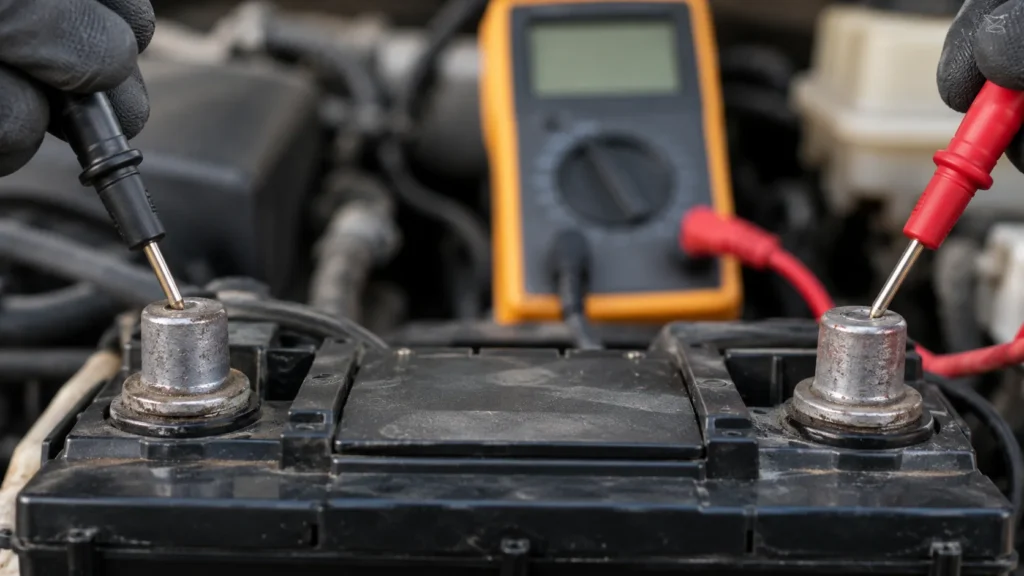
No crank means the engine is not being turned by the starting system. Low battery output, loose or corroded connections, a poor earth, starter supply or solenoid, a relay or fuse, and a missing start-authorisation signal can produce overlapping symptoms. Working dashboard lights do not prove the battery can deliver starting current.
Useful next stepTell us whether there is silence, rapid clicking, one click or slow turning, and whether the lights dim. Avoid repeatedly holding the key or button.
Check what is missing while the engine turns
If a petrol or diesel engine turns at a normal starting speed without firing, assessment moves towards fuel delivery, engine-speed and timing signals, start authorisation and mechanical condition. Petrol engines also need the correct spark. Slow cranking still needs power and starter checks before assuming a fuel fault.
Useful next stepSend the sound of the attempt if safe, the fuel level, warning messages and any earlier stalling. A silent fuel pump or a stored code alone does not confirm a failed part.
Establish why running is not sustained
Starting and then stopping can involve immobiliser authorisation, fuel pressure, air control, electrical supply or an engine fault. Record whether it stops immediately, after warming up or only under a particular condition. A successful restart does not establish that it is ready to drive normally.
Useful next stepStop repeated restarts if it keeps stalling. Tell us about warning lights, recent repairs and any change in engine sound.
Check the correct recognition method
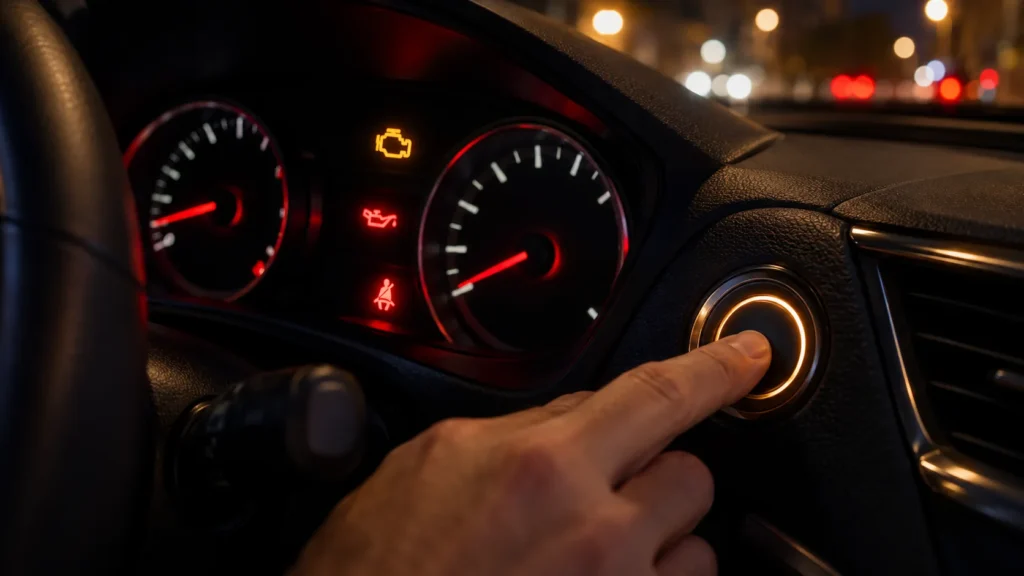
A weak remote-key battery, a missing key signal, a low vehicle supply or a start-authorisation fault may prevent starting. Use your vehicle manual for the backup-key position, which may be in a console slot rather than against the start button. A spare recognised key can provide useful information.
Useful next stepShare the exact display message and whether the spare key changes it. If a key fault is confirmed, see our
key fob repair service. Do not attempt to bypass the immobiliser or repeatedly force an unrecognised start.
Read the vehicle-ready state and alerts
A hybrid can be ready to move without its petrol engine running, and an EV has no conventional engine-cranking sound. Check the fitted ready indicator or drive status and record the exact warnings. Low-voltage supply, key recognition or another system fault may need assessment. A traction-battery charge display does not prove every starting system is working.
Useful next stepShare the model, ready/drive status and alerts. Confirm coverage for the vehicle and follow its specified assistance and transport procedure.
Leave it off when damage is suspected
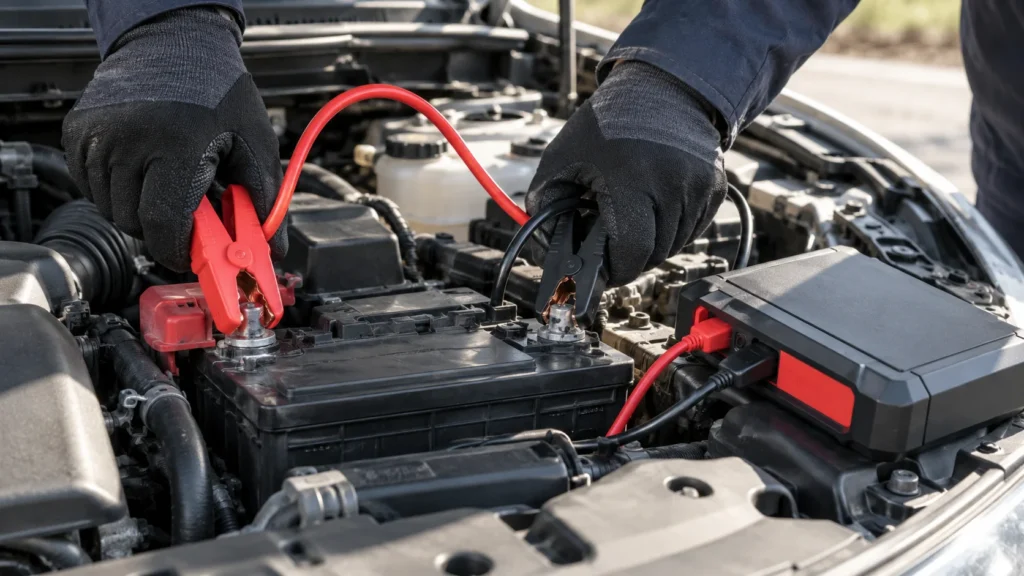
If the engine stopped in water, water ingestion is suspected or the vehicle was submerged, do not try another start or a jump-start. An abnormal mechanical noise, overheating event, smoke or fuel leak also changes the assessment. Rain exposure alone is different from an engine taking in water, but it does not prove restarting is safe.
Useful next stepExplain what happened and arrange suitable recovery or assessment before another attempt. Do not rely on leaving it in the sun as a repair.