In this guide
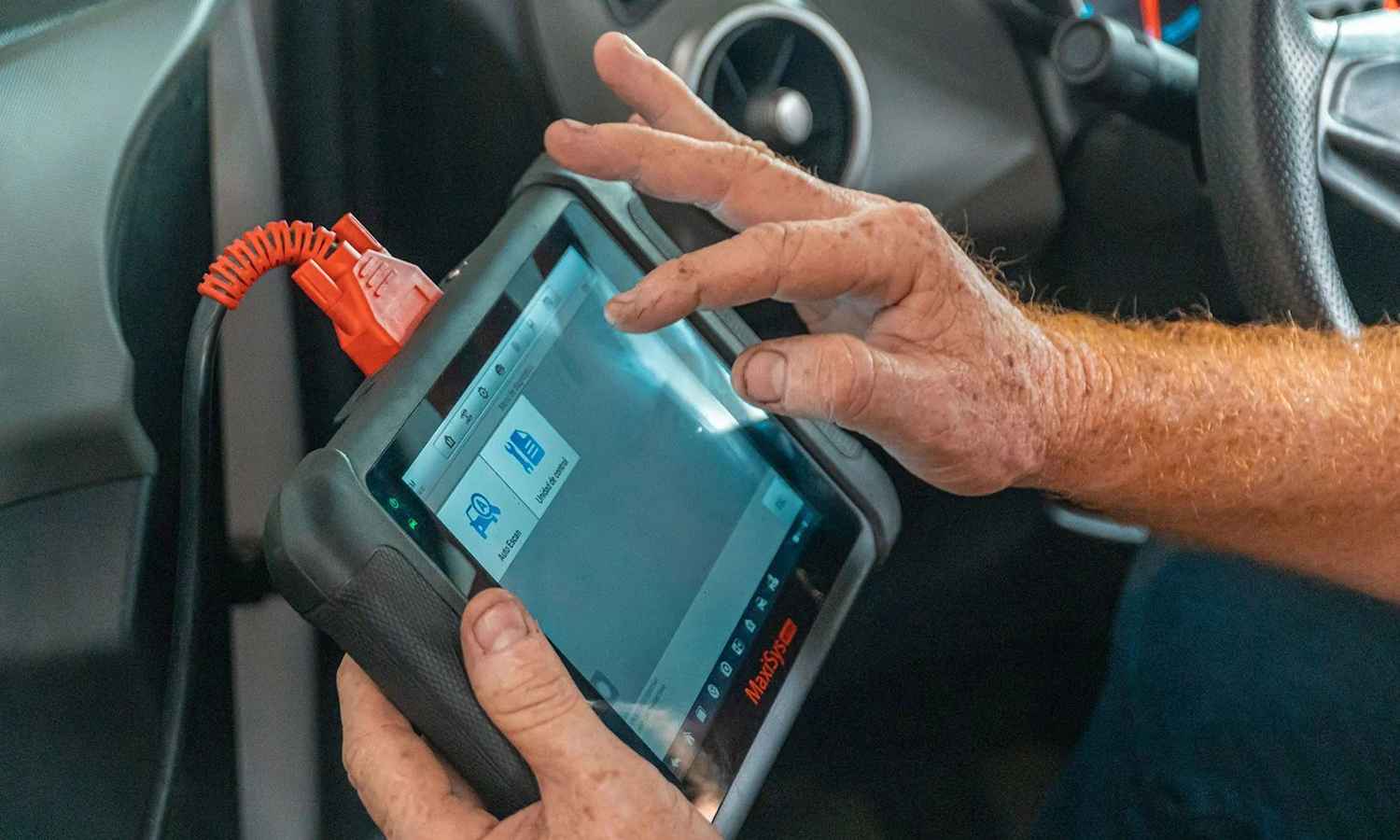
A car diagnostic report records information retrieved from the vehicle and, where included, the technician’s checks. It can show fault codes, accessible systems and useful operating data. It does not automatically identify the failed part or prove the whole car is healthy. Before approving repairs, look for the connection between your symptom, the computer finding and the test that supports the recommended work.
This guide explains how to read that connection. If you already have a warning or recurring fault, the car computer diagnostics service at Mechanics in Al Quoz sets out the initial scan estimates, coverage questions and booking details.
Start with the vehicle and complaint
Check that the report belongs to your car. The registration, VIN where recorded, make, model, year and mileage should be consistent with the vehicle. A selected model or engine that is incorrect can affect how the tool interprets available information. Ask about any mismatch before using the report to approve parts.
The complaint matters just as much as the vehicle identity. A report for a rough cold start should say whether the car was tested cold. A scan taken with the vehicle stationary does not establish what happens during an intermittent highway hesitation. Ask whether the symptom occurred during the visit and how that affects the conclusion.
Write down when the fault began, what makes it appear and what recent work preceded it. Battery discharge, a jump-start, water entry, a fitted accessory or a replaced component may be relevant. These details are evidence to consider, not proof that the most recent repair caused the fault.
Check what was actually scanned
An engine code read, a multi-system scan and a targeted diagnostic investigation are different services. An engine-only reader can leave the transmission, brakes, restraints and body electronics unchecked. Even a professional tool has vehicle-specific coverage and access limits.
Look for the modules that responded, the systems that were not supported and any communication errors. A blank line should not be interpreted as a pass. If the report uses a green tick or a general health score, ask what that label means and whether it reflects codes alone or completed functional testing.
| Report entry | What it tells you | Question to ask |
|---|---|---|
| System scanned with no recorded code | The accessible system did not report a code at that check. | Was my complaint reproduced or physically checked? |
| System not supported | The tool or selected application did not provide that check. | Is different equipment or access required? |
| No communication | A connection to that module was not established. | Were compatibility, power supply and network conditions investigated? |
| Additional test recommended | The available scan does not yet settle the cause. | What will that test distinguish, and what will it cost? |
A communication problem is not an automatic instruction to replace a control module. The technician may first need to establish whether the module is fitted, powered and reachable with the correct equipment. Ask for that distinction in the findings.
Read a code as a clue
A diagnostic trouble code, or DTC, describes a condition detected by the vehicle. The wording may name a circuit, signal, system or performance problem. It can guide the next checks without identifying the single component responsible.
For example, a sensor circuit fault can involve the sensor, connector, wiring or supply. A mixture-related result needs interpretation alongside the operating conditions and other observations. Buying the part whose name appears in a code description can leave the original problem unresolved.
Keep the complete code, including any suffix or manufacturer-specific detail. A shortened search result may describe a different application. Ask the workshop to explain the code in the context of your exact engine and system rather than relying on a universal internet definition.
How evidence should lead to a decision
A teaching example of report structure. These are not findings from a customer vehicle.
- The complaint
- The owner reports rough running during the first cold start.
- The scan observation
- The scan records a fault relevant to the complaint. Its description and available status are retained.
- The missing evidence
- The car was warm during the visit. The original symptom has not been reproduced, and the suspected component has not been confirmed faulty.
- The appropriate next decision
- Agree a cold-start assessment or a specific targeted test. Do not turn an unconfirmed suspicion into a completed diagnosis.
- The repair decision
- Approve a repair when the findings support it, with the affected part, labor and verification checks identified.
This is a useful way to judge a report without becoming a technician. You are asking whether the recommendation follows from the evidence, not trying to perform the diagnostic procedure yourself.
Understand the code status
Reports can use terms such as current, stored, pending, historical or permanent. Their exact meaning varies with the vehicle and diagnostic system. Ask how the displayed status relates to the complaint instead of ranking urgency by the label alone.
- Current or active generally indicates a fault condition detected under the system’s relevant criteria. The underlying cause still requires assessment.
- Stored or historical records a detected event. It may or may not explain what the car is doing now.
- Pending can indicate a condition that has been detected but has not met the relevant confirmation criteria.
- Permanent emissions code has special clearing behavior on supported vehicles. It is not simply another erasable history entry.
The California Bureau of Automotive Repair explains that supported permanent emissions codes cannot be erased with a scan-tool reset or battery disconnection. The vehicle clears them after its own checks verify that the defect is no longer present. That technical distinction is useful when reading a report. California inspection rules are not Dubai registration requirements.
A remaining code after repair needs the correct explanation. Ask whether it is an active fault, a retained permanent entry awaiting self-checks or a different unresolved issue. Do not accept a blanket statement that every remaining code is harmless.
Freeze-frame and live data differ
Freeze-frame data is a stored snapshot of operating conditions associated with a detected fault. Live data shows supported values during the current diagnostic session. A vehicle may provide one, both or limited information, depending on the system and the tool.
That difference changes what you can conclude. A recorded engine temperature at the fault event is not necessarily the current temperature. A live reading taken at idle may not represent the condition that occurred under load. Ask which data was examined and how it helps explain your complaint.
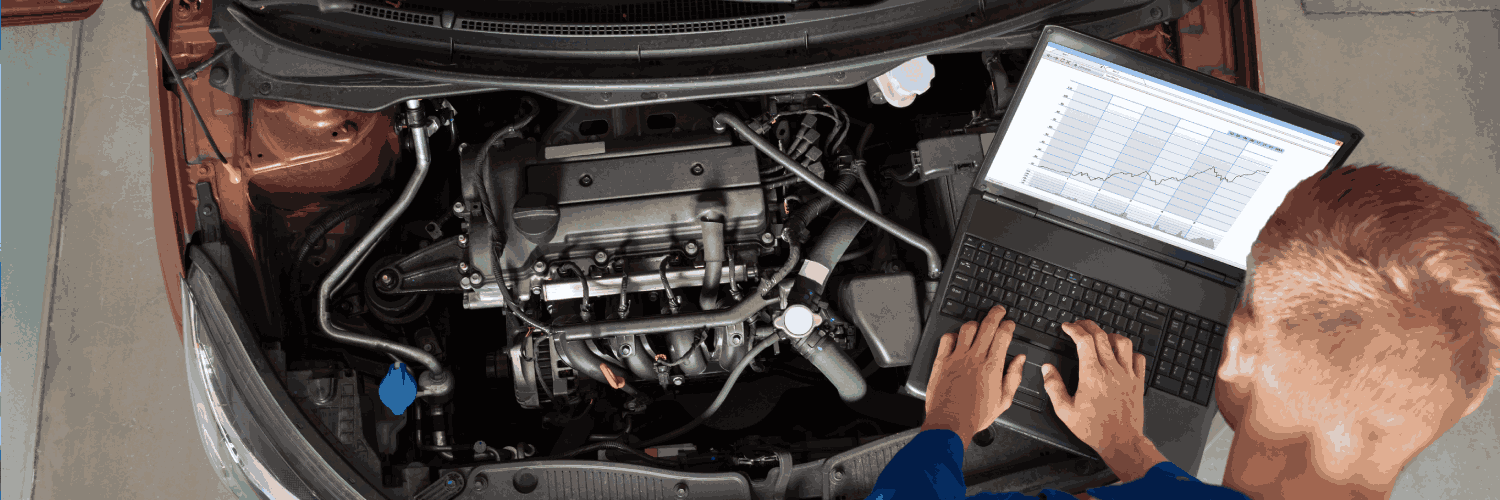
Data needs units and context. Engine speed, temperature and voltage mean little when copied as isolated numbers without the conditions of the test. There is no single normal value for every engine, operating state or battery system. Ask the technician what reference or comparison supports the interpretation.
Nor does every report contain an accurate calendar date for when a fault began. Some systems provide event counts or mileage, while others provide less detail. Missing information should remain missing. A workshop should not invent a precise failure history from a basic code entry.
What readiness does and does not mean
Emissions readiness describes whether supported self-checks have run under the required conditions. An incomplete monitor is not the same thing as a confirmed failed component. A ready monitor is also not a general certificate for brakes, tires, structure or every electrical function.
Some readiness information can reset after code clearing or a battery event. Ask whether this occurred recently and whether it limits the report. Do not interpret incomplete readiness alone as proof that a seller deliberately concealed a fault.
There is no universal distance that makes every vehicle complete every check. Conditions vary. Do not drive a car with a serious warning simply to complete a monitor, and do not follow an arbitrary road procedure from an online forum. The vehicle instructions and the technician’s safe repair plan take priority.
Separate the scan from the diagnosis
A scan retrieves information. Diagnosis evaluates possible causes against the complaint and appropriate tests. The distinction should be visible in the report, the estimate and the explanation you receive.
Useful findings name the relevant test, its result and what that result supports. If a component is only suspected, it should be described that way. A long printout with dozens of codes can be less useful than a concise explanation that identifies which fault matters and why.
Depending on the problem, diagnosis may need wiring measurements, a mechanical test, a controlled functional check or observation under specific operating conditions. The initial fee may not include that work. Ask the workshop to define the next test and obtain your approval before extending the investigation.
When the car has several faults, ask which issue is being addressed first and why. A common electrical problem can affect several systems, but it is equally unsafe to assume that one repair will remove every unrelated defect. The report should keep confirmed relationships separate from assumptions.
When not to authorize replacement yet
Pause a parts decision when the recommendation rests only on the name in a code, a generic app suggestion or an unexplained colored status. Ask for the missing test or a clearer explanation. A part should not be condemned merely because it is expensive, commonly blamed online or the next item in a trial-and-error sequence.
A cheaper next step may be to check a connector, verify power supply, compare an earlier report or reproduce the symptom. That does not mean every fault has a cheap repair. It means the spending should answer a specific unresolved question.
If the vehicle is within a relevant manufacturer warranty, recall or service campaign, check eligibility with the appropriate provider before authorizing work that may be covered. Do not assume that a general diagnostic report proves coverage or that every independent test affects warranty in the same way.
Ask what is confirmed, what is suspected and what the next charge will establish. A workshop that cannot reproduce an intermittent problem should state the limitation. Uncertainty is a reason for a defined test plan, not an invented diagnosis.
What a clean report cannot promise
A no-code result does not establish that the engine, transmission, suspension and body are free from wear or damage. Mechanical noise, fluid leakage and trim problems may require inspection without generating a relevant electronic fault.
A diagnostic scan also cannot certify the complete accident history, original mileage or future reliability of a used car. Include it in a broader pre-purchase vehicle inspection, with the limitations recorded. If a seller offers only a code-free printout, ask which physical checks are missing.
Do not use an old report as proof of current condition. The date, test conditions, later repairs and any new symptoms matter. Similarly, a scan should supplement scheduled maintenance rather than replace the manufacturer’s service requirements.
Keep evidence before and after repair
Save the original report before codes are cleared. Keep the approved estimate, parts description and relevant test results with it. This provides a starting point if a warning returns and helps another workshop avoid repeating assumptions.
At handover, ask whether the original symptom was checked again, which systems were rescanned and whether any faults remain. A post-repair scan is useful, but it should sit alongside the functional checks appropriate to the job. The absence of a code immediately after resetting is not proof that the repair will remain effective.
If a warning returns, record the circumstances without continuing an unsafe journey. A flashing engine warning with severe shaking, loss of braking, unsafe steering, overheating or an oil-pressure warning calls for stopping safely and following the handbook. Contact the workshop about recovery where necessary.
Questions to ask before paying
- Does the report match my vehicle and original complaint?
- Which systems were scanned, and which were inaccessible?
- Was the symptom reproduced under the relevant conditions?
- What test confirms the recommended part or repair?
- Which findings are still only suspected?
- What additional work requires approval, and what is the total with VAT?
- What checks will verify an approved repair?
- Can I keep the original and post-repair findings?
These questions turn a technical printout into a decision you can understand. Bring an existing report when inquiring at Mechanics in Al Quoz, along with the model, year, warning messages and recent repair history. The diagnostics page explains the workshop service and initial price guidance.
Technical references
Bosch diagnostic-tool documentation explains code reading, supported live data and freeze-frame functions. Its vehicle-coverage statements concern that specific product and do not establish the equipment or coverage available at Mechanics.
California Bureau of Automotive Repair OBD reference explains permanent-code and readiness distinctions. It is cited for those technical concepts, not as a source of UAE inspection law.