In this guide
A pre-purchase inspection is an independent check of a used car before you pay for it. It covers the paperwork, body, engine, gearbox, brakes, suspension, electronics and a road test, and it finds faults a seller may not mention. Use this checklist on your first viewing, then have a workshop inspect the car before you hand over any money.
This checklist is written by the Mechanics workshop team in Al Quoz, Dubai. We inspect used cars for buyers regularly, and these are the same points we look at.
Use it to rule out bad cars yourself. Then book a professional check for the one you want to buy.
Found a car you like? Book a full pre-purchase inspection before you pay. We check it on the lift, scan it and give you a written report.
Why a pre-purchase inspection matters in Dubai
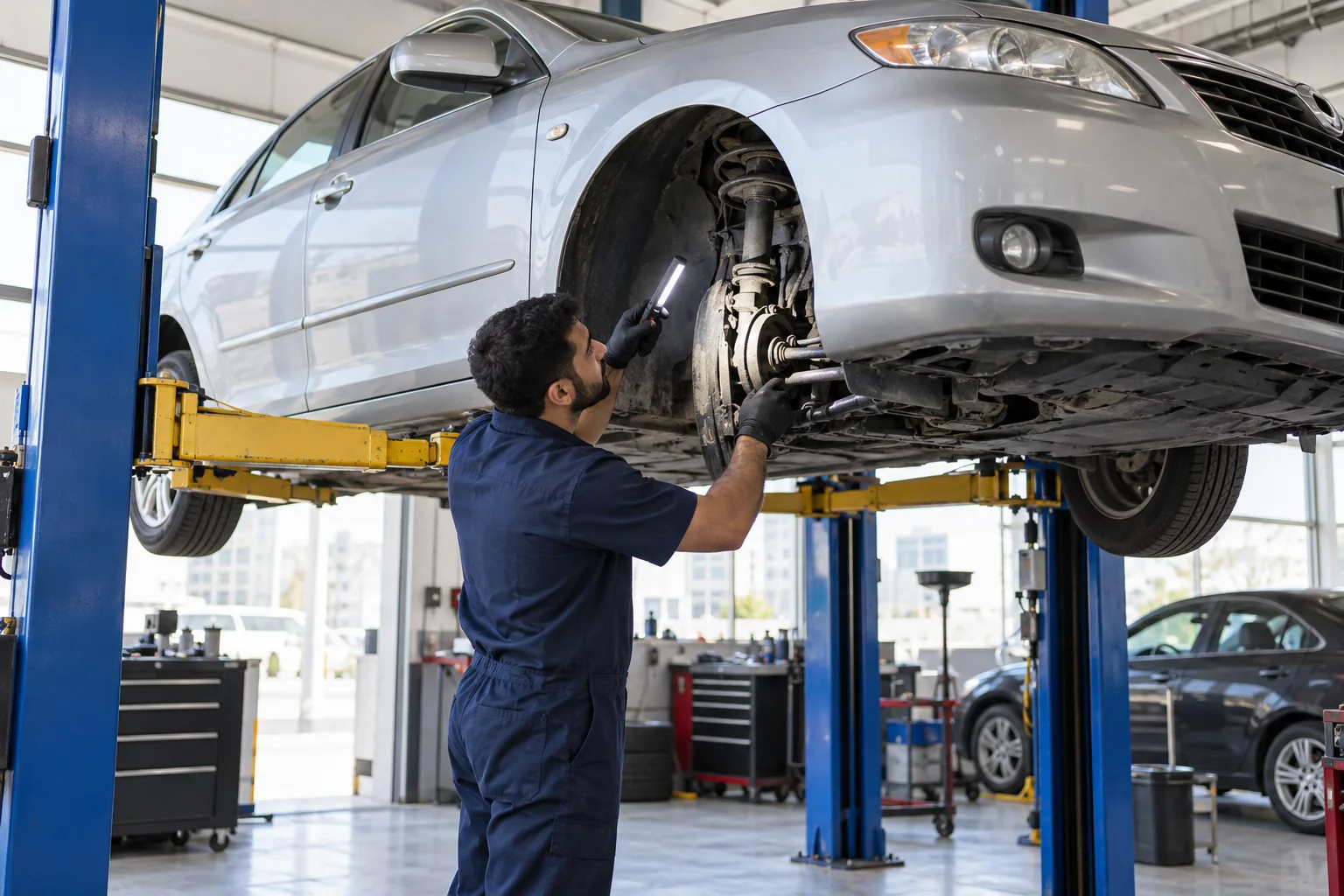
- Finds hidden faults before they become your bill
- Shows past accident and repaint work
- Reads stored fault codes the dashboard may not show
- Gives you facts to negotiate the price
Dubai’s heat, sand and stop start traffic are hard on cooling systems, AC, rubber parts and gearboxes. A car can look clean and still need expensive work soon after you buy it.
Step 1, check the paperwork
Do this before you even look at the car. If the papers are wrong, nothing else matters.
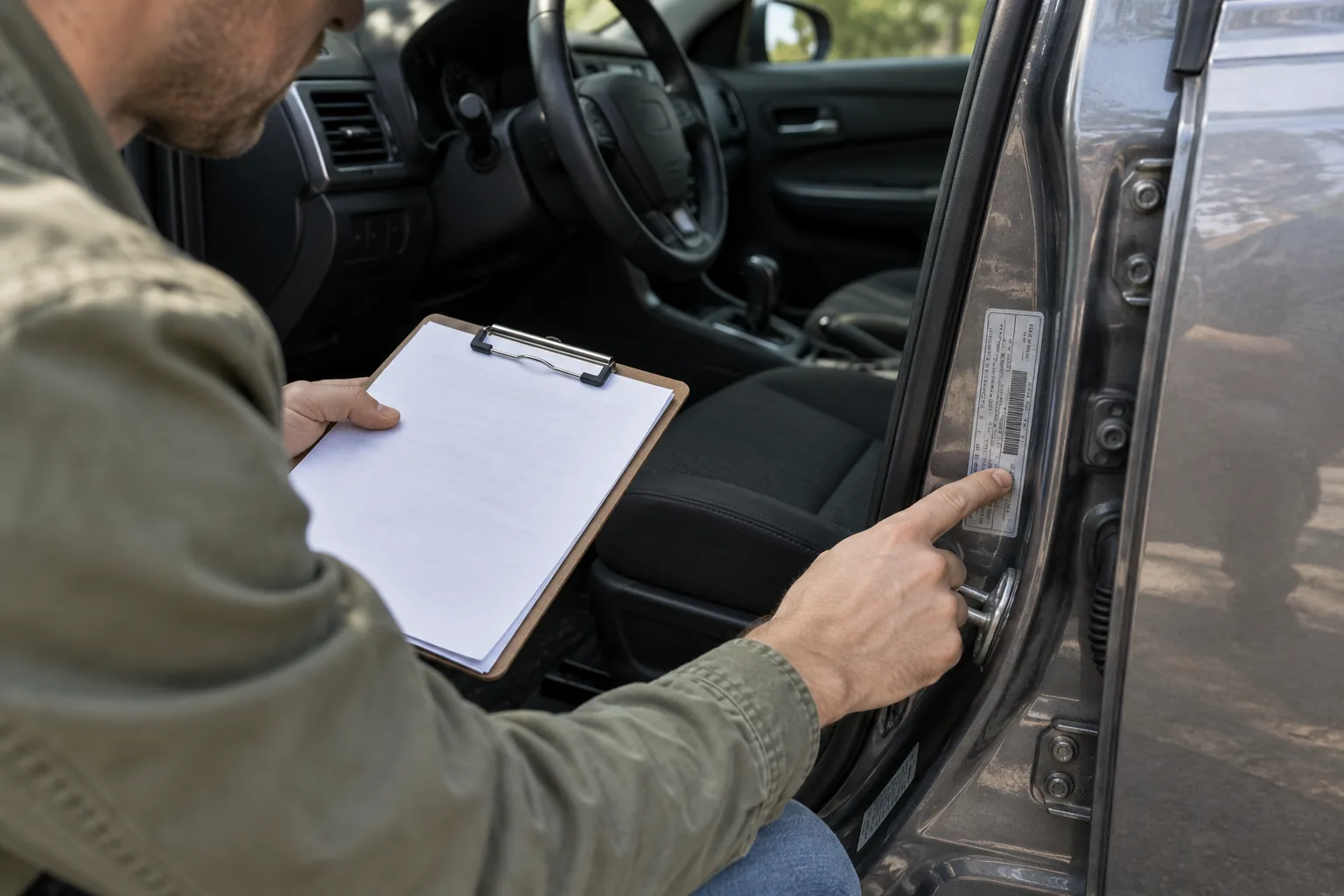
- Registration card, the mulkiya, matches the seller’s name
- Chassis number on the card matches the number on the car
- Service history with dates and mileage
- Invoices for major repairs
- No outstanding loan or finance on the car
- Warranty or service contract, if any, and whether it transfers
GCC spec or imported? Ask where the car was first sold. Imported cars can be fine, but some come with past accident or flood damage. Ask for its history before you go further.
Step 2, check the outside of the car
| What to check | Warning sign | What it can mean |
|---|---|---|
| Panel gaps | Uneven gaps between doors and bonnet | Past accident repair |
| Paint colour | One panel a slightly different shade | Panel was repainted |
| Overspray | Paint on rubber seals or trims | Poor quality repaint |
| Rust | Bubbles at arches, sills or edges | Corrosion, possibly flood |
| Glass | Chips, cracks or mixed glass brands | Replacement after damage |
| Lights | Water inside or one lamp newer than others | Seal failure or front end repair |
Step 3, check the tyres and wheels
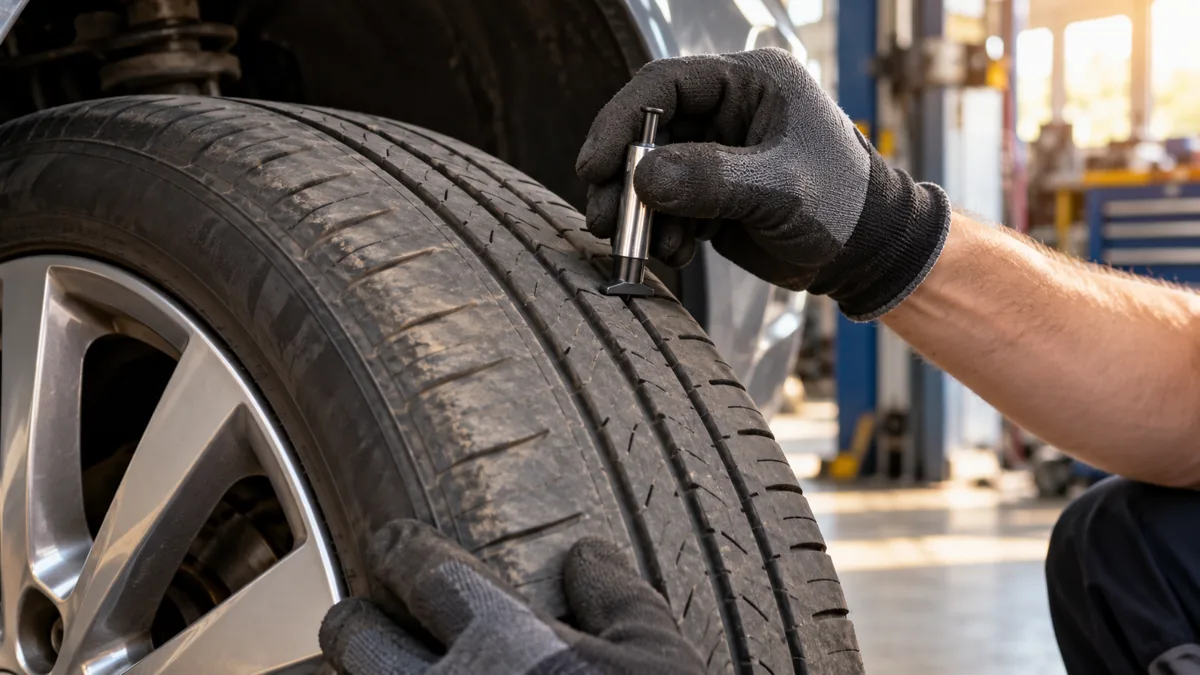
- Same brand and size on all four
- Even wear across the tread
- Production date code is not too old
- No cracks, bulges or cuts in the sidewall
- Rims free of cracks and heavy kerb damage
Wear on one edge can point to alignment or suspension problems. Our tyre pressure guide explains what tyre wear can tell you.
Step 4, check the interior
All lights should come on at start up, then go out.
Should blow cold within a few minutes, even in summer.
Very worn wheel, pedals or seat with low mileage is a red flag.
A musty smell or damp carpets can mean water entry.
Windows, mirrors, locks, screen and cameras all work.
All belts pull out and lock properly.
Step 5, check under the bonnet
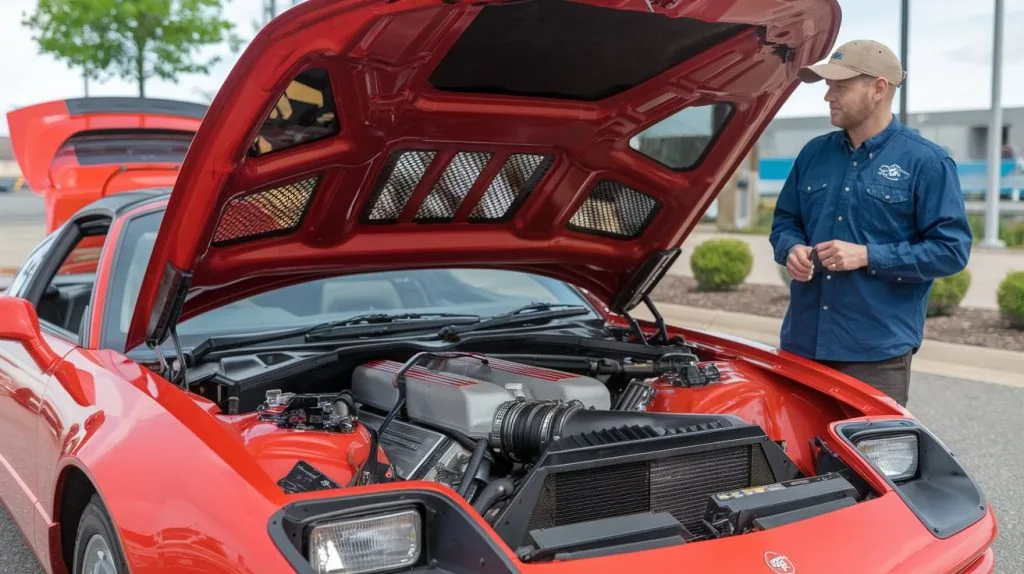
Do this with the engine cold and off.
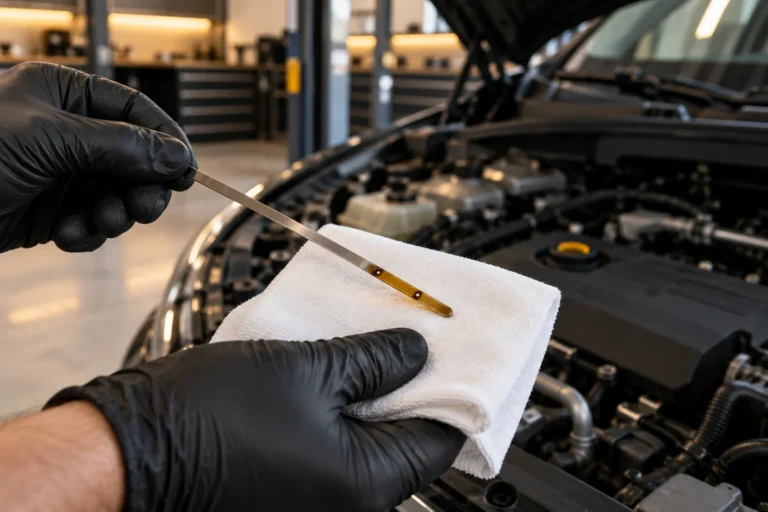
- Oil level and colour, no milky residue on the cap
- Coolant level and colour, no oil in it
- No fresh oil or coolant leaks
- Hoses and belts not cracked
- Battery terminals clean, battery not swollen
- A freshly steam cleaned engine can hide leaks. Ask why it was cleaned.
- Do not open the coolant cap on a hot engine.
Step 6, start the engine from cold
-
Ask for a cold engine
Tell the seller not to start the car before you arrive.
-
Listen at start up
Rattles, knocking or a long crank can point to problems.
-
Watch the exhaust
Blue smoke, thick white smoke or black smoke are warning signs.
-
Let it idle
Idle should be smooth with no shaking or warning lights.
Step 7, take a proper test drive
| Test | What good looks like | Warning sign |
|---|---|---|
| Pull away | Smooth and quiet | Jerks, slips or clunks |
| Gear changes | Quick and smooth | Delays, flare or harsh shifts |
| Braking | Straight and firm | Pulling, noise or pulsing pedal |
| Steering | Straight and light | Pulling, vibration or knocking |
| Bumps | Quiet and controlled | Knocks, bounces or rattles |
| Temperature gauge | Steady in the middle | Climbing in traffic |
Drive in city traffic and on a highway if you can. Let the engine reach full temperature, as some faults only show when hot.
Red flags that mean walk away or inspect closely
- Seller will not allow an independent inspection
- Chassis number does not match the papers
- Warning lights on, or the seller says they were just cleared
- Water marks, rust under carpets or a damp smell
- Mileage that does not match the wear or the service records
- Pressure to pay a deposit before any checks
Do not rely on a quick look. Our inspection checks the car on a lift, scans every system and gives you a written report before you buy.
What a professional inspection adds
Your own checks can rule out obvious bad cars. A workshop inspection goes further, with tools you do not have at a viewing.
Diagnostic scan
Reads stored and cleared fault codes in all main systems.
Lift inspection
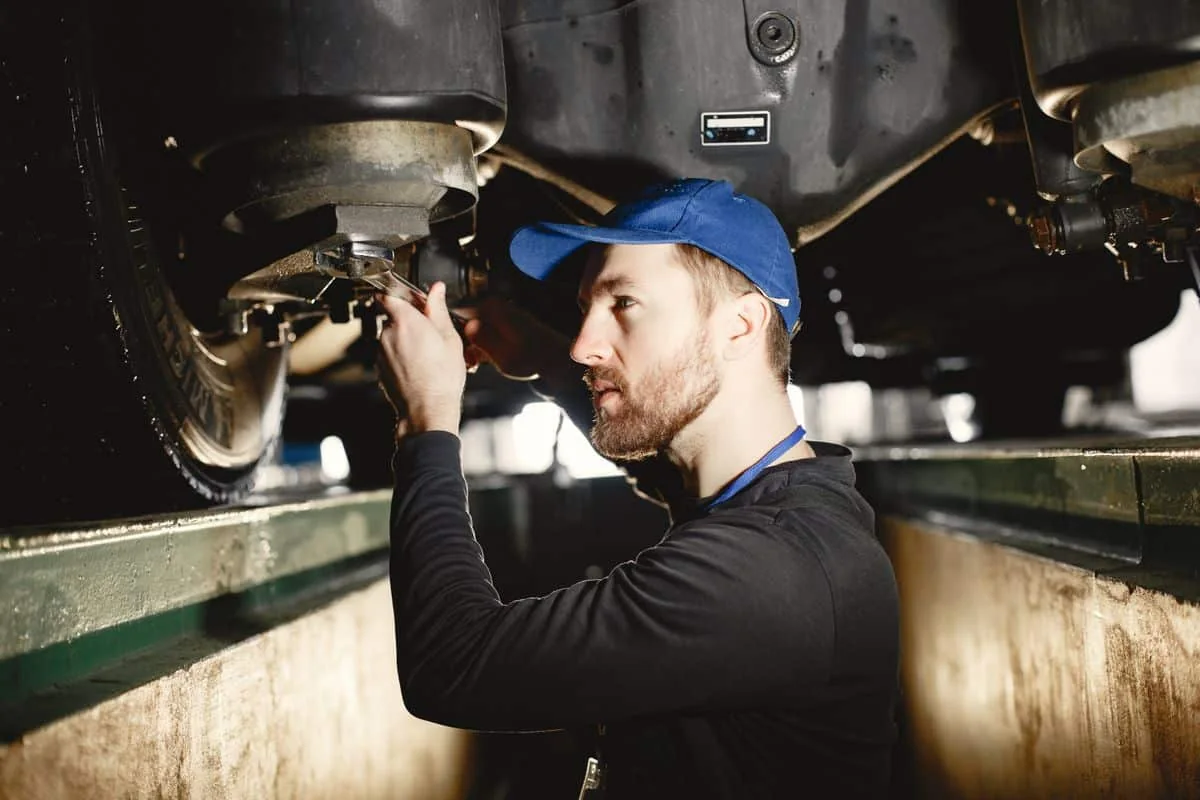
Underbody, chassis, leaks, suspension and exhaust seen from below.
Paint check
Finds repainted panels and signs of accident repair.
Road test
Driven by a technician who knows what to listen for.
Written report
Findings, photos and a list of repairs needed.
Repair estimate
Rough costs to help you negotiate the price.

How to spot a flood damaged car
Musty or damp smell that air freshener does not hide.
New carpets in an old car, or water stains under them.
Rust on seat rails, screws and under the dashboard.
Flickering lights, odd warnings or dead switches.
Dubai has seen heavy rain and flooded roads in recent years. Flood damage often shows months later as electrical faults, so it is worth checking carefully.
How to spot past accident damage
- Paint thickness or colour that differs between panels
- Bolts on wings, doors or bonnet with tool marks
- Welding marks or new metal in the engine bay or boot
- Airbag light or mismatched airbag covers
- New radiator support or headlights on an older car
Repaired accident damage is not always a reason to walk away. A good repair is fine. A poor one can affect safety and value.
Extra checks for different car types
| Car type | Extra things to check |
|---|---|
| Luxury cars | Air suspension, electronics, service records at specialists |
| 4×4 and SUVs | Underbody damage, 4×4 system, desert use signs |
| Hybrids | Hybrid battery health and warning messages |
| Electric cars | Battery health report, charging port and cables |
| Performance cars | Clutch, brakes, tyres and signs of modification |
| High mileage cars | Gearbox, suspension, cooling system and oil leaks |
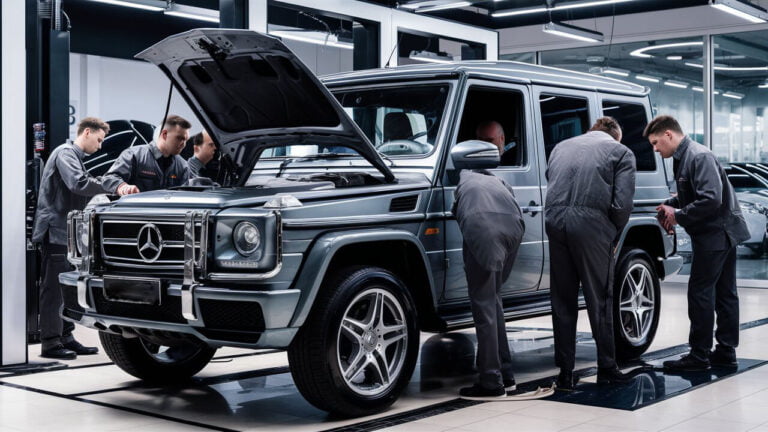
A real example of why this matters is our Mercedes G500 inspection story, where the cooling system failed at our door.
After the inspection, what next?
-
Read the report
Separate safety items, near term costs and small issues.
-
Get repair estimates
Know what the faults will cost before you talk price.
-
Negotiate
Ask the seller to fix items or lower the price.
-
Decide
Buy with confidence, or walk away if the risk is too high.
Checks that matter more in Dubai heat
Summer temperatures put extra load on some parts. These are the areas we see fail most often on used cars brought to our workshop.
Cooling system
Radiator, water pump, thermostat and expansion tank work hard in traffic and heat.
AC system
Compressor, condenser and fan faults are common and can be costly.
Battery
Heat shortens battery life, so an older battery may be near the end.
Rubber and plastic
Hoses, bushes, wiper blades and trims crack and harden faster.
Tyres
Hot roads age rubber, even when the tread still looks deep.
Sand and dust
Air filters, cabin filters and radiator fins can clog on desert driven cars.
Watch the temperature gauge closely in slow traffic. A car that runs hot at a viewing will likely run hot in August too. Our guide on radiator flush explains how cooling problems start.
How to check the gearbox by type
| Gearbox type | What to feel for | Common warning sign |
|---|---|---|
| Conventional automatic | Smooth shifts up and down | Slipping, harsh shifts or delay into drive |
| CVT | Smooth steady pull | Whine, shudder or loss of pull |
| Dual clutch | Quick clean changes | Judder at low speed or jerky pull away |
| Manual | Clutch bites in the middle | High bite point, slipping or grinding |
- Shift into drive and reverse with your foot on the brake and feel for a heavy clunk
- Drive slowly in traffic, as many faults show at low speed
- Ask when the gearbox oil was last changed
What a good service history looks like
- Regular oil services at sensible gaps
- Mileage that rises steadily between visits
- Invoices with the workshop name and the car details
- Major items such as brakes, tyres and battery recorded
- Recall work done where it applies
- Long gaps with no service records
- Stamps with no dates, mileage or invoices
- Mileage that goes down between records
Check the safety and driver assist systems
Modern cars rely on sensors and modules. A fault here can be costly and may affect safety.
| System | Quick check | Where we confirm it |
|---|---|---|
| ABS and ESC | Warning lights go out after start | Computer check scan |
| Brakes | Firm pedal, no noise or pull | Brake inspection on the lift |
| Airbags | Airbag light goes out | Scan for stored airbag faults |
| Parking sensors and cameras | Beep and picture in reverse | Function test and scan |
| Tyre pressure monitor | No TPMS warning on the dash | Sensor check |
| Alignment | Car drives straight, wheel centred | Wheel alignment check |
- A recently cleared fault can come back after a few drive cycles
- Ask the seller if any warning light has come on in the last few months
- Test the AC on full cold, and see our AC repair page if it struggles
Buying from a dealer or a private seller
| Point | Dealer | Private seller |
|---|---|---|
| Price | Often higher | Often lower |
| Warranty | Sometimes offered | Usually none |
| History | May have its own report | Depends on the owner’s records |
| Inspection | Still recommended | Strongly recommended |
A dealer report is useful, but it is written for the seller. An independent check works only for you.
Common mistakes buyers make
- Viewing the car at night or in the rain, which hides paint and body faults
- Only driving a short loop, so the engine never reaches full heat
- Trusting a fresh service sticker without invoices
- Paying a deposit before the inspection
- Falling for the colour or options and ignoring the faults
- Skipping the inspection on a low mileage car
View in daylight. Sunlight shows repainted panels, dents and scratches far better than garage lights or night time viewings.
What to send us when you book
Make, model, year and mileage.
Dealer or private, and where the car is.
Anything you noticed at the viewing.
When you plan to decide on the car.
Send us the car details. We will confirm what the inspection covers and arrange a time before you buy.
Quick viewing checklist
Mulkiya, chassis number, history, no finance.
Gaps, paint, rust, glass, lights.
Wear, age, damage, matching set.
Lights, AC, wear, smell, electrics.
Fluids, leaks, belts, cold start, smoke.
Gears, brakes, steering, bumps, temperature.
Pre-purchase inspection questions we get asked
What does a pre-purchase inspection check?
Paperwork and identity, body and paint, tyres, interior and electrics, engine and fluids, underbody, a diagnostic scan and a road test. You get a written report of the findings.
When should I get the inspection?
After you have chosen the car but before you pay any money or a large deposit. That way you can still negotiate or walk away.
Can I inspect a car myself?
You can do the basic checks in this list. A workshop adds a lift inspection, a full scan and experience of common faults, which a viewing cannot match.
Do dealers allow independent inspections?
Most good dealers and private sellers do. If a seller refuses, treat it as a warning sign.
Can an inspection find a rolled back odometer?
It can find signs, such as wear that does not match the mileage, or service records and stored data that show higher readings.
Is it worth inspecting a cheap car?
Yes. On a cheap car one big repair can cost more than the car is worth, so the check can save you from a bad buy.
Do you inspect electric and hybrid cars?
Yes. We check the usual areas plus battery and system warnings. Send the car details and we will confirm what is included.
What if the inspection finds problems?
You get the facts in writing. You can ask the seller to fix them, lower the price, or walk away.
Does a clean service history mean a good car?
It helps a lot, but it does not show accident damage, flood damage or faults since the last service. An inspection checks the car as it is today.
How long does a pre-purchase inspection take?
It depends on the car and how much we find. A full check with a scan, lift inspection and road test usually takes a few hours, so plan the time with the seller.
Should I inspect a car that is still under warranty?
Yes. A warranty may not cover wear items, accident damage or past misuse, and some warranties do not transfer to a new owner. An inspection shows what you are really buying.
Can the inspection be done at the seller’s location?
Some checks can, but a lift, scan tools and a proper road test give the clearest picture. Ask us on WhatsApp and we will advise the best option for the car you are viewing.
How do I book an inspection at Mechanics?
See our pre-purchase inspection page for what is included and how to book, or send the car details on WhatsApp.