In this guide
The most common steering problems in Dubai are vibration, heavy steering, loose steering, pulling to one side, noise when turning and a slow or uneven response. Most come from wheel balance, alignment, worn tie rods or ball joints, a power steering leak or an electric steering fault. Heat and stop start traffic speed up wear, so early checks keep repairs small.
This guide is written by the Mechanics workshop team in Al Quoz, Dubai. Steering complaints are among the faults we diagnose most often, and these are the patterns we see.
Use it to describe what your car is doing. Then let a technician confirm the cause before any part is ordered.
Is it safe to drive with a steering problem?
Stop driving if the steering suddenly feels very heavy, very loose or clunks loudly. The same applies if a steering warning light comes on with a heavy wheel. Park safely and arrange for the car to be moved.
| What you notice | Risk level | What to do |
|---|---|---|
| Light vibration at one speed | Low | Book a balance and alignment check soon |
| Car pulls gently to one side | Medium | Check tyre pressure, then book an alignment |
| Whine when turning | Medium | Check for a fluid leak and book a check |
| Clunk over bumps or when turning | High | Drive gently to the workshop only |
| Very loose or free play in the wheel | High | Do not drive, arrange recovery |
| Sudden heavy steering with a warning | High | Stop safely and call for help |
Steering feels wrong? Send us the car model and what you feel, and we will tell you whether it is safe to drive in.
How your steering system works
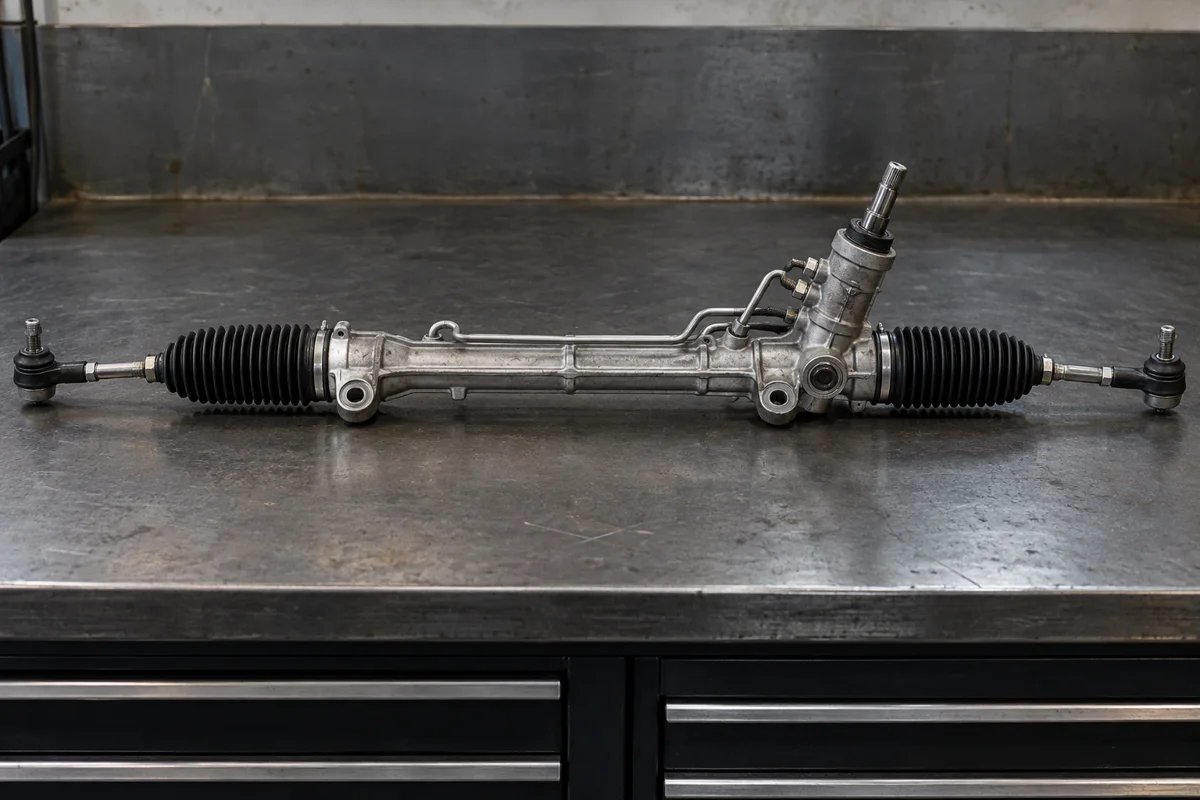
Most cars use rack and pinion steering. Turning the wheel moves a rack left or right, and tie rods push the front wheels.
- Steering column and wheel
- Steering rack and pinion
- Inner and outer tie rods
- Ball joints, control arms and wheel bearings
- Power assistance, hydraulic or electric
Pump, fluid and hoses
A belt driven pump pushes fluid to the rack. Leaks and worn pumps cause whine and heavy steering.
Electric pump
An electric motor drives the pump. Faults can show as warnings and sudden loss of assist.
Motor on the column or rack
No fluid at all. Faults come from sensors, the motor, wiring or the battery voltage.
The 6 most common steering problems
| Symptom | Likely causes | How we confirm it |
|---|---|---|
| Vibration in the wheel | Wheel balance, bent rim, tyre damage, worn joints | Road test, balance check, lift inspection |
| Heavy or stiff steering | Low fluid, weak pump, slipping belt, EPS fault, low tyre pressure | Fluid and leak check, scan, pressure test |
| Loose steering or free play | Worn tie rod ends, inner tie rods, ball joints, rack wear | Joint play test on the lift |
| Pulling to one side | Alignment, tyre pressure, tyre wear, sticking brake | Pressure check, alignment readings, brake check |
| Noise when turning | Low fluid, pump whine, worn joints, top mounts, CV joints | Turning test, lift inspection |
| Slow or uneven response | Air or leak in hydraulics, rack wear, EPS sensor fault | Scan for codes, rack and pump checks |
1. Steering wheel vibration
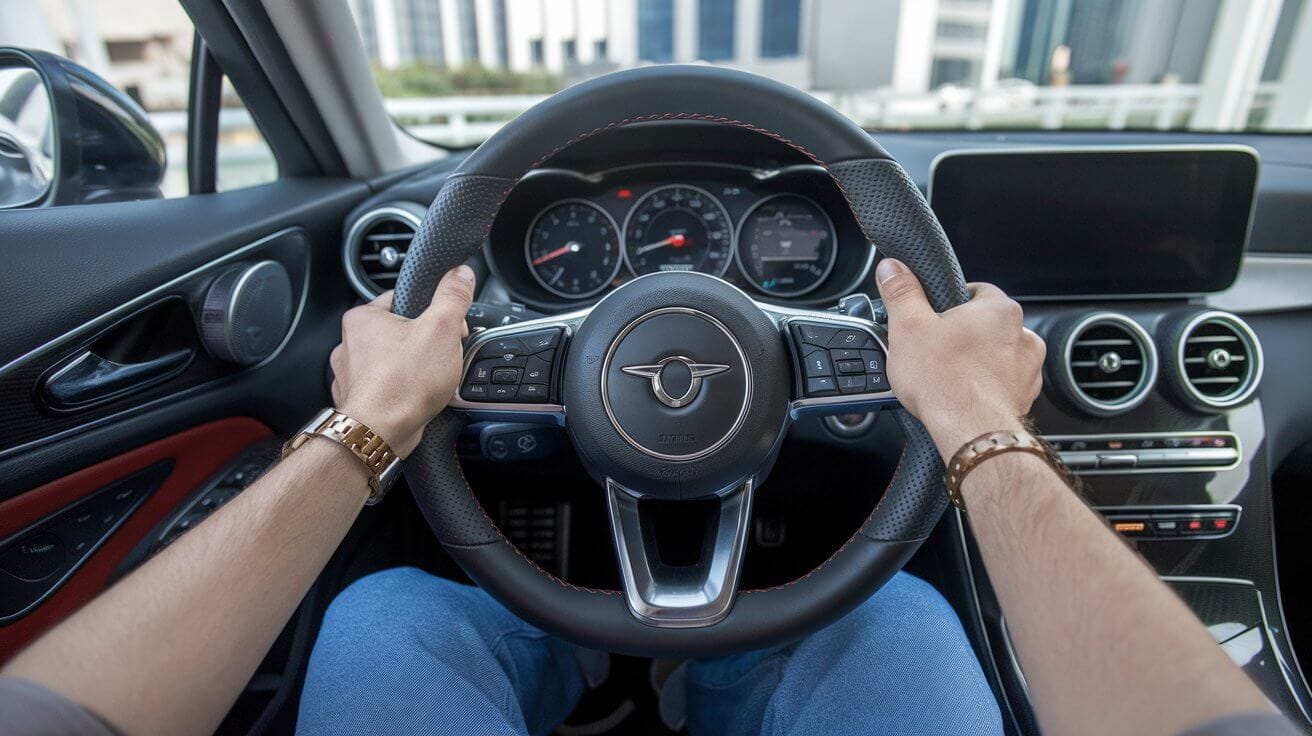
- Vibration at one speed range often points to wheel balance
- Vibration when braking points to the brake discs
- Vibration that grows with speed can be a bent rim or tyre fault
- Shake over bumps can mean worn joints
After pothole or kerb hits we often find a bent rim or a lost balance weight. A rim repair or balance usually fixes it.
2. Heavy or stiff steering
Low fluid
A leak at a hose, the pump or rack seals lets fluid escape.
Weak pump
A tired pump struggles most at parking speeds.
EPS fault
Sensor, motor or low voltage faults can remove assist.
Tyres
Low pressure makes any steering feel heavy.
3. Loose steering or free play
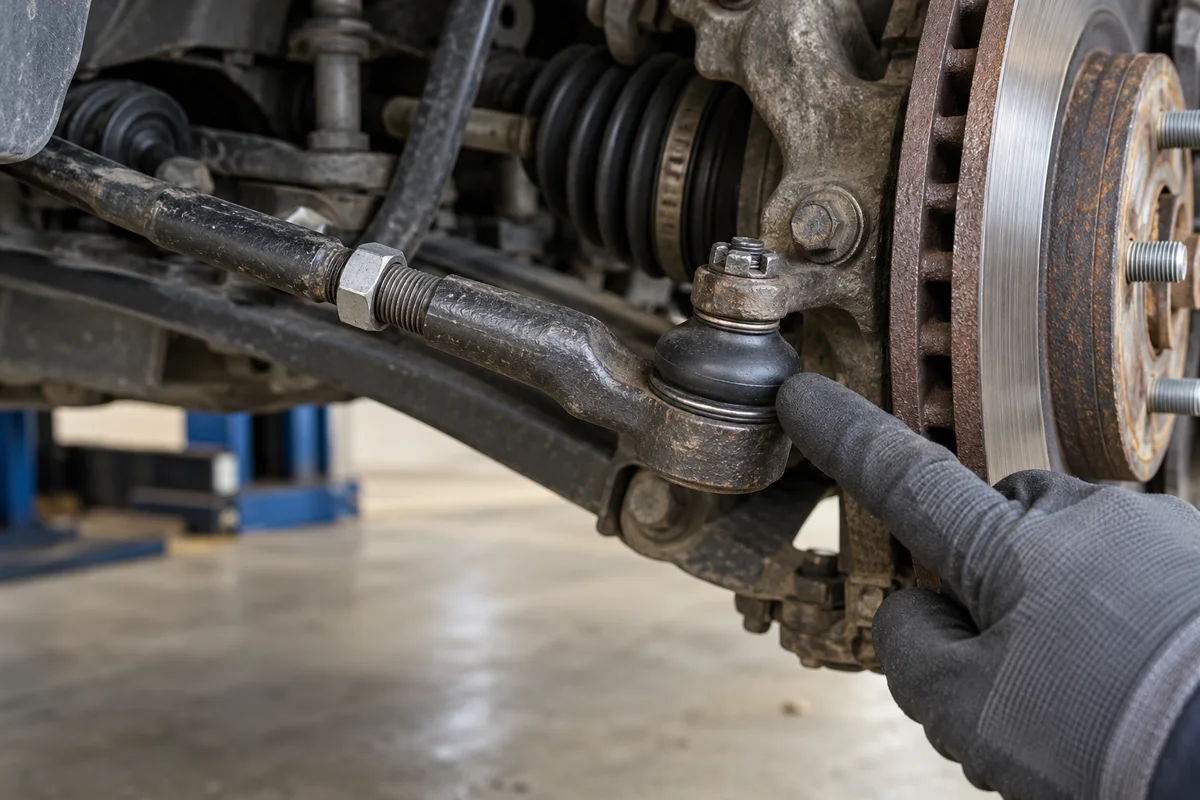
Free play means the wheel moves before the car responds. It is usually a worn joint, not the rack itself.
- Outer tie rod ends wear first on many cars
- Split dust boots let sand in and speed up wear
- Inner tie rods and ball joints are checked at the same time
See our tie rod replacement page for that repair.
4. Car pulling to one side
-
Check tyre pressure
A low tyre on one side is the simplest cause.
-
Look at tyre wear
Edge wear points to alignment or worn parts.
-
Check the brakes
A sticking caliper can pull the car and heat one wheel.
-
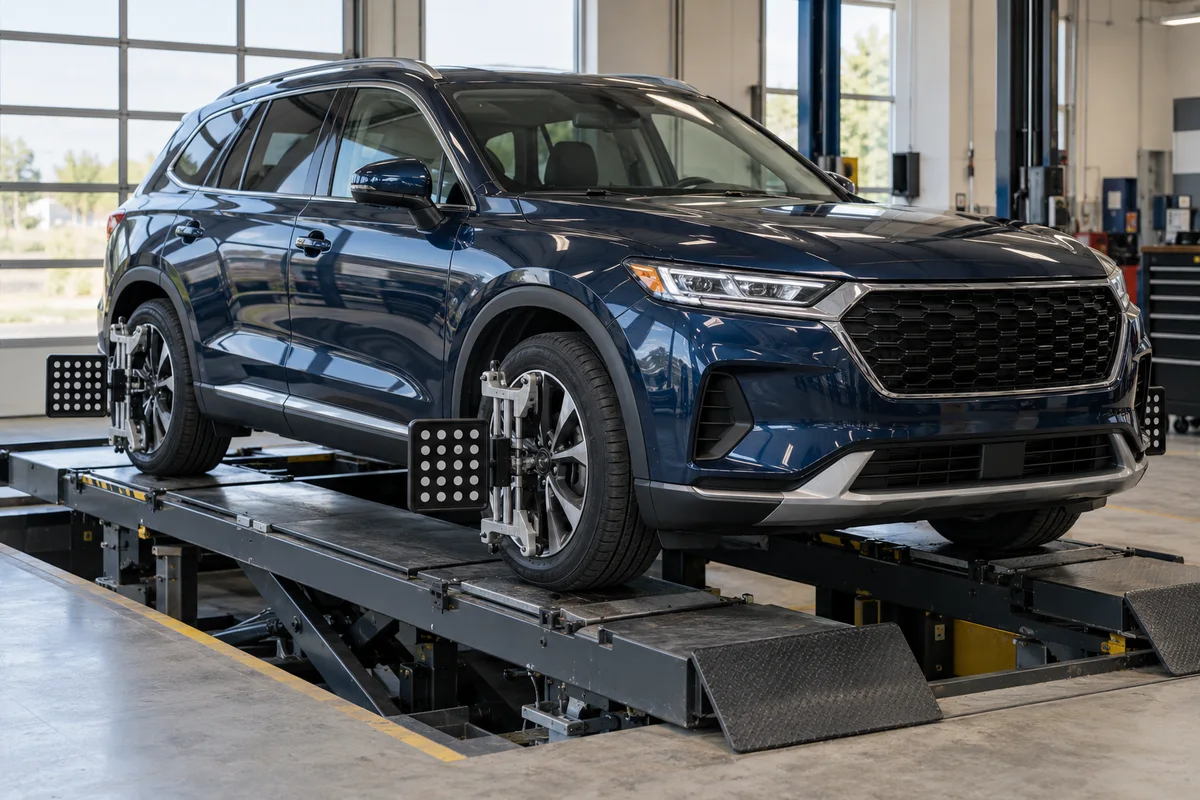
Measure the alignment
Camber, caster and toe are read and set to the maker’s figures.
5. Noise when turning
| Noise | Often caused by |
|---|---|
| Whine that rises with steering | Low fluid or a worn power steering pump |
| Squeal at full lock | Slipping belt or a pump under strain |
| Clunk when turning | Tie rod ends, ball joints or top mounts |
| Clicking on full lock | Worn CV joint on front wheel drive cars |
| Creak at low speed | Dry bushes or strut top bearings |
6. Slow or uneven steering response
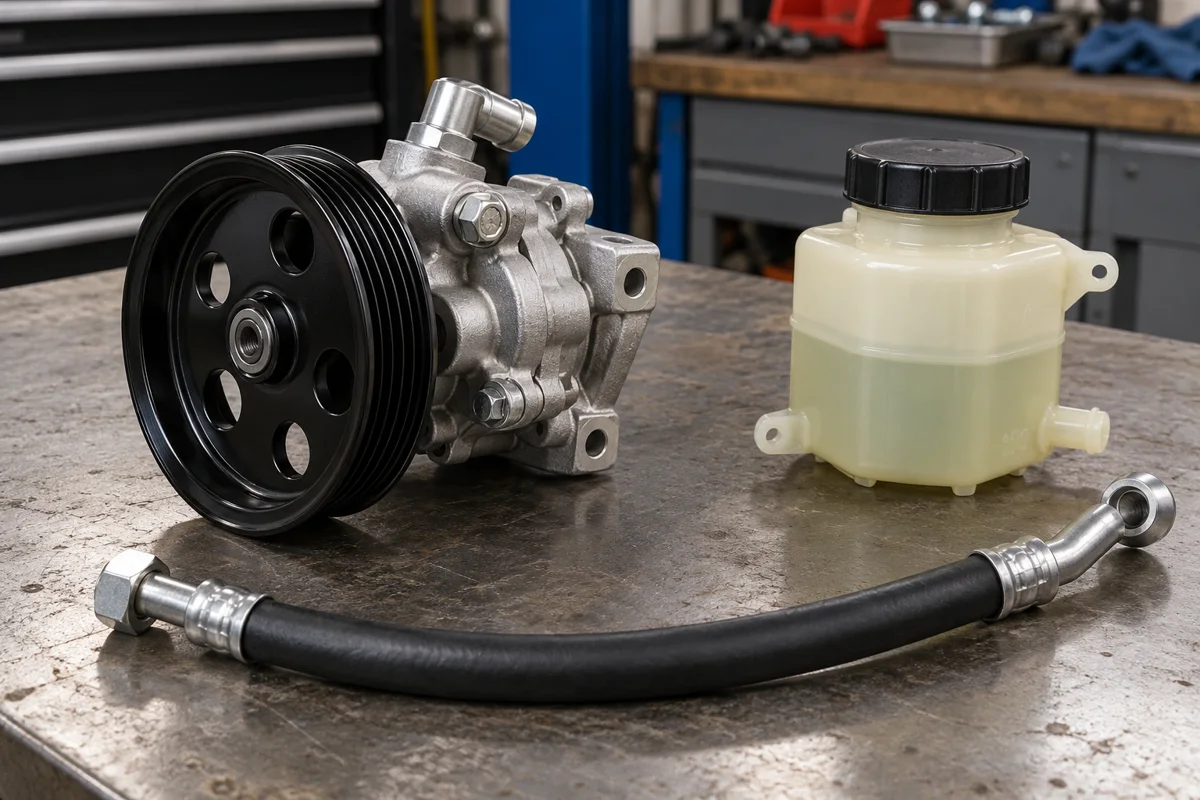
- Air in the system after a leak or repair
- Internal wear in the rack or pump
- Steering angle or torque sensor faults on EPS cars
- Assist that changes as the engine warms up
How Dubai conditions affect your steering
Fluid and rubber age faster
High temperatures thin old fluid and harden hoses and seals.
Dust gets into joints
A split boot lets sand in, which wears tie rods and ball joints quickly.
Full lock in tight spaces
Holding the wheel on full lock strains hydraulic pumps.
Repeated impacts
Hitting bumps and kerbs knocks alignment out and loads the joints.
In summer we often see steering complaints together with tyre pressure changes. Our tyre pressure guide explains how heat changes pressure.
What you can safely check yourself
- Tyre pressures on all four wheels, with the tyres cold
- Uneven or edge wear on the front tyres
- Power steering fluid level on hydraulic cars, engine off
- Fresh fluid spots under the front of the car
- Whether the steering wheel sits straight on a straight road
- Any warning light or message on the dashboard
- Do not lift the car or remove wheels to check joints
- Do not top up with the wrong fluid type, check the handbook
- Do not keep driving with a clunk or free play
How Mechanics diagnoses steering faults
-
Listen to you
When it happens, at what speed and whether it is worse hot or cold.
-
Road test
A technician feels for play, pull, vibration and noise.
-
Scan the car
EPS, ABS and stability systems are read for stored faults. See our computer check.
-
Lift inspection
Tie rods, ball joints, rack boots, bushes and leaks are checked by hand.
-
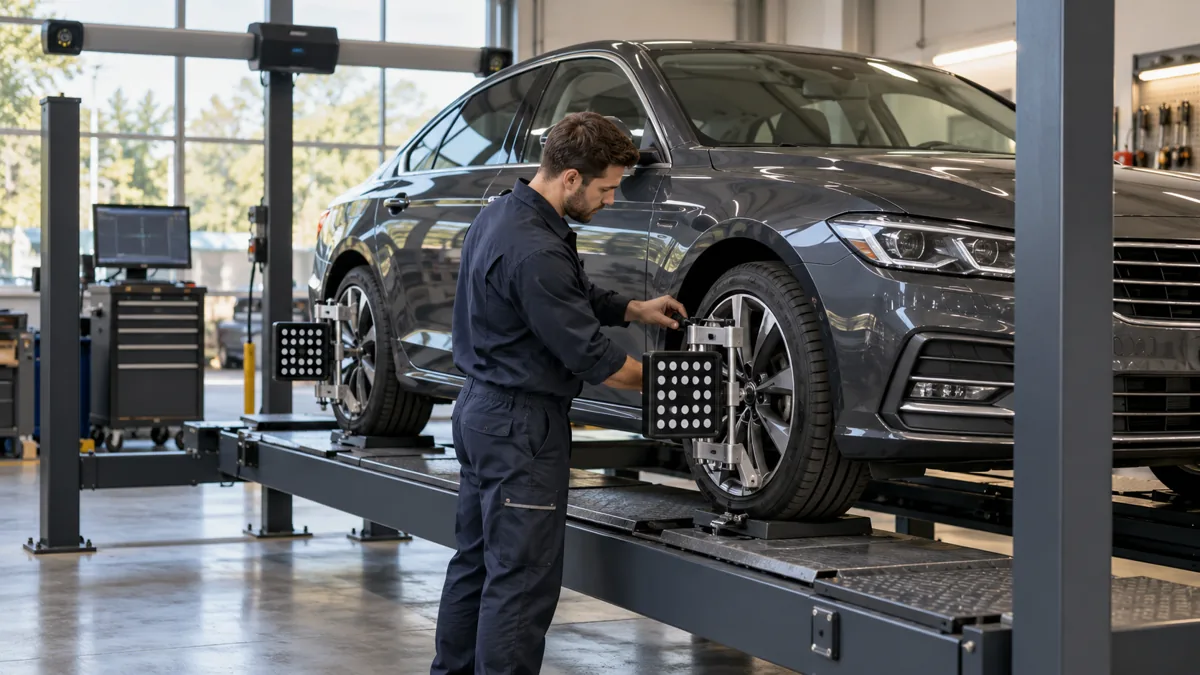
Measure alignment
Readings are taken before any parts are changed.
-
Written quote
You get the findings and the price before we start.
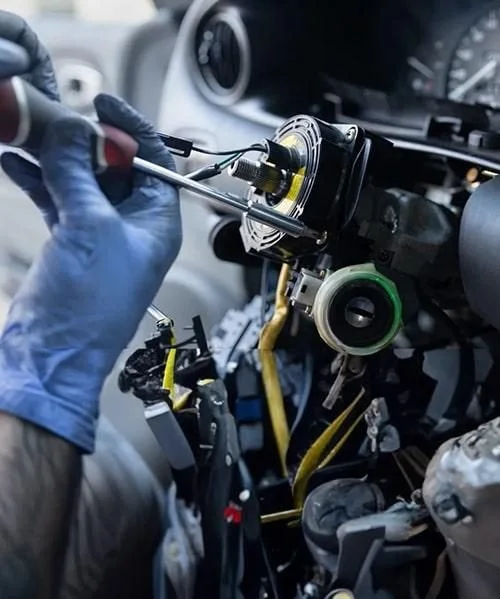
Common steering repairs and what they fix
| Repair | Fixes | Usually followed by |
|---|---|---|
| Wheel balance | Vibration at speed | Road test |
| Wheel alignment | Pulling, off centre wheel, tyre wear | Road test |
| Tie rod end replacement | Free play, clunks, uneven wear | Wheel alignment |
| Ball joint replacement | Clunks, wander, uneven wear | Wheel alignment |
| Pump or hose repair | Whine, leaks, heavy steering | Bleed and leak test |
| Steering rack repair | Leaks, internal wear, uneven assist | Wheel alignment |
| EPS repair or calibration | Warning light, loss of assist | Scan and sensor calibration |
Alignment after joint or rack work matters. Skipping it can wear new tyres quickly. See our wheel alignment service.
What affects the cost of a steering repair?
The real cause
A balance is a small job, a rack is a large one. Diagnosis comes first.
The system fitted
Hydraulic, electro hydraulic and EPS parts differ in price.
Parts choice
Genuine, OEM equivalent or rebuilt parts change the total.
Extra work
Alignment, fluid and calibration are often needed after the repair.
Planning prices are on our steering repair price section. Your final quote depends on the car and what we find.
How to prevent steering problems
- Check tyre pressures every month, more often in summer
- Have the alignment checked after a hard kerb or pothole hit
- Ask for the rack boots and joints to be checked at every service
- Do not hold the wheel on full lock for long
- Fix small leaks early before the pump runs low
- Take speed bumps slowly and straight on
Hydraulic and electric steering faults compared
| Point | Hydraulic steering | Electric steering EPS |
|---|---|---|
| Assist comes from | A pump and fluid pressure | An electric motor |
| Typical early sign | Whine and fluid loss | Warning light or message |
| Heavy steering cause | Low fluid, pump wear, belt | Sensor, motor or low battery voltage |
| Main check | Leak and pressure test | Scan and live data |
| After repair | Bleed the system, check for leaks | Calibrate the steering angle sensor |
On EPS cars a weak battery can cause odd steering behaviour. We test the battery and charging first, as it is the cheapest cause to rule out.
Steering warning lights explained
Power steering fault
Assist may be reduced or lost. Drive carefully and have it scanned.
EPS system warning
Common on electric systems. Often linked to sensors or voltage.
ESC or traction fault
A steering angle sensor fault can switch off stability control.
Column lock fault
Some cars show this when the electric column lock does not release.
Symbols differ by brand, so check your handbook. If the light stays on with heavy steering, do not keep driving.
How steering and suspension problems overlap
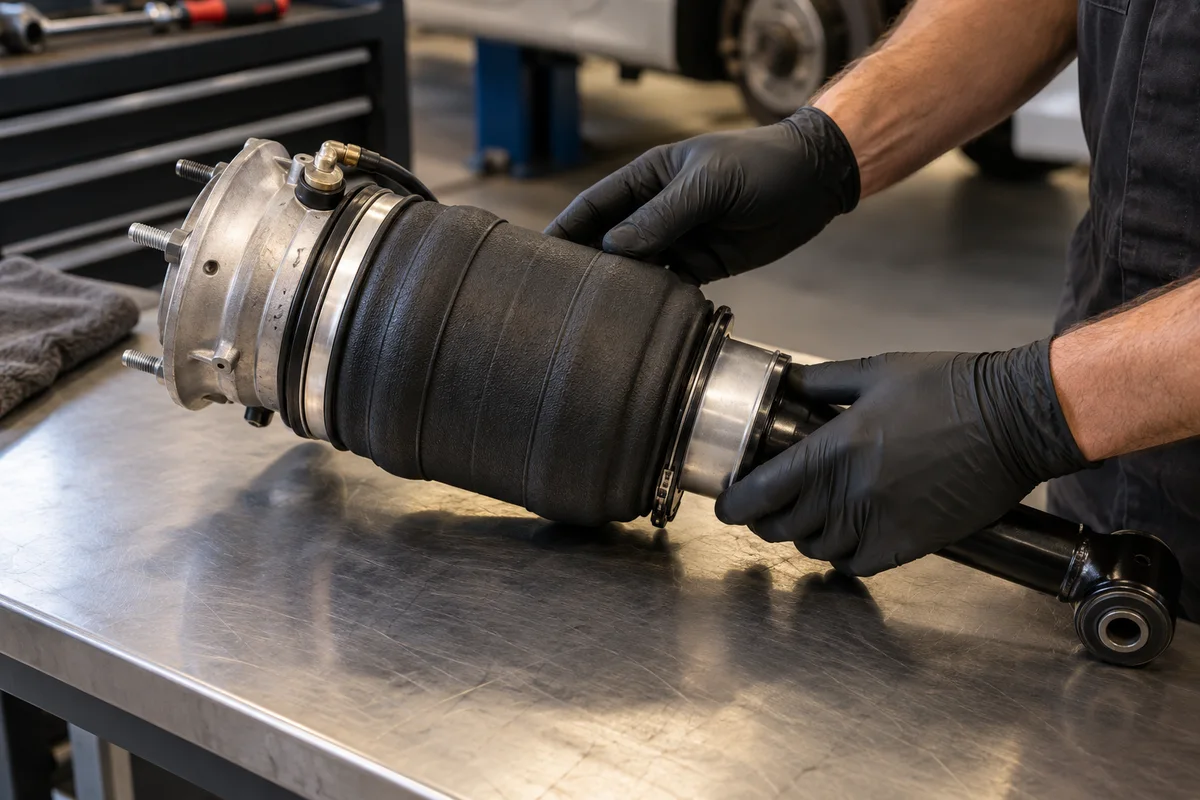
Steering and suspension share the same front end. A worn suspension part often feels like a steering fault.
- Worn control arm bushes cause wander and pulling
- Weak shock absorbers cause shake over bumps
- Worn top mounts cause creaks and clunks when turning
- Bad wheel bearings cause hum and play in the wheel
We check the whole front end together. See our suspension repair page for those parts.
Signs a steering repair was done right
- The steering wheel sits straight when driving straight
- No pull on a flat road with hands relaxed
- No warning lights after a short drive
- No new noise when turning in the car park
- An alignment printout after joint or rack work
- An invoice that lists each part and the work done
If something feels different after any repair, tell the workshop straight away. A recheck is quicker than living with a new fault.
Steering checks before buying a used car
Steering faults are easy to miss on a short test drive. These checks take a few minutes and can save a large repair bill.
-
Turn lock to lock
With the engine running, turn the wheel fully both ways and listen for whine or clunks.
-
Drive on a straight road
The wheel should sit centred and the car should not drift.
-
Check the front tyres
Worn inner or outer edges suggest alignment or joint wear.
-
Look for leaks
Fluid on the rack boots or under the engine points to a hydraulic leak.
Our used car pre-purchase checklist covers the rest of the car.
What to send us
Make, model, year and mileage.
What you feel or hear and at what speed.
A photo of any dashboard light.
Recent tyre, alignment or suspension work.
Book a steering check. Send these details on WhatsApp and we will advise the next step before you drive in.
Steering problem questions we get asked
What are the most common steering problems?
Vibration, heavy steering, loose steering, pulling to one side, noise when turning and a slow response. Most are caused by balance, alignment, worn joints, a power steering leak or an electric steering fault.
Why is my steering wheel hard to turn?
On hydraulic systems it is often low fluid, a leak or a weak pump. On electric systems it can be a sensor, motor or voltage fault. Low tyre pressure also makes steering heavier.
Why does my car pull to one side?
Common causes are uneven tyre pressure, wheel alignment, uneven tyre wear or a sticking brake. Check the pressures first, then book an alignment check.
Why does my steering wheel shake at high speed?
Usually wheel balance, a bent rim or a damaged tyre. If it shakes when braking, the brake discs are the more likely cause.
What does a clunk when turning mean?
A clunk often points to a worn tie rod end, ball joint or strut top mount. Drive gently and have it checked soon, as worn joints can fail.
Can I drive with a whining power steering pump?
For a short time, gently, if the steering still feels normal. A whine usually means low fluid or pump wear, and running it dry can damage the pump.
Does my car have electric or hydraulic steering?
Many newer cars use electric steering with no fluid reservoir. If you see a power steering fluid reservoir under the bonnet, it is hydraulic or electro hydraulic.
Do I need an alignment after a tie rod replacement?
Yes. Changing a tie rod changes the toe setting, so an alignment is needed to keep the car straight and protect the tyres.
How often should I check the wheel alignment?
Have it checked after any hard impact, new tyres, or steering and suspension work, and if you notice pulling or uneven wear.
Can heat in Dubai cause steering problems?
Heat ages fluid, hoses and seals faster, and changes tyre pressure. Sand also wears joints when their boots split. Regular checks catch these early.
How long does a steering diagnosis take?
A road test, scan and lift inspection is usually done on the same visit. Larger faults may need further tests, which we explain before going ahead.
Can wheel alignment fix a steering wheel that is off centre?
Usually yes. An off centre wheel on a straight road is a classic alignment sign. If the joints are worn, they must be replaced first or the setting will not hold.
Is steering rack repair better than replacement?
It depends on the fault. Some leaks can be sealed, while internal wear often needs a rebuilt or new rack. We explain both options and prices after inspection.
How do I book a steering check at Mechanics?
Send your car details and the symptom on WhatsApp, or see our steering repair page. You get a written quote before any work starts.