In this guide
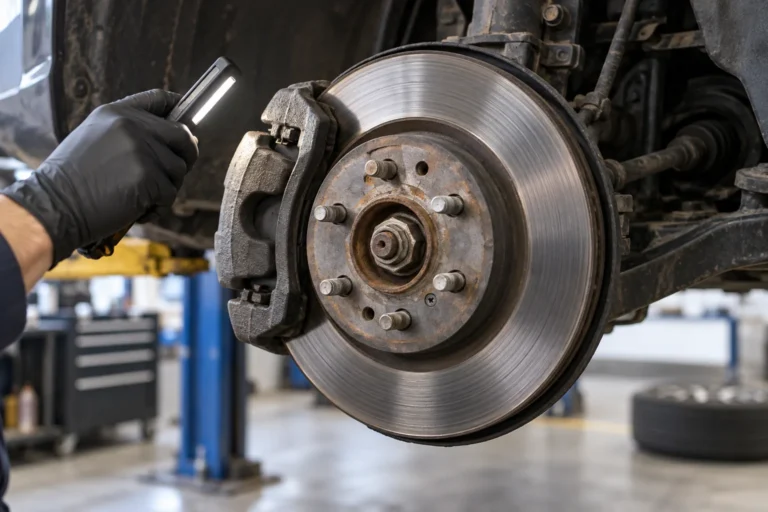
A sticking brake caliper keeps the brake pad pressed on the disc after you release the pedal. The usual signs are a pull to one side, a burning smell, one wheel much hotter than the others and uneven pad wear. Common causes are seized slide pins, a stuck piston, a collapsed brake hose or old brake fluid. It is a safety fault, so have it checked quickly.
This guide is written by the Mechanics workshop team in Al Quoz, Dubai. Dragging brakes are a regular job in our workshop, and these are the patterns we see.
Use it to describe what your car is doing. Then let a technician confirm the cause before any part is ordered.
Is it safe to drive with a sticking brake caliper?
Not for long. A dragging brake overheats the pads, disc and brake fluid, and hot brakes can lose stopping power.
| What you notice | Risk level | What to do |
|---|---|---|
| Light pull when braking only | Medium | Book a brake check soon |
| Pull while driving, not only when braking | High | Drive gently to the workshop only |
| Burning smell from one wheel | High | Stop safely and let the brakes cool |
| Smoke from a wheel | Very high | Stop, switch off, arrange recovery |
| Soft pedal or brake warning light | Very high | Do not drive, arrange recovery |
| Car will not roll freely on flat ground | High | Do not drive far, have it checked |
Do not touch a wheel, disc or caliper to check its heat after driving. A dragging brake can be hot enough to burn skin badly. If you smell burning or see smoke, stop somewhere safe and stand clear while it cools.
- Do not keep driving to see if it frees itself
- Do not pour water on a hot brake
- Do not lift the car or remove a wheel at the roadside
Car pulling or smelling of hot brakes? Send us the car model and which wheel, and we will tell you whether it is safe to drive in.
How a brake caliper works
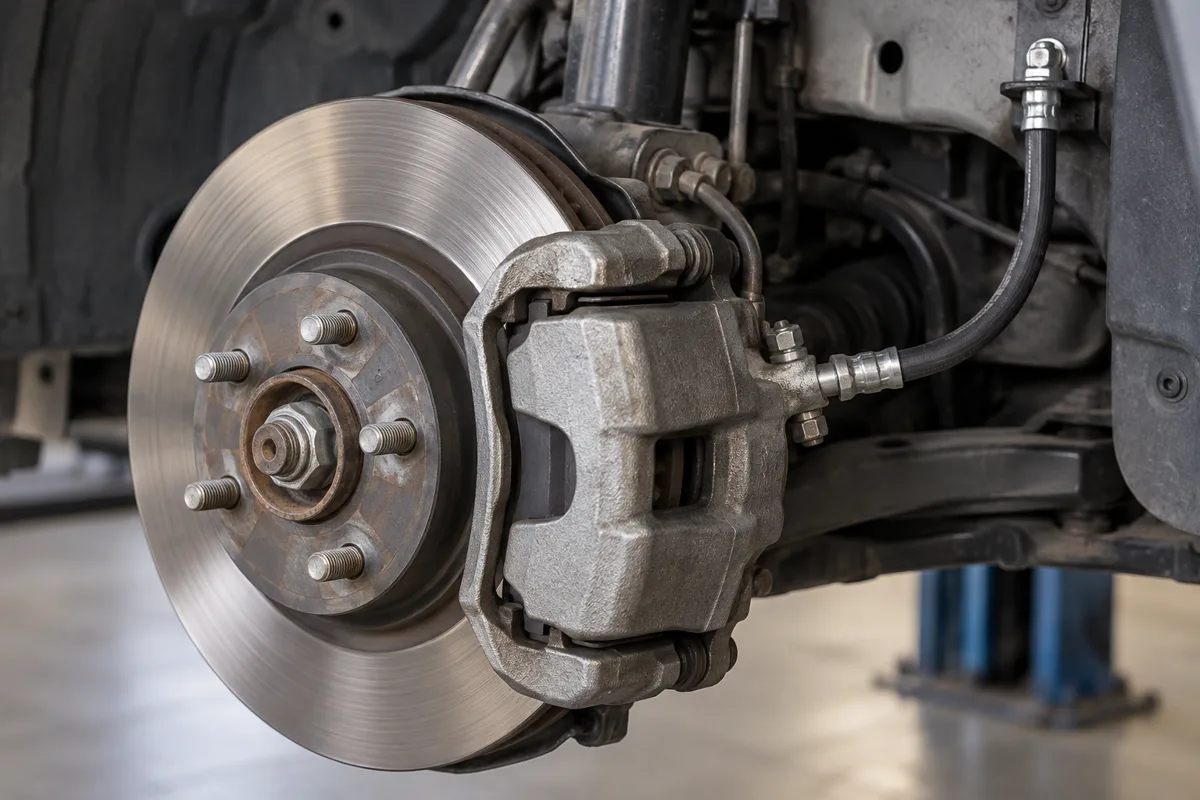
When you press the pedal, brake fluid pushes a piston in the caliper. The piston clamps the pads onto the disc to slow the car.
- Master cylinder and brake fluid
- Brake hose to each wheel
- Caliper piston, seal and dust boot
- Slide pins and their rubber boots
- Brake pads and the brake disc
Piston on one side
The body slides on pins to clamp both pads. Seized pins are a common fault.
Pistons on both sides
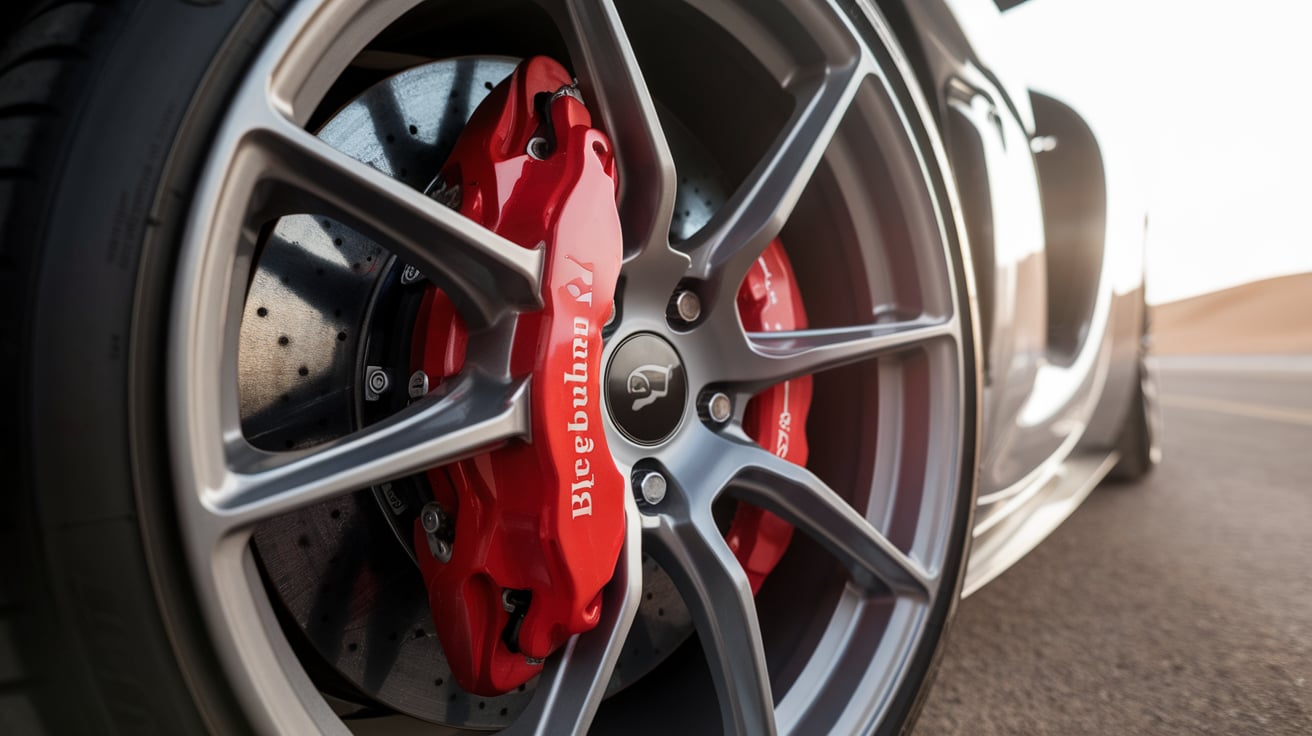
Found on many larger and performance cars. A stuck piston is the usual cause.
Parking brake built in
Many rear calipers include the parking brake, often electric. It can also hold the pads on.
When you release the pedal, the piston seal pulls the piston back slightly. If anything stops that small movement, the pad keeps rubbing.
Sticking brake caliper, symptom to cause table
| What you notice | Possible cause | How we confirm it |
|---|---|---|
| Car pulls to one side | Caliper dragging or not applying evenly | Road test and wheel spin test on the lift |
| Burning smell after driving | Pad dragging on the disc | Temperature comparison between wheels |
| One wheel much dirtier with brake dust | Constant pad contact on that wheel | Visual check and pad wear comparison |
| Uneven pad wear, inner pad worn more | Seized slide pins or piston | Pad thickness and pin movement check |
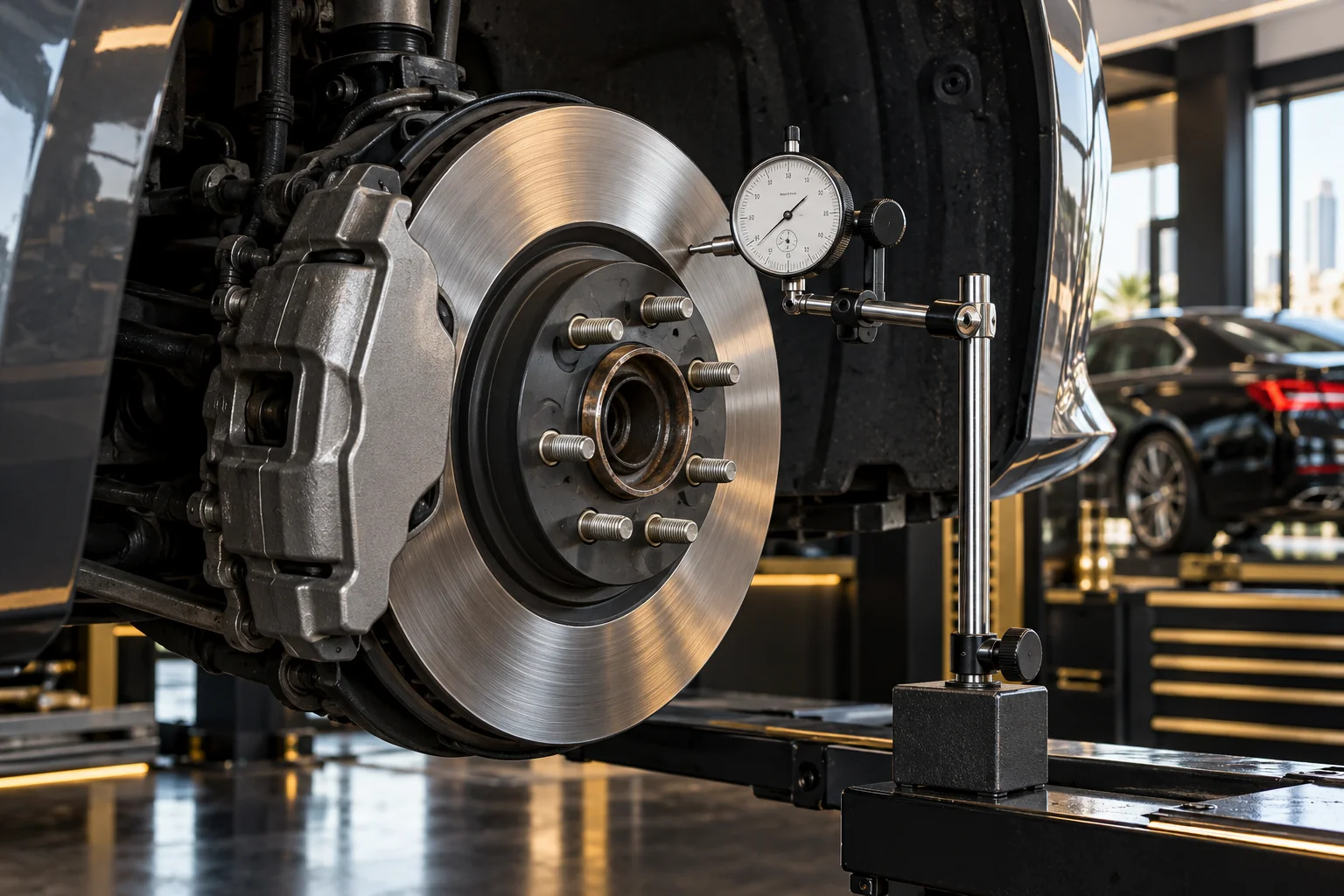
| Vibration when braking | Disc overheated or uneven after dragging | Disc thickness and runout measurement |
| Car feels slow or uses more fuel | Brake drag holding the car back | Free wheel spin test |
| Rear wheel drags after parking | Parking brake mechanism not releasing | Scan for parking brake codes, release test |
Pulling and uneven wear can also come from worn pads. Our guide to the symptoms of worn brake pads helps you compare the two.
What causes a brake caliper to stick, causes in detail
1. Seized or dry slide pins
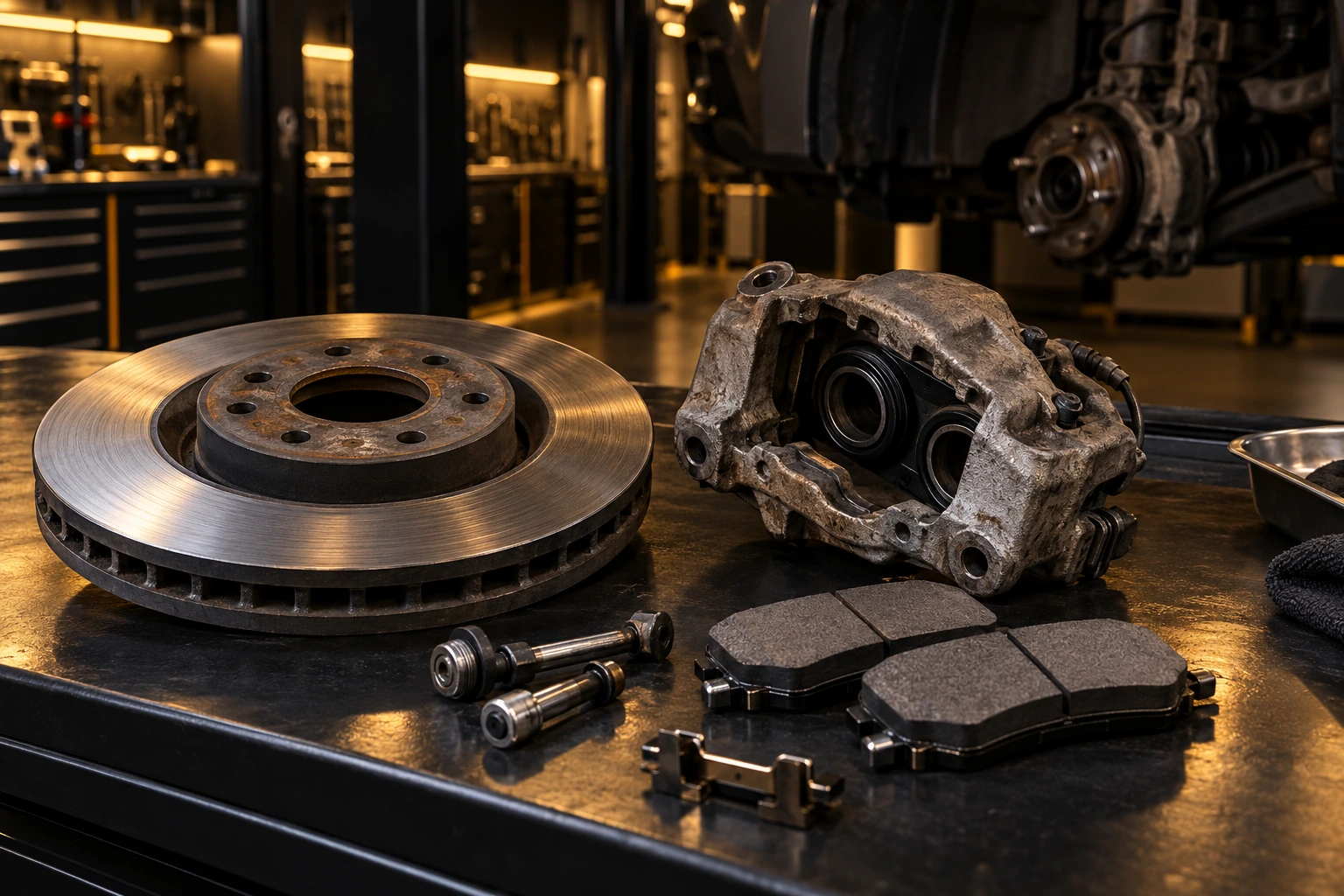
The pins let a sliding caliper move freely. When the grease dries out or rust forms, the caliper cannot centre itself.
- Often shows as one pad worn far more than the other
- Torn pin boots let dust and water in
- We check pin movement by hand with the caliper off
2. Stuck caliper piston
Corrosion or dirt behind a torn dust boot can stop the piston returning. The pad then stays in light contact with the disc.
- Dust boots are checked for splits and swelling
- A piston that will not move smoothly usually means a caliper rebuild or replacement
- Both calipers on the axle are compared
3. Collapsed brake hose
Inner lining breaks down
An old rubber hose can fail inside while looking fine outside.
Acts like a one way valve
Fluid goes in under pressure but cannot return easily.
Brake stays on
The caliper stays applied until the pressure slowly bleeds back.
4. Old or contaminated brake fluid
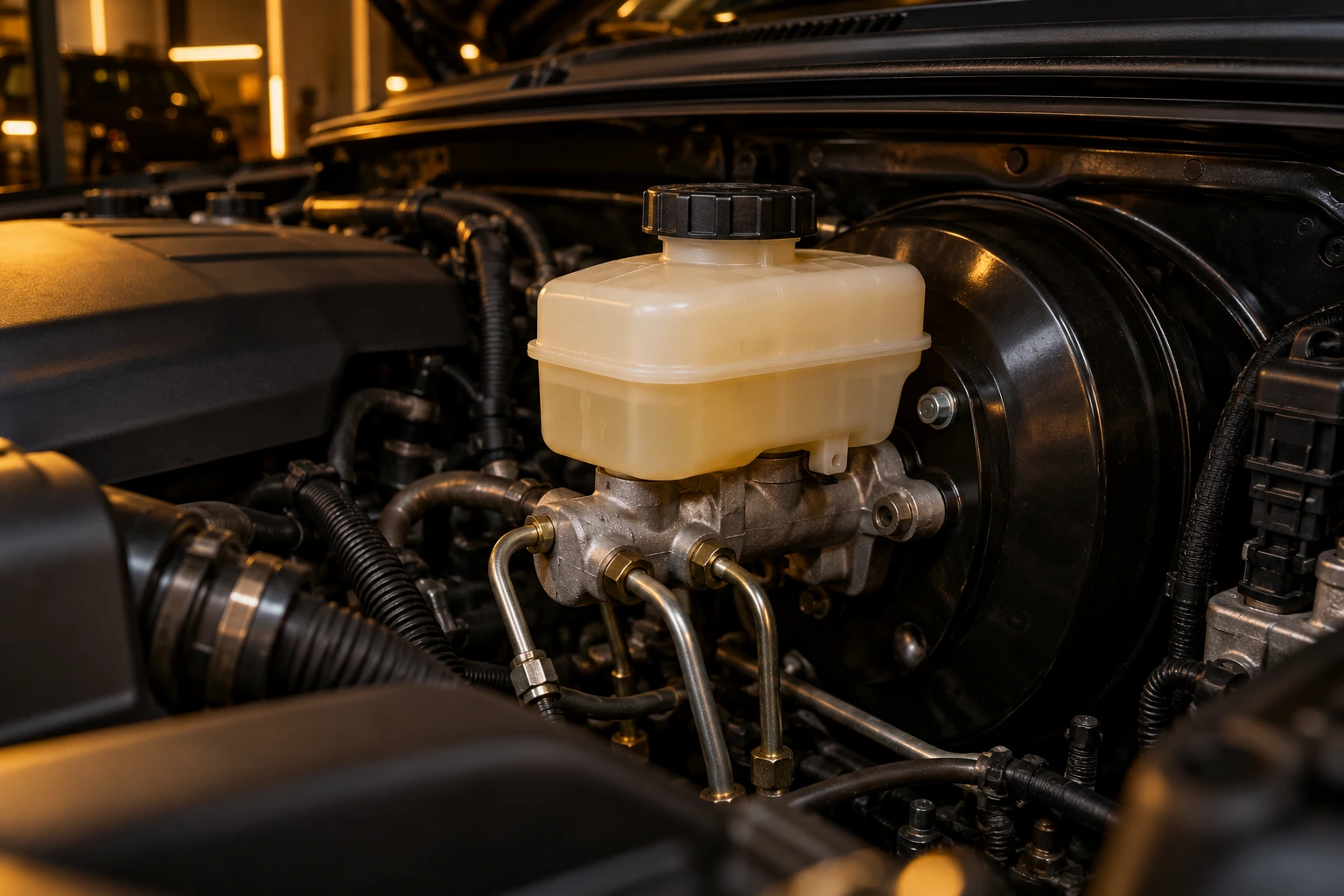
Brake fluid absorbs moisture over time. Moisture causes corrosion inside the caliper and lowers the boiling point of the fluid.
- We test the fluid condition before advising a change
- Dark fluid is a sign it is overdue
- The car maker sets the fluid type and change interval
5. Worn pad hardware and abutment clips
Pads slide in clips on the caliper bracket. Rust under the clips can trap the pad so it cannot move back.
- Common on cars that sit for weeks without moving
- New clips usually come with quality pad sets
- The bracket is cleaned before new clips are fitted
6. Parking brake, master cylinder or ABS faults
| Part | How it can hold a brake on |
|---|---|
| Electric parking brake | Motor or mechanism does not release fully at the rear |
| Cable parking brake | Seized cable keeps the rear brake partly applied |
| Master cylinder | Pressure does not release fully, usually affects more than one wheel |
| ABS hydraulic unit | Rare, a valve fault can hold pressure on one circuit |
If the ABS light is on as well, our guide on why the ABS light turns on explains the system.
What you can safely check yourself
These checks need no tools, no lifting and no wheel removal.
- Note which way the car pulls and whether it happens only when braking
- Look at the wheels for one that is much darker with brake dust
- Notice any burning smell from one corner after a drive
- Check the brake fluid level in the reservoir against the marks
- Note any brake or parking brake warning light and take a photo
- Listen for a light rubbing noise when rolling slowly in a quiet car park
- Do not touch wheels, discs or calipers to feel for heat
- Do not open the brake system or loosen any bleed screw
- Do not lever pistons back or remove calipers yourself
- Do not top up with a different fluid type than the cap or handbook states
How Mechanics diagnoses a sticking brake caliper
-
Listen to you
When the pull or smell happens, which wheel, and any recent brake work.
-
Road test
A technician checks for pull, drag, vibration and pedal feel.
-
Compare wheel temperatures
After the test, a much hotter wheel points to the dragging brake.
-
Lift and spin test
Each wheel is spun by hand. A dragging brake resists or stops quickly.
-
Strip and inspect
Pads, pins, boots, piston, clips and hose are checked, and the disc is measured.
-
Scan if needed
Electric parking brake and ABS systems are read for faults.
-
Written quote
You get the findings and the price on WhatsApp before we start.
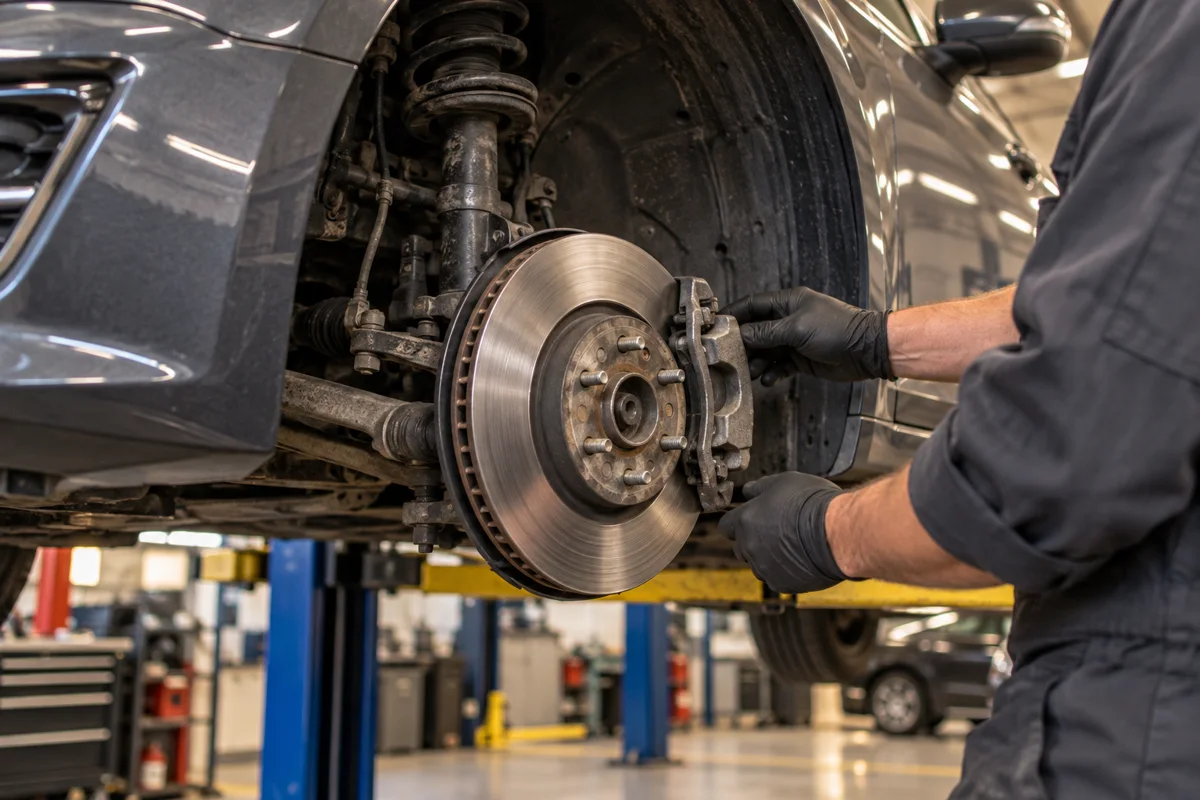
Common sticking caliper repairs and what they fix
| Repair | Fixes | Usually followed by |
|---|---|---|
| Clean and grease slide pins, new boots | Seized or dry pins | Pad check and road test |
| New pad clips and bracket clean | Pads trapped in the bracket | Road test |
| Caliper rebuild with new seals | Stuck piston where the bore is still good | Bleed and road test |
| New or remanufactured caliper | Corroded bore, seized piston | Bleed and road test |
| Brake hose replacement | Collapsed or swollen hose | Bleed and road test |
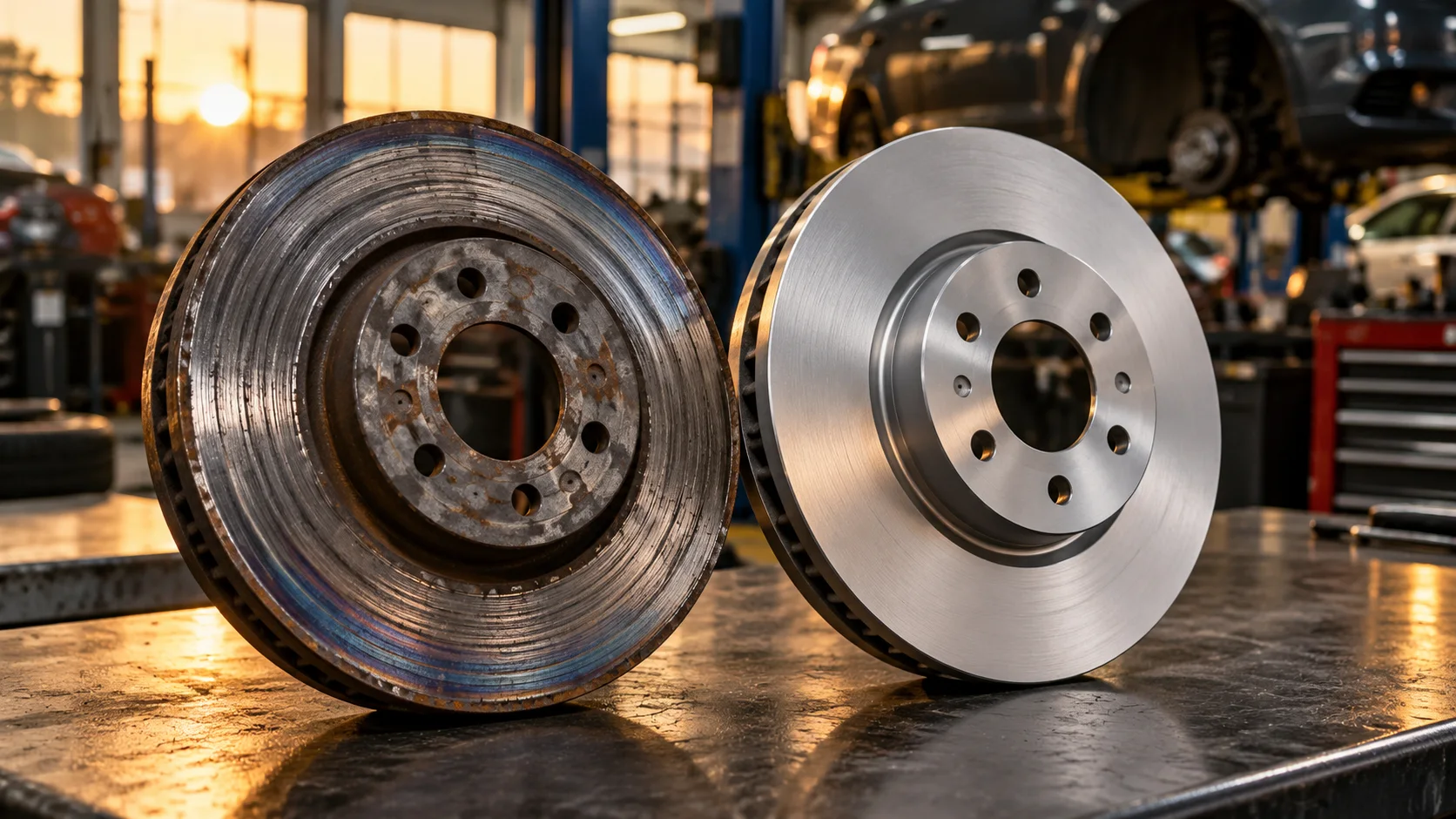
| Pads and discs | Heat damage from dragging | Bedding in and road test |
| Brake fluid change | Old, wet or dark fluid | Pedal check |
A dragging brake often overheats the pads, so we check them every time. Our brake pad replacement service covers that part of the job.
What affects the cost of a sticking caliper repair?
The real cause
Greasing pins is a small job, a new caliper and hose is a larger one.
Caliper type
Fixed multi piston and electric parking brake calipers cost more.
Parts choice
New genuine, OEM equivalent and remanufactured calipers differ in price.
Damage done
Overheated pads and discs often need replacing at the same time.
Fluid and bleeding
Any hydraulic work needs a bleed, and old fluid may need a full change.
| Work | Planning price from our brake repair page |
|---|---|
| Caliper, hydraulic or ABS repair | Quote after diagnosis |
| Standard brake pads | AED 265 to 850 per axle, including 5 percent VAT |
| Conventional discs and pads | AED 840 to 2,100 per axle, including 5 percent VAT |
| Brake fluid change | AED 130 to 265 per vehicle, including 5 percent VAT |
These planning figures are copied from our brake repair price section. Your final quote depends on the car and what we find.
How Dubai conditions affect brake calipers
Hot brakes, hot fluid
High air temperature plus stop start traffic keeps brakes hot for longer.
Dust in the boots
Fine sand gets past split boots and wears pins and pistons.
Water and parking
Washing then parking for days lets rust form on pins, clips and discs.
Moisture in the fluid
Humid months add to the moisture brake fluid takes in over time.
We often find sticking rear calipers on cars that were parked for a long time over summer. A short drive and a brake check before regular use is worth it.
How to prevent brake calipers from sticking
- Ask for the slide pins to be cleaned and greased at every pad change
- Have the boots and hoses checked at every service
- Change the brake fluid at the interval the car maker sets
- Drive the car regularly, even for short trips
- Do not ignore a light pull or a new smell
- Use quality pads that come with new clips
Sticking caliper or worn pads, how to tell
| Sign | Sticking caliper | Worn brake pads |
|---|---|---|
| Noise | Light rubbing or none | Squeal from the wear indicator or grinding |
| Smell | Burning from one wheel | Usually none unless very worn |
| Wheel heat | One wheel much hotter | All wheels similar |
| Pull | Often, even off the brakes | Rare |
| Pad wear | Uneven on one wheel | Even and thin on the axle |
What to send us
Make, model, year and mileage.
Which corner smells, pulls or looks dirtier.
A photo of any brake or parking brake light.
Recent pad, disc or fluid work, and whether the car was parked long.
Book a brake caliper check. Send these details on WhatsApp and we will advise whether to drive in or arrange pickup.
Sticking brake caliper questions we get asked
What are the signs of a sticking brake caliper?
A pull to one side, a burning smell, one wheel hotter or dirtier than the others, uneven pad wear and a car that feels held back. Some cars also vibrate when braking after the disc overheats.
Can I drive with a sticking brake caliper?
Only a short distance, gently, to a workshop. A dragging brake keeps heating up and can fade. If you see smoke, smell strong burning or the pedal feels soft, stop and arrange recovery.
What causes a brake caliper to stick?
The usual causes are seized slide pins, a stuck piston, a collapsed brake hose, rusted pad clips or old brake fluid. On rear wheels the parking brake can also hold the pads on.
Can a sticking caliper fix itself?
No. It may seem to free up when cold, but the cause is still there. It usually gets worse and damages the pads and disc.
Why does my car pull to one side when braking?
A caliper that sticks or does not apply evenly is a common cause. Uneven tyre pressure, worn suspension parts and alignment can also cause a pull, so we check them together.
Can a sticking caliper damage the brake disc?
Yes. Constant rubbing overheats the disc, which can leave hot spots, uneven thickness and vibration. We measure the disc before deciding whether it can stay.
Do I need to replace both calipers?
Not always. If one caliper has failed and the other is healthy, one may be enough. On older cars we may suggest both for even braking, and we explain why.
Can a caliper be rebuilt instead of replaced?
Often yes, if the piston and bore are not badly corroded. A rebuild uses new seals and boots. If the bore is pitted, a new or remanufactured caliper is the safer choice.
Can old brake fluid make a caliper stick?
Yes. Fluid takes in moisture over time, which can corrode the piston and bore. Changing the fluid at the car maker’s interval helps protect the calipers.
Why does a rear brake stick after parking?
Rear calipers often include the parking brake. A seized cable, a stuck electric parking brake mechanism or rust after long parking can stop it releasing fully.
How much does it cost to fix a sticking caliper in Dubai?
Caliper repair is quoted after diagnosis, because it depends on the cause and the car. Pad, disc and fluid planning prices are on our brake repair page, and your final quote depends on what we find.
Does Dubai heat make calipers stick?
Heat and stop start traffic keep brakes hot, and sand wears boots and pins. Long parking periods also let rust form. Regular brake checks catch these early.
Can I clean the slide pins myself?
Brakes are safety critical, so we do not recommend it. The car must be lifted safely, parts refitted to the correct torque and the brakes tested afterwards.
How do I book a brake caliper check at Mechanics?
Send your car details and which wheel is affected on WhatsApp, or call us. Our workshop is in Al Quoz, Dubai, and you get a written quote before any work starts.