In this guide
The main signs of worn brake pads are a squeal when braking, a grinding noise, a longer stopping distance, a pad warning light and a vibration or pull under braking. Squealing is an early warning. Grinding or weaker braking means the pads may be down to metal and the car needs checking before more driving.
This guide is written by the Mechanics workshop team in Al Quoz, Dubai. Brake pad wear is one of the checks we carry out most often, and these are the signs we see.
Use it to understand what your brakes are telling you. Then let a technician measure the pads and discs before you decide on the repair.
Is it safe to drive with worn brake pads?
Stop driving if you hear grinding, the pedal feels soft or sinks, or the car takes much longer to stop. These signs can mean severe wear or a hydraulic fault. Park safely and arrange recovery.
| What you notice | Risk level | What to do |
|---|---|---|
| Light squeal that comes and goes | Low | Book a brake inspection soon |
| Brake pad warning message | Medium | Drive gently and book a check promptly |
| Steady squeal on every stop | Medium | Have the pads measured this week |
| Vibration through the pedal or wheel | Medium | Book a check of the discs and pads |
| Grinding or scraping metal sound | High | Stop driving, arrange recovery |
| Soft or sinking pedal, red brake light | High | Do not drive, call for help |
Brakes squealing or grinding? Send us the car model and the noise you hear, and we will tell you if it is safe to drive in.
How brake pads work
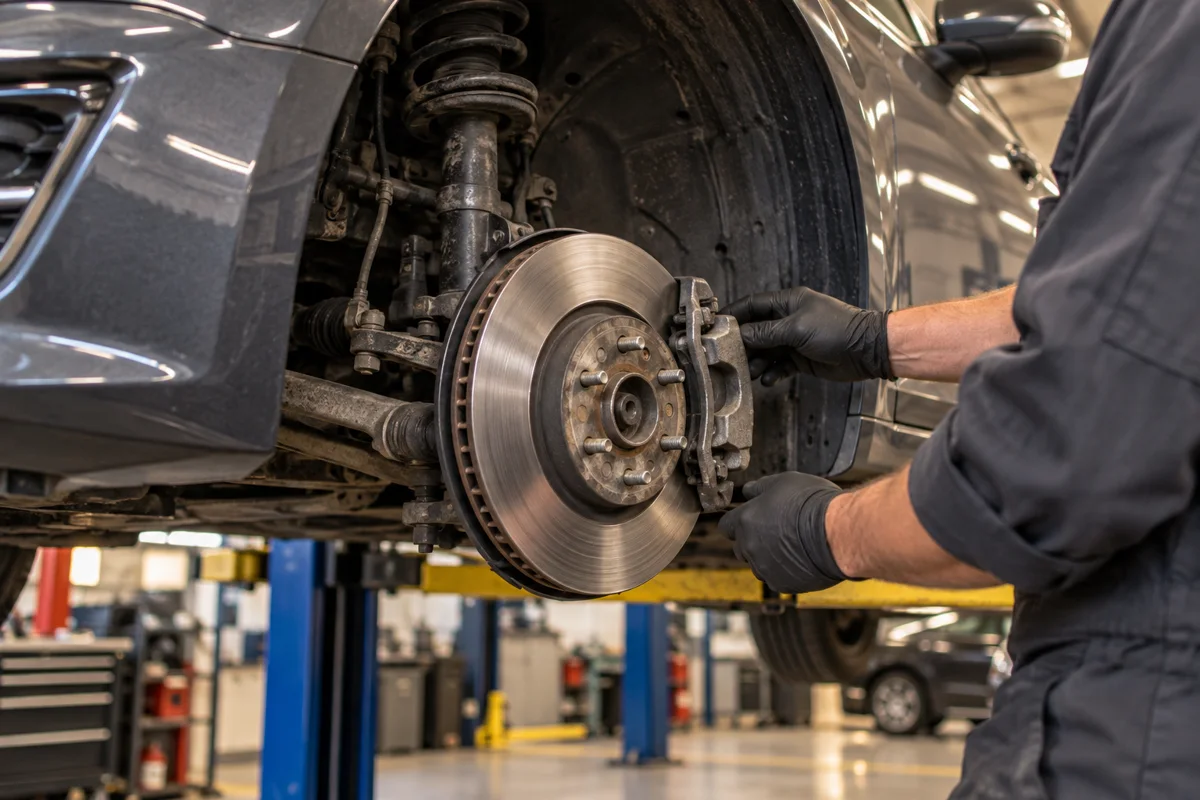
When you press the pedal, brake fluid pushes the caliper pistons. The caliper squeezes the pads against the spinning disc, and friction slows the wheel.
- Brake pedal and master cylinder
- Brake fluid, pipes and hoses
- Calipers, pistons and guide pins
- Brake pads with friction material on a steel backing plate
- Brake discs, also called rotors
Quiet and low dust
Common on daily cars. Smooth feel and cleaner wheels.
Strong and heat tolerant
Good bite under load, but often noisier and harder on discs.
Soft and quiet
Gentle on discs, but tends to wear faster under heavy braking.
Matched to the system
Big brake and carbon ceramic systems need their own specific pads.
Signs of worn brake pads and what they mean
Most pad wear gives warning signs well before it becomes dangerous. The table shows what each sign usually means and how we confirm it.
| What you notice | Possible cause | Check that confirms it |
|---|---|---|
| High pitched squeal when braking | Wear indicator touching the disc, or noise from hardware | Pad thickness and hardware check |
| Grinding or scraping | Friction material gone, backing plate on the disc | Wheel off inspection of pads and discs |
| Pad warning light or message | Electronic wear sensor has been reached | Pad measurement and sensor check |
| Longer stopping distance | Thin or glazed pads, or a hydraulic fault | Pad, disc and fluid inspection |
| Vibration under braking | Disc thickness variation or uneven pad deposits | Disc measurement and runout check |
| Car pulls to one side when braking | Uneven pad wear or a sticking caliper | Caliper and guide pin check |
| Burning smell or very hot wheel | Dragging brake | Caliper movement and pad contact check |
Each warning sign in detail
1. Squealing when you brake
Many pads have a small metal tab called a wear indicator. When the pad gets thin, the tab touches the disc and squeals to warn you.
- A squeal on every stop often means the indicator is touching
- A squeal only on the first few stops in the morning can be surface moisture
- Noise can also come from missing shims, clips or a glazed pad
- Sound alone does not tell us which parts need replacing
2. Grinding or scraping metal
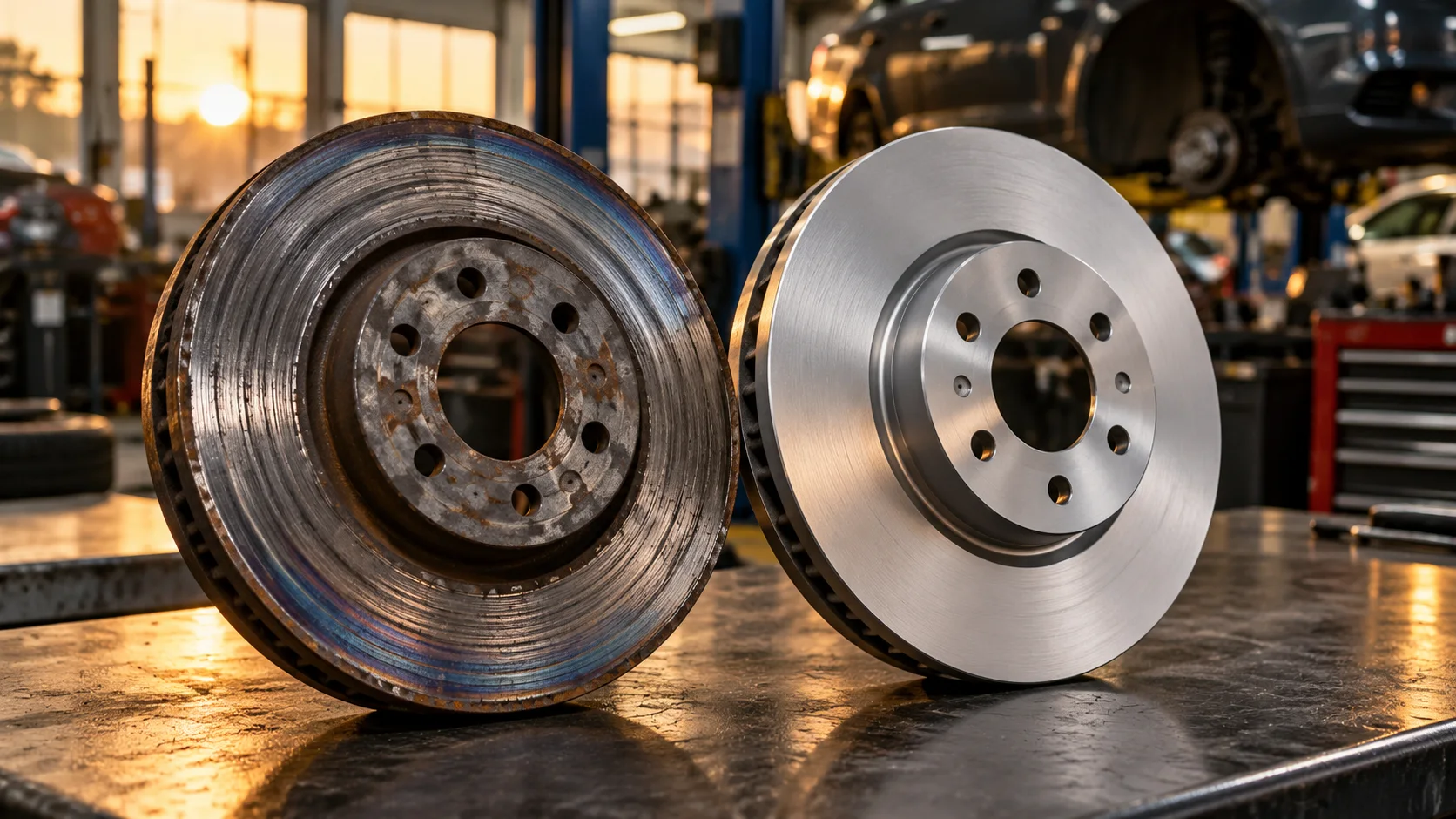
Grinding often means the friction material has worn through. The steel backing plate then cuts into the disc.
- Braking power can drop
- The disc gets deep grooves and may need replacing
- Heat can damage the caliper piston seals
- Stones caught in the brake can sound similar
When we find grinding, we almost always check the discs as well as the pads.
3. Brake pad warning light
Wear sensor reached
The sensor wire in the pad has worn through. Book a check promptly.
Fluid or system fault
Can mean low fluid or a hydraulic problem. Do not drive until it is checked.
Antilock fault
Normal braking may work, but ABS may not. Our ABS light guide explains more.
Symbols differ by brand, so read the exact message in your handbook. A new sensor is often needed when the pads are changed.
4. Longer stopping distance or a soft pedal
Thin pads have less material to grip the disc, so the car takes longer to stop. A soft or sinking pedal is different and points to the hydraulic side.
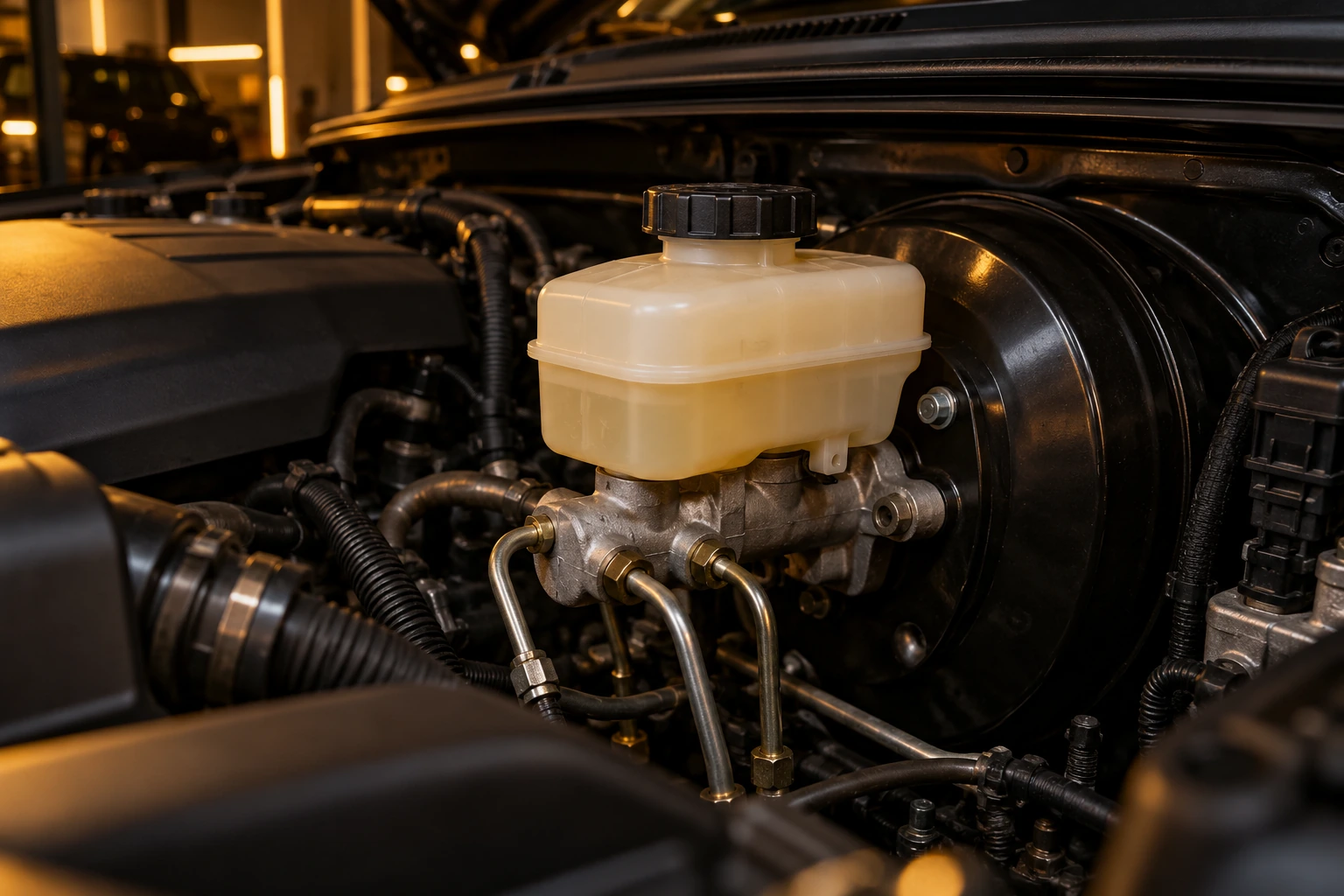
- Fluid level drops slowly as pads wear, which is normal
- A sudden drop in fluid points to a leak
- Old fluid can boil under heavy braking and fade the pedal
- Never top up fluid just to hide a warning
Hydraulic faults are covered by our brake repair service.
5. Vibration or pulling when braking
-
Feel where it comes from
Shake in the steering wheel often points to the front discs.
-
Note when it happens
Vibration only at high speed braking suggests disc thickness variation.
-
Watch for a pull
A pull to one side can mean a sticking caliper on that wheel.
-
Have it measured
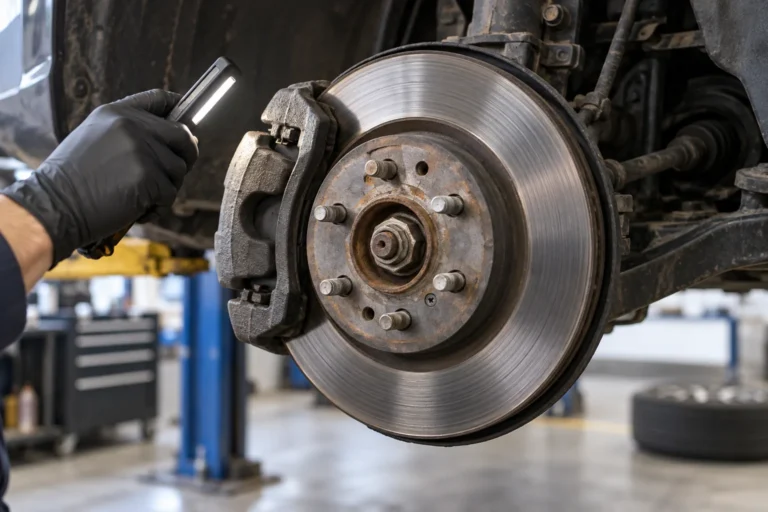
We check disc thickness, runout and caliper movement on the lift.
A pull can also come from tyres. Our sticking brake caliper guide explains that fault in detail.
What do worn brake pads look like?
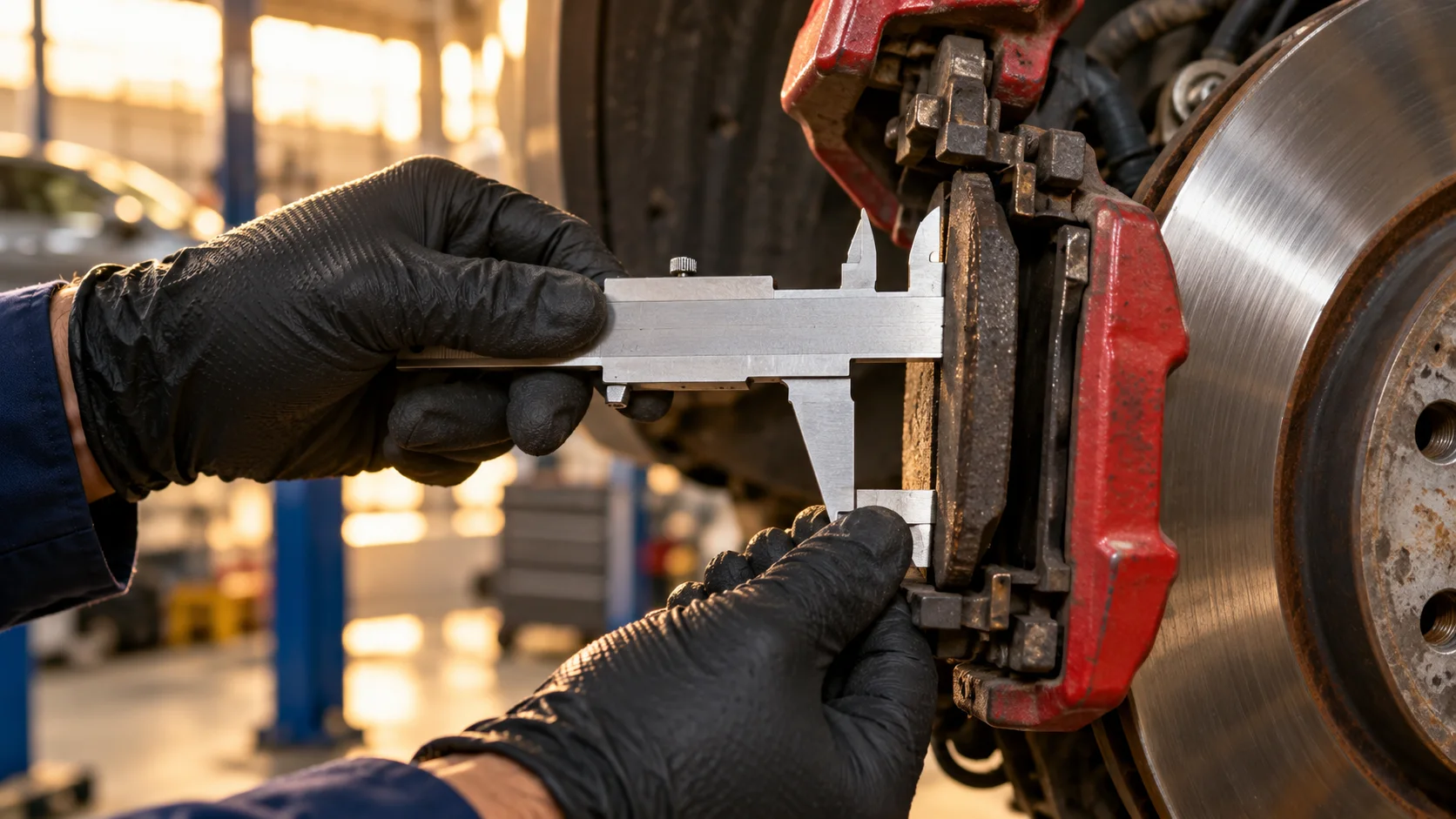
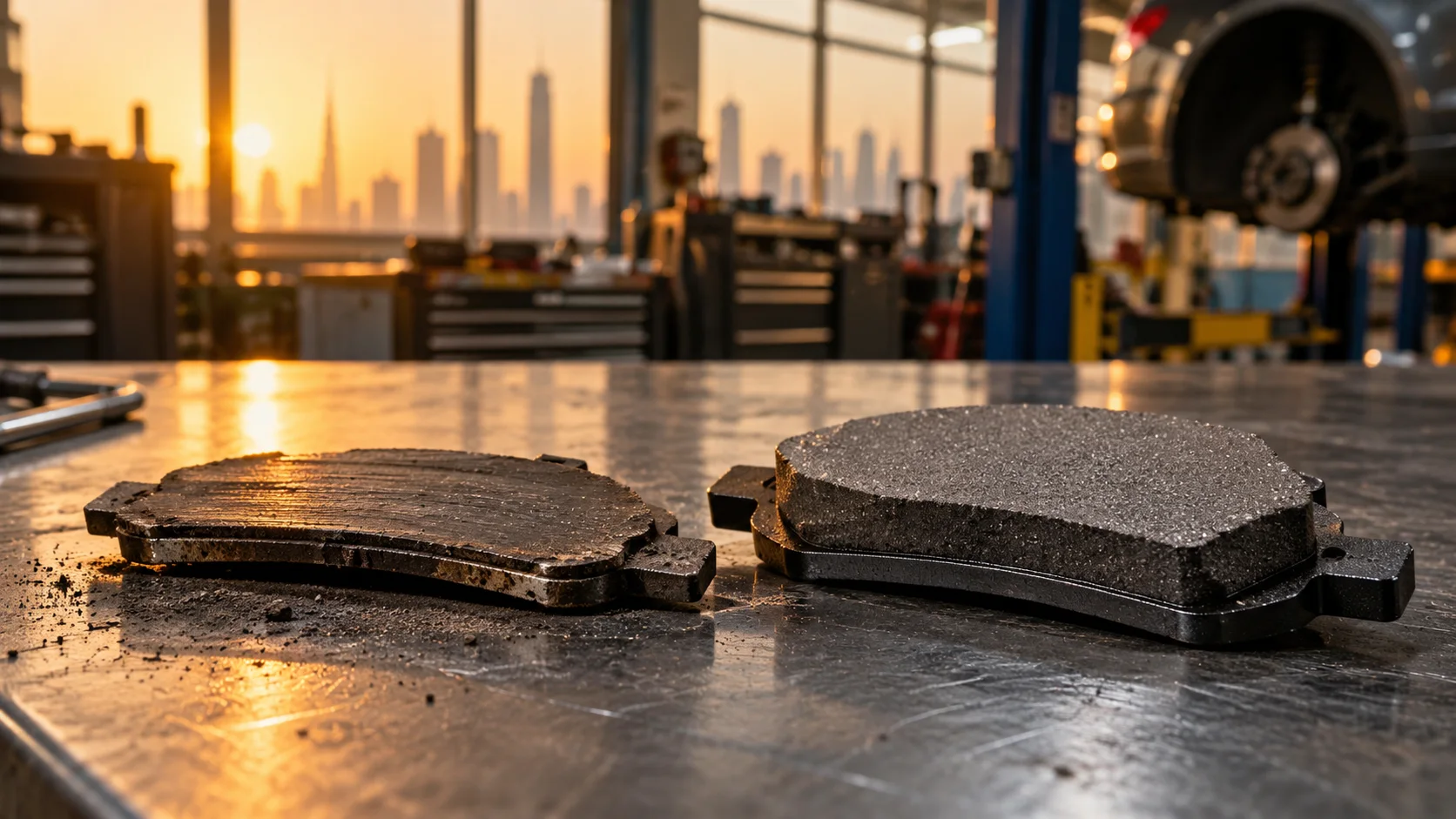
A new pad has a thick layer of friction material on its backing plate. A worn pad has only a thin strip left, or none at all.
- Very thin friction material on the inner or outer pad
- One pad thinner than the other on the same wheel
- Cracks, glazing or crumbling edges
- A lip on the outer edge of the disc and deep grooves
- Blue or dark heat marks on the disc
The inner pad often wears faster and cannot be seen through the wheel. Looking at one outer pad does not show the condition of the whole axle.
When to replace brake pads
At the maker’s limit
Pads are replaced when the friction material reaches the pad maker’s minimum.
When the sensor warns
A pad warning message means replacement is due soon.
When wear is uneven
Uneven pads are replaced and the cause, often a caliper, is fixed.
When damaged
Cracked, glazed or oil soaked pads are replaced at any thickness.
There is no universal number of kilometres left at a given thickness. Traffic, loads, pad type and the car change the wear rate, so we plan from measurements.
What you can safely check yourself
These checks need no tools, no jack and no wheel removal. Brake work itself belongs in the workshop.
- Listen for squeal or grinding with the windows down
- Note any brake or pad warning on the dashboard
- Check the brake fluid level against the marks, engine off
- Look for heavy black dust on one wheel only
- Notice any pull, vibration or change in pedal feel
- Feel for a hot smell after normal driving
- Do not lift the car or remove wheels to check pads
- Do not keep driving with grinding or a soft pedal
- Do not top up fluid to hide a warning light
How Mechanics inspects worn brake pads
-
Listen to you
What you hear or feel, when it started and any warning light.
-
Road test
We check pedal feel, pulling, vibration and noise under braking.
-
Wheels off inspection
Inner and outer pads on both sides of each axle are measured.
-
Disc checks
Disc thickness, surface condition and runout are compared with the specification.
-
Caliper and fluid checks
Pistons, guide pins, hoses and fluid condition are inspected.
-
Written quote
You get the findings and the price on WhatsApp before any work starts.
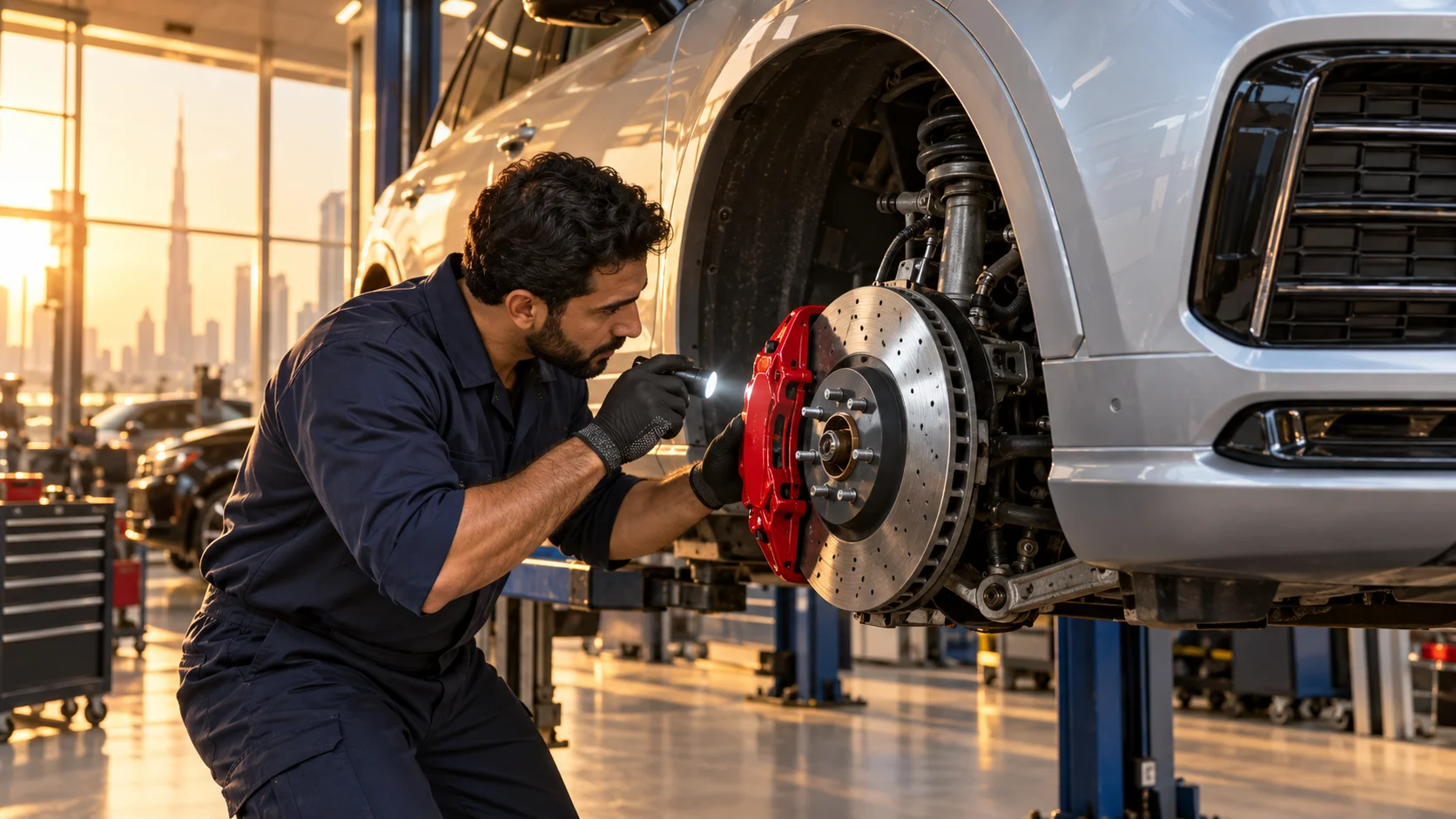
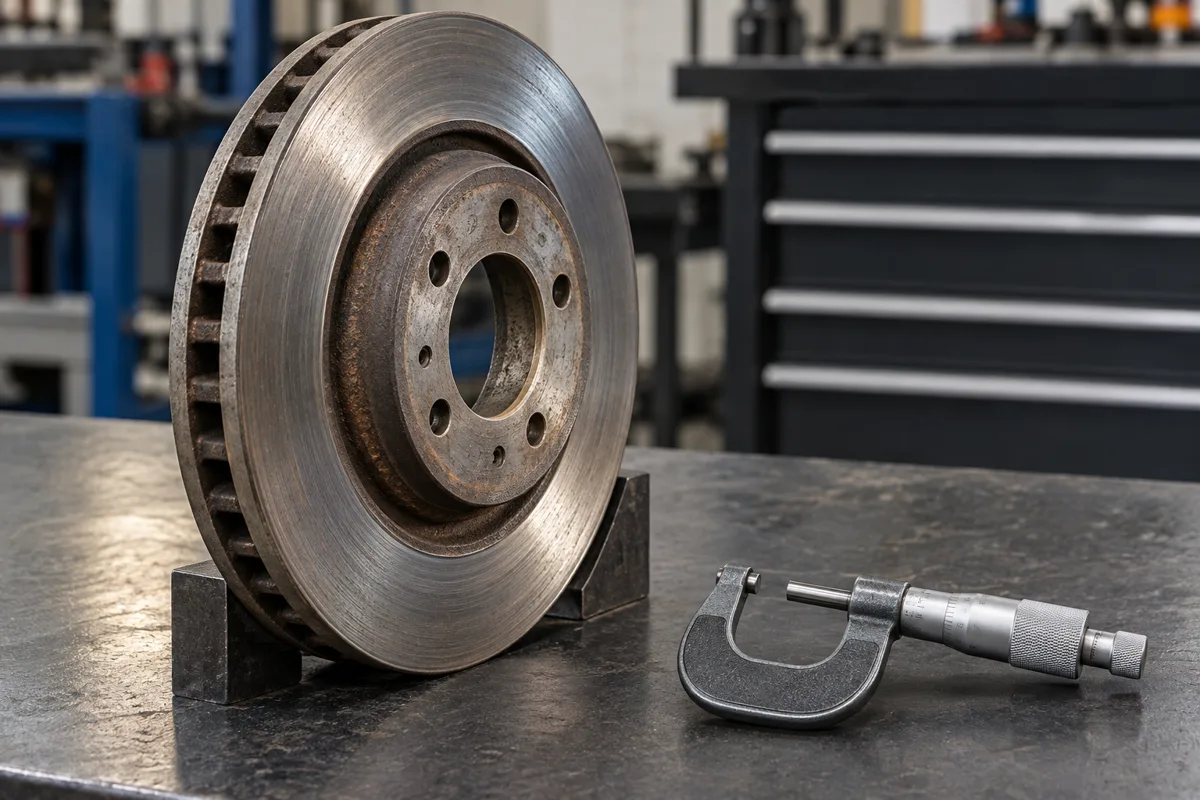
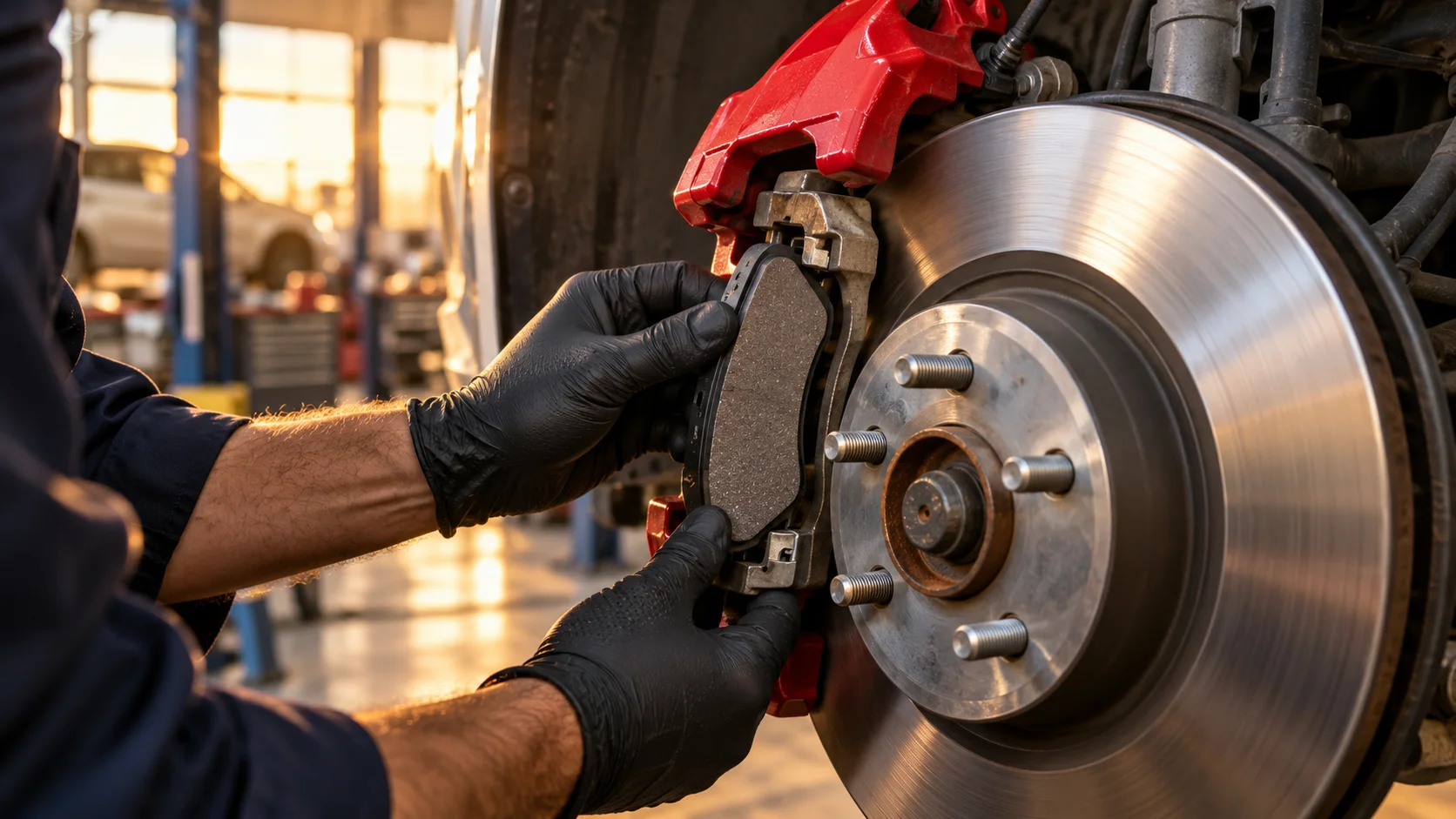
On cars that come in with a pad warning, we often find the inner pads far thinner than the outer ones. That usually points to a caliper or guide pin that needs attention.
Brake repairs and what they fix
| Repair | Fixes | Usually followed by |
|---|---|---|
| Pads only, per axle | Squeal, pad warning, thin pads | Road test and bedding advice |
| Pads and discs, per axle | Grinding, deep grooves, worn discs | Road test and bedding advice |
| Wear sensor replacement | Pad warning that stays on | Warning reset |
| Caliper service or repair | Uneven wear, pull, dragging brake | Brake fluid bleed if opened |
| Brake fluid change | Old fluid, pedal fade | Pedal and leak check |
| Electronic parking brake service | Rear pad change on cars that need it | Parking brake function test |
See our brake pad replacement service for the full job and what it should include.
How much does brake pad replacement cost in Dubai?
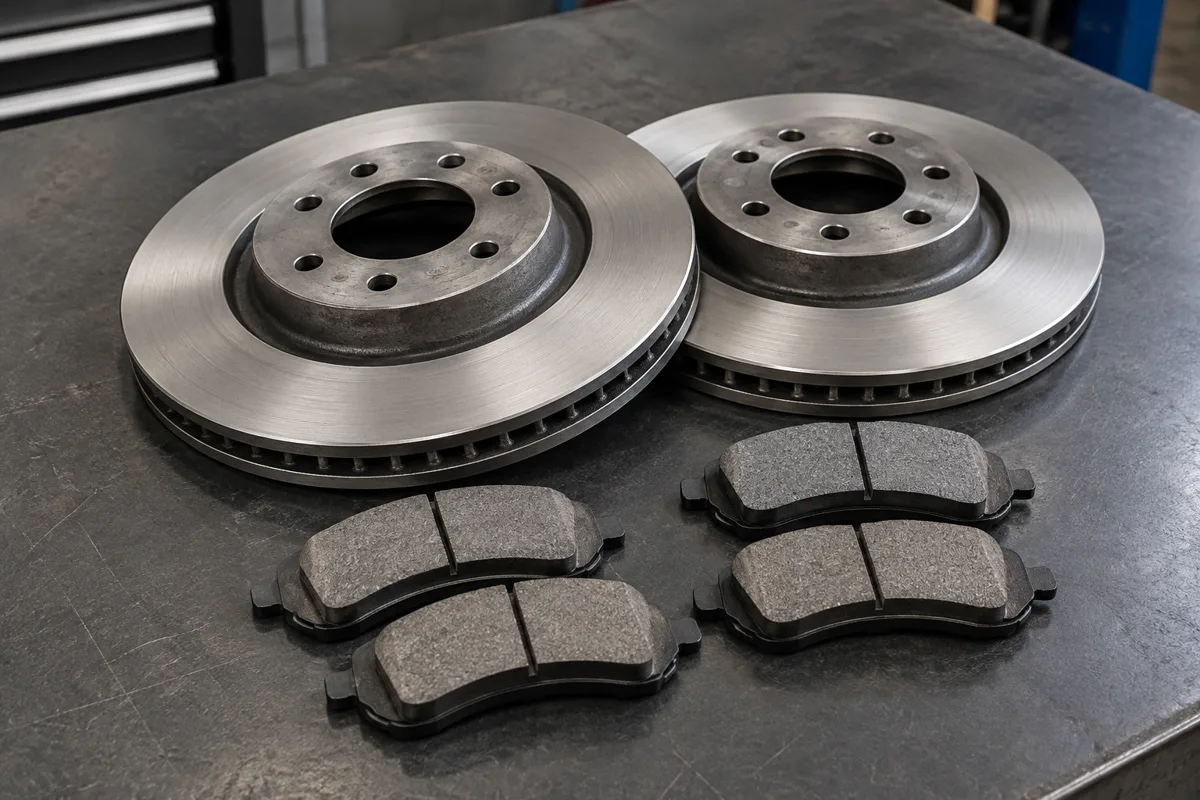
| Job | Planning range per axle |
|---|---|
| Standard pads and routine fitting | AED 265 to 850 including 5 percent VAT |
| Conventional discs and pads | AED 840 to 2,100 including 5 percent VAT |
These ranges are copied from our brake pad replacement price section. Your final quote depends on the car and what we find.
Pads or pads and discs
Worn or grooved discs add to the job. Measurements decide this.
Front or rear axle
Front and rear prices can differ even on the same car.
Sensors and hardware
Wear sensors, clips and seized parts are outside the base range.
Brake system type
Performance and carbon ceramic brakes need their own quote.
How Dubai driving wears brake pads
Stop start driving
Crawling traffic means many stops and more pad wear per kilometre.
Hot brakes cool slowly
High air temperatures keep brakes hot and age the fluid faster.
Dust in the calipers
Fine sand gets into guide pins and can cause uneven wear and noise.
More weight to stop
Large SUVs and loaded cars work their brakes harder.
Tyre pressure also affects how well a car stops. Our tyre pressure guide explains how heat changes pressure.
How to make brake pads last longer
- Leave a longer gap in traffic so you brake gently
- Lift off early before junctions and speed bumps
- Do not ride the brake pedal on long downhill roads
- Ask for the brakes to be checked at every service
- Change the brake fluid at the interval in your handbook
- Fix a sticking caliper early before it ruins new pads
- Follow the bedding advice after new pads are fitted
What to send us
Make, model, year and mileage.
The noise or feel, and when it happens.
A photo of any brake or pad message.
When the pads or discs were last changed.
Book a brake pad check. Send these details on WhatsApp and we will advise the next step before you drive in.
Worn brake pad questions we get asked
What are the first signs of worn brake pads?
The first sign is usually a high pitched squeal when braking, or a pad warning message on the dashboard. Book an inspection when you notice either one.
What does grinding when braking mean?
Grinding often means the friction material has worn away and metal is touching the disc. Stop driving and have the car checked, as braking can be weaker and the discs get damaged.
How long can I drive with squeaky brakes?
There is no safe number of kilometres we can give. A squeal is a warning to book a check soon, not a countdown. If it turns to grinding, stop driving.
How often should brake pads be replaced?
It depends on the car, the pad type and how you drive. Stop start traffic and heavy cars wear pads faster. We replace them when measurements reach the maker’s limit.
Do I need new discs with new brake pads?
Not always. Discs are replaced when they are below minimum thickness, deeply grooved or damaged. If they are still within specification, new pads can be fitted on their own.
Should brake pads be replaced on both sides?
Yes. Pads are replaced on both wheels of the same axle so that both sides brake evenly. Front and rear axles can be done separately.
Why are my front brake pads wearing faster than the rear?
The front brakes do most of the stopping work on most cars, so they usually wear first. On some cars with stability systems, the rear pads can wear quickly too.
Why is one brake pad more worn than the other?
Uneven wear often points to a sticking caliper piston or guide pin. Fitting new pads without fixing that cause can wear the new pads out early.
Can worn brake pads cause vibration?
Worn pads can add to it, but vibration under braking more often comes from the discs. We measure disc thickness and runout to find the cause.
Does the brake light come on when pads are worn?
On cars with pad wear sensors, a pad warning shows when the sensor is reached. A red brake light can mean low fluid or another fault and needs checking before driving.
Is it normal for new brake pads to squeak?
Some light noise can happen while new pads bed in. Constant squeal or grinding after fitting is not normal and should be checked by the workshop that fitted them.
Can I check brake pad thickness through the wheel?
Sometimes you can see the outer pad through the spokes, but that is only part of the picture. The inner pad often wears faster and is hidden, so a proper check needs the wheels off in the workshop.
Can heat in Dubai wear brake pads faster?
Heat keeps brakes hot for longer and ages the brake fluid. Combined with stop start traffic, that means Dubai cars often need more frequent brake checks.
How much does brake pad replacement cost in Dubai?
Our planning range for standard pads and routine fitting is AED 265 to 850 per axle including VAT, as shown in our brake pad price table. Discs, sensors and extra repairs add to that, and your quote depends on the car.
How do I book a brake check at Mechanics?
Send your car details and the symptom on WhatsApp, or see our brake pad replacement page. You get a free inspection and a written quote before any work starts.