In this guide
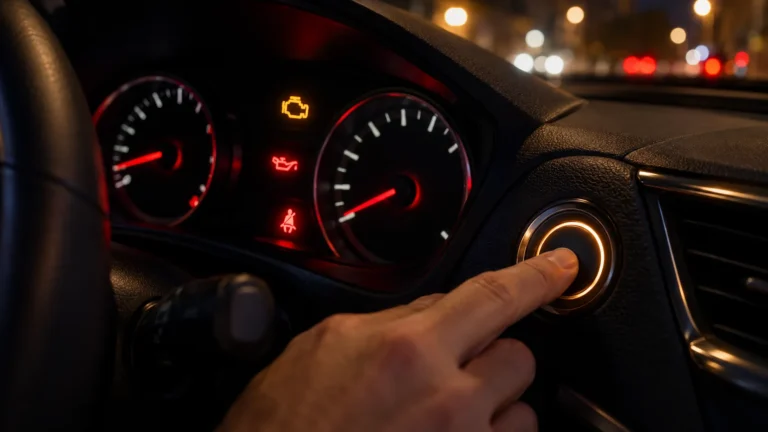
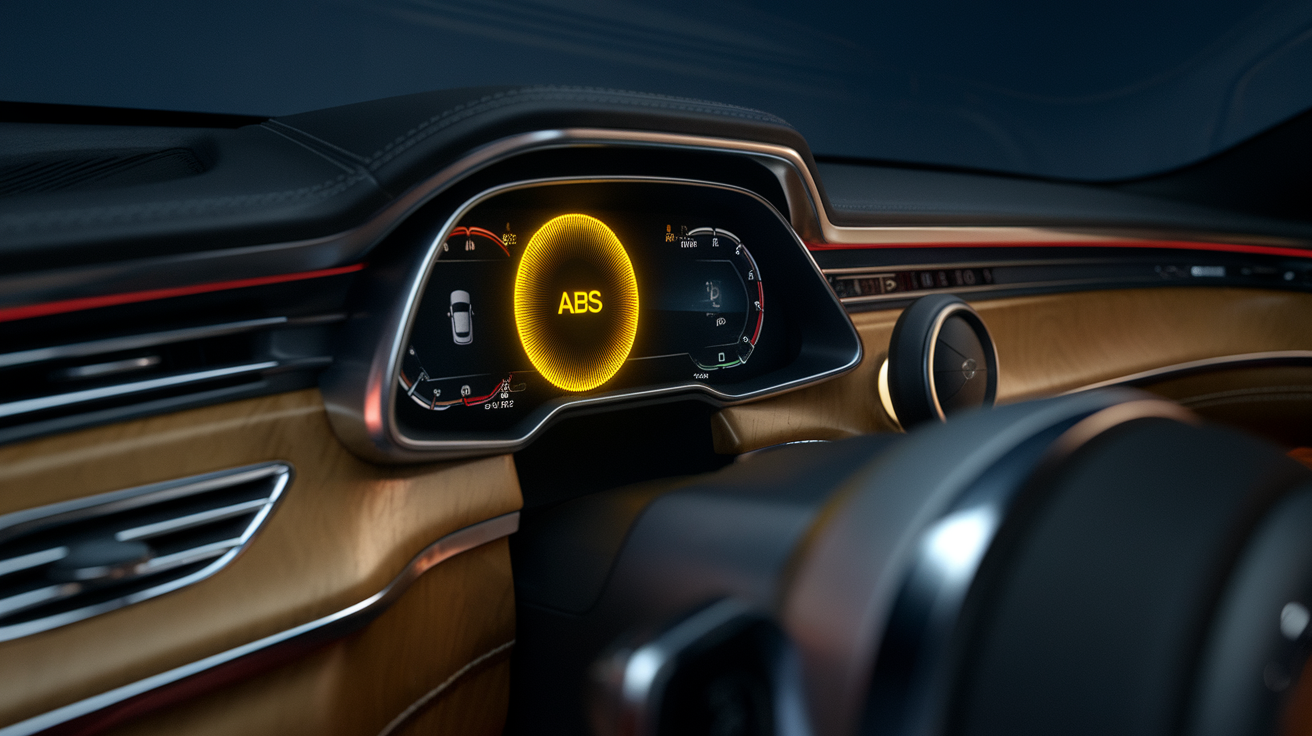
An amber ABS light means the anti-lock braking system has found a fault and switched itself off. Your normal brakes still work, but the wheels can lock in a hard stop. A scan of the ABS fault code shows exactly where the problem is.
This guide is written by the Mechanics workshop team in Al Quoz, Dubai. ABS and stability warnings are among the most common dashboard faults we scan every week.
If you already know you need it checked, see our brake repair service. If you want to understand the problem first, read on.
Is it safe to drive with the ABS light on?
It depends on which lights are on and how the brake pedal feels. Use this table to decide what to do right now.
| What you see | What it usually means | What to do |
|---|---|---|
| Amber ABS light only | ABS switched off after a stored fault | Drive gently and book a scan |
| ABS and traction or stability light | One wheel speed signal is missing | Avoid hard braking and fast corners |
| ABS and red brake light | Low fluid or a hydraulic fault | Stop safely and do not drive |
| Soft or sinking pedal | Possible fluid leak or air in the lines | Stop and arrange recovery |
| Light comes and goes | Loose wiring or a dirty connector | Note when it happens and book a scan |
| Light on for a few seconds at start up | Normal bulb and system self test | Nothing, if it goes out |
Driving with ABS off. Leave more distance and brake early. Take extra care on wet roads, sand and painted lines, because the wheels can lock and the car can slide.
The red brake light is the one that matters most. On its own it can mean the parking brake is on or the fluid is low. Together with the ABS light it can also mean the brake force balance between front and rear is not working.
ABS light on right now? Send a photo of your dashboard and your car model. A technician will tell you if it is safe to drive in or if we should collect the car.
How does ABS work?
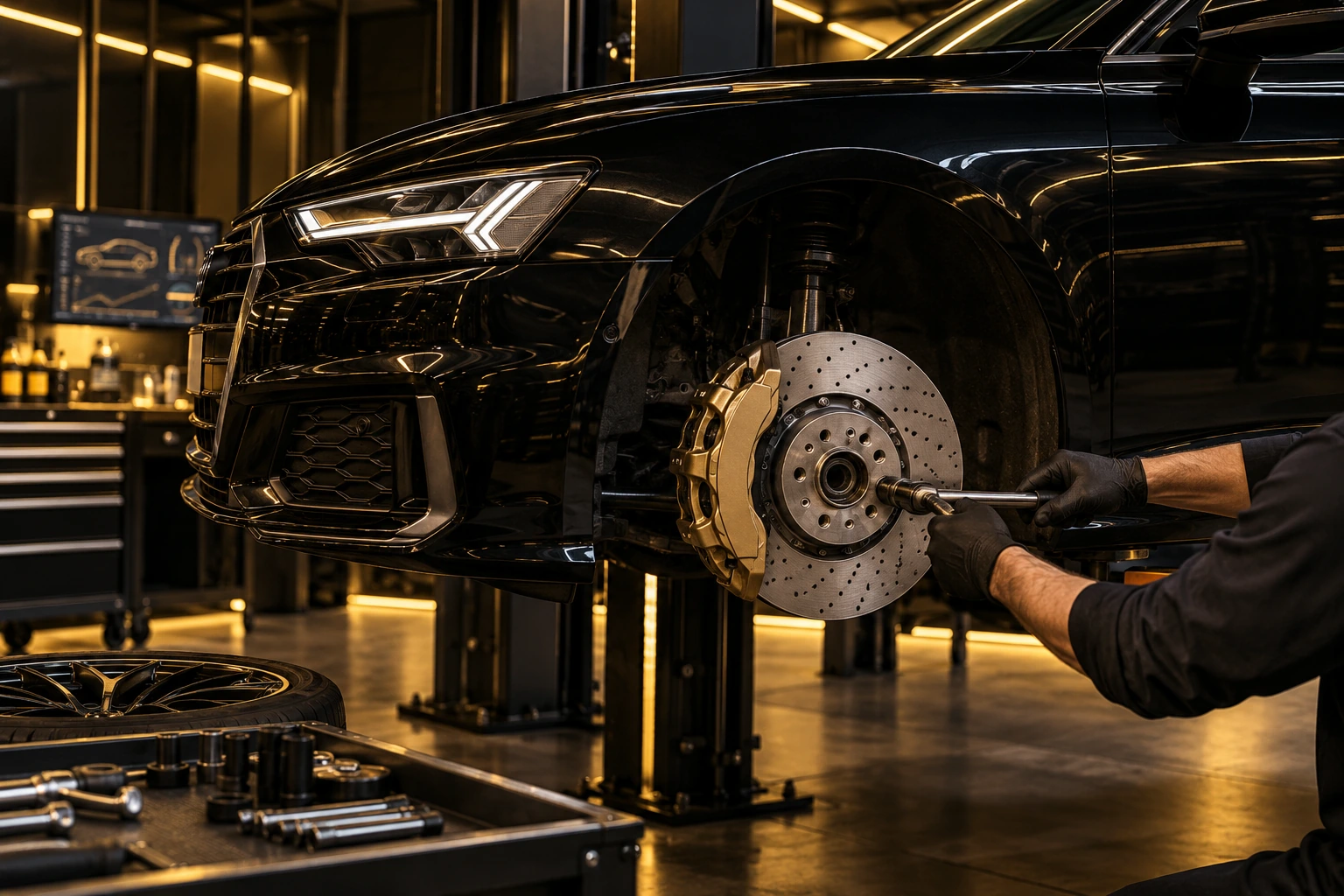
Each wheel has a speed sensor. The ABS unit compares all four wheel speeds many times every second.
- A wheel slows too fast in a hard stop
- The ABS unit releases and reapplies brake pressure in quick pulses
- The tyre keeps grip, so you can still steer around danger
The same sensors feed traction control and electronic stability control. That is why one bad sensor often lights up two or three warnings together.
On many cars the wheel speed signal is also used by the speedometer, cruise control, hill start assist and the gearbox. So an ABS fault can affect more than braking.
What ABS does and does not do
Keeps steering control
Stops the wheels locking so you can steer while braking hard.
Helps on slippery roads
Very useful on wet roads, sand and painted lines.
Always stop you shorter
On loose sand or gravel stopping can even be a little longer.
Replace good tyres
Worn tyres still slide. ABS can only use the grip that is there.
ABS light or another brake warning?
Several brake related lights look similar. Knowing which one is on helps you decide how urgent it is.
| Warning light | Colour | What it points to | Urgency |
|---|---|---|---|
| ABS | Amber | Anti-lock system fault | Book a scan soon |
| Brake or exclamation in a circle | Red | Low fluid, hydraulic fault or parking brake on | Stop and check |
| Traction control | Amber | Wheel slip system off or faulty | Book a scan soon |
| Stability control | Amber | Skid control off or faulty | Book a scan soon |
| Brake pad wear | Amber | Pads close to the minimum | Replace pads soon |
| Tyre pressure | Amber | One or more tyres low | Check pressures today |
What causes the ABS light to come on?
These are the faults we find most often at our workshop, from most common to least common.
Wheel speed sensor
Cracked body, dirty tip or failed electronics inside the sensor.
Wiring or connector
The cable flexes with the suspension and can chafe or corrode.
Tone ring or bearing
A cracked ring or worn bearing breaks the signal.
Low brake fluid
Fluid does not evaporate. Low fluid means worn pads or a leak.
ABS module or pump
Less common and more expensive. Must be proven by tests. See our ABS module repair page.
Voltage or tyre size
Weak battery, blown fuse or a mismatched tyre.
1. Faulty wheel speed sensor
The sensor sits right next to the hub and the brake disc. It takes heat, water, sand and road grit every day.
- The plastic body can crack from heat cycles
- Metal particles stick to the magnetic tip and blur the signal
- The electronics inside can fail with no visible damage
Most modern cars use active sensors that need power and send a digital signal. A simple resistance test cannot judge them. The right test is live data or an oscilloscope check while the wheel turns.
2. Damaged wiring or connector
The sensor cable runs along the suspension arm, so it bends every time the wheel moves up and down.
- Chafed insulation where the cable rubs on a bracket
- A broken wire hidden inside the cable cover
- A green, corroded plug after rain or a car wash
We often see this after suspension or brake work, when the cable was not clipped back into its holders. A light that comes and goes on bumps usually points here.
3. Cracked tone ring or worn wheel bearing
The sensor reads a toothed ring or a magnetic ring built into the wheel bearing. If that ring is damaged, a perfect sensor still sends a bad signal.
- Replacing only the sensor will not fix a cracked ring
- A noisy or loose wheel bearing can also break the signal
4. Low brake fluid
Brake fluid does not dry up in the heat. The level drops slowly as the pads wear, or quickly when there is a leak.
A low level usually turns on the red brake light and on many cars the ABS light too. Topping up without asking why it dropped can hide a leak or very worn pads.
5. ABS module or hydraulic pump fault
The control unit and the hydraulic unit are usually one assembly. Internal electronic faults, a failed pump motor or a stuck valve set their own fault codes.
This is less common than sensor faults and costs more, so it must be confirmed by tests. Power and ground to the module are always checked first.
6. Low voltage, fuse or tyre size
The ABS unit watches its own supply voltage. A weak battery, poor earth or a corroded terminal can set ABS faults along with other warnings.
A mismatched tyre size, a very flat tyre or the wrong spare wheel can make one wheel turn at a different speed. The system can see that as a fault. If several lights came on after a hard start, read our guide to corroded battery terminals.
Other signs that often come with an ABS fault
Needle jumps or drops to zero on some cars.
Stops working or switches off by itself.
No longer holds the car on a slope.
ABS clicks in at very low speed with no reason.
Some automatics shift oddly without a speed signal.
Tyres skid in a hard stop because ABS is off.
What can you check yourself?
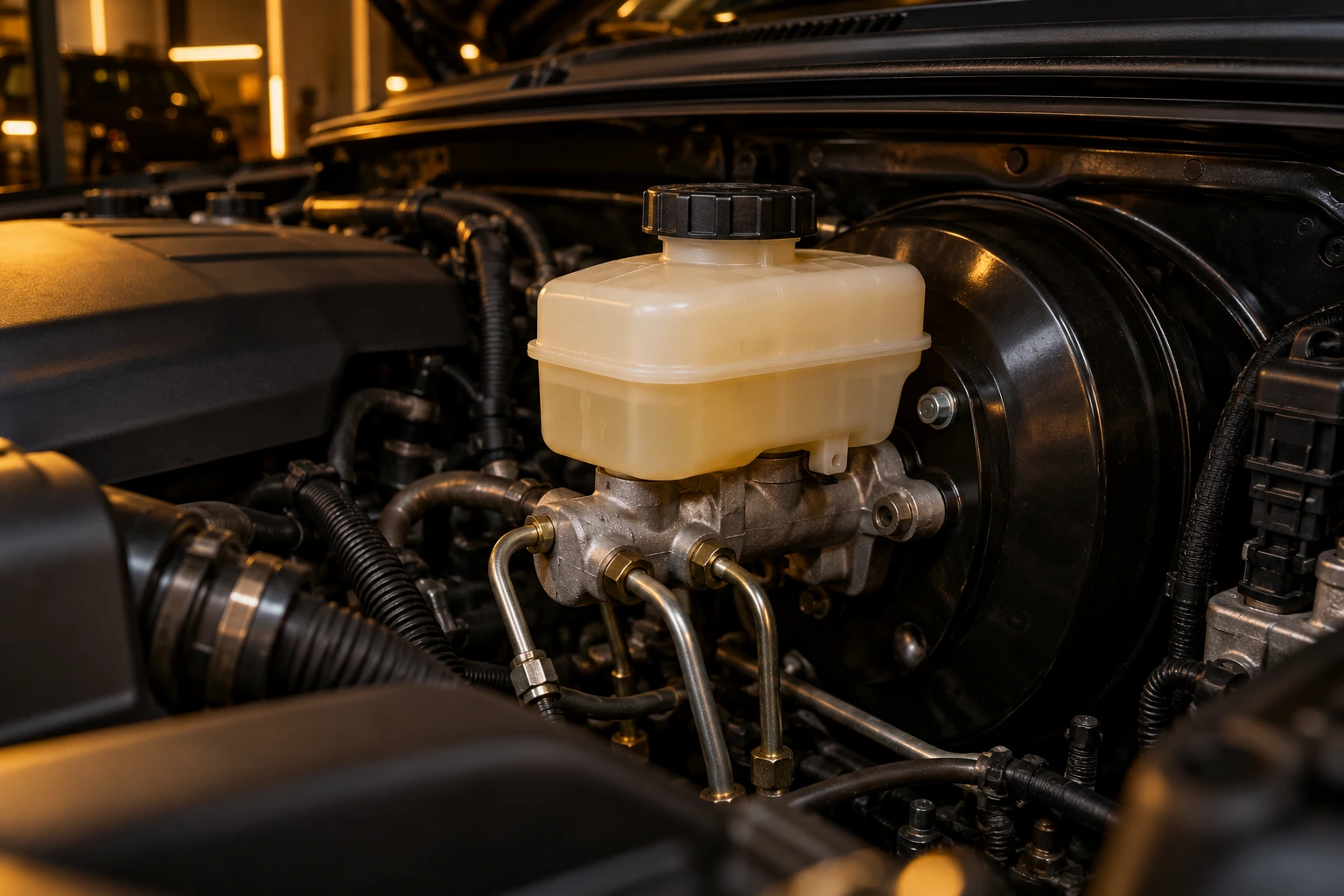
No tools and no lifting needed. With the car parked and the engine cold, check these.
- Which lights are on, and take a photo
- Brake fluid level between MIN and MAX
- All four tyres the same size and properly inflated
- Any tyre, brake, suspension or battery work done recently
- When the light appears, such as at start up, over bumps or after rain
- Do not clear the code before the scan. It deletes useful fault data.
- Do not top up fluid and forget it. Find out why it dropped.
- Do not replace parts based on guesswork or a forum post.
How does Mechanics diagnose an ABS fault?
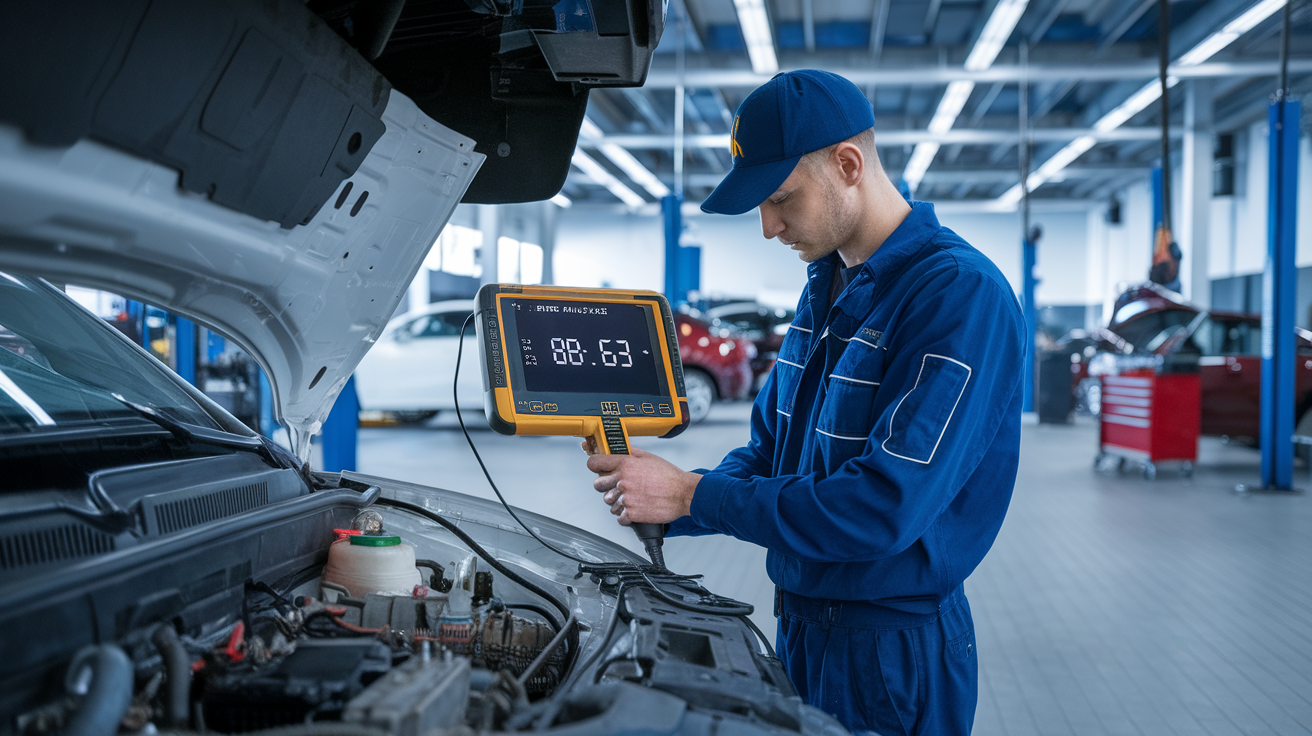
Basic engine code readers often cannot talk to the ABS module. A proper diagnosis needs a scan tool that reads the brake system of your exact car. At our Al Quoz workshop the process is the same every time.
-
Scan and read live data
We read the ABS codes and freeze frame data, then watch all four wheel speeds. A wheel that drops to zero points to that corner.
-
Inspect the corner
Sensor, cable route, connector and tone ring are checked with the wheel off.
-
Test before ordering parts
Signal output, supply voltage and wiring continuity are tested. No guessing.
-
Check the module if needed
If the code points to the control unit, its power and ground are proven first.
-
Repair, clear and road test
Codes are cleared, any calibration is done and the car is road tested to confirm everything works.
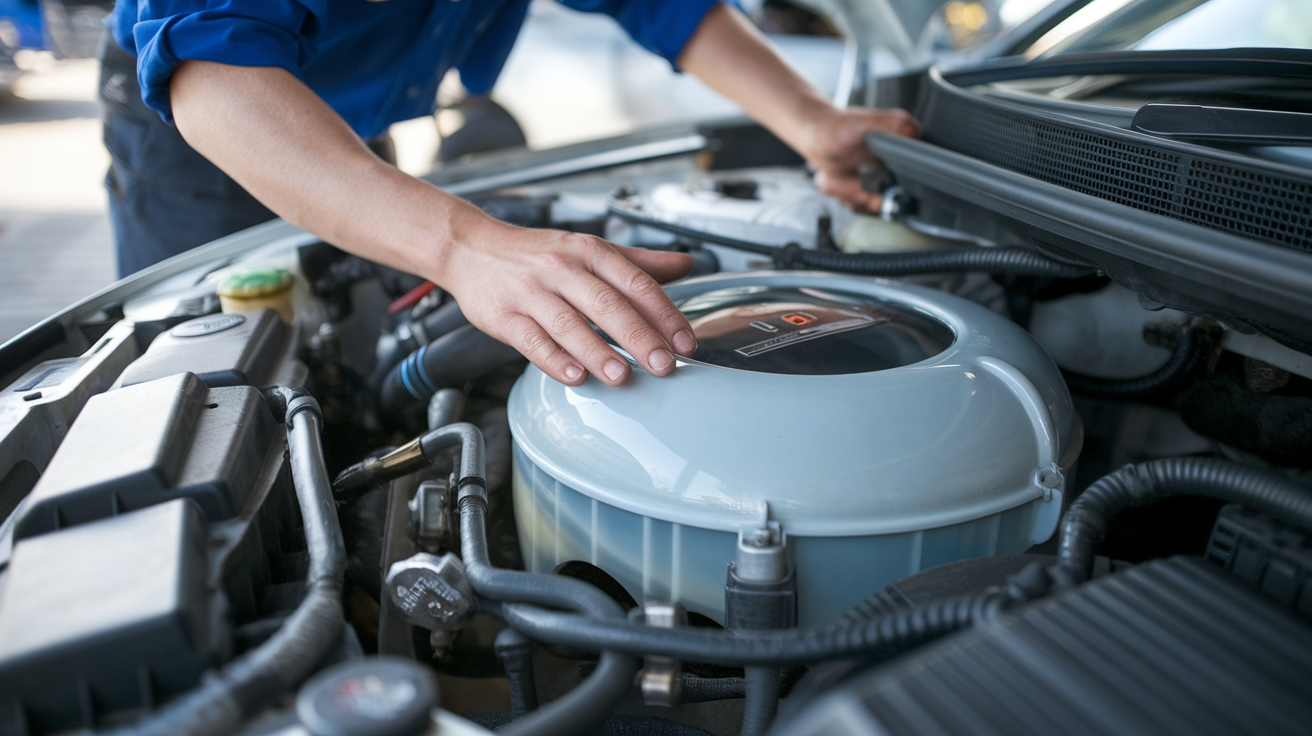
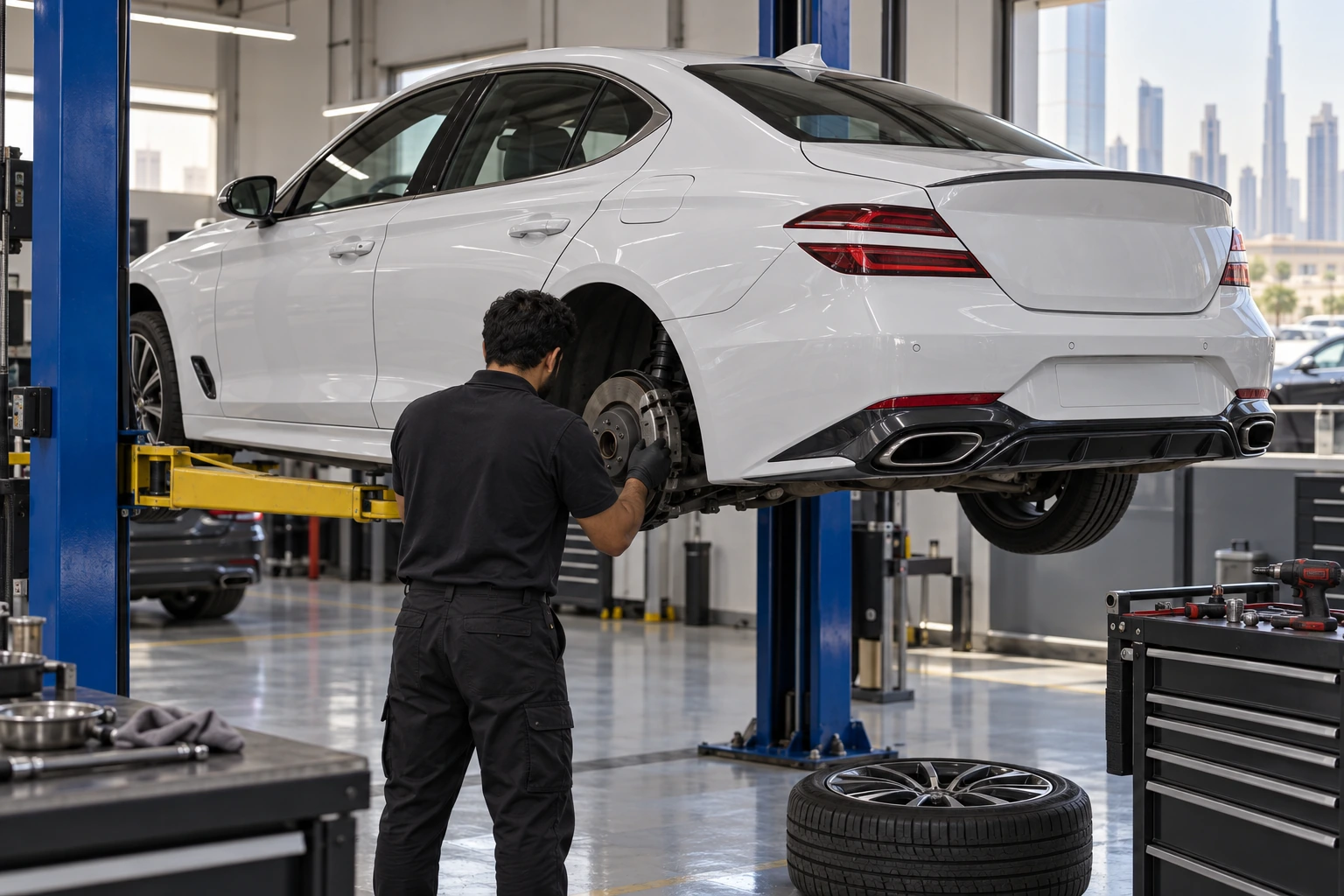
You get the findings and a written quote on WhatsApp before any repair starts. If the fault does not show on the day, we tell you honestly instead of replacing parts in hope. More on reports in how to read a car diagnostic report.
What do ABS fault codes usually point to?
Exact codes differ by brand, but most ABS faults fall into these groups.
| Code group | What it usually means | First check |
|---|---|---|
| Sensor circuit open or short | Broken wire, bad plug or dead sensor | Wiring and connector |
| Sensor signal implausible | Signal is weak or jumps around | Sensor gap, tone ring, bearing |
| Pump motor fault | Pump does not run or draws wrong current | Fuse, relay and power supply |
| Valve fault | A valve inside the unit does not respond | Module power, then the unit |
| Low or high voltage | Supply outside the normal range | Battery, alternator and earth |
| Communication fault | Module not talking to other units | Network wiring and other modules |
What are the repair options?
| Repair | When it is needed | Size of job |
|---|---|---|
| Clean sensor and seat | Dirt or metal on the sensor tip | Small |
| Repair wiring or plug | Chafed cable or corroded connector | Small to medium |
| Replace wheel speed sensor | Sensor confirmed faulty by testing | Medium |
| Replace tone ring or bearing | Cracked ring or worn bearing | Larger |
| Repair or recode module | Module fault that can be repaired | Larger |
| Replace ABS unit | Unit confirmed faulty and not repairable | Largest, coding often needed |
How much does ABS repair cost in Dubai?
The cost depends almost entirely on what the scan finds. A loose connector is a small job. An ABS unit on a luxury or German car is the most expensive outcome.
An initial scan at Mechanics is AED 100 to 400 depending on the car. See car computer diagnostics for what is included. A fair repair quote should show these points.
- The fault code and the test that confirmed the failed part
- Part brand, genuine, OE supplier or aftermarket
- Labour, any coding or calibration, and VAT
- Any other findings listed separately
If one workshop says sensor and another says module, ask each one which test supports their answer. On many cars a module repair or recoding is possible instead of a new unit.
Get a clear answer and a written quote. Send us these details on WhatsApp.
- Car make, model and year
- Which lights are on, a photo is best
- When it started and any recent work
Why are ABS faults common on Dubai cars?
Heat cycles harden sensor cables and connector seals over time.
Fine sand and brake dust build up on the sensor tip.
Water in connectors and rust on the tone ring after heavy rain.
Kerbs and bumps stress the suspension and the sensor cable.
None of this means an ABS fault is certain. It is simply why the wheel corners are the first place we look.
How to avoid ABS problems
- Have brake fluid checked at every service and changed at the interval in your manual
- Ask for sensor cables to be clipped back properly after any suspension or brake work
- Avoid deep water in underpasses after heavy rain
- Keep all four tyres the same size and properly inflated
- Replace a noisy wheel bearing early, before it damages the signal
- Look after the battery, weak voltage confuses electronic modules
ABS myths and facts
| Myth | Fact |
|---|---|
| The brakes stop working when the ABS light is on | Normal brakes still work. Only the anti-lock function is off. |
| A new sensor always fixes the light | Wiring, tone rings and bearings cause many ABS lights. |
| Disconnecting the battery fixes it | It may hide the light for a while. The fault comes back. |
| ABS always means shorter stopping | Its main job is keeping steering control. |
| Brake fluid evaporates in the heat | It does not. A low level means wear or a leak. |
Related reading on brakes includes our guides to a sticking brake caliper and the signs of worn brake pads.
ABS light questions we get asked
Can the ABS light turn off by itself?
Sometimes. If an intermittent fault stops, the light can go out, but the code usually stays stored. The cause is still there, so have the code read before it returns.
Will my car fail RTA inspection with the ABS light on?
A lit ABS or brake warning light can be flagged as a brake fault during a technical inspection in Dubai. It is best to fix it before your renewal test.
Why are ABS, traction and stability lights all on?
They share the same wheel speed sensors. When one signal is missing, the car switches all three off, so one fault lights up all three.
Can I replace the ABS sensor myself?
Only if the fault is confirmed. Many ABS lights come from wiring, the tone ring or the bearing, so a new sensor alone will not fix them.
Does a flashing ABS light mean something different?
On some cars it means an active fault or a self test, on others a fault that comes and goes. Check the owner’s manual and the stored code.
How long does an ABS sensor repair take?
With the fault confirmed and the part in stock, a sensor is often replaced the same day. Bearing, wiring and module repairs take longer.
Can a car wash cause an ABS light?
It can. High pressure water aimed at the wheels can push water into a weak connector. If the light came on after a wash, the plug is a good place to start.
Can new tyres cause the ABS light?
Yes, if one tyre is a different size or the pressures are very uneven. The system sees one wheel turning faster and can store a fault.
Is it safe to drive on the highway with the ABS light on?
If only the amber light is on and the pedal feels normal, the brakes work, but avoid high speed and keep a large gap. Book the scan as soon as you can.
Do you offer pickup for ABS problems?
Send us your location and car details on WhatsApp. We will tell you if it is safe to drive in or arrange to collect the car.
Checked against HELLA wheel speed sensor information and Pico Technology active wheel speed sensor test. Always follow the repair information for your exact vehicle.