In this guide
A car engine overheats when the cooling system cannot carry heat away fast enough, most often because of low coolant from a leak, a failed cooling fan, a stuck thermostat, a worn water pump or a blocked radiator. In Dubai heat and slow traffic these weak points show up quickly. If the gauge rises, stop safely and switch off, because driving on can damage the engine within minutes.
This guide is written by the Mechanics workshop team in Al Quoz, Dubai. Cooling faults are among the most urgent jobs we handle every summer.
Read the first section now if your car is hot. The rest explains the causes, the checks we run and the likely costs.
What to do if your engine is overheating
Never open the radiator cap or coolant tank while the engine is hot. The coolant is under pressure and can spray out and cause serious burns. Wait until the engine has fully cooled.
-
Switch the AC off
This reduces the load on the engine. Turning the heater to full hot and full fan can pull some heat away while you find a safe place to stop.
-
Pull over safely
Leave the road at the next safe point. On a highway, use the hard shoulder only if you must, and put your hazard lights on.
-
Switch the engine off
Once stopped, turn the engine off. Do not let it idle while the gauge is in the red.
-
Stay clear of steam
If you see steam or smell hot coolant, keep the bonnet closed until it settles.
-
Call for advice
Send us a photo of the gauge or warning and any leak under the car. We advise whether it is safe to move and arrange recovery when it is not.
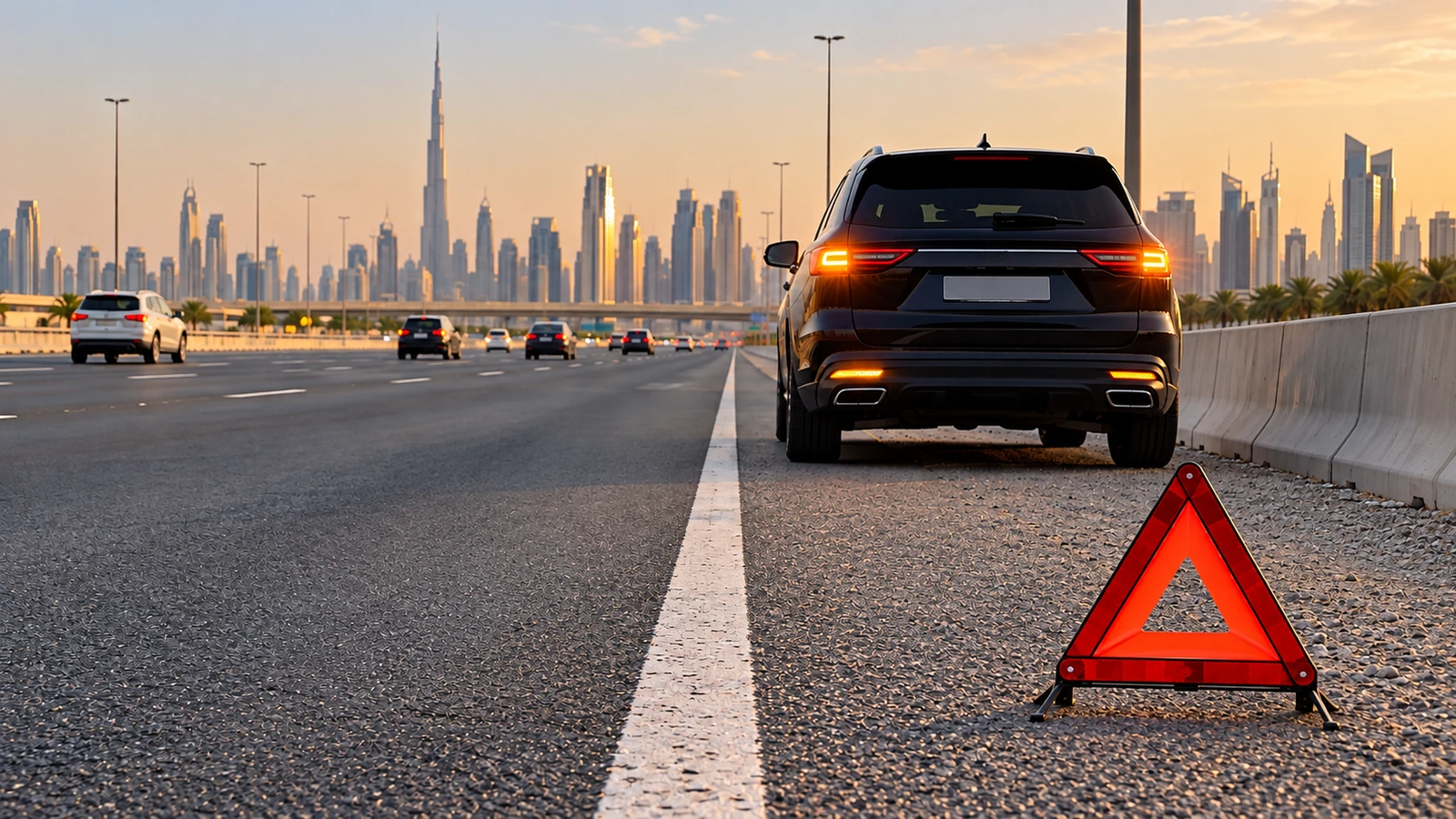
Topping up with water can get a car to a safe spot once the engine is cold. It is not a repair.
- Only add coolant or water when the engine is cold
- Pour slowly into the expansion tank, not the radiator neck
- Watch the gauge closely if you drive a short distance
- Stop again at once if it climbs
Temperature warning right now? Send us your location and a photo of the dashboard, and we will tell you whether to drive or wait for recovery.
Signs your engine is overheating
| Sign | What it often means | Risk |
|---|---|---|
| Gauge above the middle or in the red | The engine is running too hot | High, stop safely |
| Red coolant temperature warning light | Temperature or coolant level critical | High, stop safely |
| Steam from under the bonnet | Coolant boiling or spraying from a leak | High, do not open |
| Sweet smell from the vents or engine | Coolant leaking onto hot parts | Medium, book soon |
| Coolant puddle under the front | Hose, radiator or water pump leak | Medium, book soon |
| Gauge rises only in traffic | Cooling fan or airflow fault | Medium, book this week |
| Heater blows cold when the engine is hot | Very low coolant or an air lock | High, stop and check |
| Low coolant warning that keeps returning | A slow leak somewhere in the system | Medium, book soon |
How the cooling system works
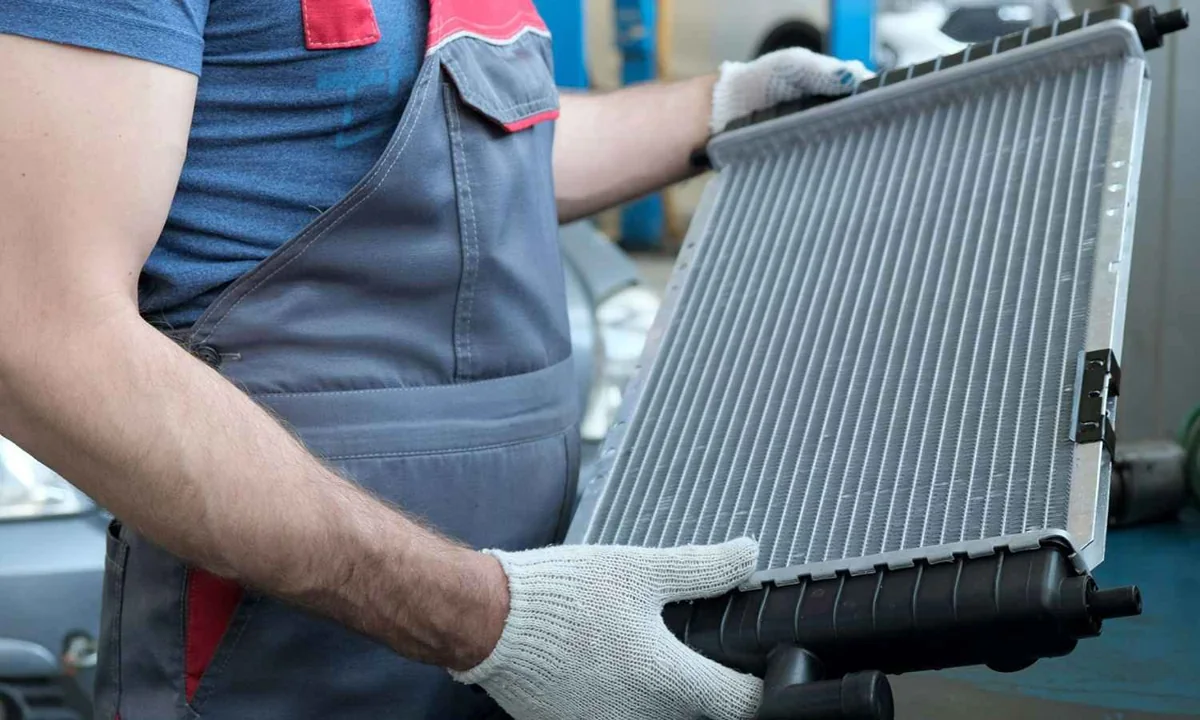
The cooling system is a closed loop that moves heat from the engine to the air.
- The water pump pushes coolant through the engine
- The thermostat opens when the engine is warm
- Hot coolant flows to the radiator at the front
- The cooling fan pulls air through the radiator at low speed
- The expansion tank holds extra coolant and keeps pressure correct
- The radiator cap holds the system at pressure so coolant does not boil
If any one of these parts fails, heat builds up in the engine. That is why the diagnosis checks the whole loop, not just the part that looks guilty.
The main causes of engine overheating
1. Low coolant from a leak
This is the cause we find most often. Coolant does not burn off in normal use, so a falling level means it is escaping.
- Cracked plastic hoses or pipe connectors
- A radiator leaking at the plastic end tanks
- A weeping water pump seal
- A cracked expansion tank or worn cap
- Heater core leaks, often noticed as a wet passenger footwell
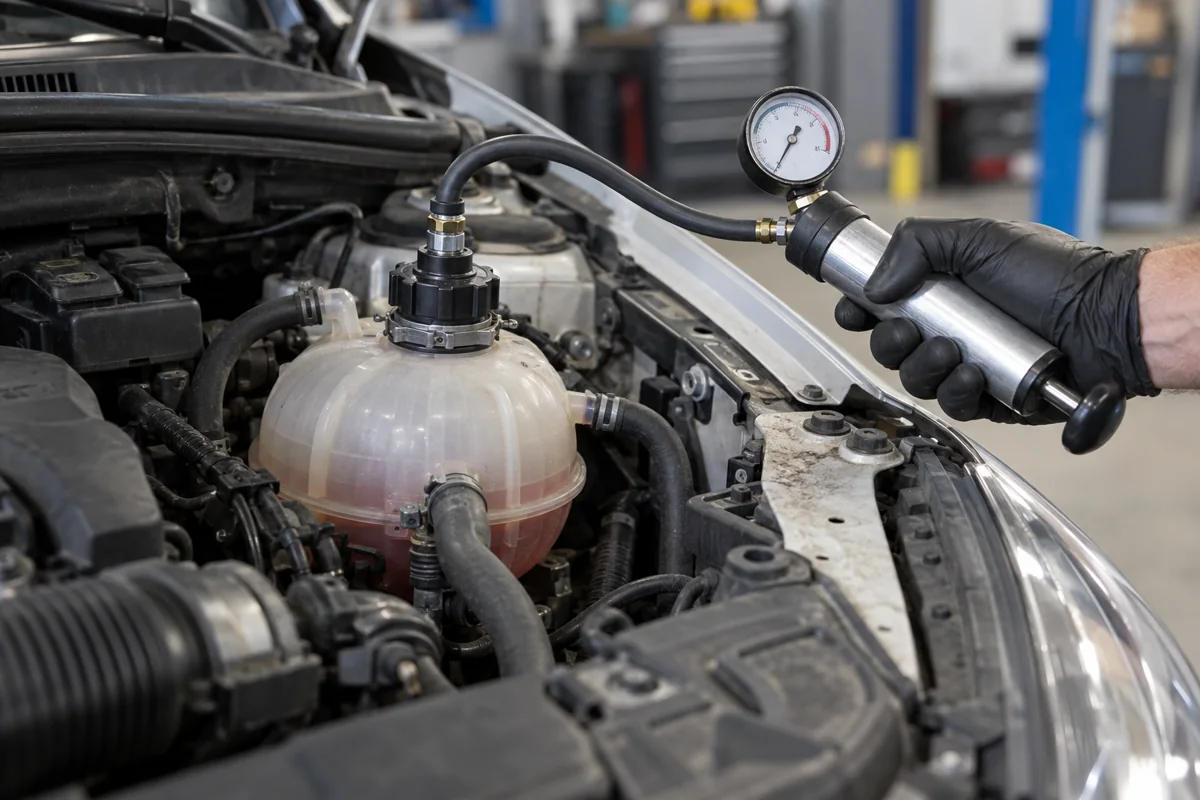
A pressure test finds the leak, even when it only appears once the system is hot.
2. A failed cooling fan
Fan motor
The motor wears out and spins slowly or not at all.
Fuse or relay
A cheap electrical part that can stop the fan completely.
Control module
Many cars run the fan through a module that can fail in heat.
Temperature sensor
A wrong reading means the fan never gets the signal to start.
A car that runs cool on the open road but climbs in traffic usually has a fan problem. Read our guide to a radiator fan not working for the full checks.
3. A stuck thermostat
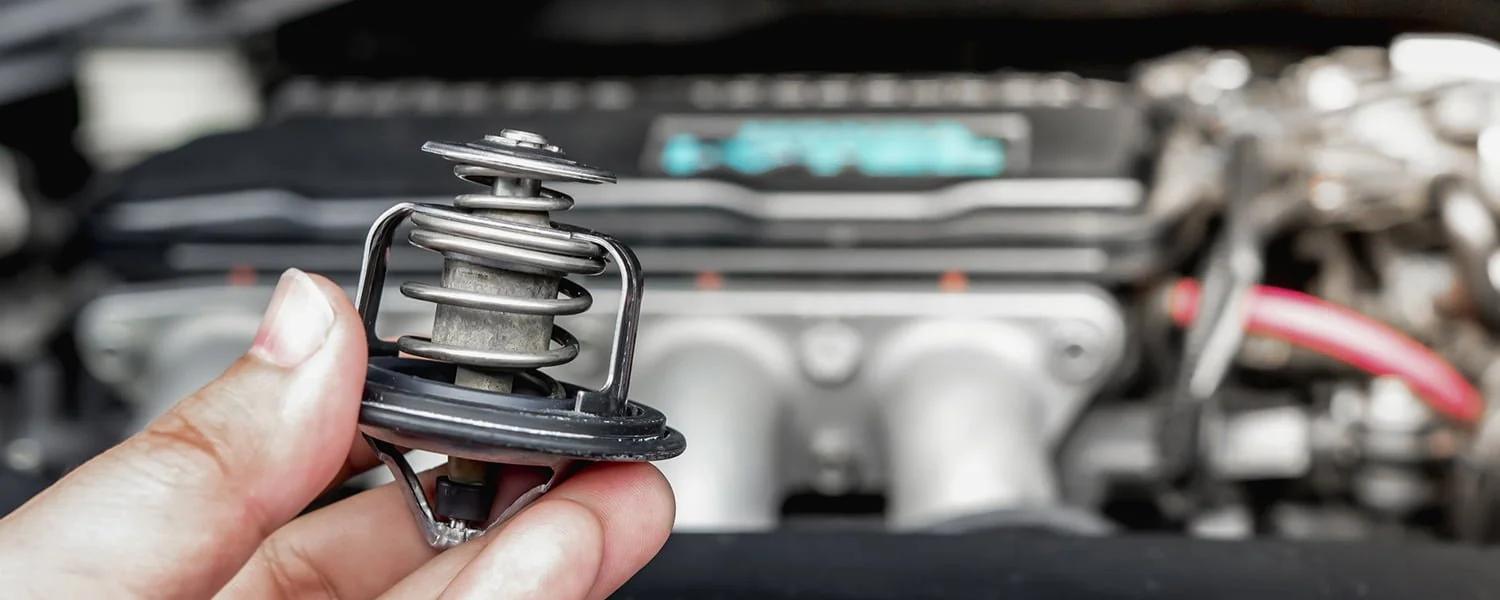
The thermostat is a valve that controls when coolant reaches the radiator. If it sticks closed, the engine heats up quickly.
- The gauge rises fast after a cold start
- The top radiator hose stays cool while the engine is hot
- Some modern thermostats are electronic and log a fault code
See our thermostat replacement page for the parts and costs.
4. A worn water pump
- Coolant drips from a small weep hole near the pump
- A whining or grinding noise from the front of the engine
- A loose pulley or wobbling belt
- Plastic impeller blades that crack and stop moving coolant
On many modern engines the pump is electric or driven inside the engine. Our water pump replacement page explains the types.
5. A blocked or damaged radiator
Radiators clog inside with scale and old coolant, and outside with sand and insects. Either way less heat leaves the engine.
- Cold patches on the radiator when the engine is hot
- Fins packed with dirt or bent flat
- Rust coloured or sludgy coolant
Old coolant should be changed on schedule. Read what a radiator flush is to see when it helps.
6. Head gasket failure
This is the cause owners fear most, and it is often the result of earlier overheating rather than the first fault.
- White exhaust smoke with a sweet smell
- Bubbles in the expansion tank with the engine running
- Coolant loss with no visible leak
- Milky residue under the oil filler cap
A combustion gas test on the coolant confirms it. We run it before anyone talks about engine work.
Why engines overheat more often in Dubai
Less margin
When the air is close to 50 degrees, the radiator has far less temperature difference to work with.
Fans work hardest
Slow traffic leaves the fan doing all the cooling for long periods.
Extra heat
The AC condenser sits in front of the radiator and adds heat to the air passing through.
Faster ageing
Plastic tanks, pipes and housings turn brittle sooner in constant high heat.
We often see the first overheating episode in a car in its fourth or fifth summer. That is when plastic cooling parts and fan motors start to tire.
What you can safely check yourself
- With the engine cold, check the coolant level against the marks on the tank
- Look under the front of the car for green, pink or orange drips
- With the engine warm and the AC on, check whether the cooling fan runs
- Look through the grille for a radiator packed with dirt
- Photograph the gauge and any warning light when it happens
- Do not open the cap on a hot engine
- Do not keep driving with the gauge in the red
- Do not pour cold water onto a hot engine
- Do not rely on stop leak products as a permanent fix
How Mechanics finds the cause of overheating
-
Hear what happened
When it got hot, how fast, and whether it was in traffic, on the highway or after a cold start.
-
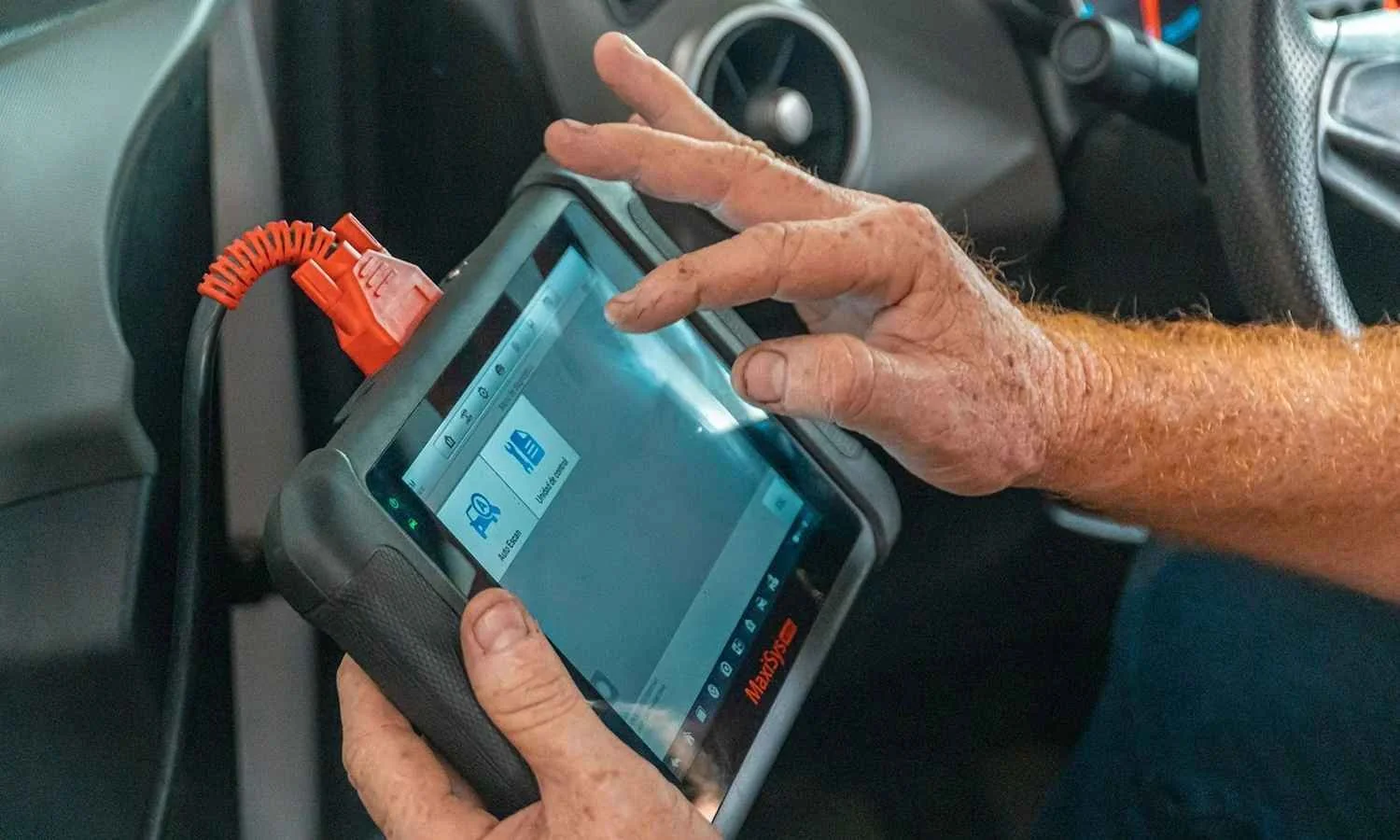
Scan the engine
Temperature readings, fan commands and fault codes are read with a diagnostic tool.
-
Pressure test
The cooling system is pressurised to find leaks, including those that only appear when hot.
-
Check the fan and thermostat
Fan operation, relay and module, and thermostat opening are confirmed.
-
Inspect pump and radiator
Water pump seal, bearing and flow, and radiator condition are checked.
-
Gasket test where needed
A combustion gas test rules head gasket failure in or out.
-
Written quote
You receive the findings, photos and price on WhatsApp before any work starts.
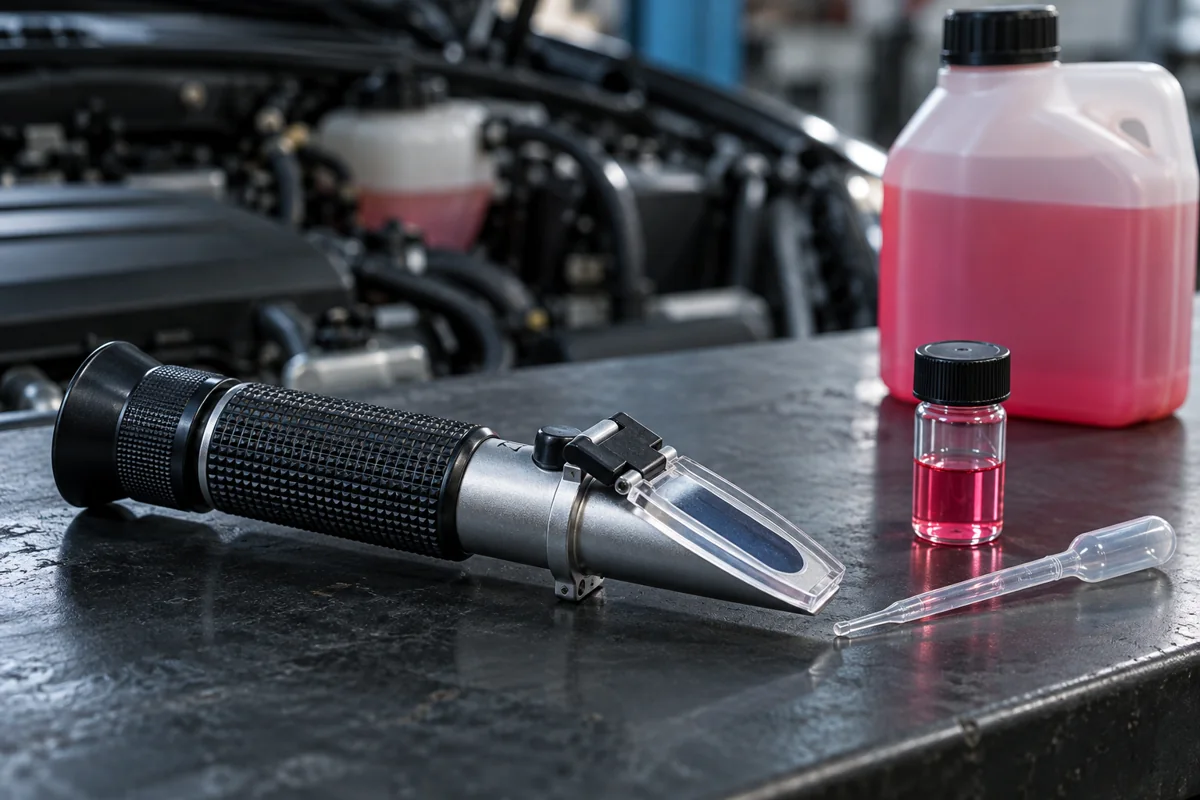
How much does overheating repair cost in Dubai?
| Work | Planning budget |
|---|---|
| Cooling inspection at Mechanics | Free initial inspection |
| Coolant flush and refill | AED 250 to 800 including VAT |
| Localised radiator leak repair | AED 300 to 800 |
| Expansion tank replacement | AED 400 to 1,300 |
| Radiator replacement, economy or mid range car | AED 600 to 1,500 |
| Thermostat and housing, Mercedes example | AED 650 to 1,500 |
| Water pump replacement | From AED 1,260 including labour |
| Head gasket or engine work | Quote after testing |
These planning figures come from our radiator repair, coolant flush and related service pages. Your written quote confirms the parts, labour and VAT for your car.
Which part failed
A hose costs far less than a pump hidden behind the timing cover.
Access
Some engines need many parts removed to reach the thermostat or pump.
Coolant type
The correct coolant for your engine matters, and the quantity varies.
Any damage
Driving while hot can add a head gasket or other engine work.
Common cooling repairs and what they fix
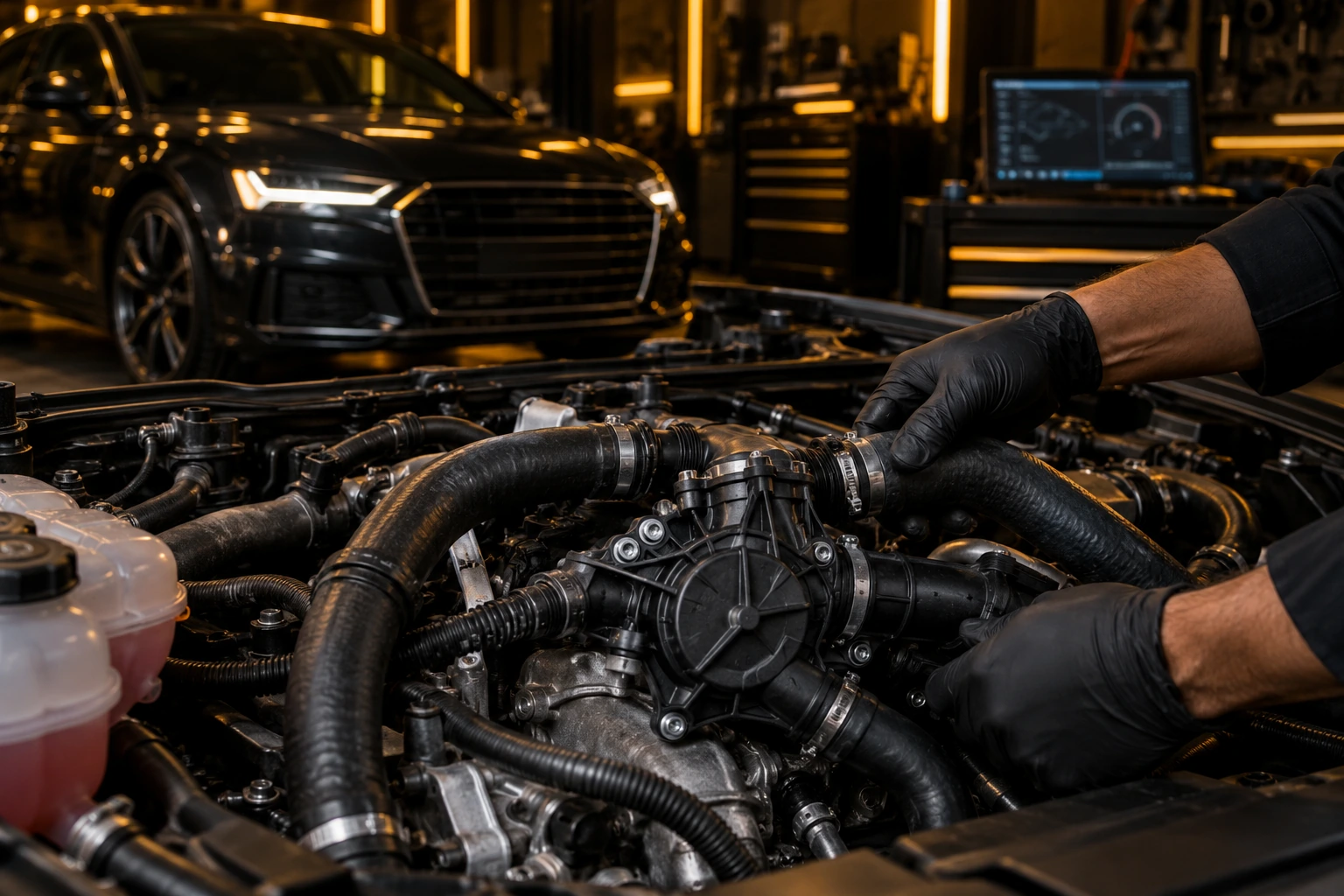
We repair the failed part and then confirm the system holds pressure and temperature on a road test.
- Hose and connector replacement for leaks
- Radiator repair or replacement
- Fan motor, relay or module replacement
- Thermostat replacement with new seals
- Water pump replacement and coolant refill with bleeding
After any cooling repair, the system must be refilled and bled of air. Trapped air can cause overheating on its own, so we never skip it.
What happens if you keep driving hot?
| Damage | What causes it |
|---|---|
| Warped cylinder head | Metal expands unevenly when the engine runs too hot |
| Blown head gasket | The seal between head and block fails under heat and pressure |
| Cracked plastic parts | Tanks and housings burst at very high temperature |
| Engine seizure | Oil breaks down and moving parts lose lubrication |
A cooling fault caught early is usually a few hundred dirhams. The same car driven on in the red can need engine repair costing many times more.
How to prevent overheating in Dubai
- Check the coolant level every two weeks in summer, with the engine cold
- Change the coolant at the interval your manufacturer sets
- Ask for a cooling pressure test before each summer
- Rinse sand and dust from the radiator gently
- Book a check the first time the gauge moves higher than normal
- Replace brittle hoses and old plastic parts before they fail
Overheating patterns on different cars
Towing and dunes
Heavy loads and soft sand push coolant temperatures up quickly, so fans and radiators work at their limit.
Plastic parts
Compact engine bays run hot and use many plastic tanks and pipes that crack with age.
Scale and wear
Old coolant leaves scale in the radiator and wears the water pump seal.
Related guides and services
What to send us
Make, model, year and mileage.
A photo of the temperature gauge or warning.
A photo of any drips or puddle under the car.
Where the car is, if it needs recovery.
Book a cooling system check. Send these details on WhatsApp and we will advise the safest next step.
Engine overheating questions we get asked
Why is my car overheating in Dubai?
The most common causes are low coolant from a leak, a failed cooling fan, a stuck thermostat, a worn water pump and a blocked radiator. High air temperatures and slow traffic make these faults show up faster.
What should I do when my engine overheats?
Switch the AC off, pull over safely, turn the engine off and stay clear of steam. Do not open the radiator cap while hot. Call for advice or recovery.
Can I drive my car if it is overheating?
Not while the gauge is high or the warning is on. Driving hot can warp the cylinder head or damage the head gasket within minutes.
Why does my car overheat only in traffic?
At speed, air flows through the radiator by itself. In traffic the cooling fan must do that work, so a weak fan, a bad relay or a blocked radiator shows up when you are stopped.
Can I add water instead of coolant?
Clean water can help in an emergency once the engine is cold. It lacks the protection of coolant, so the system should be drained and refilled with the correct coolant soon after.
How do I know if my thermostat is stuck?
A gauge that rises quickly after a cold start, a cool top radiator hose while the engine is hot and a fault code on electronic thermostats all point to it.
How much does it cost to fix an overheating car in Dubai?
It depends on the part. As planning figures, a coolant flush is about AED 250 to 800, a radiator leak repair about AED 300 to 800 and a water pump from about AED 1,260. Head gasket work is quoted after testing.
Can AC use cause overheating?
The AC adds heat in front of the radiator and load on the engine. A healthy system copes, but a weak fan or radiator may only overheat with the AC on.
What does a sweet smell from the engine mean?
Usually coolant leaking onto hot parts. It is a warning sign of a leak that can lead to overheating, so book a check soon.
How do I know if the head gasket is blown?
White sweet smelling exhaust smoke, bubbles in the coolant tank, coolant loss with no visible leak and milky oil are the usual signs. A combustion gas test confirms it.
How often should coolant be changed in Dubai?
Follow your manufacturer interval, which ranges widely by car. In Dubai heat we also recommend checking the level and condition before every summer.
Do you arrange recovery for an overheating car?
Yes. If the car is not safe to drive, send us your location on WhatsApp and we arrange recovery to our Al Quoz workshop.