Cracks, scuffs and peeling
A localized repair may suit stable damage on a serviceable surface. Widespread cracking, lifting material or damaged mounting points can make a larger repair or replacement more sensible.
Compare surface repairs ↗Cracked dashboard, worn buttons or a broken cup holder? Mechanics in Al Quoz, Dubai assesses the damaged part, explains repair and replacement options, and provides a written quote before work starts.
Small crack repair guide AED 150–400
Price depends on the damage and finish. Confirm the parts, labor and final total.
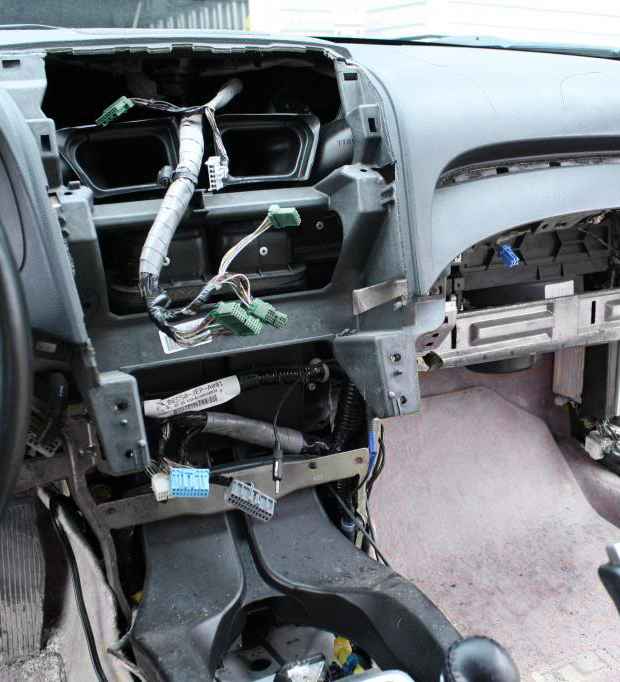
Mechanics handles dashboard surfaces and associated interior fittings in Al Quoz. The initial check establishes what can be retained, what needs replacing and whether electrical or safety components are involved.
A localized repair may suit stable damage on a serviceable surface. Widespread cracking, lifting material or damaged mounting points can make a larger repair or replacement more sensible.
Compare surface repairs ↗A faded symbol and a failed switch are different jobs. Check the control function before choosing a new button cap, switch assembly or electrical diagnosis.
Find the right button repair ↗A jammed sliding cover may need cleaning or a small component. Broken retaining arms, hinges or a cracked housing may require a matching replacement assembly.
See cup holder options ↗A cosmetic repair, an electrical switch and a full dashboard are different purchases. Use the matching line below as a starting point.
| Work required | Published guide | What to confirm |
|---|---|---|
| Small dashboard crack repair | AED 150–400 | Localized filling and finishing. Suitability depends on the material and crack position. |
| Surface refinishing | AED 300–600 | The panel area, preparation, color and finish included in the quote. |
| Button or switch replacement | AED 150–800 | Button cap versus complete switch. Electrical diagnosis or module repair is a separate item. |
| Cup holder replacement | AED 150–600 | Exact holder, access, trim removal and any broken surrounding fittings. |
| Dashboard replacement | AED 1,000–3,000+ | Part condition, equipment compatibility, removal, fitting and any separate safety-system work. |
These Mechanics guide ranges are estimates, not fixed fitted offers. The final total depends on your vehicle and the agreed work. Confirm parts, labor, materials, testing, VAT and the final total in writing. The guide figures do not establish what is included.
Damage size, material, grain, color, access and the need to remove the dashboard all matter. A leather-covered upper panel, integrated vents or a discontinued trim part can cost more than a small plastic repair. Photographs help with an initial assessment. Hidden damage needs an inspection.
Ask which parts will be reused, whether the quoted finish covers a small area or a whole panel, and what appearance can reasonably be achieved. Confirm any diagnostic or dismantling charge before authorizing work beyond the free initial inspection.
Send one photo of the whole panel and one close-up. Include your model, year and whether the damaged control still works.
Heat, sunlight, aging materials and unsuitable cleaning products can contribute to dashboard deterioration. Repair suitability depends on what has failed, not simply the length of the visible crack.
A small, stable crack may be repairable where the substrate is sound and the location permits it. Preparation, a material-compatible repair and a matching finish are considered together. Filling a crack alone does not guarantee a durable or invisible result.
Several cracks, peeling upholstery or a brittle surface may need broader refinishing or replacement of a removable trim panel. Compare the expected finish, likelihood of recurrence and total cost before choosing repeated spot repairs.
Distorted structure, broken fixings, extensive delamination or damage involving an airbag deployment area can change the repair decision. A replacement must match the model, equipment and mounting arrangement.
Color, texture and sheen can vary with age and UV exposure. Agree on the expected appearance before work starts, especially when the repaired area sits beside faded original trim.
A dashboard crack is not automatically an airbag fault. Damage near an airbag cover, deployment seam or warning light needs assessment under the vehicle maker’s repair procedures. Cosmetic filling or retrimming must not obstruct deployment or be described as restoring airbag safety. A warning or previous deployment needs a separate airbag replacement and SRS assessment.
The replacement should restore the intended function and match the surrounding controls. A cosmetic repair and electrical fault diagnosis are quoted according to the work needed.
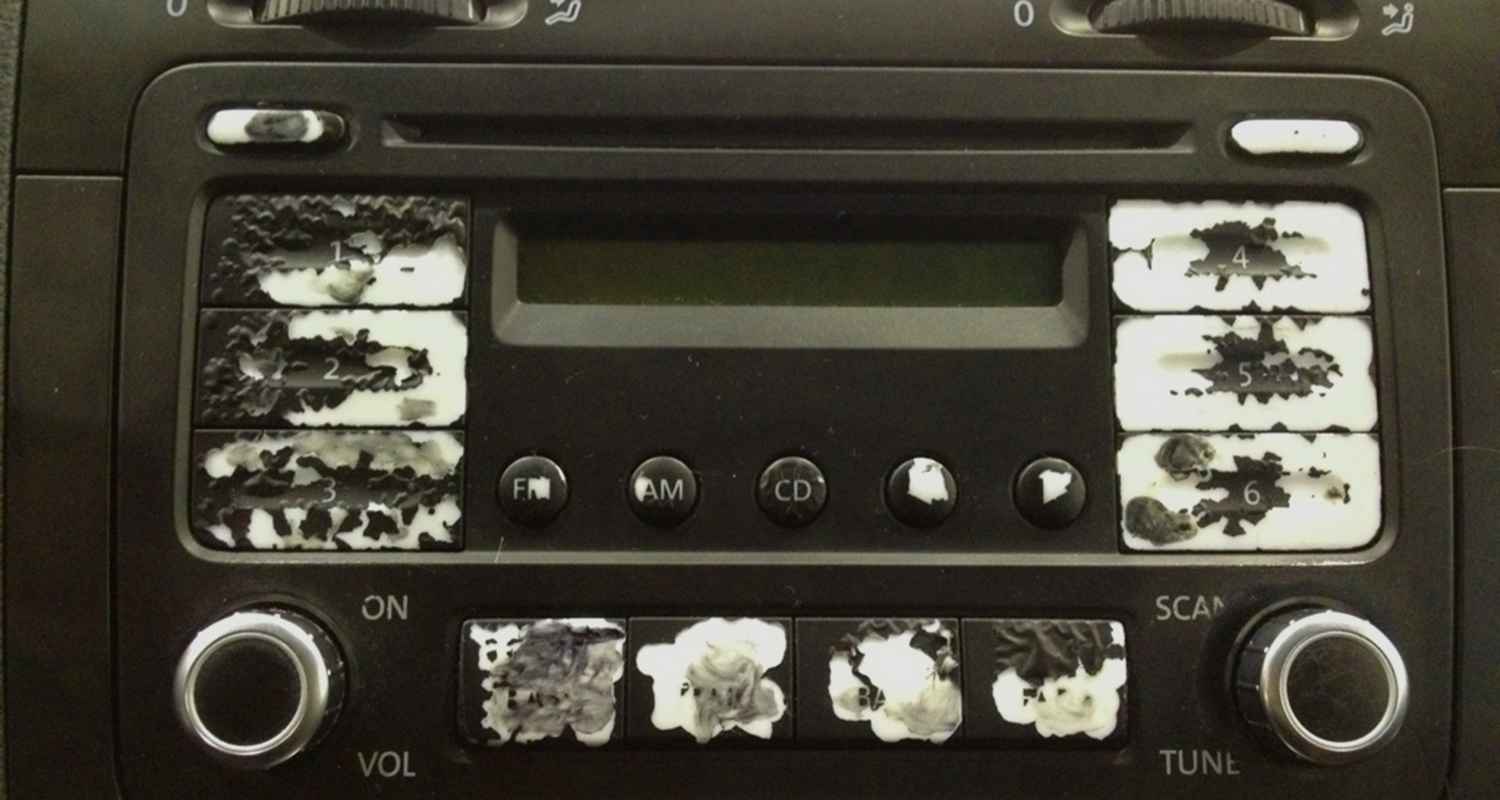
A compatible cap or trim piece may restore the label and touch surface without replacing a functioning control unit. Confirm the symbol, finish, shape and backlighting before ordering.
The check distinguishes a damaged mechanism from a switch, connector, wiring or module fault. Replacing the visible cap will not fix an electrical failure.
Hazard, parking brake, steering-wheel and other essential controls need the appropriate functional checks. A starting problem may require a separate ignition switch assessment.
| Control area | What needs checking |
|---|---|
| Radio and climate controls | A worn cap, sticking knob or broken return mechanism is different from a failed control panel or display. |
| Window and mirror switches | The switch is one possible cause. Wiring, a motor or the window mechanism can also prevent movement. |
| Steering-wheel controls | Check the affected functions and any horn or SRS concern together. Access near an airbag requires the vehicle-specific safety procedure. |
| Start, parking brake and selector controls | An unreliable essential control needs assessment before normal use. A new plastic cap will not resolve an underlying electrical fault. |
| Seat and sunroof switches | Check the command and mechanism before ordering a switch. Report any spill or intermittent operation. |
| Lighting and wiper controls | Check the switch or stalk alongside the affected function. A lighting or wiper problem can also involve wiring, a fuse, a motor or another component. Essential visibility functions must work before normal driving. |
Radio, climate, window and console switches can differ within the same model year. Send a clear photo of the control layout and your vehicle details. A display fault may need navigation screen repair. Failed gauges or a speedometer may need instrument cluster repair. These are separate diagnoses and are quoted for the affected component.
A seat belt buckle or release button belongs to the restraint system. It needs the vehicle-specific assessment and approved replacement procedure, rather than an ordinary cosmetic button repair.
Match the part number, connector, trim level and backlighting. Some vehicles have separately available caps. Others need a complete switch pack. Confirm any required coding for the actual part and vehicle.
After fitting, check the affected controls, illumination and surrounding trim. Part availability, access and electrical diagnosis affect collection time. Avoid forcing a sticking button or spraying cleaner into electrical controls.
An exterior door request button or a key-fob button needs a lock and key assessment. Identify the control and explain whether the key is recognized, rather than assuming an interior button cap will fix the fault.
A jammed lid, broken retaining arm and spill near the controls need different checks. Inspect the fitting before replacing a complete console.
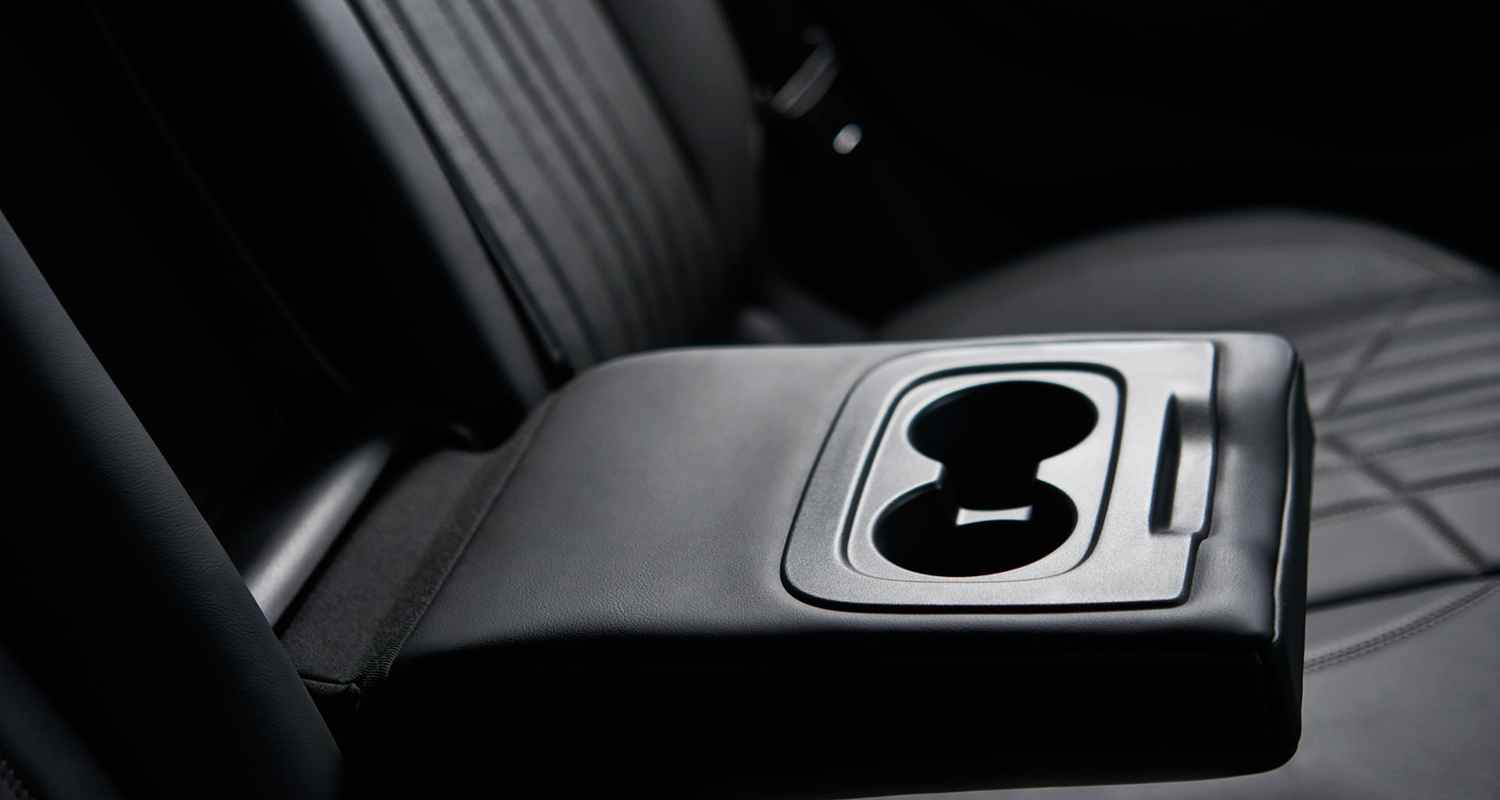
Check for sticky spills, debris or a misaligned cover. Avoid forcing the lid or spraying liquid into the mechanism.
A damaged latch, spring, retaining arm or housing may need repair or replacement. Confirm which components are available separately.
Tell us if liquid reached switches, wiring or the gear selector. Electrical inspection is a separate part of the quote.
Availability is confirmed for your vehicle. An apparently identical holder may not fit.
For a holder attached to a child restraint, follow the restraint manufacturer’s instructions and use an approved replacement for that exact seat. Do not adapt a universal holder or modify the restraint as an ordinary dashboard repair.
A dashboard rattle does not always mean the dashboard needs replacing. The sound, its location and when it happens help determine what needs checking.
A loose fastener, missing clip, damaged mounting point or contact between trim pieces can allow movement.
Locate the source before choosing a replacement clip, a repair to a serviceable fitting or a new panel.
A broken vent slat, loose surround or failed glove box latch may be available separately.
Some designs need a complete vent, lid or housing. Part availability and removal access determine the repair.
A clicking sound behind the dashboard or poor airflow may need air conditioning diagnosis rather than trim replacement.
Explain how the vents and climate controls behave so the inspection addresses the actual symptom.
Tell Mechanics what you notice before the inspection.
Keep gaps and controls clear. Avoid wedging objects into trim joints or using glue as a trial repair. Access to controls and safety components must remain clear.
Mechanics combines interior work with electrical and mechanical assessment at its Al Quoz workshop. This helps separate a damaged fitting from a fault behind it.
The damaged area and adjacent controls are checked. You receive the recommended repair, parts choice, appearance expectations and written price before authorizing work.
Seats, trim and surrounding surfaces are protected. Removable pieces are accessed carefully. Dashboard removal or work near safety components follows the vehicle-specific procedure.
The agreed material or part is used. Drying or curing time, replacement clips and any discovered damage are discussed if they change the work or completion time.
Check the repaired area, fit, gaps and affected controls. Depending on the work, this can include vents, switches, illumination, glove box operation and cup holder movement. Disconnected components and relevant warning lights need checking before handover. Ask for care instructions and the written warranty terms for the chosen work.
A small accessible repair or readily available fitting can be much quicker than dashboard removal. Surface finishing may need drying or curing time, and ordered parts can extend the stay. Confirm the completion estimate after inspection instead of relying on a universal same-day promise.
Use a sunshade and shaded parking where practical. Follow the vehicle maker’s cleaning guidance. Avoid abrasive cleaners and glossy products that create windshield reflections. Do not attach coverings or accessories over airbag deployment areas.
Confirm what will be replaced, how it will look and what the written quote covers before ordering.
Ask whether a local repair or a larger refinishing area will produce a more consistent appearance. Agree on the expected result before work begins.
Considering used trim? Check non-safety parts for brittle clips, worn hinges, fading and scratches.
A component warranty does not automatically cover the entire dashboard.
Record the repaired area and the exact parts supplied.
Confirm duration, covered work and exclusions.
Keep the invoice and follow the finish-care instructions.
Airbags and restraints require their own vehicle-specific repair procedures. Safety components must be assessed separately from cosmetic trim.
Warnings or failed controls may need computer diagnostics before a replacement part can be identified.
Repair choices, realistic timing and what to confirm before work begins.
Sometimes. A small stable crack on a suitable non-deployment surface may be repairable. Brittle material, widespread delamination, distorted structure or damage around an airbag deployment area can require another approach. The inspection should establish that before a cosmetic repair is agreed.
An exact match cannot be promised from a photograph. Age, UV fading, grain and sheen affect the result. Ask what difference may remain and whether repairing a larger panel would give a more consistent appearance.
The Mechanics guide is AED 1,000–3,000+, depending on the dashboard and work required. This is not a fixed fitted price or a maximum. Confirm part condition, labor, affected fittings, testing and the final total. Airbags and unrelated electronics should be separately itemized.
Where a compatible individual part is available, yes. Some manufacturers supply only a larger assembly. The quote should explain whether a cap, switch, mechanism, holder or complete trim assembly is required and why.
Not automatically. Infotainment displays and instrument clusters have their own electrical, software and hardware faults. Explain the symptom when contacting the workshop so the diagnostic work and quote address the correct component.
A small cosmetic mark is different from loose trim, an obstructed control or damage around a deployed airbag. Do not drive if essential controls are unreliable, visibility is obstructed or loose parts could interfere with driving. Contact the workshop about an airbag warning or deployment-area damage before arranging the visit.
Warranty cover depends on the selected repair and part. Confirm the duration, covered work, exclusions and care requirements before approval.
Ask before ordering or arranging fitting. Compatibility, condition, mounting and surrounding trim must be checked. Confirm the labor charge and responsibility for the supplied part in writing.
No universal console package is established by the AED 150 to AED 600 guide. Ask which insert, holder or assembly is included, how it is accessed, whether surrounding clips or trim need work, and the final written total.
A cover can hide a defect but does not repair damaged material, broken mountings or an unsafe panel. An adhesive finish also depends on a sound surface underneath. Ask whether the existing panel is suitable before choosing a cosmetic covering. Nothing should obstruct an airbag deployment area, vent, sensor or the driver’s view.
A kit cannot establish whether the panel, coating or airbag area is suitable for repair. Color and grain matching also vary by material and age. Avoid applying filler, heat or adhesive around an airbag seam. Send photos for an initial assessment, and inspect loose or extensive damage before choosing a repair.
No. An accessible cap, insert or removable trim piece may be repaired separately. Hidden fixings, extensive panel damage or replacement of the complete dashboard can require more dismantling. The quote should identify the access work and the affected controls before you approve it.
The guide is AED 150–800, depending on the vehicle and whether the work needs a cap, individual switch or larger assembly. It is not a fixed fitted package. Confirm the exact part, labor, electrical diagnosis, any required coding and VAT in the written quote.
Show us the damaged part and tell us what still works. Visit Mechanics in Al Quoz, Dubai after confirming the inspection time. A wide photo, close-up and vehicle details help the team prepare for your visit.