In this guide
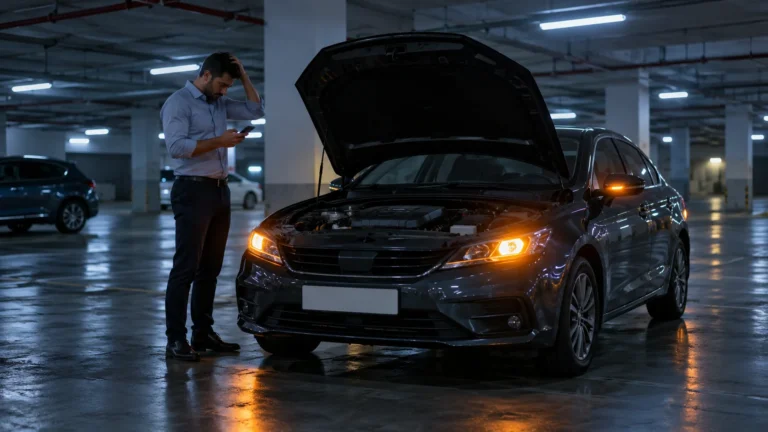
A car won’t go into gear when something stops the selector, the clutch or the gearbox from doing its job. On automatic cars the usual causes are the shift interlock, a brake light switch fault, low fluid, a stretched selector cable or a gearbox computer fault. On manual cars it is often a clutch that does not release, a hydraulic leak, worn linkage or tired synchros.
This guide is written by the Mechanics workshop team in Al Quoz, Dubai. A car that will not select a gear is one of the gearbox complaints we see most often.
Use it to see how urgent your fault is, then let a technician confirm the cause.
Is it safe to drive when your car won’t go into gear?
If the car will not select Drive or Reverse at all, it should not be driven. A flatbed recovery is safer than forcing the gearbox.
If gears engage but feel late, harsh or noisy, a short and gentle drive to the workshop is often fine. Ask us first if you are unsure.
| What you notice | Risk level | What to do |
|---|---|---|
| Lever stuck in Park, engine runs | Medium | Do not force it, check the brake lights and call us |
| Lever moves but the car does not drive | High | Do not drive, arrange recovery |
| Delay before Drive or Reverse engages | Medium | Drive gently to the workshop soon |
| Manual gears grind or will not go in | Medium | Avoid heavy traffic and book a check |
| Clutch pedal stays on the floor | High | Do not drive, arrange recovery |
| Burning smell or fluid under the car | High | Stop and switch off, call for help |
Never force a stuck gear lever. Extra force can snap the cable, the lever housing or the interlock. That turns a small fault into a bigger repair.
Car won’t go into gear? Send us the car model and what the lever does, and we will tell you if it is safe to drive in or needs recovery.
How selecting a gear works
When you move the lever or press the clutch, a chain of parts has to work in order. A fault anywhere in that chain can stop the car going into gear.
Lever, cable and computer
The lever sends your choice by cable or wire. The transmission control module then uses fluid pressure and solenoids to engage the gear.
Clutch, linkage and synchros
The clutch separates the engine from the gearbox. The linkage moves the selector forks, and synchros match the gear speeds.
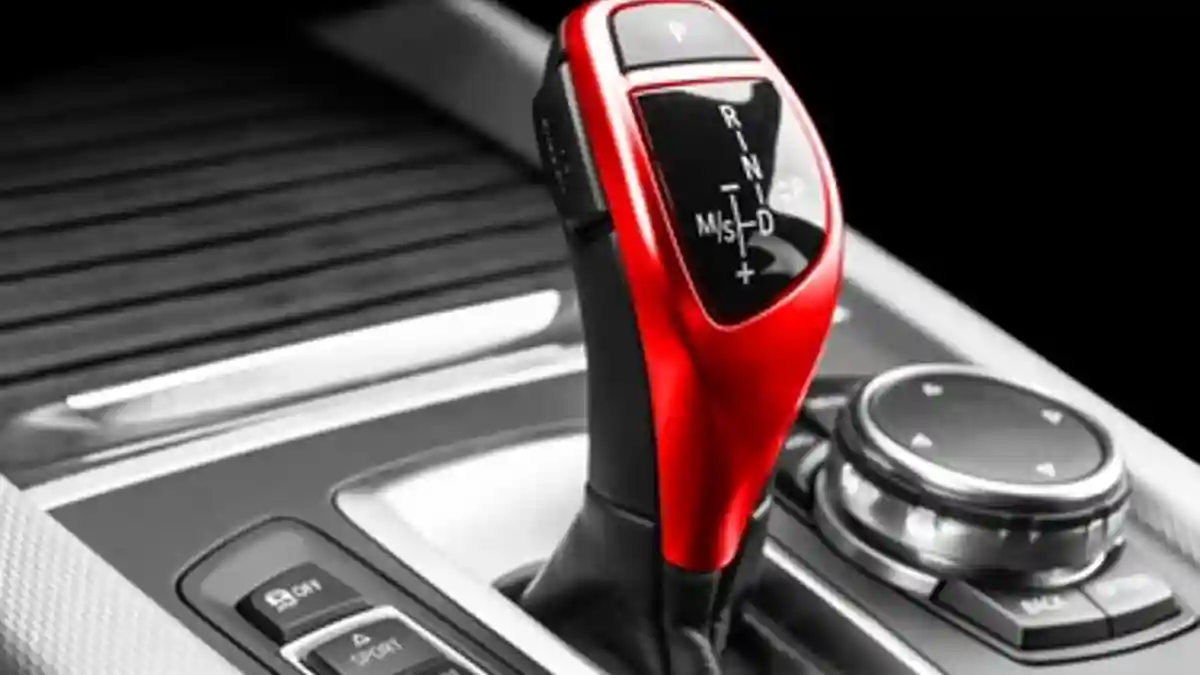
On most automatics the lever is locked in Park until you press the brake. This is the shift interlock, and it is a common reason a lever will not move.
- Brake pedal and brake light switch
- Shift interlock solenoid in the lever housing
- Selector cable or electronic shifter
- Transmission fluid and pump pressure
- Transmission control module and solenoids
Car not going into gear, symptom to cause table
| What you notice | Possible cause | The check that confirms it |
|---|---|---|
| Lever will not leave Park | Shift interlock, brake light switch, blown fuse, flat battery | Brake light check, fuse and voltage test |
| Lever moves but dash shows the wrong gear | Stretched or loose selector cable, range sensor fault | Cable adjustment check, live data on the scan tool |
| Automatic car won’t go into Drive | Low fluid, worn clutch packs, pump or torque converter fault | Fluid level and condition, pressure test |
| Stuck in one gear with a warning | Limp mode from a TCM, solenoid or sensor fault | Fault codes and live data |
| Manual grinds into every gear | Clutch not releasing fully | Pedal travel and hydraulic check |
| Manual grinds into one gear only | Worn synchro for that gear | Road test and gearbox inspection |
Why an automatic car won’t go into drive
1. Shift interlock not releasing
- The interlock solenoid holds the lever in Park until the brake is pressed
- If the solenoid fails, the lever stays locked even with your foot on the brake
- Many cars have a small shift lock release slot near the lever for emergencies
We confirm it by listening for the solenoid click and testing its power supply. A sticky interlock can also be linked to a key that will not come out, see our guide on a key stuck in the ignition.
2. Brake light switch fault
Why it matters
The car uses the brake light switch to know your foot is on the pedal.
The clue
If the brake lights do not come on, the interlock will not release either.
How we confirm it
We read the switch signal in live data and test the circuit and fuse.
3. Low or burnt transmission fluid
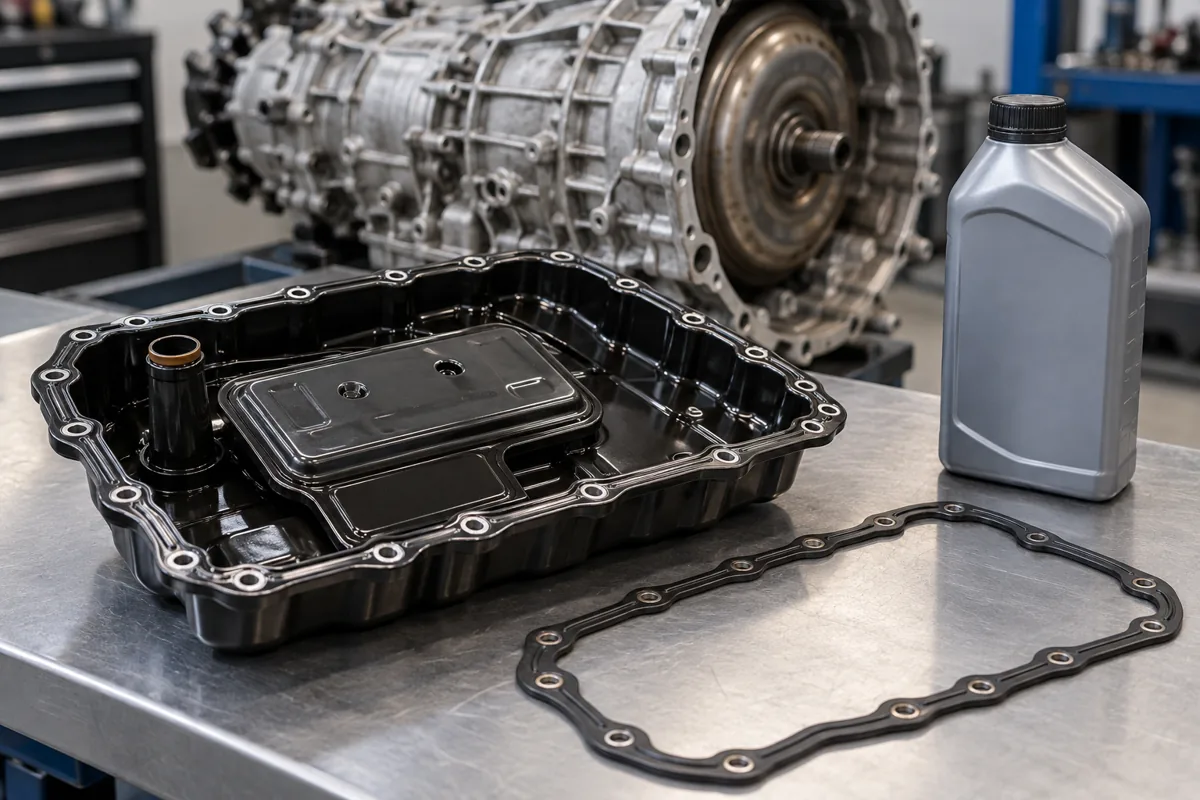
An automatic gearbox needs fluid pressure to engage each gear. Low fluid can cause a delay into Drive, slipping or no drive at all.
- Leaks often come from the pan gasket, cooler lines or seals
- Dark fluid with a burnt smell points to overheating
- Many modern gearboxes have no dipstick
4. Stretched or broken selector cable
The selector cable links the lever to the gearbox. If it stretches, slips off or breaks, the lever moves but the gearbox stays in the old position.
- The dash may show one gear while the gearbox is in another
- The lever may feel lighter or looser than normal
- Adjustment or replacement fixes it once the fault is confirmed
5. TCM, solenoid and sensor faults
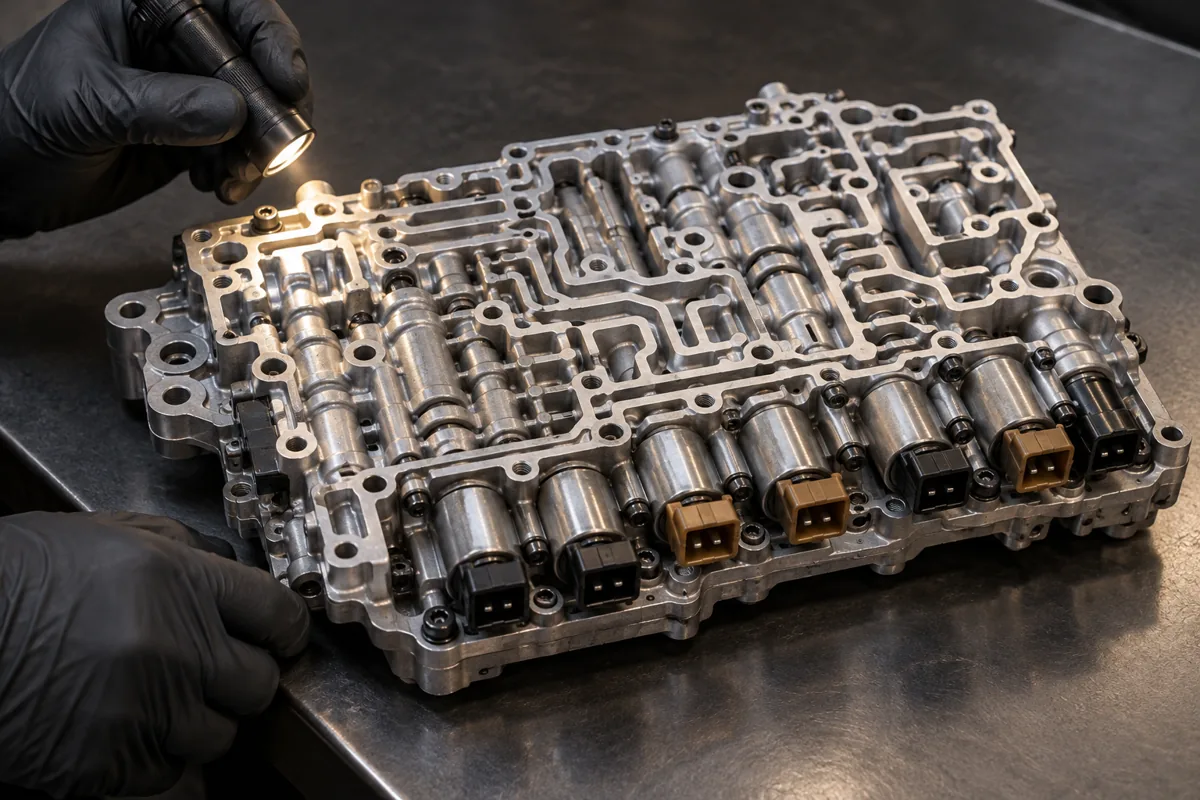
The transmission control module reads speed, range and temperature sensors. It then switches solenoids in the valve body to pick each gear.
- A range sensor fault can confuse the computer about the lever position
- Low battery voltage can cause odd gearbox behaviour
6. Limp mode
Limp mode is a protection setting that holds one gear after the computer sees a fault.
Stuck in one gear
Weak pick up and a warning light.
Codes, heat or low fluid
Sensor faults, overheating fluid or low voltage are common triggers.
Scan, do not just clear
Clearing codes without fixing the cause brings limp mode back.
7. Internal wear and torque converter
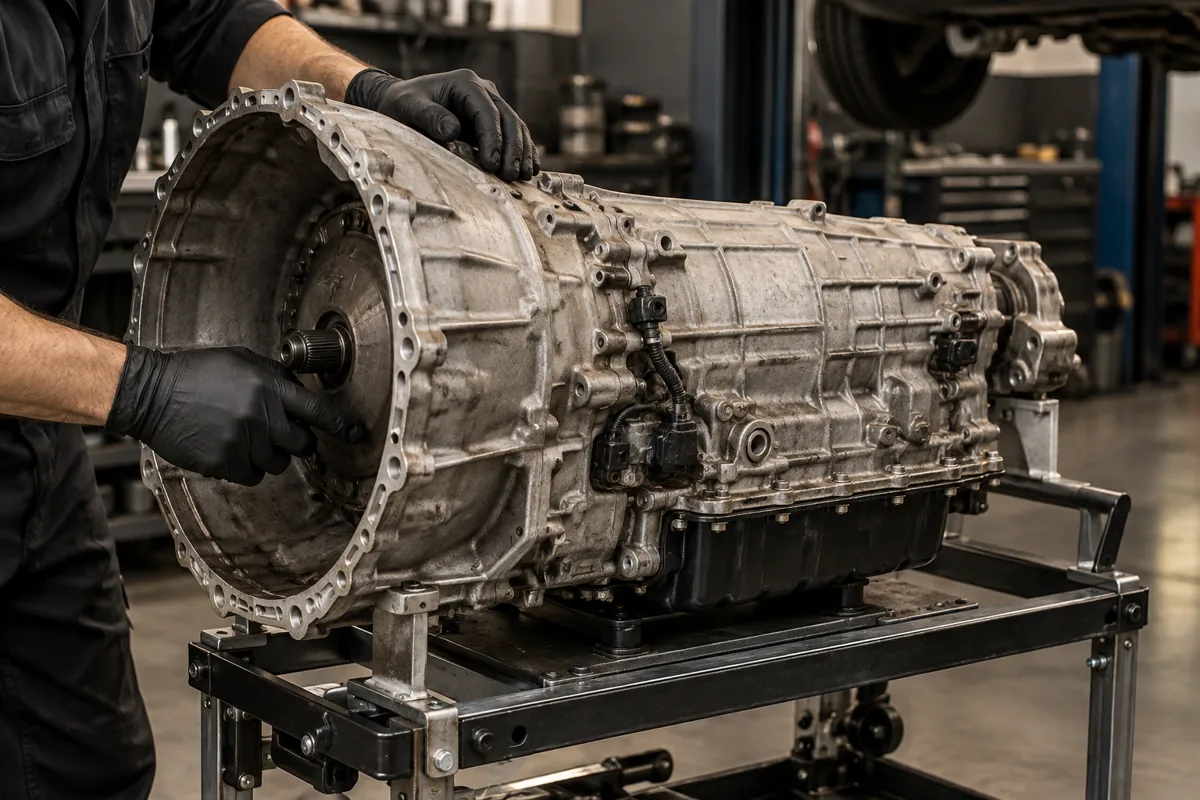
Worn clutch packs, a weak pump or a failed torque converter can stop drive even when the lever and computer are fine. These faults need pressure testing and often a gearbox inspection off the car.
Why a manual car won’t go into gear
In a manual car, most gear problems start with a clutch that does not fully release.
1. Clutch not releasing
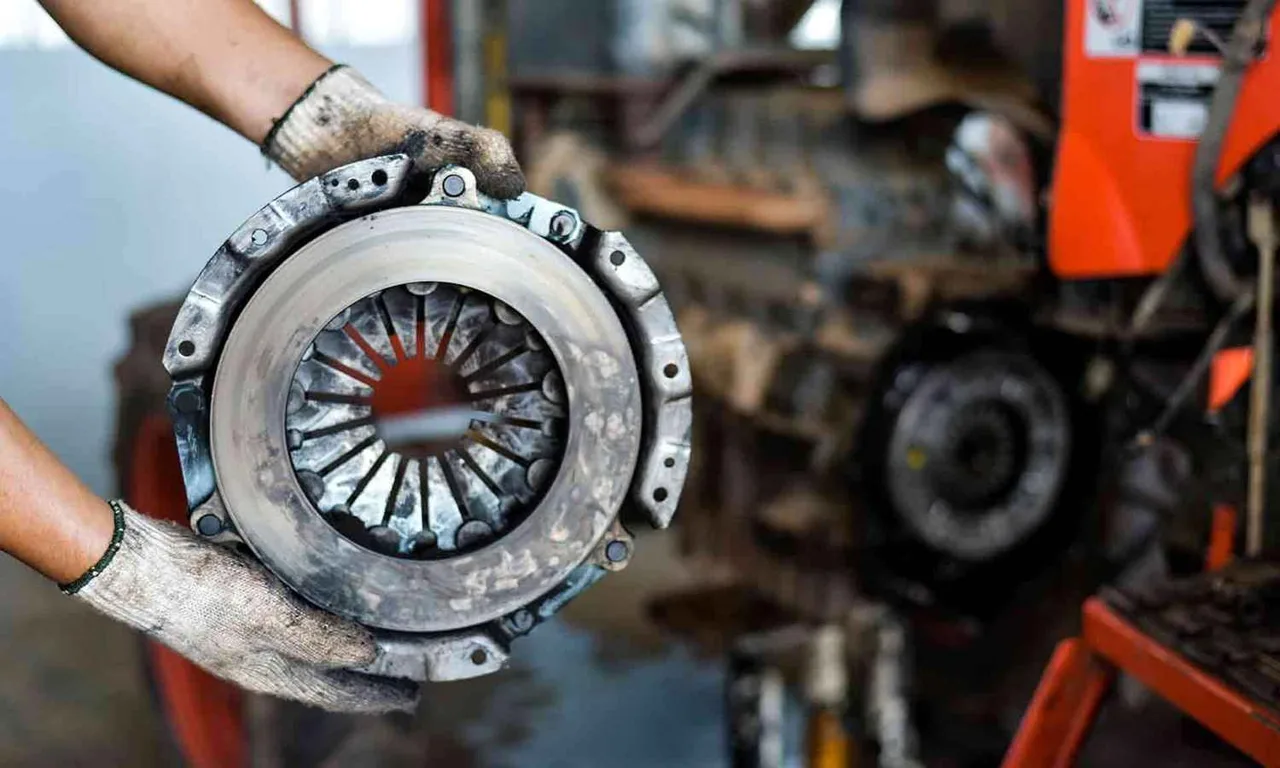
- Grinding into first and reverse from a standstill
- The car creeps forward with the pedal pressed
- A worn or sticking clutch plate, pressure plate or release bearing is often the cause
Our guide to bad clutch signs and fixes covers slipping and judder too.
2. Clutch hydraulics
Master cylinder
A worn seal lets the pedal sink slowly, so the clutch stops releasing.
Slave cylinder
A leak at the gearbox end gives a soft pedal and wet marks under the car.
Air in the line
Air makes the pedal spongy and cuts the release travel.
Fluid level
Many cars share the brake fluid reservoir with the clutch.
3. Gear linkage or cable faults
- Worn bushes make the lever loose and gears hard to find
- A broken cable end can leave the lever moving with nothing happening
4. Worn synchros and internal parts
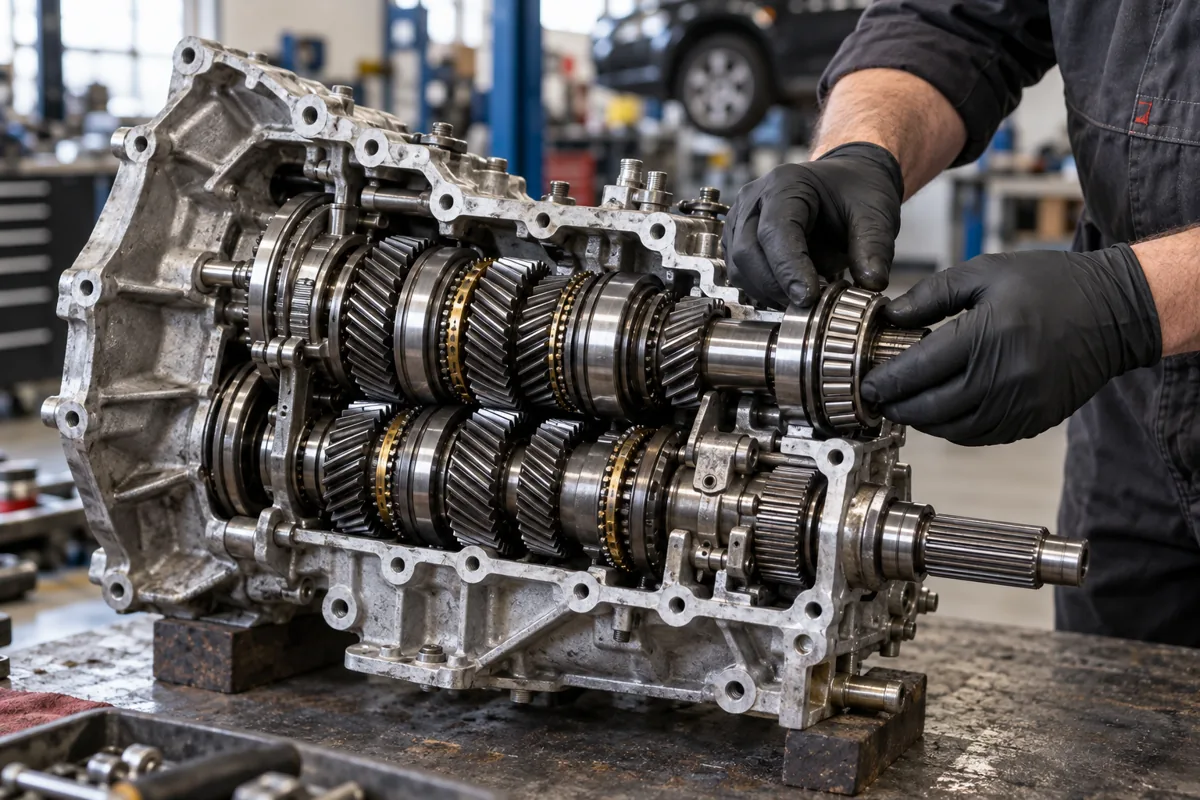
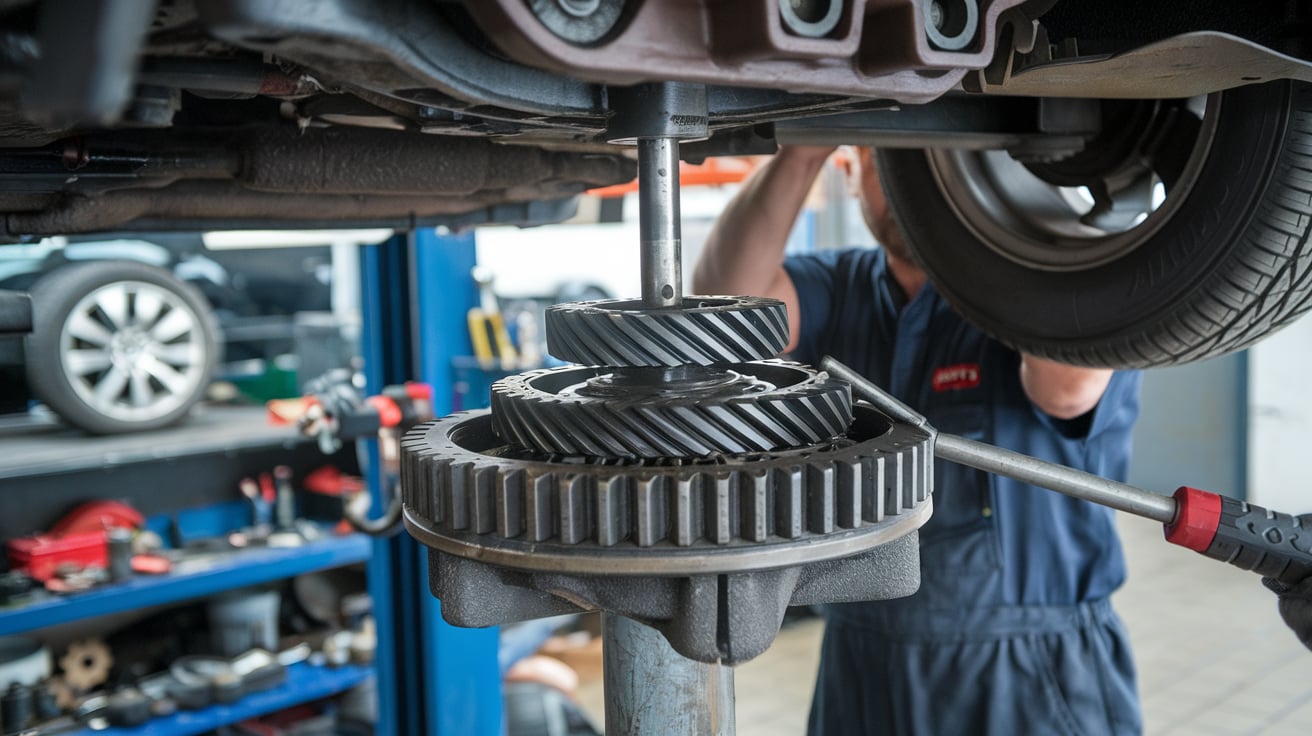
Synchros match the speed of the gear before it locks in. When one wears, that gear grinds or resists, often on fast shifts.
- Grinding in one gear only points to its synchro
- Jumping out of gear points to worn selector parts or detents
What you can safely check yourself
- Ask someone to check the brake lights come on when you press the pedal
- Notice dim lights or slow cranking, a weak battery can affect the shifter
- Take a photo of any gearbox warning on the dashboard
- Check for fresh red, brown or clear fluid spots under the car
- On a manual, feel whether the clutch pedal is soft, sinking or stays down
- Do not force the gear lever or use tools on it
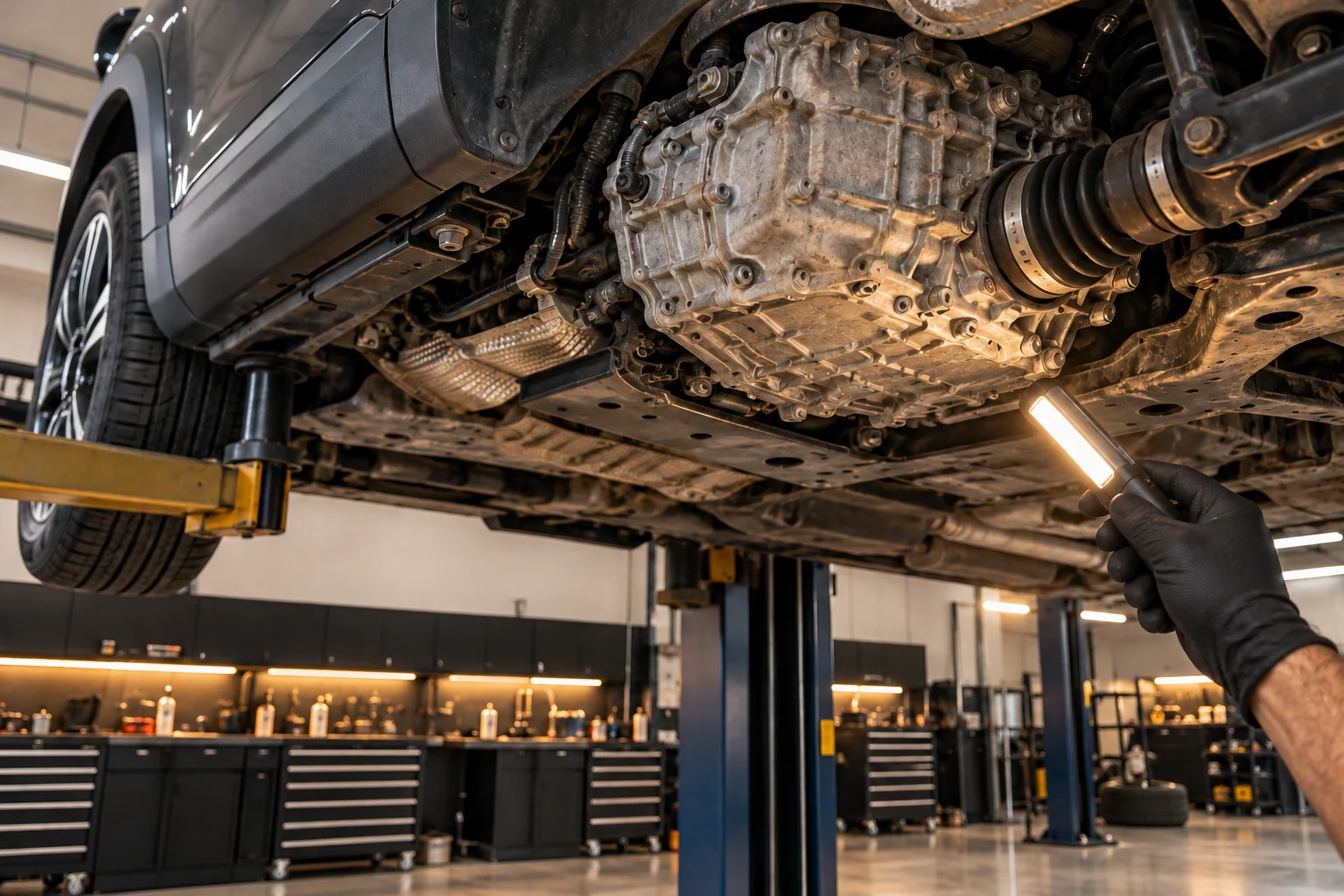
- Do not crawl under the car or lift it to check the linkage
- Do not keep clearing codes and driving in limp mode
How Mechanics diagnoses a car that won’t go into gear
-
Listen to you
We ask what the lever does, when it started and whether a warning came on.
-
Check the basics
Battery voltage, fuses and brake light operation are tested first, as they are the cheapest causes.
-
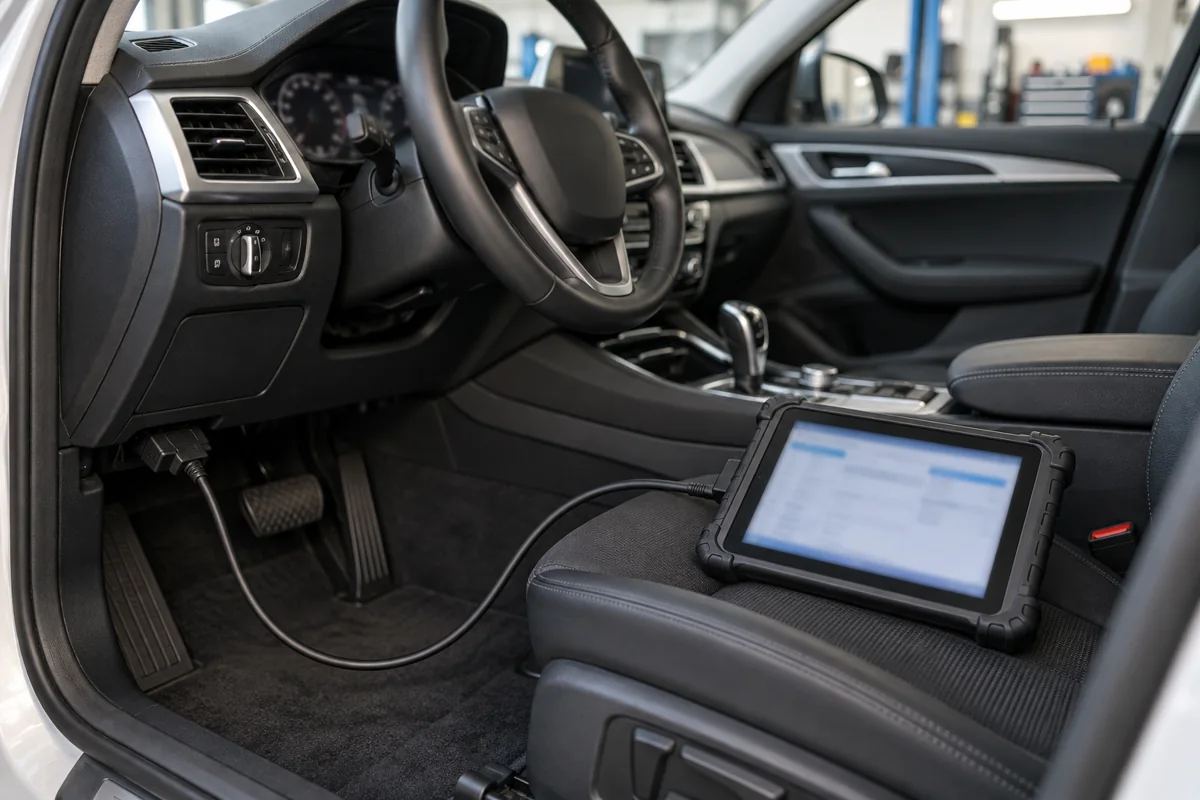
Scan the car
The gearbox, engine and body modules are read for fault codes and live data. See our computer check service.
-
Inspect the selector
We check the interlock, cable adjustment, linkage and range sensor position.
-
Check fluid and clutch
Fluid level and condition are checked on automatics, and clutch hydraulics on manuals.
-
Road test if safe
We feel for delay, slip, grinding and limp mode under real driving.
-
Written quote
You get the findings and the price on WhatsApp before any work starts.
On cars that have been stuck in traffic in summer, we often find gearbox fluid that is darker than its age suggests. On manuals, a soft clutch pedal is very often traced to a slow hydraulic leak.
Common repairs and what they fix
| Repair | Fixes | Usually followed by |
|---|---|---|
| Brake light switch replacement | Lever locked in Park, brake lights not working | Live data check |
| Interlock or shifter repair | Lever will not move with the brake pressed | Function test in every position |
| Selector cable adjustment or replacement | Wrong gear shown, lever loose | Range sensor check |
| Fluid and filter service | Delayed engagement from old or low fluid | Level set at the correct temperature |
| Solenoid or sensor replacement | Limp mode, missing gears | Code clear and adaptation |
| Clutch hydraulic repair | Soft or sinking pedal, clutch not releasing | Bleed and pedal test |
| Clutch replacement | Grinding into gear, slipping, burning smell | Road test |
Gearbox work is covered on our transmission repair page. Clutch faults are covered on our clutch repair page.
What does it cost when a car won’t go into gear?
The cost depends entirely on the cause. A switch or cable is a small job, while internal gearbox wear is a large one.
| Work | Published planning estimate |
|---|---|
| Initial inspection at Mechanics | Free |
| Fluid and filter service | AED 262.50 to 630 |
| Solenoid or sensor replacement | AED 420 to 1,260 |
| Valve body or mechatronic repair | AED 2,100 to 5,775 |
| Torque converter replacement | AED 1,575 to 4,200 |
| Full transmission rebuild | AED 5,250 to 12,600 |
These figures come from our transmission repair price section and include a 5 percent VAT allowance. Your final quote depends on the car and what we find.
The real cause
Diagnosis comes first, so you only pay for the part that failed.
Gearbox type
Conventional automatic, CVT, dual clutch and manual units differ in parts and labour.
Parts choice
Genuine, OEM equivalent or rebuilt parts change the total.
Extra work
Fluid, coding, adaptations and mounts can be needed after the repair.
How Dubai conditions affect gear problems
Fluid ages faster
High temperatures break down gearbox fluid and harden seals sooner.
Stop start driving
Slow traffic keeps the gearbox hot and works the clutch hard on manuals.
Cables and linkages
Dust gets into selector cable ends and linkage bushes and speeds up wear.
Short battery life
Heat shortens battery life, and low voltage can upset electronic shifters.
How to prevent gear problems
- Service the gearbox fluid as your maker advises, often sooner for hard use
- Fix small fluid leaks early before the level drops
- Always press the brake fully before moving the lever out of Park
- On a manual, do not rest your foot on the clutch pedal
What to send us
Make, model, year and mileage, and whether it is automatic or manual.
What the lever or clutch pedal does and which gears are affected.
A photo of the dashboard with any light or message showing.
When it started and any recent gearbox, clutch or battery work.
Book a gearbox check. Send these details on WhatsApp and we will advise the next step before you drive in.
Car won’t go into gear, questions we get asked
Why won’t my car go into gear?
On automatic cars it is usually the shift interlock, a brake light switch fault, low fluid, a selector cable or a gearbox computer fault. On manual cars it is usually a clutch that does not release, a hydraulic leak, worn linkage or worn synchros.
Why is my automatic gear lever stuck in Park?
The most common causes are a faulty brake light switch, a failed shift interlock solenoid, a blown fuse or a weak battery. Check that the brake lights work first.
Why won’t my automatic car go into Drive?
If the lever moves but the car will not drive, low or burnt fluid, a stretched selector cable, a solenoid fault or internal wear are likely. Have it checked before driving.
Can a brake light switch stop the car going into gear?
Yes. The car uses the brake light switch to know your foot is on the brake. If the switch fails, the interlock will not release the lever from Park.
How do I use the shift lock release?
Many automatics have a small release slot near the lever, and your handbook shows where it is. Use it only to move the car safely, as it does not fix the fault that caused the lock.
Can low transmission fluid stop the car going into gear?
Yes. An automatic gearbox needs fluid pressure to engage gears. Low fluid can cause a delay into Drive, slipping or no drive at all, and the leak should be found and fixed.
What is limp mode on a gearbox?
Limp mode is a protection setting where the computer holds one gear after it detects a fault. The car feels slow and revs high. A scan shows the fault code that caused it.
Why does my manual car grind when I put it in gear?
Grinding into every gear usually means the clutch is not releasing fully. Grinding into one gear only usually points to a worn synchro for that gear.
Why is my clutch pedal soft and gears hard to select?
A soft or sinking pedal usually means a leak in the master or slave cylinder or air in the line. The clutch then cannot release fully, so gears become hard to select.
Can a bad battery stop an automatic car going into gear?
It can. Low voltage can stop the interlock solenoid or an electronic shifter from working. We test the battery and charging early, as it is the cheapest cause to rule out.
Does a gearbox that won’t go into gear always need a rebuild?
No. Many cases are caused by a switch, cable, fluid or sensor. A rebuild is only needed when testing shows internal wear.
How do I book a check at Mechanics?
Send your car details and the symptom on WhatsApp, or see our transmission repair page. You get a written quote before any work starts.